
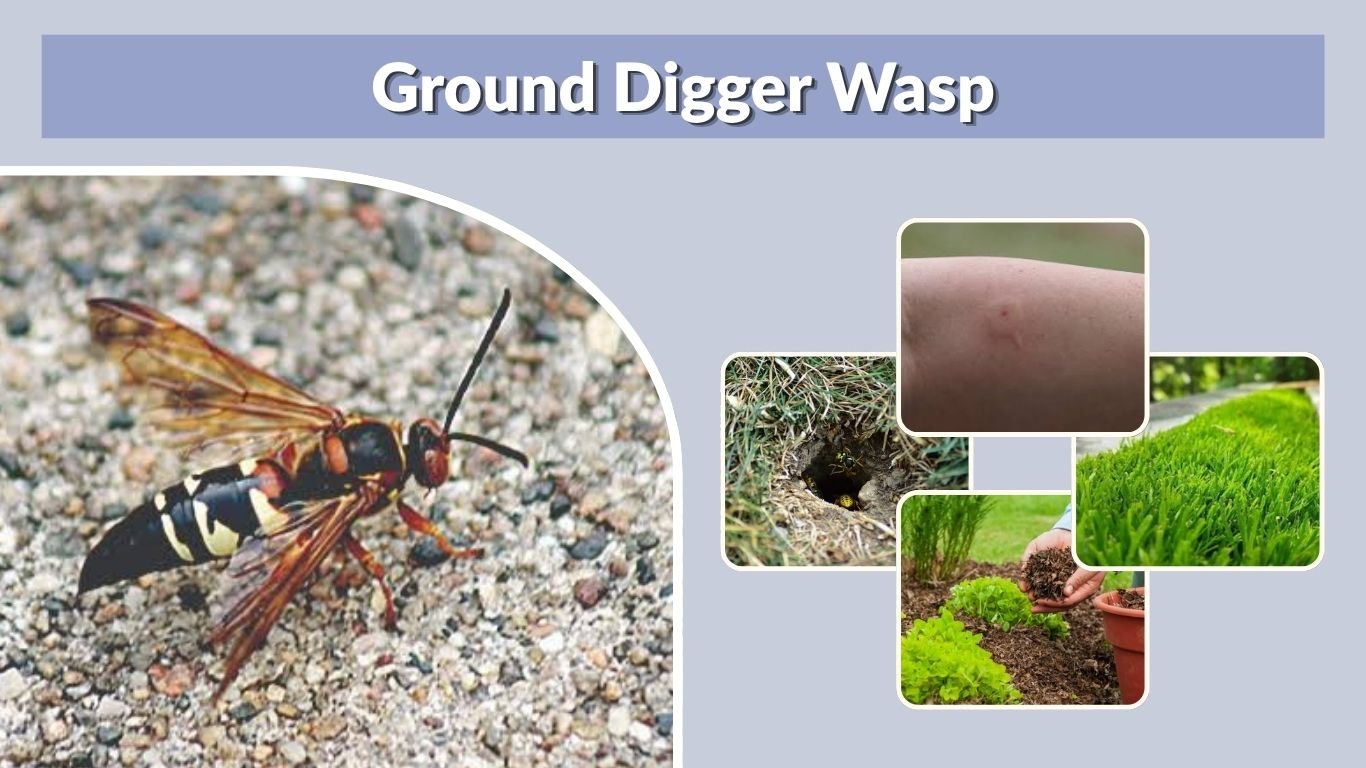
A ground digger wasp is usually a solitary wasp that excavates a burrow in dry soil and stocks it with insects for its developing young. Cicada killers, great golden digger wasps, sand wasps, and several related species fall into this broad group. Although their size and low-flying behavior can seem alarming, most digger wasps are beneficial, nonaggressive insects. Understanding their appearance, nesting habits, sting risk, and safe control options can help you decide whether removal is truly necessary.
What Is a Ground Digger Wasp?
“Ground digger wasp” is an informal term rather than the name of one species. It commonly describes solitary hunting wasps that build underground nests.
Unlike social yellowjackets, each female digger wasp generally constructs and provisions her own burrow. Several females may nest close together because they prefer the same soil conditions, but they do not normally form one shared colony.
What Does a Ground Digger Wasp Look Like?
Appearance varies by species. Common features include:
- A narrow waist between the thorax and abdomen
- Long legs and noticeable antennae
- Smooth bodies rather than the fuzzy bodies of bees
- Black, yellow, orange, red, golden, or metallic markings
- A body length ranging from under an inch to about 1½ inches
The great golden digger wasp is approximately one inch long, with golden hair on its head and thorax, an orange-and-black abdomen, and orange legs.
Ground Digger Wasp Size
Smaller digger species may measure around half an inch, while cicada killers can reach 1 to 1½ inches. A cicada killer has a dark reddish-brown thorax, amber wings, reddish legs, and a black abdomen marked with yellow bands.
Large size does not necessarily mean greater danger. Many of the biggest ground-nesting wasps are solitary and less defensive than smaller social yellowjackets.
Types of Ground Digger Wasps
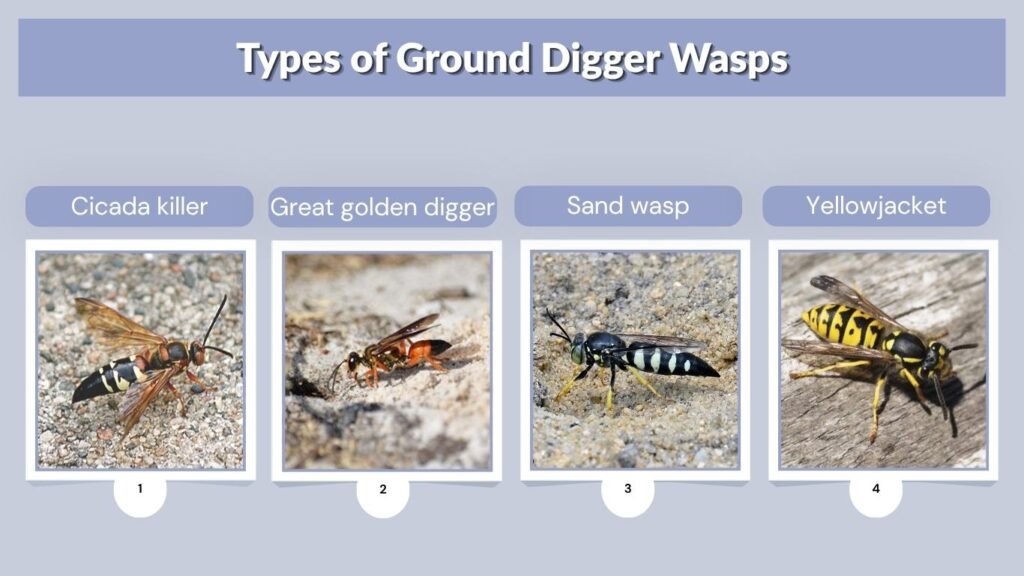
Numerous solitary wasps excavate soil, but several types are regularly encountered in lawns and gardens.
| Type | Typical appearance | Prey supplied to larvae | Behavior around people |
| Cicada killer | Very large, black and yellow | Cicadas | Usually nonaggressive |
| Great golden digger | Golden, orange and black | Katydids and crickets | Generally docile |
| Sand wasp | Black with white or yellow markings | Flies and other insects | Low sting risk |
| Thread-waisted wasp | Slender body with a long waist | Caterpillars or other insects | Usually avoids people |
| Yellowjacket | Small, compact, black and yellow | Insects and scavenged food | Defensive near its colony |
Are Cicada Killers Ground Digger Wasps?
Yes. The cicada killer is one of the most recognizable ground digger wasps. Females excavate burrows in sunny, sandy soil, capture cicadas, paralyze them, and carry them underground as food for their larvae.
Although females can sting, they usually do so only when restrained or seriously threatened. Males may patrol a nesting area and fly toward people, but they do not have stingers.
What Is a Golden Ground Digger Wasp?
The great golden digger wasp is a large solitary species with golden hairs, amber wings, orange legs, and a partly orange abdomen. It visits flowers for nectar and hunts katydids, crickets, and similar insects for its larvae.
It is considered beneficial because it pollinates flowers and helps control insect populations.
Ground Digger Wasp Nest Identification
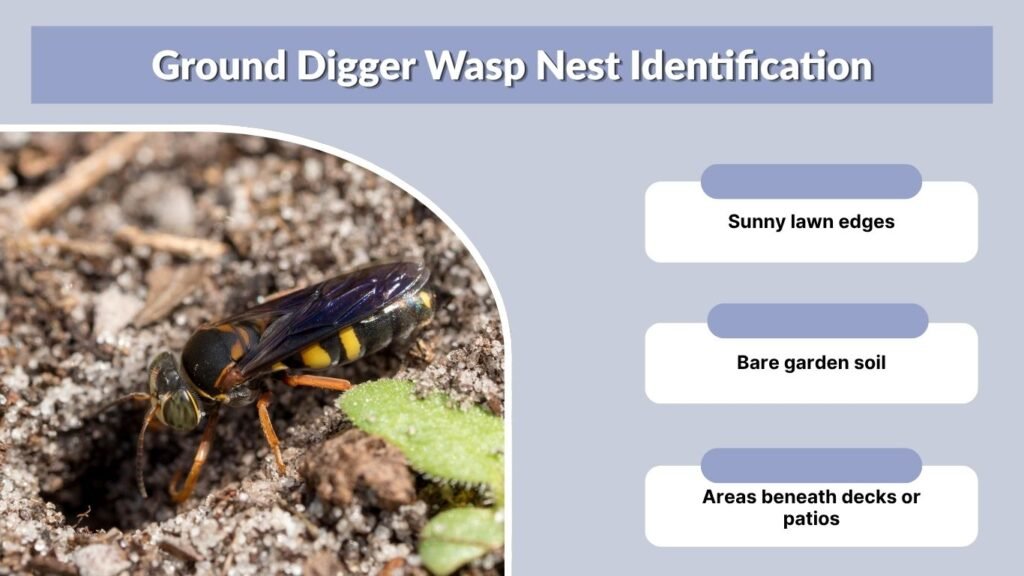
A ground digger wasp nest usually consists of a main tunnel connected to one or more individual chambers. Each chamber holds an egg and paralyzed prey that will feed the larva after it hatches.
What Does a Ground Digger Wasp Nest Look Like?
Look for a round opening surrounded by loose, freshly excavated soil. Depending on the species, the soil may form a small fan, mound, or U-shaped pile beside the entrance.
Digger wasps commonly select:
- Sunny lawn edges
- Bare garden soil
- Sandy paths
- Areas beneath decks or patios
- Gravel borders and driveways
- Dry, thin sections of turf
Cicada killers especially favor open, sunny, sandy ground and may create conspicuous soil mounds in lawns or gardens.
Is It an Infestation?
Seeing many holes does not always mean there is a large social colony. Suitable soil can attract numerous solitary females, with each wasp maintaining a separate nest.
Activity also tends to be temporary. Many solitary wasps remain active for only a few weeks during summer, and old nests are generally not reused in subsequent years.
Ground Digger Wasp vs. Yellowjacket Nest
| Feature | Digger wasp burrow | Yellowjacket nest |
| Social structure | One female per burrow | Queen and many workers |
| Number of entrances | Often numerous separate holes | Usually one busy entrance |
| Soil near entrance | Often clearly excavated | May have little loose soil |
| Flight activity | One wasp using each hole | Continuous traffic |
| Aggression | Usually low | Often highly defensive |
Do not approach closely when many small wasps are rapidly entering and leaving one opening. That pattern may indicate a yellowjacket colony rather than solitary digger wasps.
Do Ground Digger Wasps Sting?
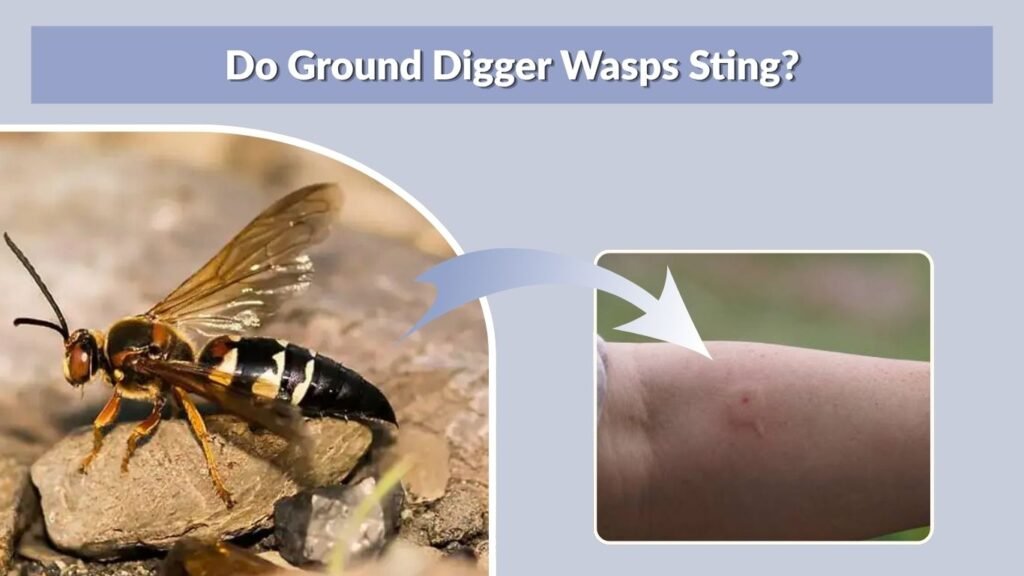
Female ground digger wasps possess stingers because they use venom to paralyze prey. However, solitary species do not have a large colony to defend and are unlikely to sting unless stepped on, trapped in clothing, handled, or pressed against the skin.
Are Ground Digger Wasps Dangerous?
They generally pose little danger when their nesting area is left undisturbed. The greatest risks occur when:
- Someone walks barefoot near the holes
- Children attempt to catch the wasps
- Pets dig into active burrows
- Wasps become trapped inside clothing
- A person has a serious insect-venom allergy
A sting can cause immediate pain, redness, itching, and swelling. Trouble breathing, swelling of the face or throat, widespread hives, dizziness, or fainting requires emergency medical attention.
Will Ground Digger Wasps Enter a House?
Ground digger wasps normally remain outdoors because they need soil for nesting and hunt outdoor insects. An individual may accidentally enter through an open door or window, but these wasps do not usually establish underground-style nests inside houses.
Ground Digger Wasp Life Cycle
A female digs a burrow, captures suitable prey, and places it inside a nesting chamber. She lays an egg on or near the stored insect and seals the chamber.
After hatching, the larva consumes the supplied prey, develops underground, and eventually forms a cocoon. Cicada killers overwinter as larvae inside their soil burrows, pupate in spring, and emerge as adults in summer.
Adults live for one active season. New adults emerge the following year rather than continuing as a permanent colony with a queen and workers.
How to Get Rid of Ground Digger Wasps
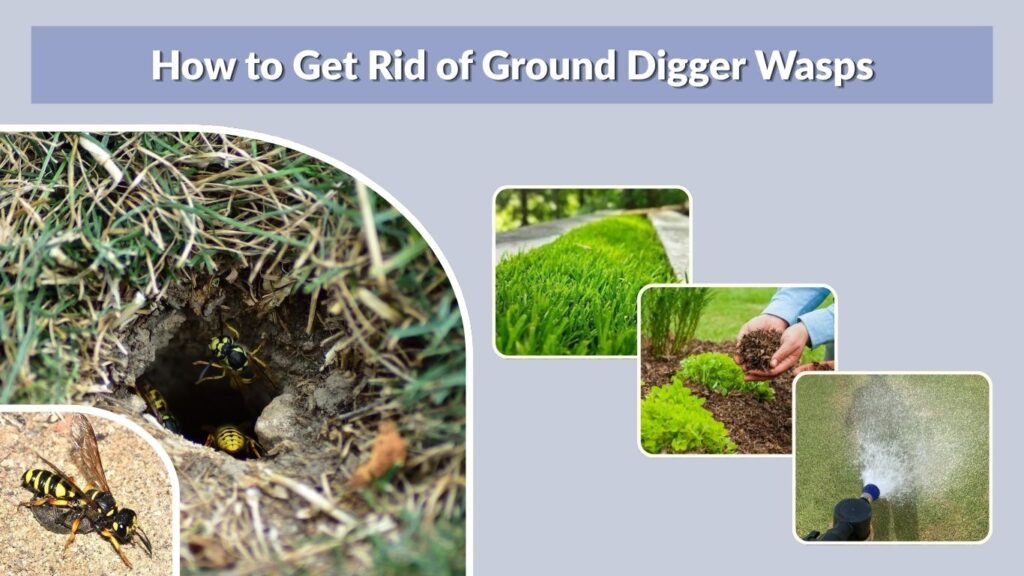
Removal is often unnecessary because these wasps are beneficial, seasonal, and unlikely to sting. Tolerating them is the preferred option when the nests are away from doors, walkways, playgrounds, and frequently used lawn areas.
Natural Ground Digger Wasp Control
Digger wasps prefer exposed, dry, easily excavated soil. You can make a site less attractive by:
- Maintaining thick, healthy grass
- Covering bare soil with plants or mulch
- Repairing thin or damaged lawn areas
- Watering extremely dry nesting patches when appropriate
- Preventing children and pets from disturbing active holes
These changes are deterrents rather than instant nest treatments. Avoid blocking an occupied hole while the female is outside because she may simply dig another entrance.
When Nest Removal May Be Necessary
Consider professional removal when nests are beside an entrance, beneath playground equipment, along a busy pathway, or near someone with a known sting allergy.
Correct identification is important before applying any treatment. A pest professional can determine whether the insects are solitary digger wasps or aggressive ground-nesting yellowjackets.
Avoid Dangerous Home Remedies
Do not pour gasoline, kerosene, bleach, ammonia, or boiling liquids into a burrow. Never attempt to burn an underground nest. These methods can cause fires, toxic exposure, soil contamination, and serious injuries.
When using a pesticide, select a product specifically labeled for the target insect and application site. Follow every label direction, and keep children, pets, toys, and food away from the treatment area for the required period.
FAQs
Do ground digger wasps bite or sting?
Female ground digger wasps can sting but do not normally bite people. They use their stingers to paralyze insect prey. Human stings are uncommon and usually happen when a wasp is trapped, stepped on, handled, or pressed against the skin.
Should I kill ground digger wasps?
Killing them is usually unnecessary. Most species are temporary, solitary, and beneficial predators. Leave them alone when their burrows are in a low-traffic location. Removal is more reasonable when nests create an unavoidable sting hazard.
What kills ground digger wasps?
Pesticides labeled specifically for ground-nesting wasps may kill them, but the product must be suitable for the identified species and site. Because digger wasps are rarely dangerous, habitat modification or professional evaluation is generally preferable to routine pesticide use.
Can I trap ground digger wasps?
Common hanging wasp traps usually target scavenging yellowjackets and may not attract solitary digger wasps. Digger species focus on flowers and particular insect prey, so improving turf and covering bare soil are generally more practical long-term deterrents.
Will ground digger wasps return next year?
The same adults will not return because their seasonal life cycle ends. New adults may emerge from underground chambers the following year, and other females may select the area again when its sunny, dry soil remains suitable for digging.
