
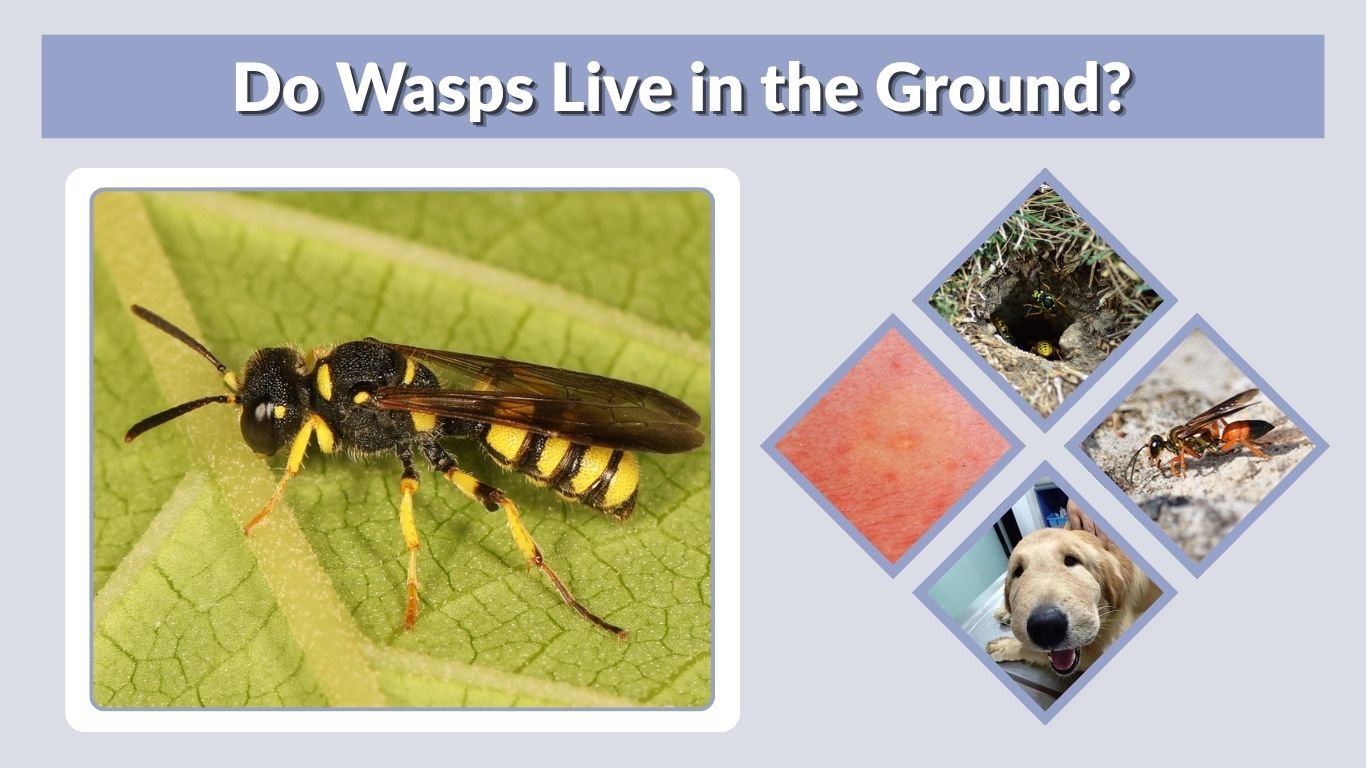
Yes, some wasps live in the ground, while others build nests in trees, wall cavities, roof spaces, or beneath eaves. Ground-nesting species include yellowjackets, cicada killers, digger wasps, and several solitary hunting wasps. Their underground homes may look like simple holes, but the size, structure, and number of occupants vary considerably. Identifying the wasp correctly is important because some species are peaceful, whereas social yellowjackets may aggressively defend their colony.
What Wasps Live in the Ground?
“Ground wasp” is not the name of one particular species. It is an informal description for wasps that dig burrows or occupy underground cavities.
Some live alone, with one female maintaining each burrow. Others form social colonies containing a queen and hundreds or thousands of workers. Ground-nesting solitary wasps may gather in the same favorable location, but every female usually has her own separate nest.
Ground-Nesting Yellowjackets
Yellowjackets are the ground wasps most likely to cause problems around homes. They often use abandoned rodent burrows, spaces beneath tree roots, cracks near foundations, and other existing cavities.
A yellowjacket nest typically has one main entrance with numerous workers repeatedly flying in and out. The underground cavity contains layers of papery comb hidden below the surface. Colonies may contain several hundred to several thousand individuals.
Yellowjackets are usually about half an inch long with smooth black-and-yellow bodies. Because they are social, they work together to defend their colony when the entrance or surrounding ground is disturbed.
Cicada Killer Wasps
A cicada killer is a huge wasp that lives in the ground. Adults are commonly black or reddish-brown with yellow markings and may measure approximately 1 to 1½ inches long.
Females dig burrows in sunny, well-drained soil and carry paralyzed cicadas underground as food for their developing larvae. A burrow often has a noticeable pile of excavated soil beside its entrance.
Although their size looks alarming, cicada killers are solitary and generally ignore people. Females can sting when handled or threatened, while territorial males may fly toward intruders but lack functional stingers.
Digger and Thread-Waisted Wasps
Digger wasps and thread-waisted wasps include numerous solitary species that construct nests in soil. One female prepares each nest and supplies it with captured insects or spiders for her larvae.
Many females may nest close together when a sunny patch has suitable loose soil. This gathering can resemble a colony, but the wasps are not sharing one communal nest like yellowjackets. Most solitary ground wasps are beneficial predators and are unlikely to sting unless trapped, stepped on, or handled.
Great Black and Other Dark Ground Wasps
A large black wasp entering a ground hole may be a great black wasp or another solitary digger species. These wasps hunt insects and place captured prey inside underground nest chambers.
Color alone cannot provide a reliable identification. Ground-nesting wasps may be entirely black, black and yellow, orange and black, reddish, metallic blue, or marked with white. Observe body shape, size, nest entrance, soil mound, and the number of insects using the hole.
Types of Wasps That Live in the Ground
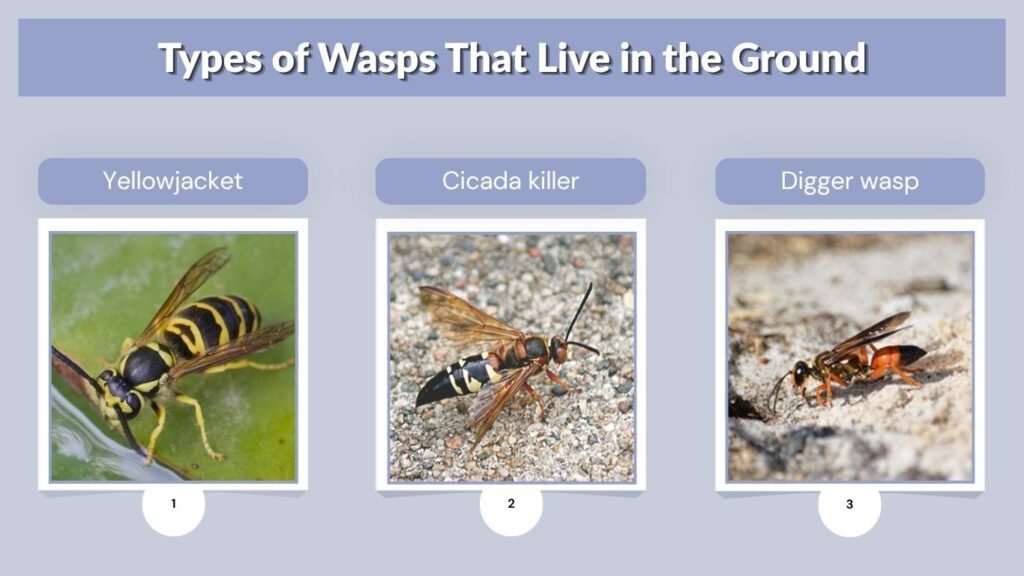
The following table compares common ground-nesting wasps and their behavior.
| Ground-nesting wasp | Typical appearance | Nest behavior | Risk to people |
| Yellowjacket | Small, smooth, black and yellow | Large social colony using one entrance | High near a disturbed nest |
| Cicada killer | Very large, black or brown with yellow markings | Solitary burrow with excavated soil | Usually low |
| Digger wasp | Varies; often slender and dark | One female per burrow | Low |
| Thread-waisted wasp | Narrow waist with long body | Solitary soil nest | Low |
| Great black wasp | Large and mostly black | Solitary underground chambers | Low unless handled |
| Sand wasp | Often patterned black, white, or yellow | Burrows in loose or sandy soil | Generally low |
Ground-nesting wasps are also useful predators. Many capture caterpillars, flies, cicadas, grasshoppers, or other insects that may otherwise damage plants.
What Does a Ground Wasp Nest Look Like?
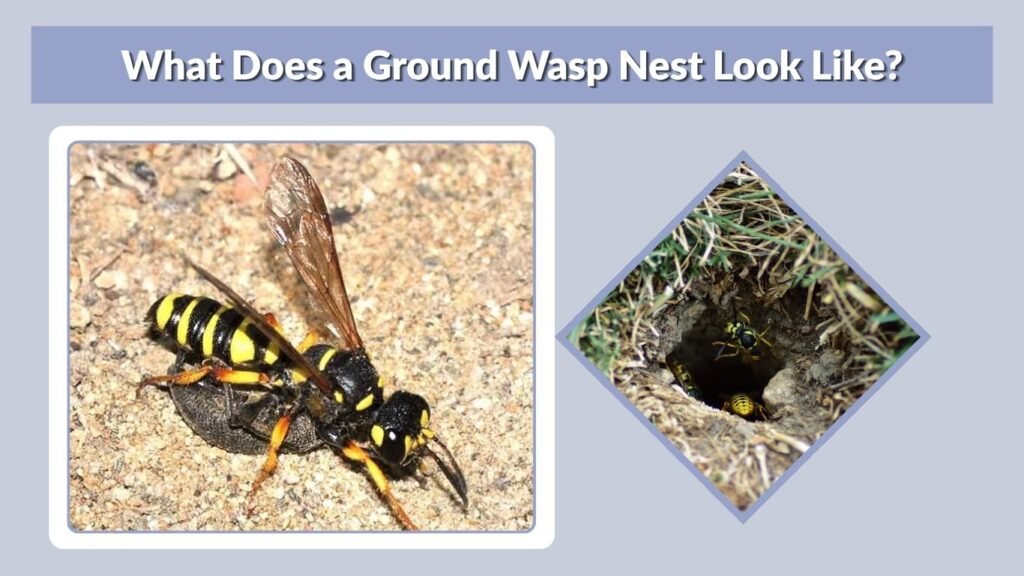
An underground wasp nest may initially look like an ordinary hole in a lawn, garden bed, woodland edge, or sandy bank. The activity around the opening often provides better identification than the hole itself.
Signs of a Yellowjacket Nest
A yellowjacket entrance may be surrounded by little or no loose soil because the colony often occupies a preexisting cavity. The strongest sign is a steady stream of small black-and-yellow workers entering and leaving the same opening.
Yellowjacket activity becomes especially noticeable in mid-to-late summer, when colonies have grown larger. Their entrances may appear in lawns, beneath shrubs, along paths, beside buildings, or between rocks.
Signs of a Solitary Wasp Burrow
Solitary digger wasps usually excavate their own tunnels. Their holes may have loose soil piled around or to one side of the entrance.
Several holes can appear within a small area, particularly in dry, sunny soil. However, you may see only one female regularly using each opening rather than continuous traffic from many workers.
Yellowjacket vs. Cicada Killer Nest
| Feature | Yellowjacket nest | Cicada killer burrow |
| Number of wasps | Hundreds or more in one colony | One female per burrow |
| Entrance traffic | Many workers entering and leaving | Usually one wasp |
| Hole size | Often relatively small | Larger and more obvious |
| Loose soil | Usually limited | Often a noticeable mound |
| Defensive behavior | May be highly defensive | Usually tolerant of people |
Are Ground Wasps Aggressive?
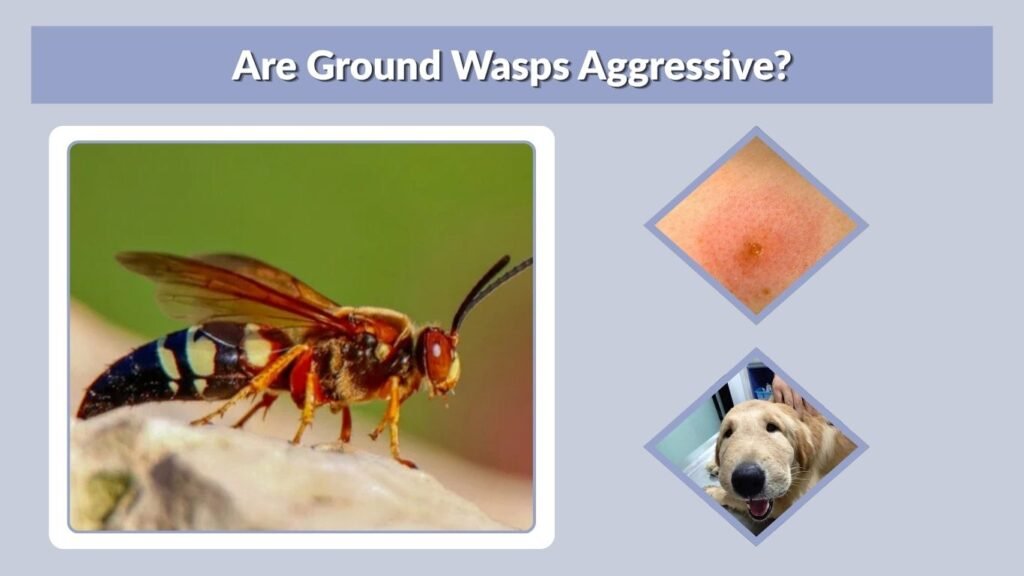
Most solitary ground wasps are not naturally aggressive toward humans. They focus on digging, hunting prey, feeding on nectar, and reproducing. Their intimidating flights near a burrow are not always attacks.
Yellowjackets are different because the workers collectively protect their queen, larvae, and nest. Lawn mowers, string trimmers, digging tools, footsteps, pets, and children playing close to the entrance may trigger defensive activity.
When multiple small wasps emerge from one hole, move away calmly and quickly. Do not strike the nest, block the opening, or stand nearby trying to identify them at close range.
Do Wasps, Bees, or Hornets Live in the Ground?
Several bees also live underground. Mining bees, sweat bees, and other solitary native bees may create numerous small holes in lawns. They are often furry and less defensive than yellowjackets.
Many insects called “ground hornets” are actually cicada killer wasps or yellowjackets. Paper wasps generally attach open, umbrella-shaped combs beneath eaves, branches, railings, and other protected surfaces rather than living underground. Hornet species more commonly construct aerial or cavity nests, although nesting habits vary among species and regions.
How Long Do Ground Wasps Live?
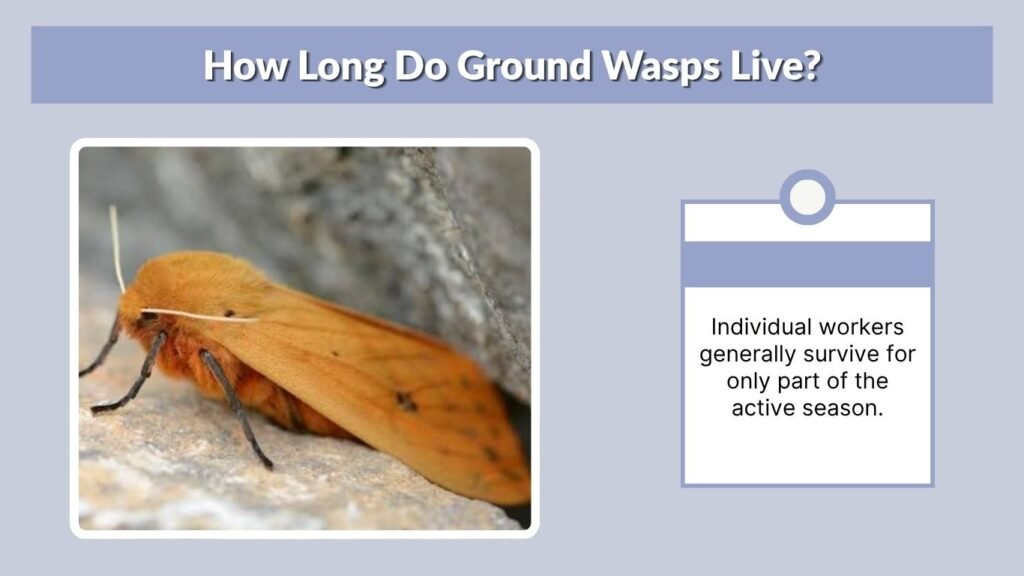
Individual workers generally survive for only part of the active season. In temperate climates, social yellowjacket colonies are typically annual: workers and the old queen die as cold weather arrives, while newly produced queens seek protected overwintering sites.
The surviving queens emerge the following spring and start new colonies rather than reusing the former workforce. Yellowjacket workers are normally active from spring through fall, although nests may remain unnoticed until their population becomes large in summer.
Solitary ground wasps also have seasonal life cycles. Adults may be visible for only a limited period, while immature wasps develop inside protected underground cells.
What to Do When Wasps Live in Your Yard
Leave a solitary wasp nesting area alone when it is away from doors, paths, playgrounds, or heavily used lawn space. These insects help control other insects and usually disappear after their short nesting season.
A ground yellowjacket colony requires more caution. Keep children and pets away, mark the general area from a safe distance, and avoid mowing or digging nearby. Professional removal is the safest choice when the nest is close to regular human activity or when someone in the household has an insect-venom allergy.
Never pour gasoline into a nest or attempt to burn it. Such methods create serious fire, poisoning, and environmental hazards without guaranteeing that the underground colony will be eliminated.
FAQs
Can wasps live in holes in the ground?
Yes. Yellowjackets may occupy abandoned animal burrows or natural cavities, while cicada killers and solitary digger wasps excavate their own tunnels. Observe whether many insects share one entrance or individual wasps use separate holes.
What is the aggressive wasp that lives in the ground?
A ground-nesting yellowjacket is usually the aggressive species people encounter. Workers may emerge together and repeatedly sting when vibrations or movement threaten the colony. Most large solitary ground wasps are considerably less defensive.
Do paper wasps live in the ground?
Paper wasps normally build exposed, umbrella-shaped combs beneath eaves, branches, decks, and other sheltered structures. An active underground colony of small social wasps is more likely to contain yellowjackets than paper wasps.
What is the giant wasp that lives in the ground?
In much of North America, a huge black-and-yellow ground wasp is often a cicada killer. Females carry cicadas into underground burrows. Despite their large size, they rarely sting people unless physically threatened.
Where do ground wasps prefer to live?
Many solitary species prefer sunny, dry, well-drained, or sandy soil where digging is easy. Yellowjackets often choose protected underground cavities, including abandoned rodent tunnels, spaces beneath roots, and openings near structures.
