
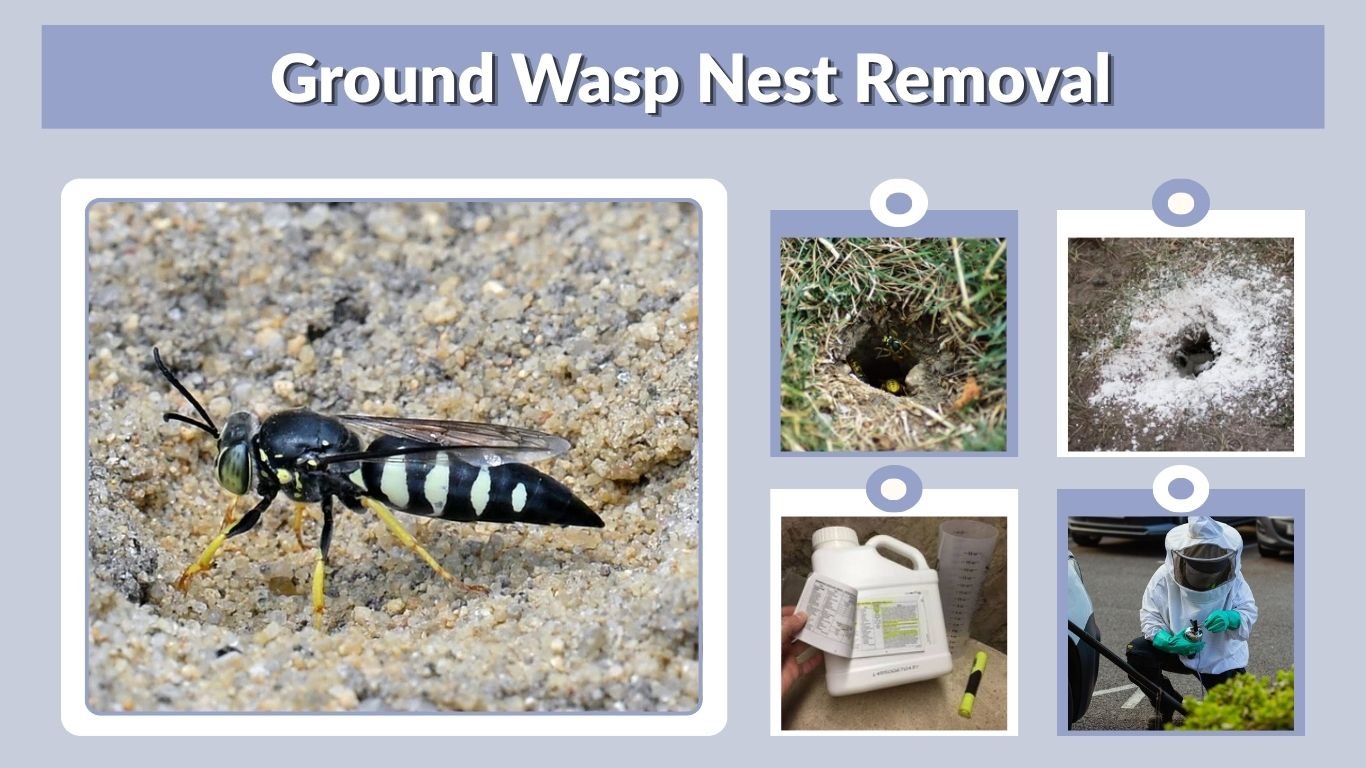
Ground wasp nest removal may be necessary when an underground colony is located beside a doorway, walkway, playground, garden, or frequently used lawn. The insects are often ground-nesting yellowjackets, which may emerge together and sting repeatedly when their nest is disturbed. Small solitary digger-wasp burrows are usually less dangerous and may not require treatment. Before attempting removal, identify the insect, locate the entrance from a safe distance, and decide whether professional service is the safer option.
Should You Remove a Ground Wasp Nest?
Not every underground wasp nest needs to be destroyed. The appropriate response depends on the species, location, colony size, and likelihood that people or pets will disturb it.
Ground nests in remote parts of a property can often be left alone. Control becomes more reasonable when a nest is in a high-traffic area or presents an unavoidable sting risk.
Signs Removal May Be Necessary
Consider ground wasp removal when:
- Numerous wasps use one entrance
- The hole is near a door or walkway
- Children or pets play nearby
- Lawn maintenance repeatedly disturbs the nest
- The entrance is beside a foundation
- Someone nearby has a known sting allergy
- Wasps are entering a wall or structural opening
People with a known allergy to wasp stings should not attempt DIY nest treatment. A pest-management professional has protective equipment and application tools designed for this work.
When the Nest Can Be Left Alone
Solitary ground digger wasps usually maintain individual burrows rather than one large defensive colony. If only one large wasp occasionally enters each hole, the insects may be beneficial digger wasps that hunt garden pests.
A steady stream of small black-and-yellow wasps entering one opening is more consistent with a yellowjacket colony. Even a small surface hole can lead to a much larger underground nest.
Identify the Nest Before Removal
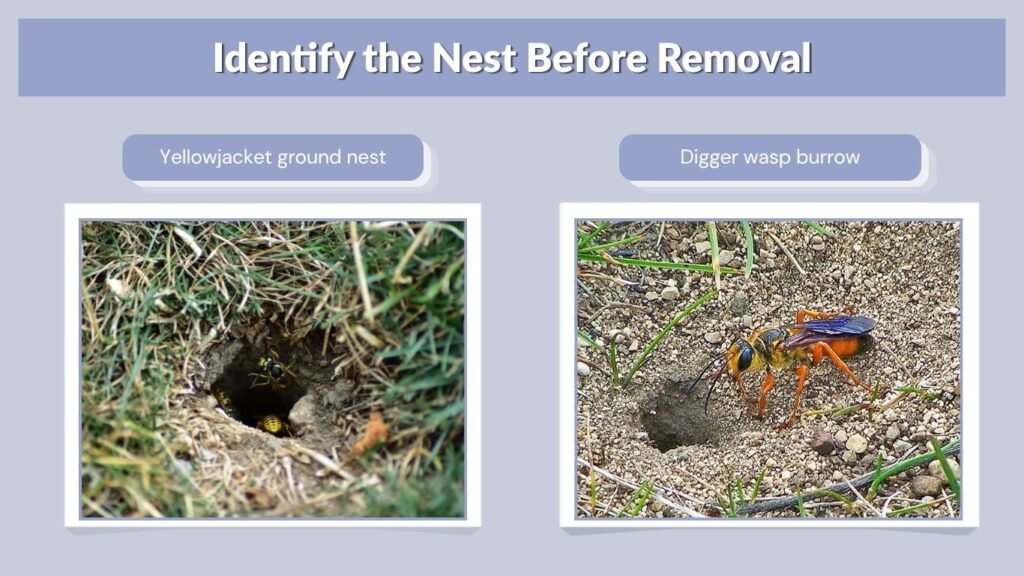
Correct identification prevents unnecessary pesticide use and reduces the risk of approaching an aggressive colony.
Observe activity from a considerable distance during daylight. Do not stand directly over the entrance, insert an object into it, or block the wasps’ flight path.
Yellowjacket Nest vs. Digger Wasp Burrow
| Feature | Yellowjacket ground nest | Digger wasp burrow |
| Entrance activity | Many wasps entering and leaving | Usually one wasp per hole |
| Social structure | Queen with numerous workers | Normally solitary |
| Defensive behavior | Strong nest defense | Usually nonaggressive |
| Loose soil | Often little visible soil | Frequently has a soil mound |
| Removal need | Often necessary near people | Usually unnecessary |
A yellowjacket entrance may be hidden beneath vegetation. Following the general direction of wasp traffic from a safe distance can help locate it. Once found, mark the area without approaching or disturbing the hole.
Ground Bees and Bumble Bees
Not every insect using a ground hole is a wasp. Solitary mining bees and some bumble bees also nest underground. Many native ground-nesting bees are valuable pollinators and present a relatively low sting risk when their nesting area is not disturbed.
Confirm the insect before applying any pesticide. Some protected bee species may be subject to conservation laws, depending on the location.
How to Remove a Ground Wasp Nest Safely
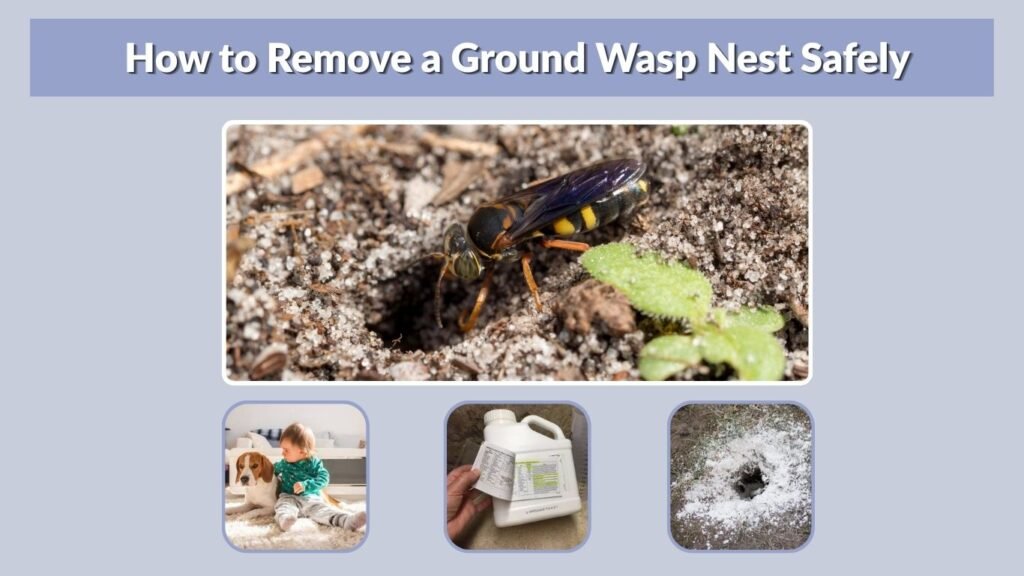
Professional removal is the safest method, particularly for large colonies. DIY treatment should be limited to an outdoor nest with a clearly identified entrance when no one performing the work has a sting allergy.
Prepare the Area
Before treatment:
- Keep children and pets indoors.
- Stop mowing, trimming, or digging near the nest.
- Identify a clear retreat route.
- Close nearby doors and windows.
- Remove toys, pet bowls, and outdoor equipment.
- Read the complete pesticide label before opening the product.
Wear long sleeves, long trousers, closed shoes, gloves, and eye protection. Secure loose openings around cuffs and pant legs. However, ordinary clothing does not provide the same protection as a professional wasp suit.
Choose the Appropriate Time
Extension guidance recommends treating unwanted yellowjacket nests during late evening or early morning, when the insects are less active and more colony members are likely to be inside. Reduced activity lowers—but does not eliminate—the possibility of being attacked.
Do not attempt treatment when you cannot clearly see your retreat path. Avoid using flashlights directed at the entrance because disturbed wasps may fly toward the light.
Use Only a Properly Labeled Product
Use a pesticide only when its label specifically permits application to ground-nesting wasps, yellowjackets, or the relevant nesting site. Directions differ among products, so the label—not general online advice—must determine the application method, protective measures, amount, retreatment interval, and reentry requirements.
Some labeled insecticidal dusts are applied around and into a ground-nest entrance so returning workers carry the material farther into the colony. Liquid treatments may be less effective when the actual nest chamber is located some distance from the visible opening.
Keep adults, children, and pets away from treated areas for the period stated on the label. Prevent pesticides from entering drains, stormwater systems, ponds, or other bodies of water.
Check for Continued Activity
Observe the entrance from a safe distance over the following days. Do not immediately dig into the nest or place your face near the opening.
Some product labels instruct users to check after one or two days and retreat when activity remains. Follow the exact timing printed on the product you used.
Seal or repair the area only after you are certain the colony is inactive. Prematurely blocking an entrance near a building can cause surviving yellowjackets to search for another route, potentially leading them into the structure.
Methods You Should Never Use
Unsafe home remedies can cause burns, poisoning, fire, environmental contamination, or mass attacks.
Never pour the following into a ground wasp nest:
- Gasoline or kerosene
- Diesel fuel
- Bleach
- Ammonia
- Drain cleaner
- Unlabeled pesticide mixtures
Do not ignite the nest, insert fireworks, use a pressure washer, strike the ground, or attempt to dig out an active colony. Never place a rock or container over the entrance while wasps are active; they may create another exit.
Does Soapy Water Remove Ground Wasps?
Soap-and-water treatments may affect exposed insects and can sometimes work on certain small nests, but underground nest shape and depth make results unreliable. A poorly controlled application requires approaching the entrance and can provoke the colony.
For an active social nest near people, professional treatment or a product specifically labeled for underground wasps offers a more controlled approach.
Are Ground Wasp Traps Effective?
Hanging traps may reduce the number of foraging yellowjackets around eating areas, but they generally do not eliminate an established underground colony. The queen, larvae, and many workers remain protected inside the nest.
Traps are better considered a supplemental measure than a substitute for locating and treating a hazardous colony.
Professional Ground Wasp Removal
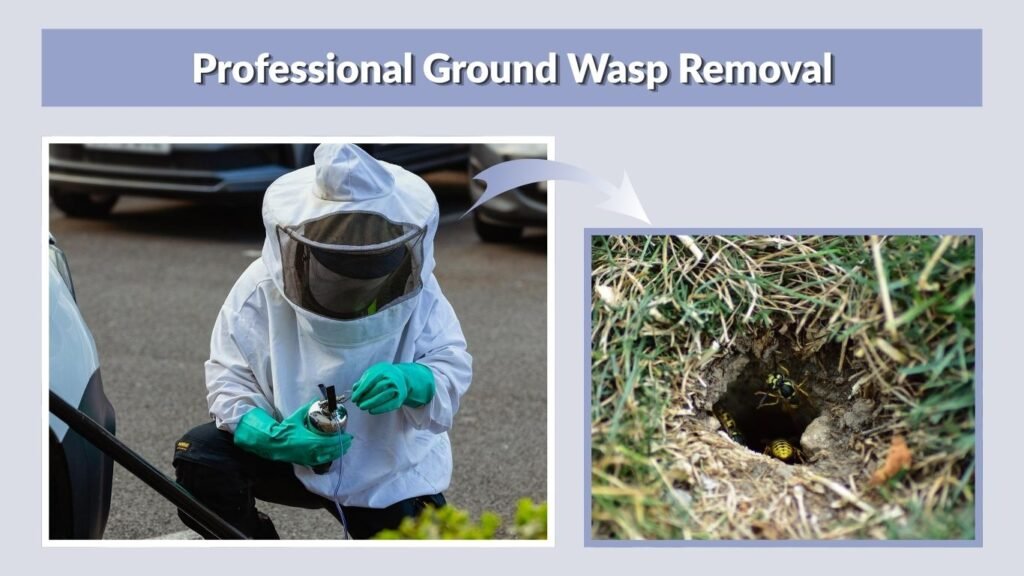
Professional service is appropriate when the nest is large, difficult to access, beside a building, or located where an attack would make escape difficult.
Hire a licensed pest professional when:
- Wasps are entering a foundation or wall
- More than one nest entrance is suspected
- Previous DIY treatment failed
- The nest is beneath a deck or patio
- You cannot identify the insect
- Anyone nearby has a serious sting allergy
- The colony is beside a school, business, or public pathway
Hidden nests inside wall voids and other structural spaces are particularly challenging. Aerosols may fail to reach the colony and can drive wasps toward indoor spaces, so professional control is generally recommended.
Ground Wasp Nest Removal Cost
The cost of removal varies according to the region, nest location, colony size, treatment method, number of visits, and whether structural access or repairs are required.
An accessible lawn nest is generally simpler than a colony beneath concrete or inside a foundation. Ask whether the quoted price includes follow-up treatment, nest monitoring, entry-point sealing, and a service warranty. Some local mosquito or vector-control districts provide ground-yellowjacket treatment, so checking local public services may reduce the cost.
Preventing Ground Wasps from Returning
After the nest is inactive, fill abandoned animal burrows and repair gaps around foundations. Maintain dense turf over thin lawn areas, cover exposed soil where practical, and inspect frequently used outdoor spaces during spring and early summer.
Prevention cannot guarantee that another queen will not establish a colony, but reducing protected underground cavities can make the property less attractive.
FAQs
What is the safest way to remove a ground wasp nest?
Hiring a licensed pest-management professional is the safest choice. For DIY treatment, first confirm that the insects are yellowjackets, keep people and pets away, wear protective clothing, and use only a product labeled for underground wasp nests.
Can I remove a ground wasp nest during the day?
Daytime treatment presents a greater risk because workers are actively entering and leaving. Extension guidance recommends late evening or early morning, when activity is lower. The nest can still be dangerous, so professional removal remains preferable.
Should I plug the ground wasp nest entrance?
Do not plug an active entrance. Surviving wasps may excavate another opening or, when the colony is beside a structure, move into the building. Wait until no activity remains and the treatment label permits sealing the area.
How long does ground wasp removal take?
Initial treatment may take only a short time, but the colony may require several days to become inactive. Some product labels recommend checking after one or two days and repeating treatment when activity continues. Always follow the specific label.
Can ground digger wasp nests be removed naturally?
Solitary digger wasps often need no removal. Allow their seasonal activity to end, then improve turf density, cover bare soil, and change overly dry nesting conditions. Professional identification is helpful when you cannot distinguish them from defensive yellowjackets.
