
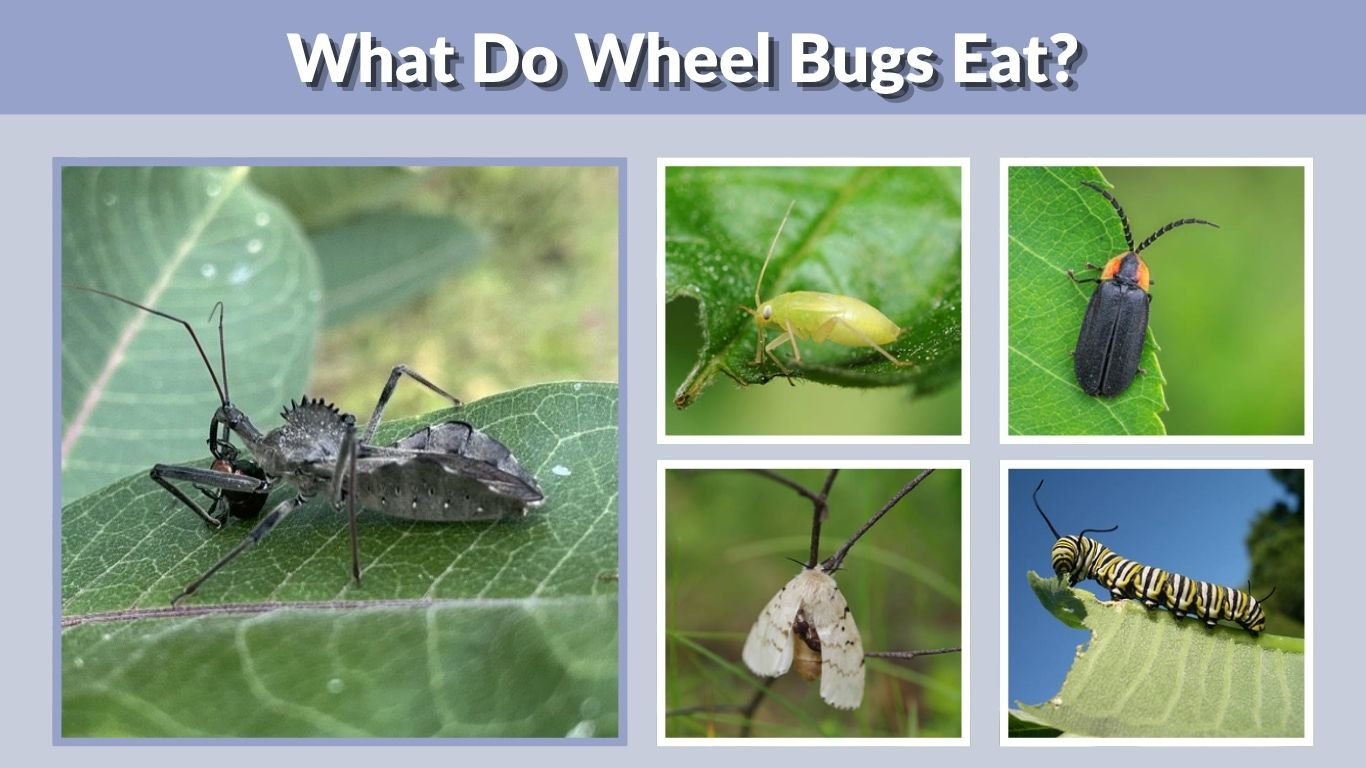
Wheel bugs eat caterpillars, beetles, aphids, leafhoppers, stink bugs, sawfly larvae, moths, flies, bees, and even other wheel bugs. These large assassin bugs are generalist predators, meaning they hunt almost any insect they can capture and overpower. They do not normally eat plants or feed on human blood. Instead, wheel bugs use a sharp beak to immobilize prey and consume its liquefied tissues.
What Is a Wheel Bug?
The wheel bug, scientifically known as Arilus cristatus, is one of the largest assassin bugs found in North America. Adults are gray or brown and have a distinctive semicircular crest resembling a toothed wheel on their backs.
Wheel bugs usually live on trees, shrubs, flowers, and garden plants where other insects are abundant. Both adults and nymphs are predators, although young nymphs commonly begin with smaller prey such as aphids.
| Feature | Description |
| Scientific name | Arilus cristatus |
| Diet | Carnivorous insect predator |
| Primary prey | Caterpillars, beetles, bugs, and aphids |
| Hunting method | Ambushes or slowly approaches prey |
| Feeding tool | Strong piercing and sucking beak |
| Garden role | Generalist predator of many pests |
10 Things Wheel Bugs Eat
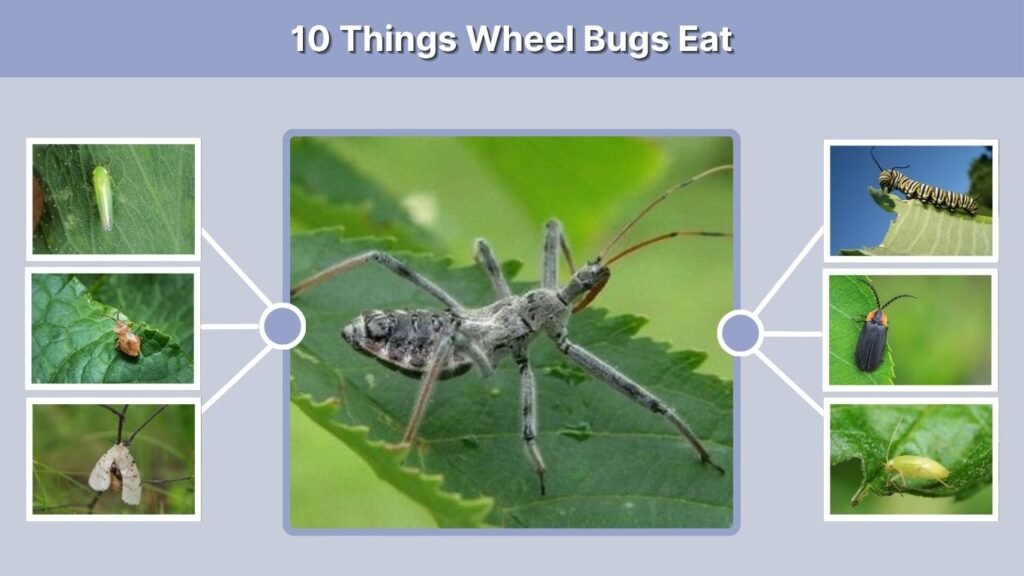
Wheel bugs are opportunistic hunters rather than selective feeders. The exact diet depends on the wheel bug’s size, life stage, habitat, and which insects are available.
1. Caterpillars
Caterpillars are among the most common foods eaten by wheel bugs. Their relatively slow movement and soft bodies make them easier to capture than many fast-flying insects.
Wheel bugs may attack fall webworms, hairy caterpillars, puss caterpillars, and other moth or butterfly larvae found on trees and shrubs. Their ability to prey on hairy, well-protected caterpillars makes them particularly useful around shade and forest trees.
2. Beetles
Wheel bugs can capture various small and medium-sized beetles. Their prey includes Japanese beetles, locust borers, milkweed longhorn beetles, and other species that feed on leaves, flowers, or trees.
A wheel bug typically holds the beetle with its front legs before inserting its beak into a softer area of the body. Adult Japanese beetles have been directly documented as wheel bug prey.
3. Aphids
Young wheel bug nymphs frequently eat aphids because they are small, slow-moving, and easy to overpower. Aphids gather in colonies on tender stems, buds, and the undersides of leaves, providing young predators with an accessible food supply.
By eating aphids, wheel bugs may help reduce the number of these sap-feeding garden pests.
4. Leafhoppers
Leafhoppers are small, plant-feeding insects that can jump quickly when disturbed. Both wheel bug nymphs and adults may prey on them when they can get close enough.
Wheel bugs often hunt slowly or remain motionless on vegetation. This ambush strategy allows them to seize active insects before those insects can escape.
5. Stink Bugs and Squash Bugs
Wheel bugs eat several kinds of true bugs, including stink bugs and adult squash bugs. These insects can be troublesome in vegetable gardens because they pierce plants and feed on their juices.
Although stink bugs have protective body armor and defensive odors, a large wheel bug may still capture and consume them. Wheel bugs are not specialized stink bug hunters, but they attack them when an opportunity appears.
6. Sawfly Larvae
Sawfly larvae resemble caterpillars and often feed together along the edges of leaves. Their soft bodies and relatively slow movement make them suitable prey for wheel bugs.
A wheel bug pierces the larva with its beak and remains attached while feeding. Sawfly larvae can remove large amounts of foliage, so predators that consume them may provide some natural control.
7. Moths
Adult wheel bugs are large enough to capture certain moths. They may attack moths resting on foliage, tree trunks, or flowers, especially when the prey is similar in size or smaller.
Wheel bugs are more likely to catch resting or slow-moving moths than fast-flying individuals. Their long front legs help grasp and stabilize prey during feeding.
8. Flies and Other Small Flying Insects
Small flies and other flying insects may become prey when they land near a waiting wheel bug. Wheel bugs do not chase insects through the air. Instead, they usually capture them from leaves, flowers, bark, or branches.
Their slow movements and gray-brown coloration help them remain unnoticed until the prey comes within striking distance.
9. Bees and Wasps
Wheel bugs occasionally eat honeybees, wasps, and other beneficial insects. They may wait near flowers where potential prey visits for nectar or pollen.
This behavior demonstrates why wheel bugs are considered generalist predators rather than perfect biological pest-control agents. They eat many harmful insects, but they do not distinguish between pests, pollinators, and other beneficial species.
10. Other Wheel Bugs
Wheel bugs can be cannibalistic. Larger individuals may attack smaller wheel bugs or other assassin bugs, particularly when regular prey is scarce or when several predators occupy the same plant.
Cannibalism is another example of their opportunistic feeding behavior. Any appropriately sized insect that can be captured may potentially become food.
How Do Wheel Bugs Catch and Eat Their Prey?
Wheel bugs either wait in ambush or patrol plants slowly until they encounter prey. Once close enough, the predator grabs the insect with its front legs and inserts its strong, curved beak.
Saliva injected through the beak rapidly immobilizes the prey and begins breaking down its internal tissues. The wheel bug then draws the liquefied material back through the same mouthpart. It does not chew or swallow solid pieces of its victim.
The Feeding Process
- The wheel bug detects or approaches an insect.
- It seizes the prey with its front legs.
- Its beak pierces the prey’s body.
- Paralytic and digestive saliva is injected.
- The wheel bug consumes the liquefied tissues.
Do Wheel Bugs Eat Plants?
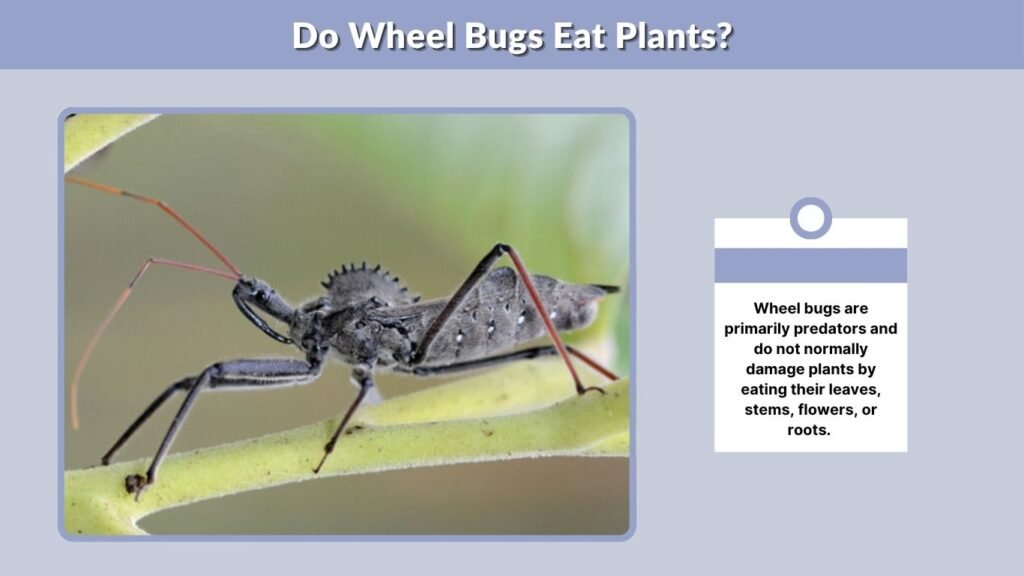
Wheel bugs are primarily predators and do not normally damage plants by eating their leaves, stems, flowers, or roots. Their presence on a plant usually means they are searching for other insects rather than feeding on the plant itself.
However, wheel bugs may remain in one location when plenty of prey is available. Finding one on a vegetable, flower, or fruit tree does not necessarily indicate that it is harming the plant.
Are Wheel Bugs Good for Gardens?
Wheel bugs are generally beneficial because they consume caterpillars, aphids, beetles, leafhoppers, and other insects capable of damaging garden plants. They contribute to natural pest control and are usually best left undisturbed outdoors.
However, they also consume pollinators and helpful predators such as honeybees and lady beetles. Their varied diet and relatively low population mean they rarely eliminate an entire pest infestation by themselves.
Avoid handling wheel bugs. They do not deliberately attack people, but both adults and nymphs can deliver an intensely painful defensive bite when squeezed, trapped, or picked up.
FAQs
Do Wheel Bugs Eat Mosquitoes?
Wheel bugs may capture mosquitoes or other small flying insects that land close to them. However, they are not specialized mosquito predators and probably have little effect on the overall mosquito population.
Do Wheel Bugs Eat Spiders?
Wheel bugs may occasionally attack small spiders when an opportunity arises. Because they are generalist predators, they do not limit themselves to insects, although insects appear to form the majority of their diet.
Do Wheel Bugs Eat Japanese Beetles?
Yes. Wheel bugs have been observed capturing and feeding on adult Japanese beetles. However, they are usually not numerous enough to control a large Japanese beetle infestation without additional management.
Do Wheel Bugs Drink Blood?
Wheel bugs do not normally feed on human or animal blood. They are predatory assassin bugs that consume other insects. A person may be bitten defensively, but the wheel bug is not attempting to use that person as food.
Should You Feed a Wheel Bug?
Wild wheel bugs do not need to be fed. Leave them outdoors where they can hunt naturally. Do not handle or keep one as a casual pet because its defensive bite can be extremely painful.
