
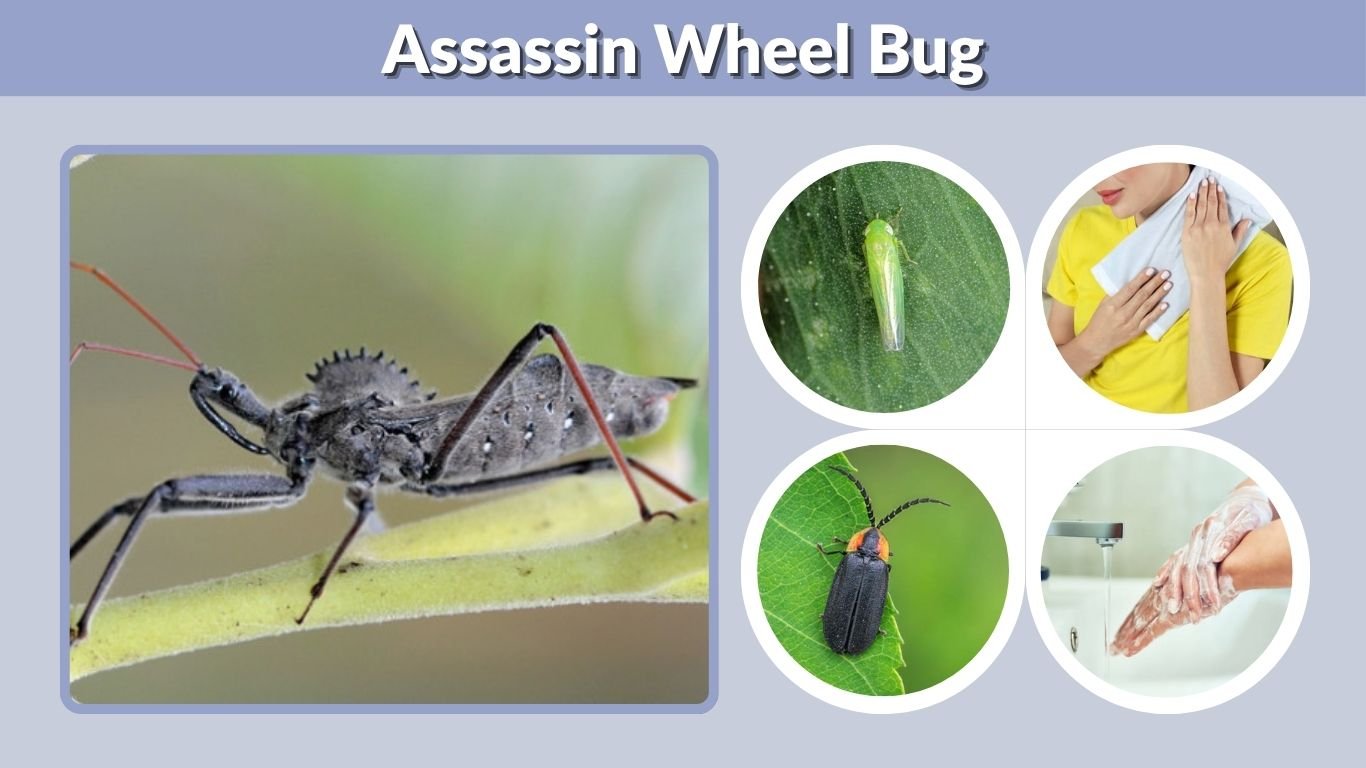
The assassin wheel bug is a large predatory insect known for the distinctive cogwheel-shaped structure on its back. Its unusual appearance often leads people to wonder whether a wheel bug and an assassin bug are different insects. In fact, a wheel bug is a specific type of assassin bug. It helps control many garden pests, but it can also deliver a painful defensive bite when handled.
Are Wheel Bugs and Assassin Bugs the Same?
Yes, wheel bugs are assassin bugs, but not all assassin bugs are wheel bugs.
“Assassin bug” refers to the entire insect family Reduviidae, which contains many predatory species. The wheel bug, scientifically named Arilus cristatus, is one member of this family. The phrase “assassin wheel bug” is therefore an informal name for the wheel bug rather than a separate species.
A simple comparison is that every wheel bug belongs to the assassin bug family, just as one particular breed belongs to a larger animal group.
| Feature | Wheel Bug | Assassin Bugs in General |
| Classification | One specific species | A large family of insects |
| Scientific name | Arilus cristatus | Family Reduviidae |
| Main identification mark | Cogwheel-shaped crest | Appearance varies by species |
| Typical color | Gray, brown or dark gray | Green, orange, brown, black or mixed |
| Feeding behavior | Predatory | Mostly predatory |
| Human bite | Possible when handled | Possible in many species |
How to Identify an Assassin Wheel Bug
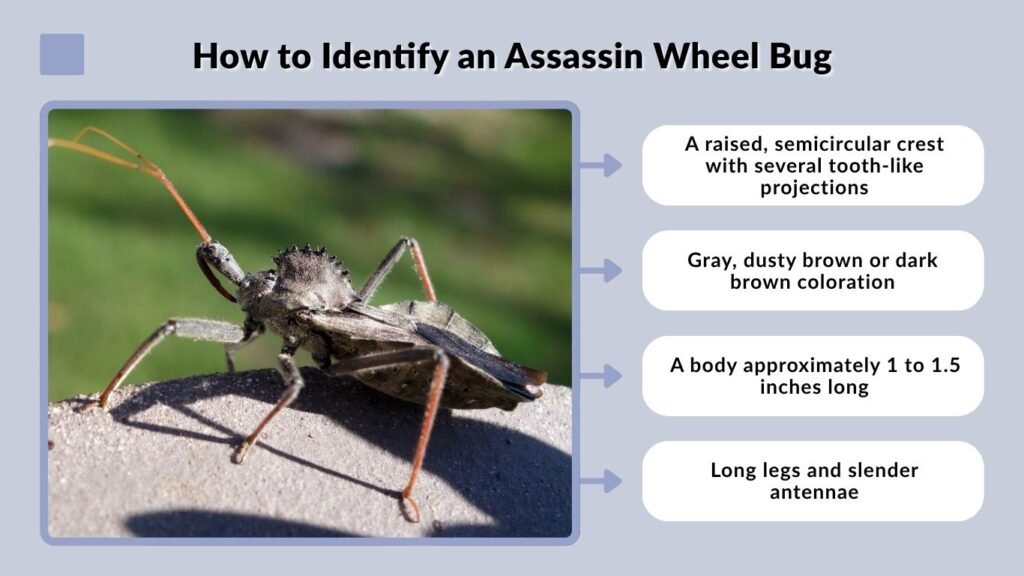
Adult wheel bugs are among the easiest assassin bugs to recognize because no other common North American insect has the same prominent wheel-like crest.
Adult Wheel Bug Identification
Look for the following characteristics:
- A raised, semicircular crest with several tooth-like projections
- Gray, dusty brown or dark brown coloration
- A body approximately 1 to 1.5 inches long
- Long legs and slender antennae
- A narrow head with noticeable eyes
- A thick, curved piercing mouthpart beneath the head
- Folded wings covering most of the abdomen
The cogwheel structure is located on the thorax, directly behind the head. It appears only after the insect reaches adulthood and is the most reliable way to distinguish a mature wheel bug from other assassin bugs.
What Does a Wheel Bug Nymph Look Like?
Young wheel bugs look dramatically different from adults. Early nymphs usually have a bright orange-red abdomen, black legs and a dark head. They are wingless and do not yet possess the characteristic wheel.
As they develop, their coloration becomes less vivid and their wing pads become more noticeable. Because of their red and black appearance, young wheel bugs are sometimes confused with spotted lanternfly nymphs or other brightly colored true bugs.
Wheel Bug vs Assassin Bug: Main Differences
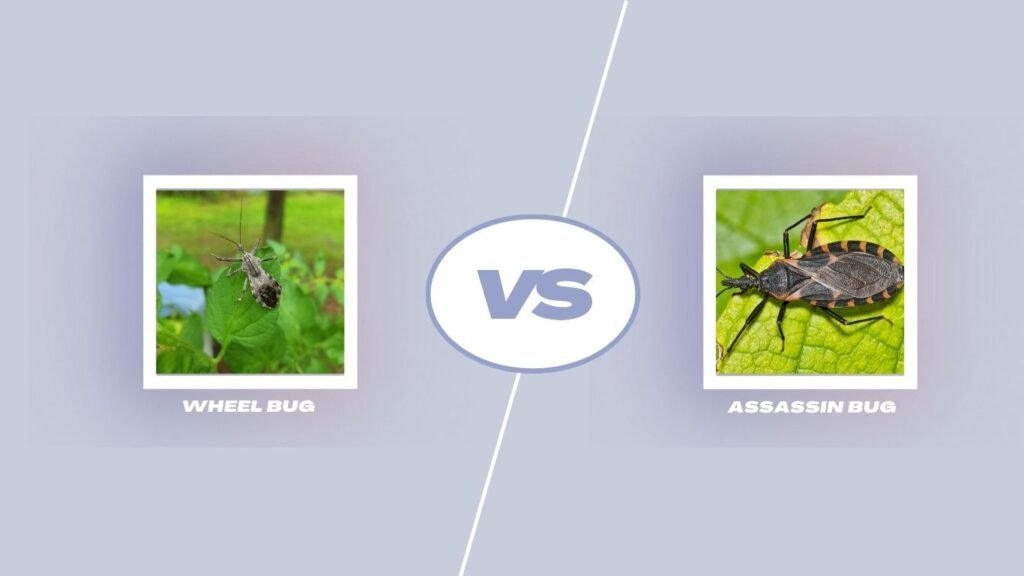
The principal difference is that “wheel bug” identifies one species, while “assassin bug” describes a much broader family.
The Wheel-Shaped Crest
Only the adult wheel bug has the large cogwheel-like structure rising from its back. Other assassin bugs may have spines, narrow bodies or distinctive colors, but they lack this complete semicircular wheel.
Therefore, a large gray assassin bug with a toothed crest is almost certainly a wheel bug.
Size and Color
Wheel bugs are relatively large and heavy-bodied compared with many other assassin bugs. Other members of the family may be small, slender, brightly colored or adapted to indoor environments.
For example, the milkweed assassin bug, Zelus longipes, is another member of Reduviidae but belongs to a different genus. It does not develop the wheel-shaped crest that identifies Arilus cristatus.
Wheel Bug vs Kissing Bug
Wheel bugs are occasionally mistaken for kissing bugs because both belong to the assassin bug family. However, their feeding habits are very different.
Kissing bugs are blood-feeding insects associated with the parasite that causes Chagas disease. Wheel bugs are predators of other insects and do not carry the parasite responsible for Chagas disease. The CDC specifically lists the wheel bug among insects commonly confused with triatomine kissing bugs.
What Do Wheeled Assassin Bugs Eat?
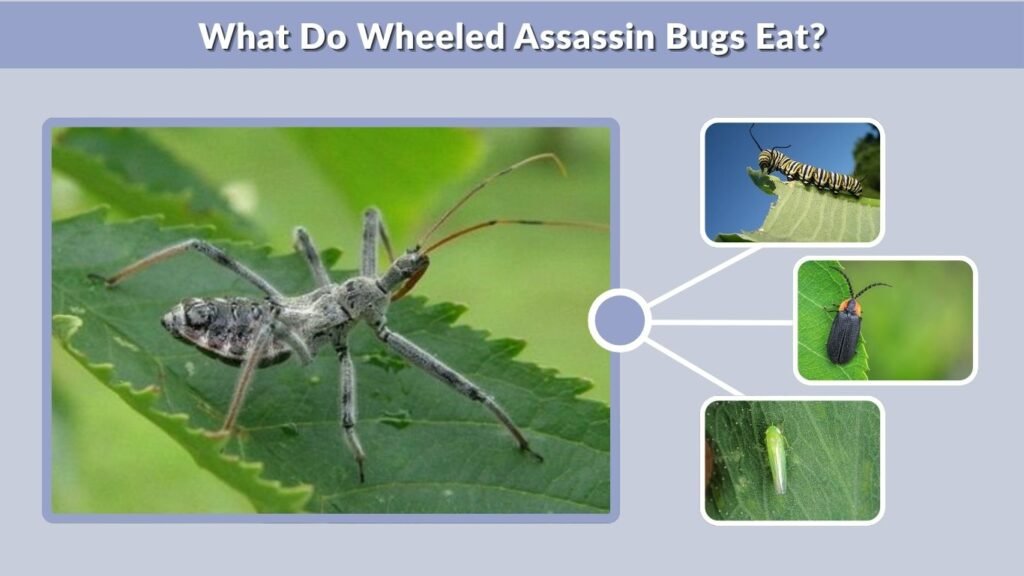
Wheel bugs are generalist predators that hunt other insects and arthropods. Their prey may include:
- Caterpillars
- Beetles
- Aphids
- Leafhoppers
- Flies
- Sawfly larvae
- Stink bugs
- Other soft-bodied insects
A wheel bug often waits quietly on leaves, flowers, shrubs or tree branches until prey approaches. It then grabs the insect with its front legs and pierces it with its curved beak.
Digestive saliva is injected into the prey, breaking down its internal tissues. The wheel bug then consumes the liquefied material through its piercing mouthpart. This feeding method is typical of predatory assassin bugs.
Are Assassin Wheel Bugs Good for the Garden?
Wheel bugs are generally considered beneficial garden predators. They consume caterpillars, aphids, beetles, leafhoppers and other insects that may damage vegetables, flowers, fruit trees and ornamental plants.
Because they are generalist hunters, they do not target only one pest species. Their presence can still contribute to natural pest control and may reduce reliance on broad-spectrum insecticides. Such insecticides can kill wheel bugs along with pests, pollinators and other beneficial insects.
A wheel bug resting on an outdoor plant usually does not need to be removed. Observe it without touching or disturbing it.
Can an Assassin Wheel Bug Bite?
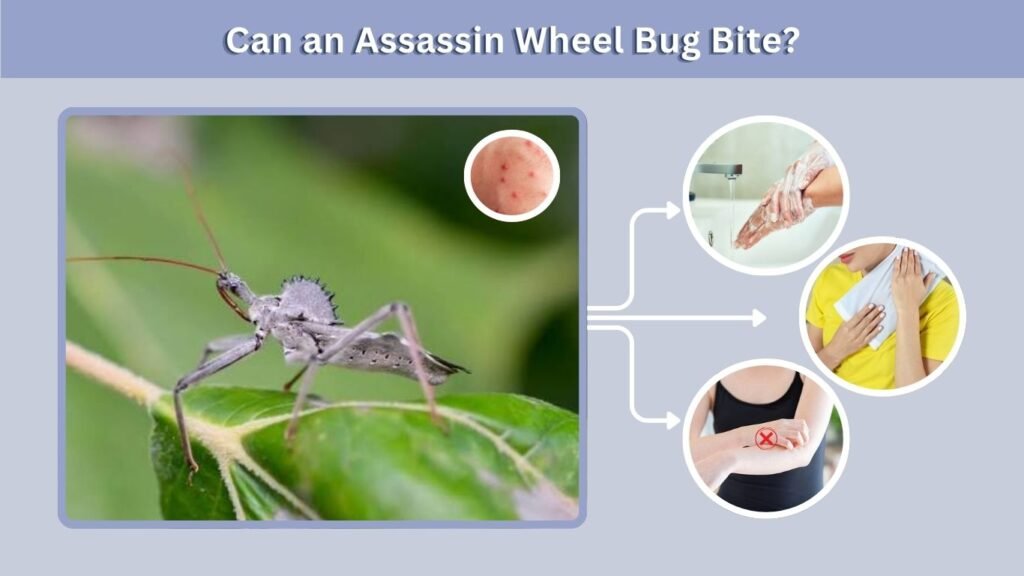
Wheel bugs can bite people, but they do not actively hunt or feed on humans. Bites generally occur when someone picks up, traps, presses against or accidentally handles the insect.
The wheel bug uses its piercing beak defensively and can produce an immediately painful bite. Redness, localized swelling, burning or numbness may follow. Although the insect looks intimidating, it normally tries to escape rather than attack.
What to Do After a Wheel Bug Bite
For a mild reaction:
- Wash the area thoroughly with soap and water.
- Apply a cold cloth or wrapped ice pack for 10–20 minutes.
- Avoid scratching or squeezing the bite.
- Monitor the area for increasing pain, swelling, warmth or discharge.
Seek urgent medical assistance if the person develops breathing difficulty, facial or throat swelling, widespread hives, dizziness, severe pain or rapidly spreading swelling.
How to Handle a Wheel Bug Safely
Never pick up a wheel bug with bare hands. If one enters a building, place a container over it, carefully slide stiff paper underneath and release it outdoors away from doors and busy areas.
Teach children not to touch unfamiliar insects, especially large true bugs with visible piercing mouthparts. Pets should also be kept from biting or pawing at them.
FAQs
Is a Wheel Bug an Assassin Bug?
Yes. The wheel bug, Arilus cristatus, belongs to the assassin bug family Reduviidae. However, assassin bugs include many species, and only the adult wheel bug possesses the distinctive toothed wheel on its back.
Is an Assassin Bug the Same as a Wheel Bug?
Not exactly. “Assassin bug” is the broader family name, while “wheel bug” refers to one particular assassin bug species. All wheel bugs are assassin bugs, but most assassin bugs are not wheel bugs.
Are Wheel Bugs Dangerous?
Wheel bugs are not aggressive toward people, but they can deliver a painful defensive bite when handled or trapped against the skin. They should be observed without touching.
Should I Kill a Wheel Bug in My Garden?
Usually not. Wheel bugs are beneficial predators that consume several common garden pests. Leaving them alone allows them to contribute to natural insect control.
What Is the Difference Between a Milkweed Assassin Bug and a Wheel Bug?
Both are assassin bugs, but they are separate species. The adult wheel bug is generally gray-brown and has a large cogwheel-shaped crest. A milkweed assassin bug lacks this wheel and usually has a slimmer, more colorful appearance.
