
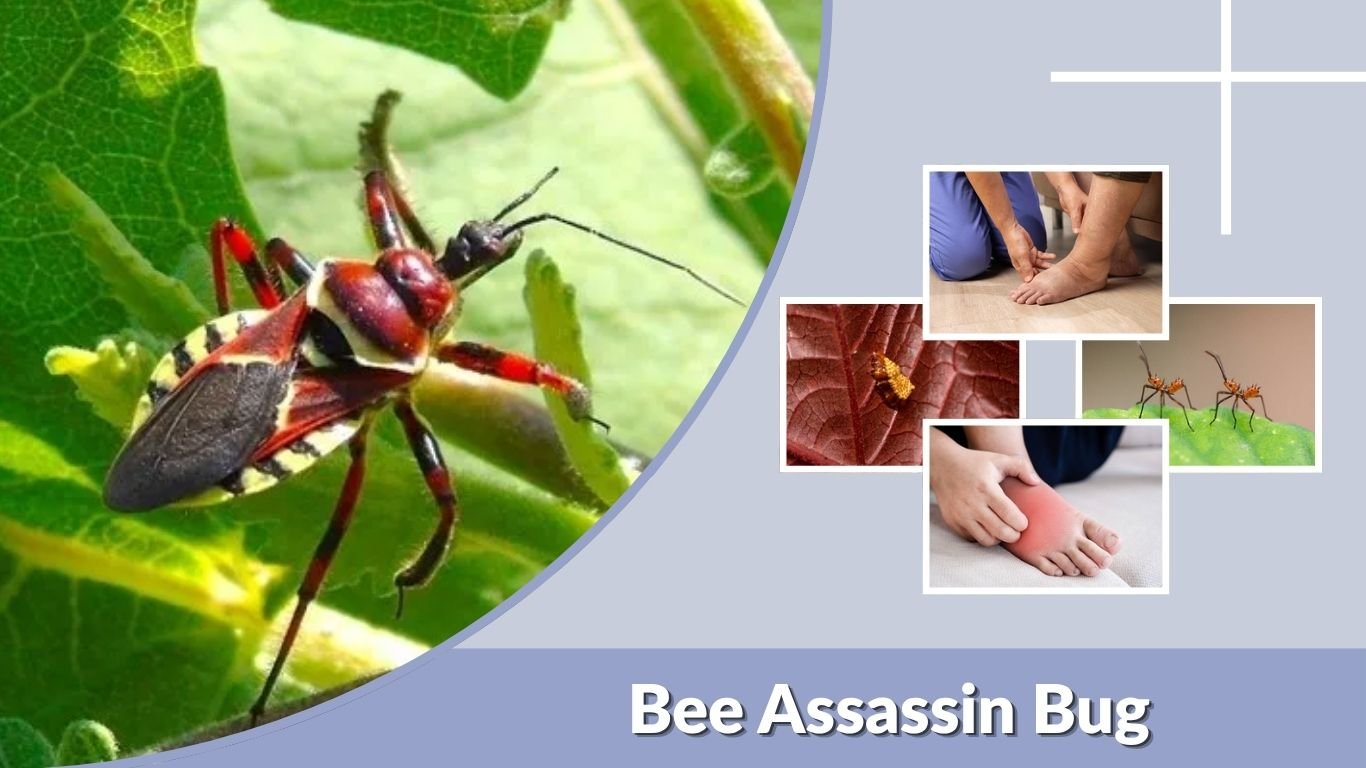
The bee assassin bug is a predatory insect that waits around flowers to capture bees, flies, beetles, and other visiting insects. The name usually refers to species in the genus Apiomerus, including the eastern bee assassin and yellow-bellied bee assassin. Although these bugs can reduce some garden pests, they may also catch valuable pollinators. They do not normally attack people, but their sharp feeding beak can deliver a painful defensive bite when they are trapped, squeezed, or handled.
What Is a Bee Assassin Bug?
Bee assassin bugs belong to Reduviidae, the assassin bug family. Common North American examples include the eastern bee assassin, Apiomerus crassipes, and the yellow-bellied bee assassin, Apiomerus flaviventris. The Florida bee assassin, Apiomerus floridensis, is another related species.
These insects are true bugs rather than beetles, flies, or wasps. Like other assassin bugs, they possess piercing-sucking mouthparts called a rostrum. They use this short, curved beak to penetrate prey, inject saliva, and consume the liquefied internal tissues.
| Feature | Bee assassin bug |
| Scientific group | Apiomerus species |
| Family | Reduviidae |
| Diet | Bees, flies, beetles, moths and other insects |
| Activity | Primarily daytime |
| Habitat | Flowers, shrubs, meadows and gardens |
| Wings | Present in adults |
| Human danger | Painful defensive bite, but not blood-feeding |
How to Identify a Bee Assassin Bug
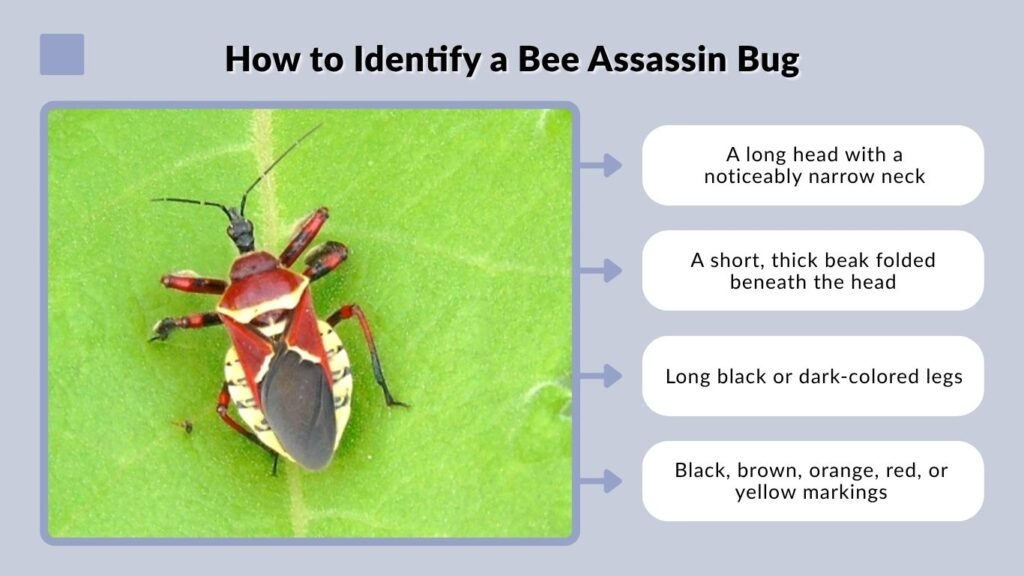
Bee assassin bugs vary in color by species, sex, age, and location. Most adults have a solid, somewhat elongated body with a narrow neck separating the head from the thorax.
Main Identification Features
Look for:
- A long head with a noticeably narrow neck
- A short, thick beak folded beneath the head
- Long black or dark-colored legs
- Black, brown, orange, red, or yellow markings
- A widened abdomen extending beyond the wings
- Sticky or hairy front legs used for holding prey
- A body commonly around 15–25 millimetres long
The eastern bee assassin is generally dark with orange or reddish edging. Yellow-bellied bee assassins have noticeable yellow or orange coloration along the abdomen, while their overall appearance may remain mostly black.
Bee Assassin Bug Nymph
Nymphs resemble smaller, wingless adults. They may have brighter orange, red, or black markings and pass through five immature stages before reaching adulthood.
A nymph can be confused with an ant because of its narrow body and long legs. It differs from an earwig because it lacks the pair of obvious forceps at the end of the abdomen. Adult bee assassins develop functional wings, whereas younger nymphs have no wings or only small wing buds.
Do Assassin Bugs Eat Bees?
Yes. Bee assassins are named for their habit of ambushing bees on flowers. Honey bees, native bees, flies, beetles, moths, and other flower-visiting insects may become prey.
A bee assassin usually waits motionless near a bloom and grabs an insect that comes within reach. Its front legs help restrain the victim while the rostrum pierces the body. Published observations of the eastern bee assassin include honey bees, soldier beetles, and fireflies among its prey.
Are They Harmful to Honey Bees?
A single bee assassin is unlikely to destroy a healthy honey bee colony. However, several bugs consistently hunting near a hive entrance or heavily visited flowers may kill noticeable numbers of workers.
Bee assassins are generalist predators rather than insects that depend exclusively on bees. They may also capture caterpillars, flies, beetles, and other insects that could be considered garden pests. Their impact is therefore mixed: they provide natural insect control but can also take pollinators.
How Does a Bee Assassin Catch Its Prey?
Bee assassin bugs rely on camouflage, stillness, and a rapid strike. Adults frequently position themselves on flower heads or nearby stems where pollinating insects are likely to land.
Some Apiomerus species use sticky plant resin in remarkable ways. Research on the yellow-bellied bee assassin found that females collect resin from plants such as brittlebush and apply it to their eggs. The coating helps attach the eggs and can deter predatory ants.
After capturing prey, the bug inserts its rostrum and injects saliva that immobilizes the insect and begins breaking down its internal tissues. The assassin bug then draws the softened contents through its feeding beak.
Can Bee Assassin Bugs Fly?
Adult bee assassin bugs can fly. Their wings lie flat over the abdomen when they are resting, and they may travel between flowering plants while searching for prey or mates.
Nymphs cannot fly because their wings have not fully developed. Wing pads become more apparent during later immature stages before the final molt produces a winged adult. Research also describes bee assassins as strong fliers, although they generally hunt by waiting or walking around vegetation rather than chasing bees through the air.
Bee Assassin Bug Bite
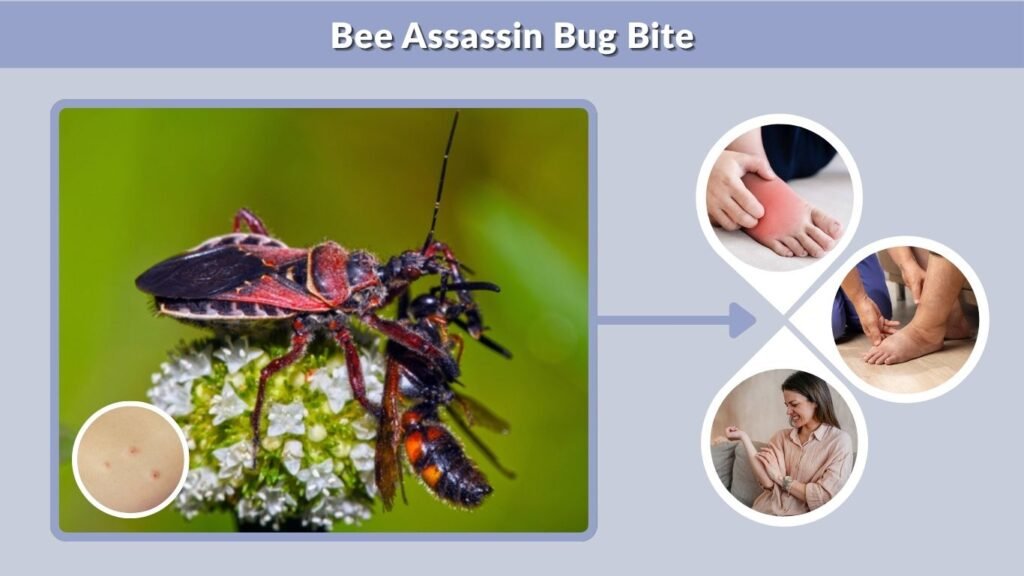
Bee assassin bugs do not feed on human blood and do not normally approach people to bite. However, they can stab the skin with their rostrum when picked up, squeezed, stepped on, or trapped inside clothing.
Assassin bug bites can cause:
- Immediate sharp or burning pain
- Redness around the puncture
- Localized swelling
- Tenderness or throbbing
- Temporary itching or numbness
Their defensive bite is often described as very painful, even though these insects are generally beneficial predators and are not naturally aggressive toward people.
What to Do After a Bite
Wash the area with soap and water and apply a cold pack wrapped in cloth to reduce pain and swelling. Avoid scratching or squeezing the affected skin.
Seek medical care if redness continues spreading, pain becomes severe, pus develops, or the symptoms do not begin improving. Facial swelling, difficulty breathing, throat tightness, severe dizziness, or fainting requires emergency assistance.
Bee Assassin Bug vs Kissing Bug
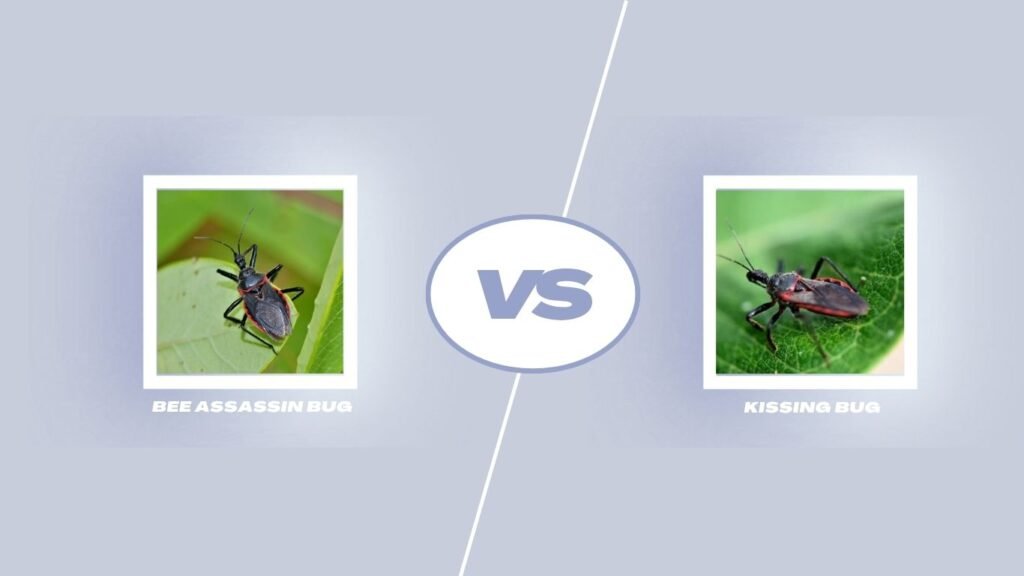
Bee assassin bugs and kissing bugs belong to the same insect family, but they have very different feeding habits.
| Feature | Bee assassin bug | Kissing bug |
| Main food | Other insects | Blood from mammals, birds and reptiles |
| Common location | Flowers and vegetation | Animal nests, outdoor shelters and buildings |
| Activity | Often active during daylight | Mostly nocturnal |
| Human biting | Defensive and uncommon | Feeds on people when given the opportunity |
| Chagas association | Not known to transmit Chagas disease | Some carry Trypanosoma cruzi |
| Body shape | Usually robust and hairy | Flatter with an elongated cone-shaped head |
Bee assassin bugs do not transmit Chagas disease. Kissing bugs are blood-feeding members of a different assassin bug group. Chagas transmission occurs when infected kissing bug feces enter broken skin, the eyes, or the mouth—not simply because any assassin bug has bitten someone.
Bee Assassin Bug Life Cycle
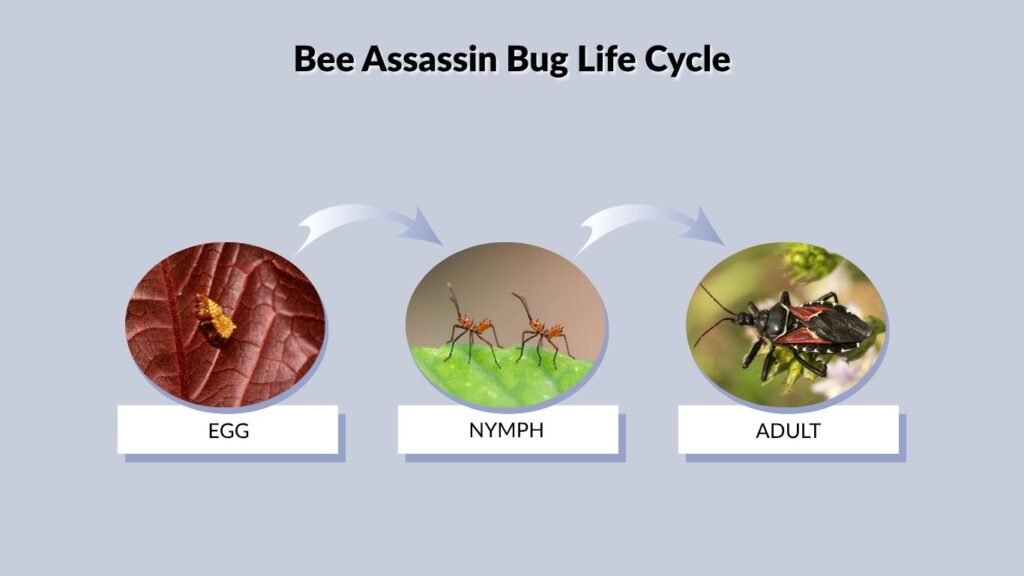
Bee assassin bugs undergo incomplete metamorphosis:
- A female lays a cluster of eggs on vegetation or another firm surface.
- Small wingless nymphs hatch from the eggs.
- The nymphs pass through five growth stages.
- The final molt produces a winged adult.
A study of the eastern bee assassin recorded an average egg stage of about 17 days and approximately 124 days of nymphal development. That population produced one generation annually and overwintered as older nymphs, although timing may vary with species and climate.
Both nymphs and adults are predators. Younger nymphs capture relatively small insects, while adults can overpower larger prey such as bees and beetles.
Bee-Killer Assassin Bugs in Australia
In North America, “bee assassin” usually refers to Apiomerus. In Australia, the name “bee-killer” may instead be applied to the common assassin bug, Pristhesancus plagipennis.
This Australian species can reach about 25 millimetres and captures honey bees, caterpillars, and other insects. It is a separate species from North American bee assassins but uses the same basic hunting method: gripping prey and piercing it with a strong rostrum.
Should You Kill a Bee Assassin Bug?
A bee assassin found away from a hive or heavily used pollinator garden can usually be left alone. It may consume flies, beetles, caterpillars, and other insects.
Removal may be reasonable when several individuals repeatedly hunt around a beehive entrance or where people could accidentally touch them. Use a container to relocate the insect rather than picking it up with bare hands. Broad pesticide spraying is generally unnecessary and could kill bees, butterflies, and other beneficial insects along with the assassin bug.
FAQs
Are bee assassin bugs dangerous?
They are not aggressive or blood-feeding, but they can deliver an intensely painful defensive bite. Avoid touching, squeezing, or trapping them against your skin.
Is a bee assassin bug venomous?
It injects saliva into insect prey, but it is not considered venomous in the same sense as a medically important spider or snake. Its bite can still cause significant localized pain and swelling.
Can bee assassin bugs kill honey bees?
Yes. Adults and larger nymphs can capture and consume honey bees. However, they also eat many other insects and normally do not eliminate an entire healthy colony.
Where are bee assassin bugs found?
They are commonly encountered on flowering plants, shrubs, grassland vegetation, woodland edges, and gardens where insects gather. Different Apiomerus species occur across parts of North and Central America.
Can a bee assassin bug transmit Chagas disease?
No evidence links bee assassin bugs with Chagas transmission. Chagas disease is associated with infected blood-feeding kissing bugs and contact with their parasite-containing feces.
