
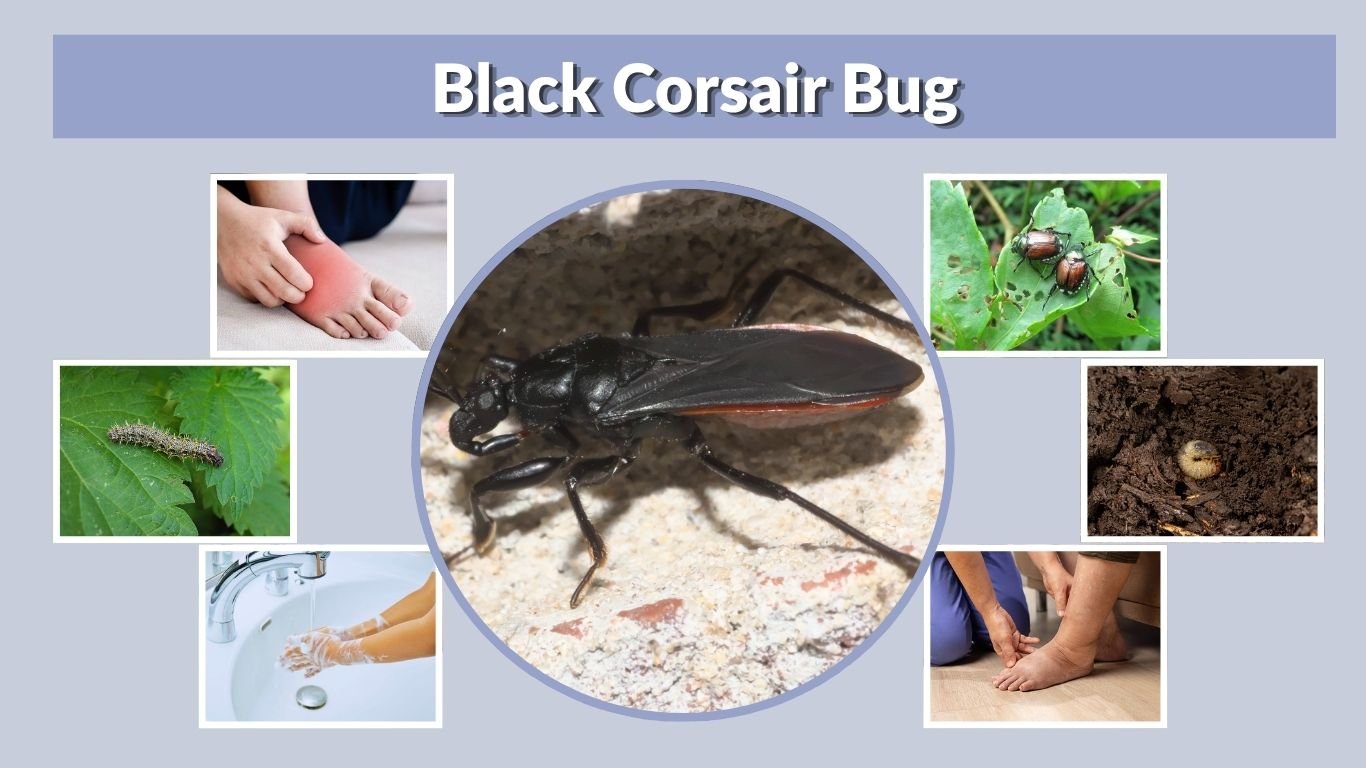
The black corsair bug is a glossy black assassin bug known for hunting beetles and other insects. Scientifically called Melanolestes picipes, it usually lives outdoors beneath stones, bark, logs, and plant debris. Males sometimes fly toward outdoor lights and accidentally enter houses. Black corsairs do not infest food, damage furniture, or feed on human blood, but they can deliver an intensely painful defensive bite when handled or trapped against the skin. This guide covers identification, bite treatment, indoor removal, life cycle, and differences from kissing bugs.
What Is a Black Corsair Bug?
The black corsair is a predatory true bug in the assassin bug family, Reduviidae. Its alternative common name, black May beetle-eater, refers to its habit of attacking May beetles and other insects.
Adults normally measure approximately 12–20 millimetres, or about ½–¾ inch long. The species occurs across much of the United States, reaches parts of southern Canada, and extends south through Mexico and into South America.
| Feature | Black corsair |
| Scientific name | Melanolestes picipes |
| Family | Reduviidae |
| Body length | About 12–20 mm |
| Main color | Shiny black |
| Diet | Beetles and other insects |
| Activity | Often nocturnal |
| Human risk | Painful defensive bite |
| Disease transmission | Not known to transmit disease |
Black Corsair Identification
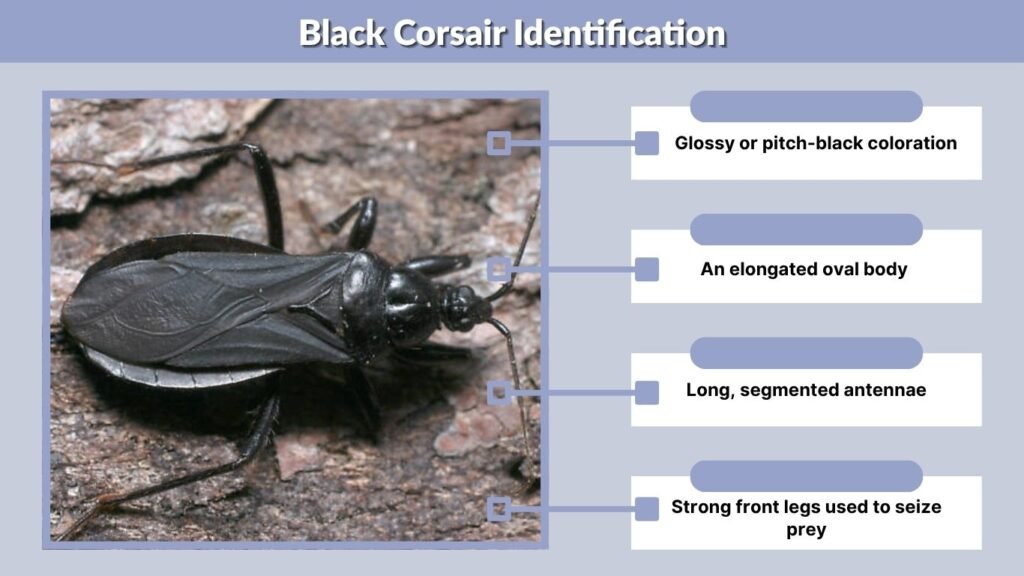
A black corsair has an elongated, relatively flat body and a small head separated from the thorax by a narrow neck. Its short, thick feeding beak normally folds beneath the head when not in use.
Key Identification Features
Look for:
- Glossy or pitch-black coloration
- An elongated oval body
- Long, segmented antennae
- Strong front legs used to seize prey
- A curved piercing beak beneath the head
- Wings lying flat across the back in males
- A body approximately ½–¾ inch long
Male black corsairs have fully developed wings and can fly. Females often have shortened wings and may be unable to fly effectively. Males are therefore more likely to be noticed around lights, windows, and buildings.
Some specimens may show reddish or orange coloring along the sides of the abdomen. Color alone should not be used for identification because other assassin bugs, plant bugs, and boxelder bugs may also be black and red.
Why Is a Black Corsair Bug in the House?
A black corsair found indoors is normally an accidental visitor rather than evidence of an infestation. Winged males may be drawn toward porch lights, illuminated windows, or other bright lights during warm weather.
Once near a building, the bug may enter through:
- Open doors and windows
- Damaged window screens
- Gaps around door frames
- Utility openings
- Cracks around siding
- Spaces beneath exterior doors
Black corsairs normally live outdoors beneath stones, loose bark, logs, weeds, and other ground cover. They do not establish colonies indoors or reproduce in household food.
How to Remove One Safely
Do not pick it up with bare hands or crush it against your skin. Instead:
- Place a cup or container over the insect.
- Slide a firm piece of paper beneath the container.
- Carry it outside and release it away from the entrance.
A vacuum can also remove it, but empty the vacuum outdoors promptly. Pesticides are rarely necessary when only one or two bugs appear.
Is the Black Corsair Bug Dangerous?
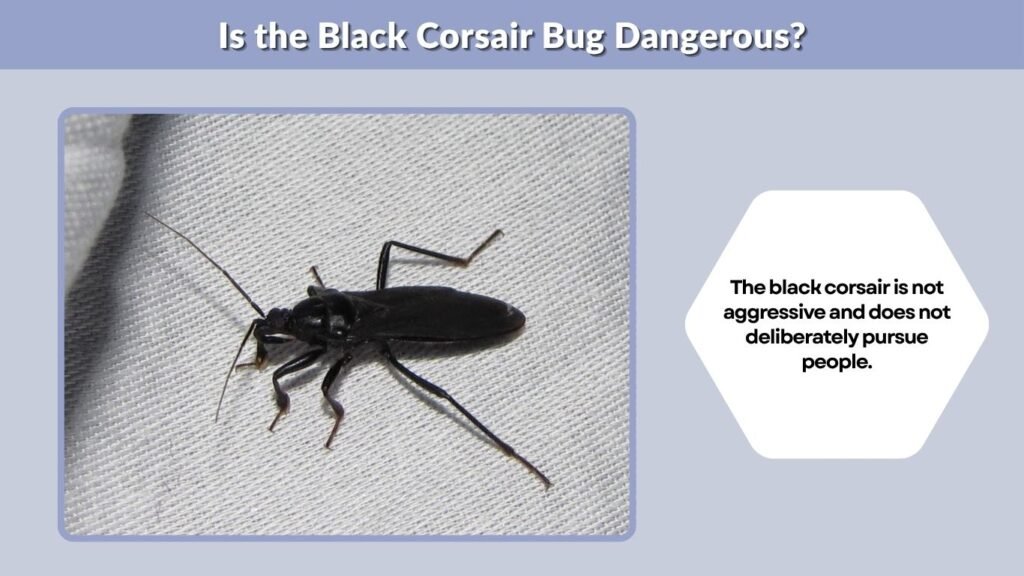
The black corsair is not aggressive and does not deliberately pursue people. However, it can defend itself with its strong piercing beak.
A bite is most likely when the insect is:
- Picked up with bare fingers
- Trapped inside clothing
- Stepped on with bare feet
- Squeezed against the body
- Swatted while resting on the skin
Assassin bugs use piercing mouthparts and saliva to immobilize insect prey. Black corsairs do not seek human blood, but their defensive bite can be extremely painful. They are not known to transmit diseases to people.
Is It Poisonous or Venomous?
The black corsair is not poisonous to touch or swallow. It injects saliva through its feeding beak when attacking prey or defending itself, but it is not generally described as a medically important venomous insect.
Its main risk to humans is localized pain and inflammation from the puncture and saliva—not systemic poisoning.
Black Corsair Bug Bite Symptoms
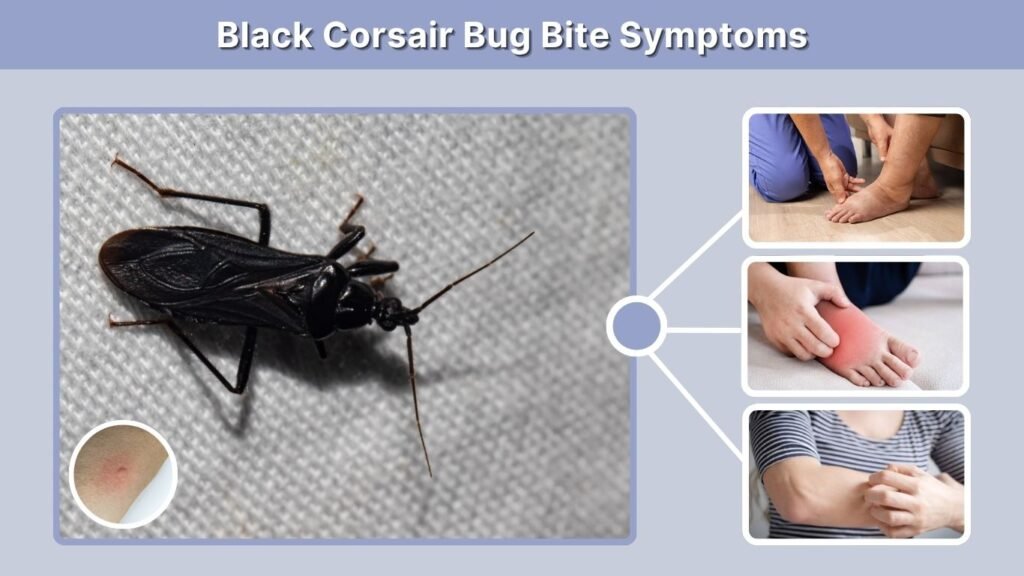
A defensive bite may cause immediate sharp, burning, or stabbing pain. The discomfort can feel much stronger than expected from an insect of this size.
Possible symptoms include:
- Intense pain at the puncture site
- Redness
- Local swelling
- Tenderness
- Burning or throbbing
- Temporary numbness
- Itching as the area heals
The severity varies according to bite location and individual sensitivity. A skin mark alone cannot confirm the species because bites, stings, and several skin conditions can look similar.
Black Corsair Bug Bite Treatment
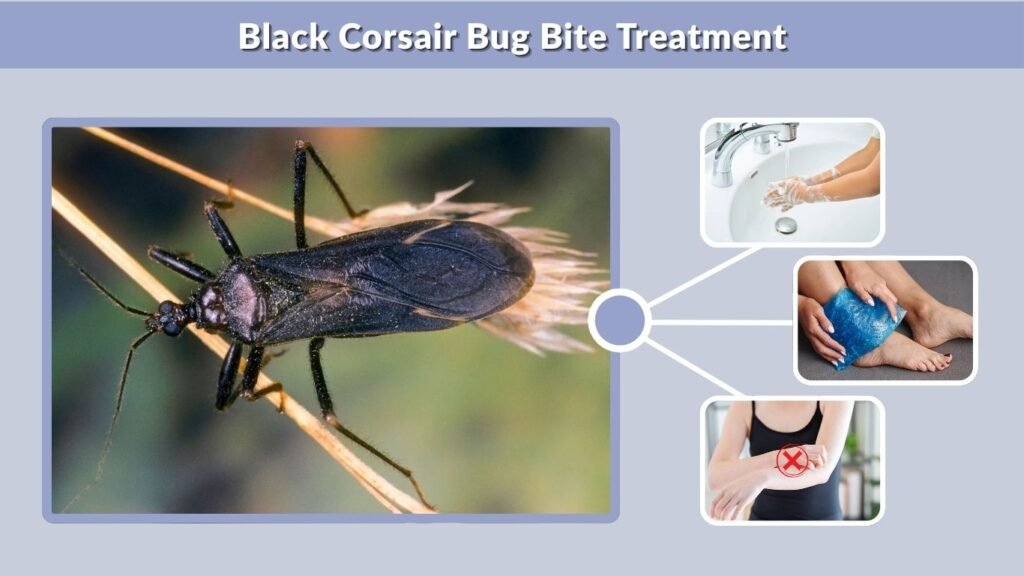
Most localized reactions can be managed with basic first aid.
Immediate Care
- Wash the area thoroughly with soap and clean water.
- Apply an ice pack wrapped in cloth or a cold compress.
- Keep the affected limb elevated when swelling is significant.
- Avoid scratching, squeezing, or puncturing any blister.
- Ask a pharmacist about a suitable pain reliever, antihistamine, or anti-itch treatment when necessary.
General medical guidance recommends washing insect bites and using a wrapped cold pack to reduce swelling and discomfort.
When to Seek Medical Care
Obtain medical advice if you develop:
- Severe or worsening pain
- Swelling that continues expanding
- Increasing redness or warmth
- Pus or unusual drainage
- Fever or general illness
- Symptoms near an eye or inside the mouth
- A reaction that does not begin improving
Difficulty breathing, swelling of the face or tongue, throat tightness, fainting, or severe dizziness may indicate a serious allergic reaction and requires emergency care.
What Do Black Corsairs Eat?
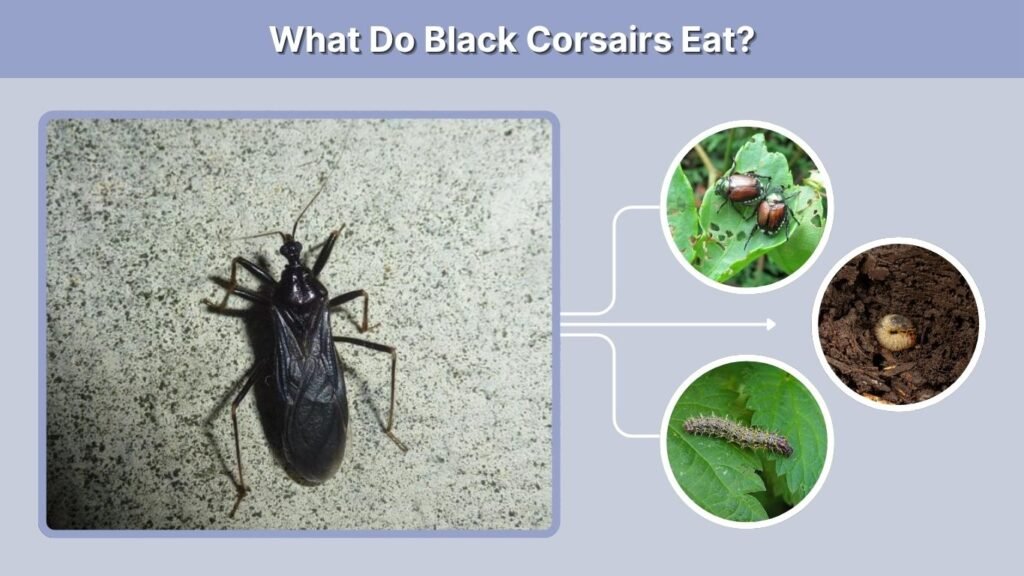
Black corsairs are predators of other insects. They have been reported attacking May beetles by approaching from behind, gripping them with specialized pads on their legs, and piercing them with the beak.
Their broader diet may include:
- Beetles
- Beetle larvae
- Caterpillars
- Other true bugs
- Small ground-dwelling insects
- Various soft-bodied arthropods
After capturing prey, the assassin bug injects digestive saliva and draws out the liquefied tissues. Predatory assassin bugs can help reduce some plant-feeding insect populations.
Black Corsair Life Cycle
Black corsairs undergo incomplete metamorphosis, progressing through egg, nymph, and adult stages rather than forming a pupa.
Females place individual eggs in soil beneath stones or similar cover. The wingless nymphs resemble small adults and become larger through repeated molts. True bugs generally pass through five nymphal stages before reaching adulthood.
Adults can overwinter beneath:
- Logs
- Stones
- Loose bark
- Weed piles
- Other protected ground debris
They become active again during warmer weather. Winged males may leave hiding places and fly toward lights during spring and summer.
Black Corsair vs Kissing Bug
Black corsairs and kissing bugs belong to the same insect family, but their diets and medical importance are very different.
| Feature | Black corsair | Kissing bug |
| Food | Other insects | Blood from vertebrates |
| Human bites | Defensive | Feeding behavior |
| Typical color | Mostly shiny black | Brown or black with colored abdominal edges |
| Body shape | Compact and elongated | Flatter with a long, cone-shaped head |
| Common setting | Beneath outdoor cover | Animal nests and sheltered structures |
| Chagas risk | Not associated | Some species can carry the parasite |
Kissing bugs feed on mammals, birds, reptiles, and occasionally people. Some can carry the parasite responsible for Chagas disease. The black corsair is an insect predator, does not feed on blood, and is not known to transmit Chagas disease.
Black Corsair vs Western Corsair
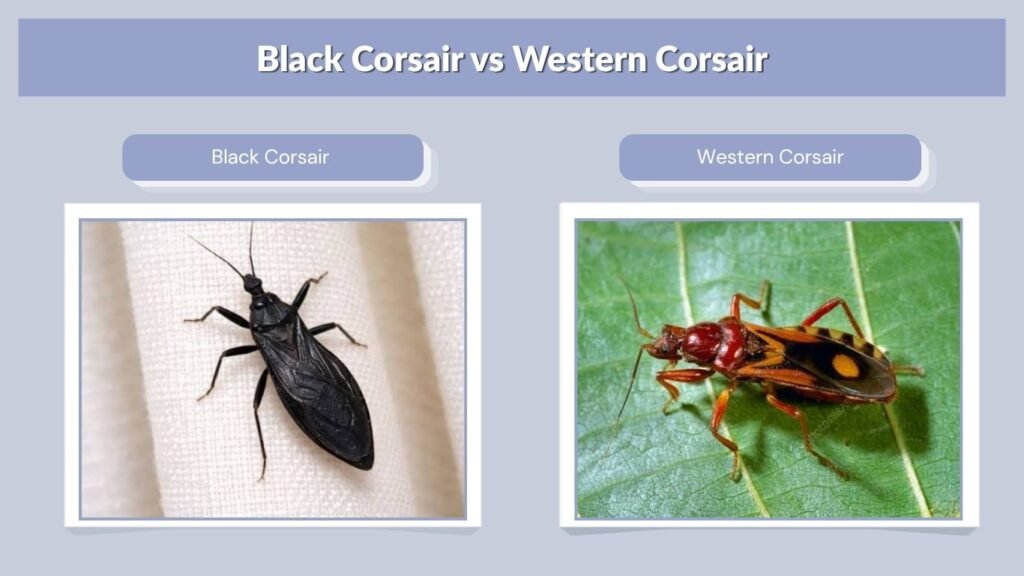
The western corsair, Rasahus thoracicus, is a different assassin bug. It usually has orange or reddish coloring on the head and thorax, dark wings, pale wing spots, and patterned abdominal edges.
| Feature | Black corsair | Western corsair |
| Scientific name | Melanolestes picipes | Rasahus thoracicus |
| Main color | Predominantly black | Orange, black, and yellow |
| Adult size | 12–20 mm | About 16–20 mm |
| Wings | Males winged; females often reduced | Adults fully winged |
| Bite | Painful if mishandled | Also potentially painful |
Both are nocturnal predators that may approach artificial lights. Neither should be handled with bare hands.
How to Keep Black Corsairs Outside
Occasional indoor visitors can be reduced by:
- Repairing window and door screens
- Installing door sweeps
- Sealing gaps around utility lines
- Caulking cracks around windows
- Turning off unnecessary porch lights
- Using motion-activated outdoor lighting
- Moving bright lights away from doors
- Removing piles of debris against the foundation
There is usually no reason to spray an entire home or yard. Black corsairs are solitary outdoor predators, and one indoor specimen does not indicate a breeding infestation.
FAQs
Can a black corsair bug fly?
Male black corsairs have fully developed wings and can fly, while females often have shortened wings. Flying males may be attracted to outdoor lights and occasionally enter buildings through open doors, windows, or damaged screens.
Does the black corsair carry Chagas disease?
No. The black corsair is not a blood-feeding kissing bug and is not known to transmit Chagas disease. It hunts other insects and bites people only defensively when handled or pressed against the skin.
Are black corsair bugs found in Pennsylvania?
Yes. The species occurs broadly across the eastern United States, including Pennsylvania, and extends westward across much of the country. Adults may be encountered in woodland cover or around exterior lights.
Should I kill a black corsair in my house?
Killing is usually unnecessary. Capture it beneath a container, slide paper underneath, and release it outdoors. Avoid using bare hands because it can deliver a painful defensive bite.
Is a black corsair an infestation pest?
No. It does not normally reproduce indoors, consume stored food, or damage fabrics and furniture. Indoor sightings usually involve individual bugs that entered accidentally while following light or searching for shelter.
