
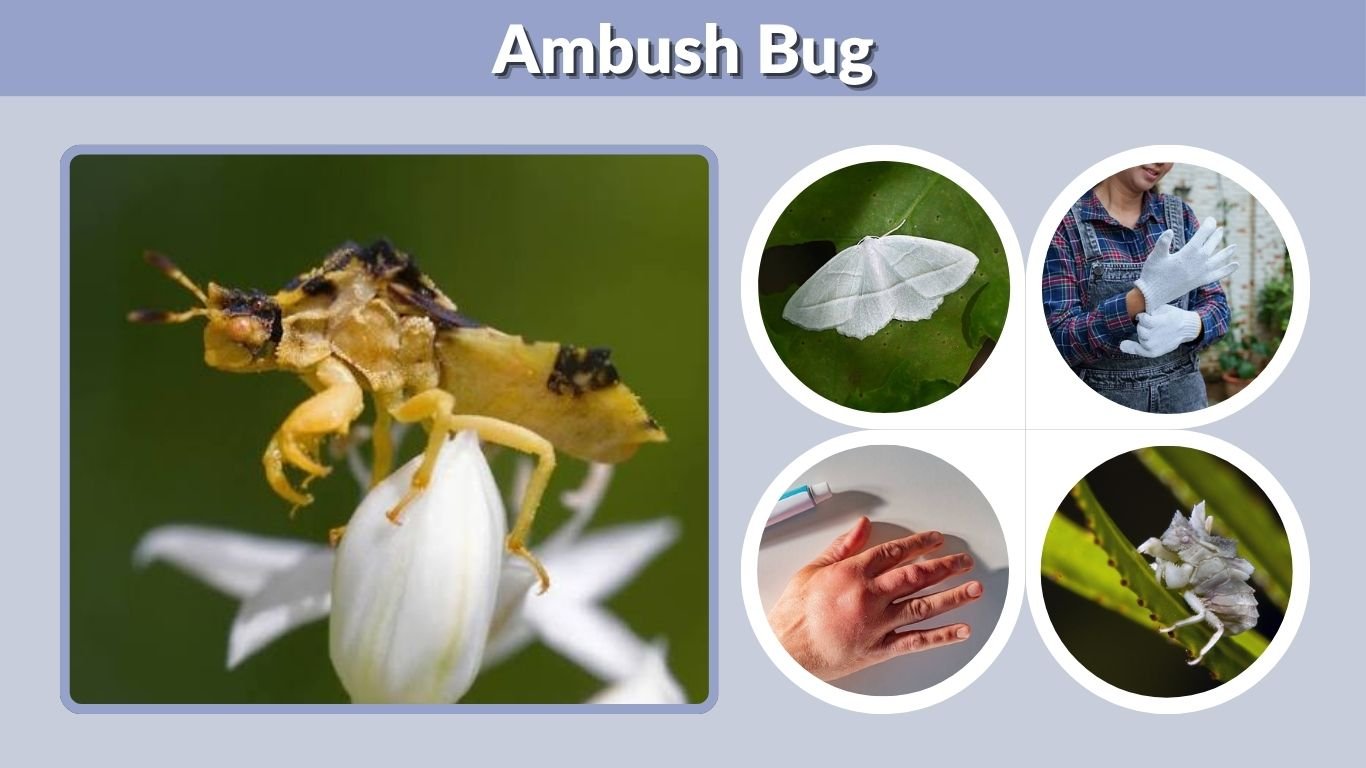
The ambush bug is a small, heavily built predator commonly found hiding among garden flowers. Instead of chasing prey, it remains motionless until a bee, fly, butterfly, or beetle comes within reach. It then grabs the insect with powerful front legs and pierces it with a sharp feeding beak. Most North American sightings involve jagged ambush bugs in the genus Phymata. Although they can deliver a painful defensive bite, they do not feed on people and are not considered medically dangerous.
What Is an Ambush Bug?
Ambush bugs are specialized members of the assassin bug family, Reduviidae. They belong to the subfamily Phymatinae, although older sources sometimes place them in a separate family called Phymatidae. Modern classification treats them as unusually shaped assassin bugs.
Unlike slender assassin bugs that actively stalk prey, ambush bugs have compact, angular bodies and remain concealed among flowers. Their colors often match yellow, white, green, or brown vegetation.
| Feature | Description |
| Scientific group | Phymatinae |
| Common North American genus | Phymata |
| Body length | Usually about 8–15 mm |
| Main colors | Yellow, green, cream, brown, or black |
| Diet | Bees, flies, beetles, moths, and caterpillars |
| Habitat | Meadows, gardens, roadsides, and flower beds |
| Human risk | Uncommon but painful defensive bite |
| Development | Egg, nymph, and adult |
Jagged ambush bugs are especially common in North America. Frequently encountered species include the American ambush bug, Phymata americana, and Pennsylvania ambush bug, Phymata pennsylvanica. Distinguishing closely related species from appearance alone can be difficult, even for specialists.
How to Identify an Ambush Bug
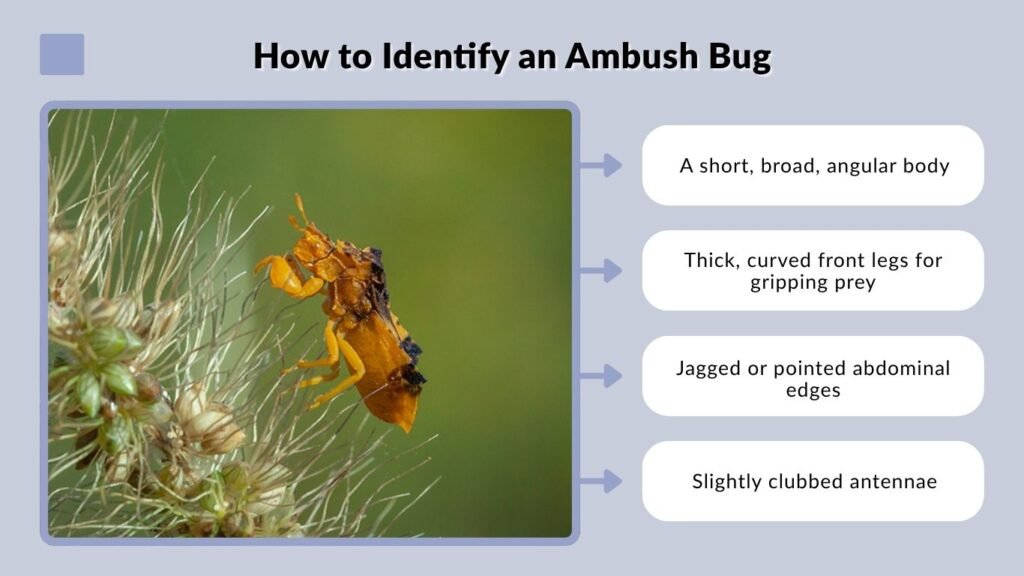
An ambush bug looks like a combination of an assassin bug and a miniature praying mantis. Its angular body, enlarged front legs, and irregular abdominal edges give it an armored appearance.
Main Identification Features
Look for:
- A short, broad, angular body
- Thick, curved front legs for gripping prey
- Jagged or pointed abdominal edges
- A short head without the long neck seen in many assassin bugs
- Slightly clubbed antennae
- A strong beak folded beneath the body
- Yellow, green, cream, brown, or black camouflage
- Small wings that may not cover the abdomen completely
Jagged ambush bugs are generally about 8–11 millimetres long. Their muscular front legs close around prey in a way similar to those of a praying mantis. Adults have wings, but they are generally poor fliers and spend much of their time waiting on flowers.
Yellow and Green Ambush Bugs
Color can vary considerably. A yellow ambush bug may blend almost perfectly with goldenrod, while a green individual may disappear among leaves and flower stems. Brown and cream patterns help break up the insect’s outline.
Color alone is not enough to determine the exact species. Sex, age, region, and surrounding habitat may influence an individual’s appearance.
Jagged Ambush Bug
“Jagged ambush bug” is the common name for members of the genus Phymata. The name refers to the uneven, sharply angled sides of the abdomen.
These bugs are often found on:
- Goldenrod
- Asters
- Queen Anne’s lace
- Daisies
- Coneflowers
- Milkweed
- Yarrow
- Other yellow or white flowers
Goldenrod is an especially productive place to search during late summer and early fall. The bug’s yellow-brown coloring allows it to remain concealed while bees, flies, and butterflies visit the flowers.
What Do Ambush Bugs Eat?
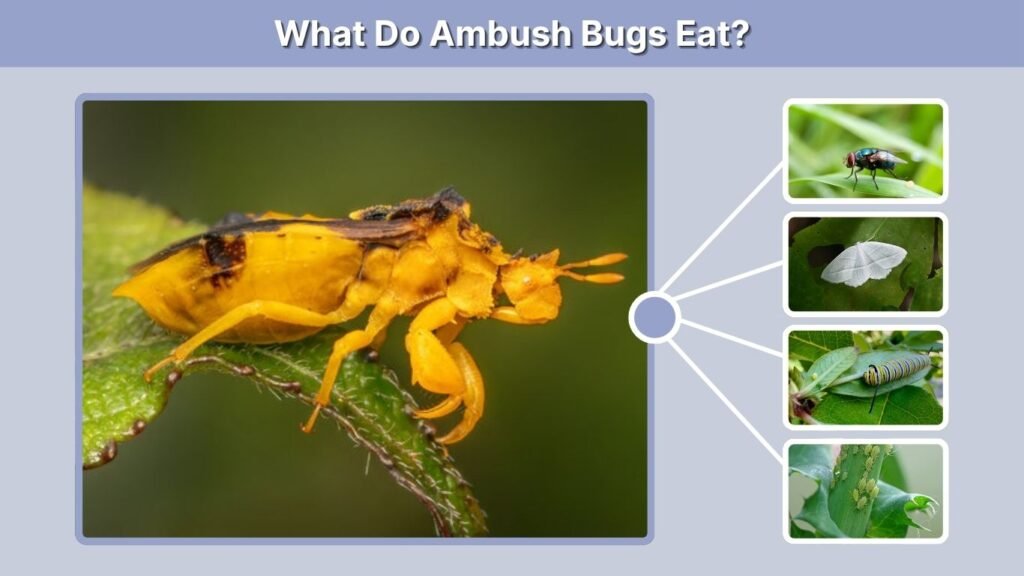
Ambush bugs are generalist predators, meaning that they capture many kinds of insects rather than specializing in one prey species.
Their diet may include:
- Flies
- Small moths
- Caterpillars
- Aphids
- Thrips
- Beetles and beetle larvae
- Wasps
- Honey bees and native bees
- Butterflies
- Other true bugs
They can overpower insects much larger than themselves, including bumblebees and butterflies.
How They Capture Prey
An ambush bug waits without moving on or beneath a flower. When an insect lands nearby, the bug rapidly closes its enlarged front legs around the victim.
It then inserts its sharp beak and releases saliva that immobilizes the prey and breaks down its internal tissues. The bug draws the liquefied material through the same feeding beak.
Some ambush bugs may occasionally drink nectar, but animal prey is necessary for normal growth and development.
Are Ambush Bugs Beneficial?
Ambush bugs can benefit gardens because they eat aphids, thrips, caterpillars, beetle larvae, and other plant-feeding insects. Both adults and nymphs act as predators.
However, they do not distinguish between garden pests and beneficial pollinators. An adult waiting on a flower may capture honey bees, native bees, butterflies, or beneficial flies.
| Potential benefits | Potential disadvantages |
| Eat aphids and thrips | May catch honey bees |
| Capture caterpillars | May prey on native bees |
| Reduce some beetle larvae | May kill butterflies |
| Provide natural pest control | Do not target pests exclusively |
One or two ambush bugs are unlikely to cause serious harm to a healthy pollinator population. Colorado State University Extension advises that no control is normally necessary, even though adults sometimes capture bees.
Do Ambush Bugs Bite?
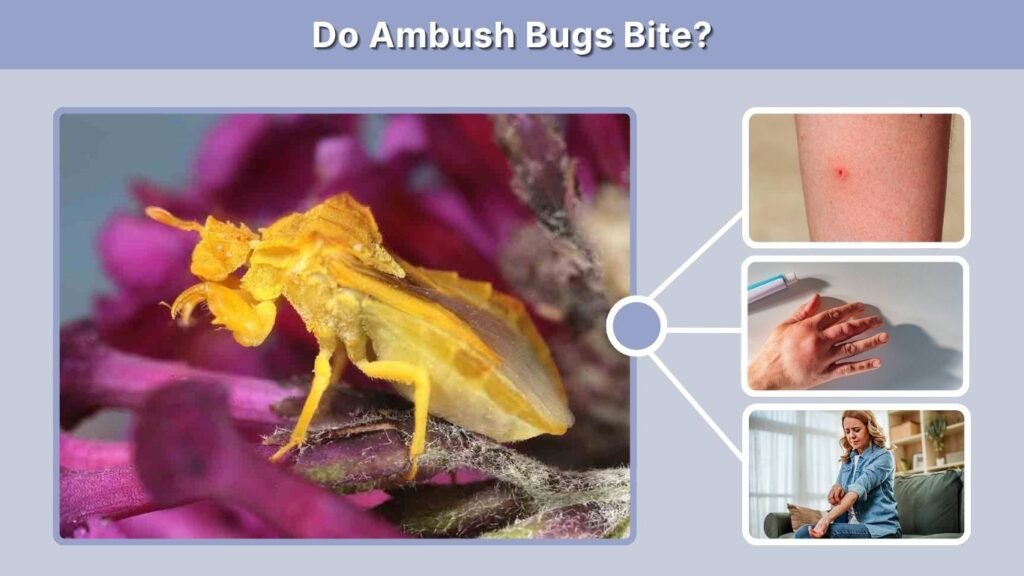
Ambush bugs can bite, but they do not feed on human blood. A bite is usually defensive and occurs when the insect is picked up, squeezed, trapped against the skin, or accidentally pressed while someone handles flowers.
A bite may cause:
- Immediate sharp or burning pain
- A small red mark
- Local tenderness
- Mild swelling
- Temporary itching or irritation
An Extension expert describes ambush bug bites as rare and their venom as mild and not medically significant. The insect is more likely to remain still or escape than deliberately bite a person.
Ambush Bug Bite Treatment
For a minor bite:
- Wash the area thoroughly with soap and water.
- Apply a cold pack wrapped in cloth to reduce pain and swelling.
- Avoid scratching or squeezing the area.
- Monitor it for worsening redness, pain, or signs of infection.
General first-aid guidance recommends washing insect bites and using a cold compress for swelling.
Seek medical advice if pain or swelling continues to worsen, redness spreads, pus develops, or the area becomes increasingly warm. Difficulty breathing, facial or tongue swelling, fainting, or throat tightness requires emergency medical attention.
Are Ambush Bugs Poisonous or Dangerous?
Ambush bugs are not poisonous to touch. They use prey-subduing saliva delivered through their beak, but their defensive bites are not considered medically dangerous to most people.
They do not:
- Seek people for food
- Feed on blood
- Infest houses
- Damage plants
- Transmit Chagas disease
- Attack unless handled or trapped
Ambush bugs should not be confused with kissing bugs. Kissing bugs are blood-feeding relatives associated with the parasite that causes Chagas disease. Ambush bugs are daytime predators found mainly on flowers and are not associated with Chagas transmission.
Ambush Bug Nymph
A nymph resembles a miniature adult but lacks developed wings. It has the same angular body, enlarged gripping legs, and piercing beak.
Nymph Identification
Young ambush bugs typically have:
- No functional wings
- A short, broad body
- Thick front legs
- Green, yellow, cream, or brown coloring
- Jagged abdominal edges
- A smaller overall size than adults
Nymphs hunt on leaves, stems, and flowers. They often capture small prey such as aphids, mites, thrips, insect eggs, and young caterpillars.
Ambush Bug Life Cycle
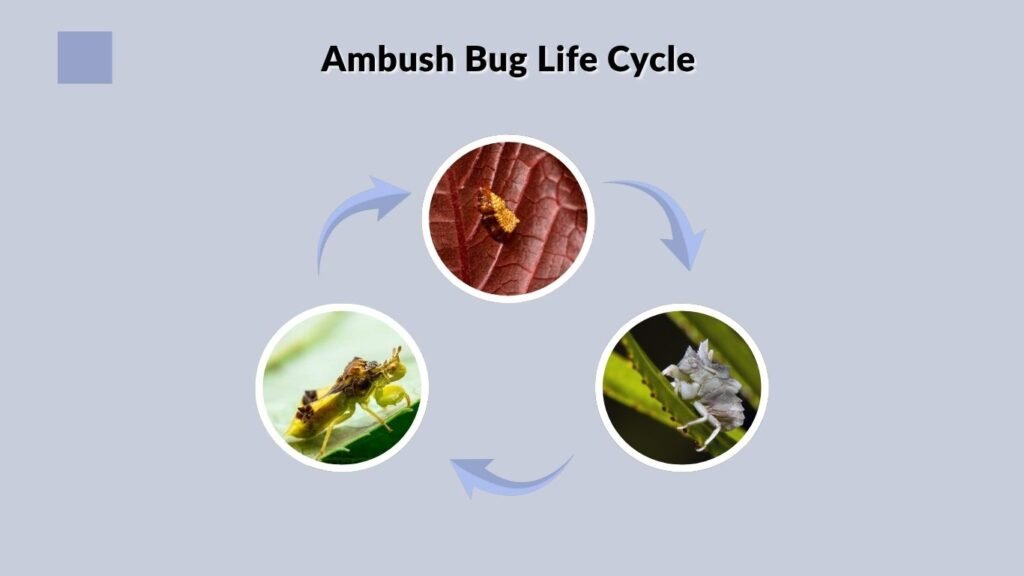
Ambush bugs undergo incomplete metamorphosis, so they do not have a caterpillar or pupal stage.
1. Egg
Females deposit groups of small, dark, barrel-shaped eggs on plant leaves or stems.
2. Nymph
Wingless nymphs emerge and begin hunting small insects. They grow by shedding their exoskeleton several times.
3. Adult
After the final molt, the insect develops wings and becomes reproductively mature. Adults continue hunting from flowers and other vegetation.
Jagged ambush bugs commonly produce one generation per year. Depending on the species and climate, eggs or adults may survive the winter and become active when conditions improve.
Where Are Ambush Bugs Found?
Jagged ambush bugs occur across southern Canada, most of the United States, and northern Mexico. They favor sunny, flower-rich environments such as gardens, prairies, meadows, roadsides, and woodland edges.
Pennsylvania and Ontario
Ambush bugs occur in Pennsylvania and can be found hunting among goldenrod and other late-season flowers. They also occur in southern Ontario and other parts of southern Canada where suitable meadow and garden habitats are available.
Ambush Bugs in Colorado
Colorado has jagged ambush bugs, including Phymata americana. They may be found on marigolds, goldenrod, and other flowering plants where bees and flies gather.
How to Get Rid of Ambush Bugs
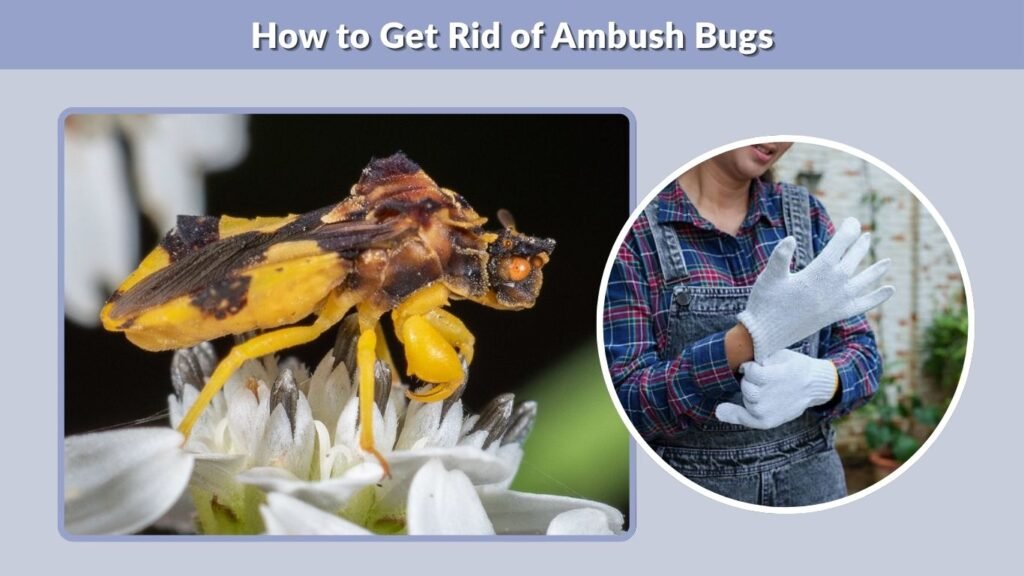
Control is rarely necessary because ambush bugs do not injure plants or establish household infestations.
When one is hunting in an inconvenient location:
- Wear thick gardening gloves.
- Place a container over the bug.
- Slide cardboard or paper underneath.
- Relocate it to another flower bed or natural area.
- Avoid handling it directly.
Removing the flowers is unnecessary because the insect will simply move to another hunting location. Broad-spectrum insecticides are also undesirable because they can kill bees, butterflies, and other beneficial predators.
FAQs
Are ambush bugs dangerous to humans?
Ambush bugs are not considered medically dangerous. They can inflict a painful defensive bite if trapped or handled, but they do not pursue people or feed on blood. Leaving them undisturbed prevents most encounters.
Are ambush bugs good for the garden?
They can be beneficial because they consume aphids, thrips, caterpillars, beetles, and other plant pests. However, they are generalist predators and may also capture bees, butterflies, and other pollinating insects.
Can ambush bugs fly?
Adults possess wings, but jagged ambush bugs are generally poor fliers. They normally remain on flowers or walk between nearby plants. Nymphs cannot fly because their wings are not fully developed.
What is the scientific name of an ambush bug?
Ambush bugs belong to the subfamily Phymatinae within the assassin bug family. Many North American species belong to Phymata, including Phymata americana and Phymata pennsylvanica.
Should I kill an ambush bug?
Killing one is usually unnecessary. It does not damage plants and may eat garden pests. When it repeatedly catches pollinators in a sensitive location, move it carefully while wearing gloves rather than applying pesticide.
