
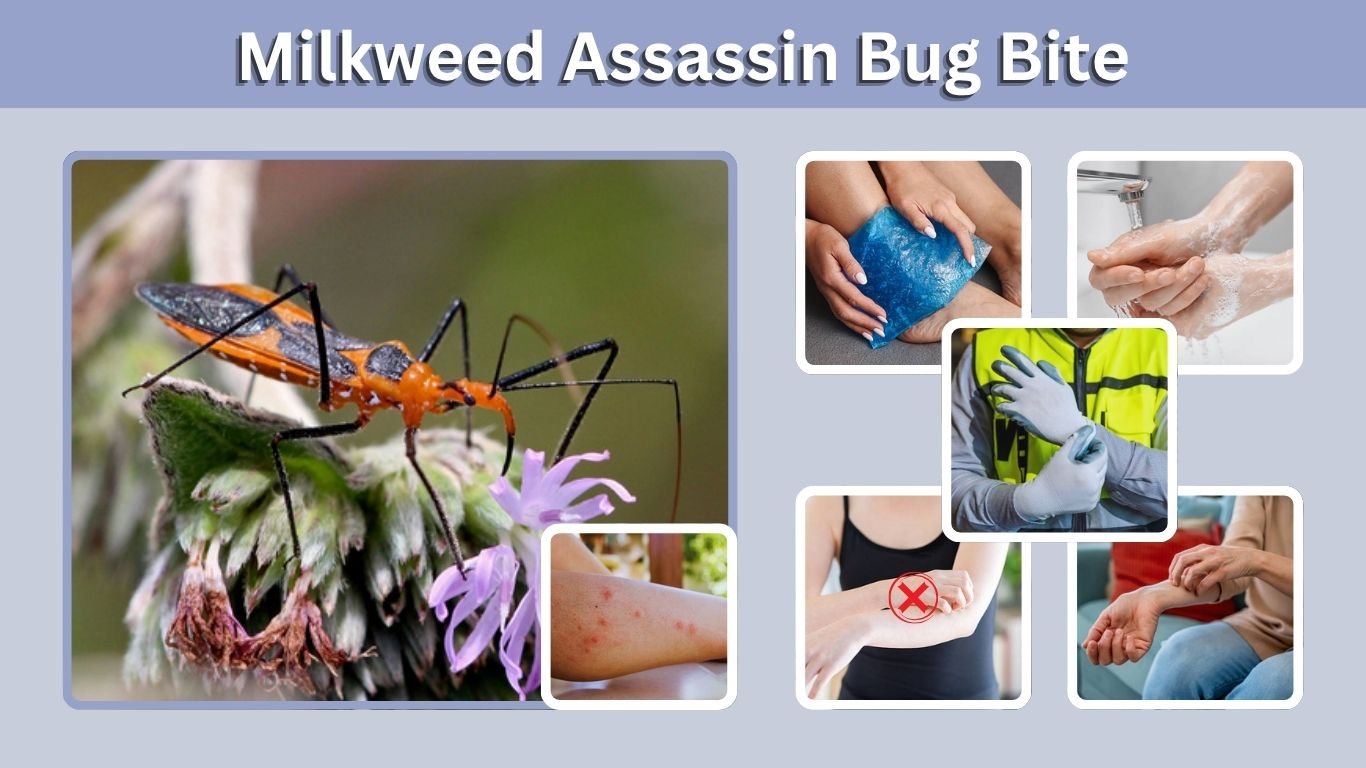
A milkweed assassin bug bite can be surprisingly painful despite the insect’s beneficial role in gardens. The milkweed assassin bug (Zelus longipes) normally uses its piercing mouthparts to attack other insects, not humans. However, it may bite defensively when picked up, squeezed, or trapped against the skin. A bite can cause an immediate burning sensation followed by redness and swelling that may persist for several days. Milkweed assassin bugs are not kissing bugs and are not considered vectors of Chagas disease.
Do Milkweed Assassin Bugs Bite Humans?
Yes, milkweed assassin bugs can bite humans, but biting is normally defensive rather than an attempt to feed.
Zelus longipes is a predatory insect that attacks mosquitoes, flies, beetles, caterpillars, and other small prey. Its piercing mouthpart, or rostrum, is designed to penetrate other insects.
A human bite is most likely when someone:
- Picks up the bug with bare fingers
- Accidentally squeezes it
- Traps it against the skin
- Handles vegetation where it is hiding
- Attempts to remove it by hand
UF/IFAS notes that milkweed assassin bugs are not generally a threat to humans, but improper handling can result in a bite that causes burning and swelling.
What Happens If a Milkweed Assassin Bug Bites You?
A bite usually produces a localized reaction around the bite site.
The initial sensation may be sharp or burning because assassin bugs use specialized mouthparts and secretions for subduing their insect prey. UF/IFAS reports that a Zelus longipes bite may cause a burning sensation with swelling lasting for several days.
The severity can vary from person to person.
For most people, the main concern is temporary pain and irritation rather than serious poisoning or systemic illness.
Milkweed Assassin Bug Bite Symptoms
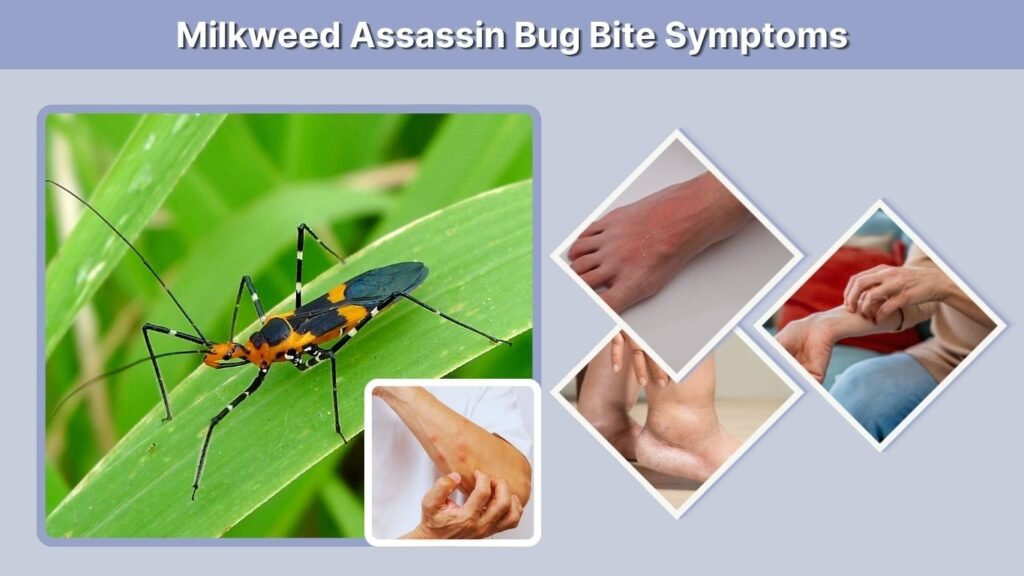
Commonly reported or expected symptoms around an assassin bug bite include:
- Sudden sharp or burning pain
- Redness
- Localized swelling
- Itching
- Tenderness
- A small raised bump or welt
- Irritation around the puncture site
A recent UF/IFAS description notes that assassin bug bites can be painful and may leave a small itchy lump.
How Long Does a Milkweed Assassin Bug Bite Last?
Minor discomfort may improve relatively quickly, but swelling can sometimes remain for several days. UF/IFAS specifically reports that swelling after a milkweed assassin bug bite may persist for days.
If swelling is gradually decreasing, that is different from swelling that continues to expand or becomes increasingly painful.
Milkweed Assassin Bug Bite Still Swollen: Should You Worry?
Some swelling can occur after an assassin bug bite and may last for several days.
However, medical evaluation is appropriate if the reaction is unusually severe or worsening rather than improving.
Seek prompt medical attention for symptoms such as:
- Difficulty breathing
- Swelling of the face, lips, tongue, or throat
- Widespread hives
- Dizziness or fainting
- Rapidly increasing swelling
- Severe or worsening pain
- Signs suggesting infection
A persistent or worsening skin reaction cannot reliably be diagnosed as an assassin bug bite based on appearance alone.
Milkweed Assassin Bug Bite Treatment
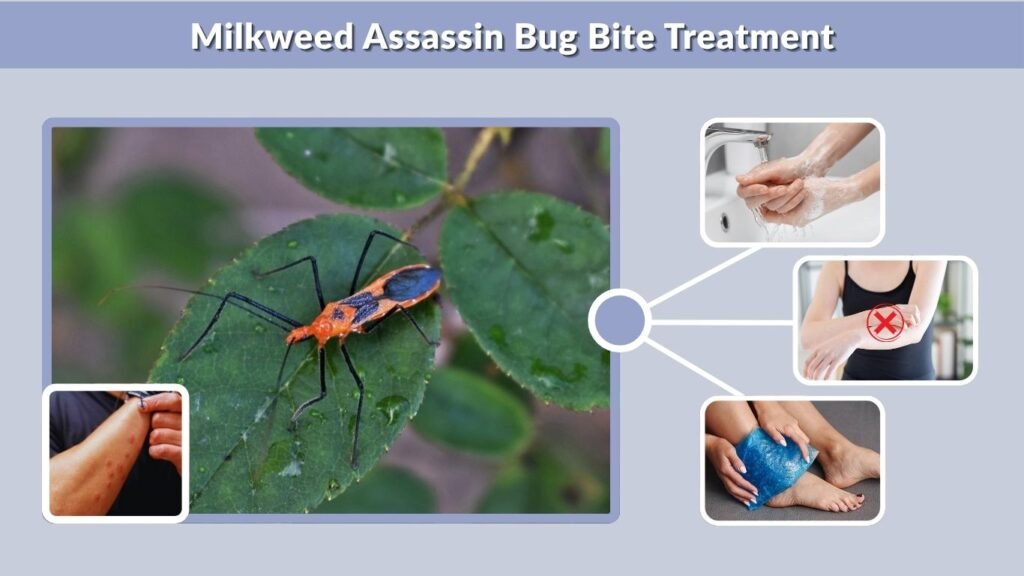
For a mild assassin bug bite, basic first aid is generally appropriate.
Texas A&M AgriLife recommends washing the bite and applying an antiseptic after bites from assassin bugs. Pain-relieving medication may also help when appropriate, and treatments for itching or swelling may sometimes be useful.
Basic Care After a Bite
You can generally:
- Wash the area with soap and water.
- Avoid scratching the bite.
- Apply a cold compress to help with discomfort and swelling.
- Monitor the area for worsening redness or swelling.
- Use an appropriate over-the-counter treatment according to its label or advice from a healthcare professional if needed.
Do not cut, squeeze, or attempt to “remove venom” from the bite.
If symptoms are severe, unusual, or rapidly worsening, seek medical care rather than relying only on home treatment.
Is a Milkweed Assassin Bug Bite Poisonous?
A milkweed assassin bug bite is not normally described as a poisonous bite.
The insect uses its piercing mouthparts to inject saliva into insect prey and then consume the liquefied contents. Humans are not its normal food source.
UF/IFAS describes the primary human effects as burning and swelling rather than a medically significant poisoning syndrome.
So while the bite can hurt, the terms painful defensive bite are more accurate than “poisonous bite.”
Milkweed Assassin Bug Nymph Bite
A milkweed assassin bug nymph can also potentially bite defensively.
Nymphs are immature versions of the adult and already possess the piercing mouthparts needed to capture prey. First-instar nymphs begin predatory feeding soon after hatching, and the species passes through five nymphal stages before adulthood.
Because they are smaller, immature assassin bugs may appear less threatening, but they should still not be handled unnecessarily.
The safest approach is to observe both nymphs and adults without touching them.
Milkweed Assassin Bug Bite vs Mosquito Bite
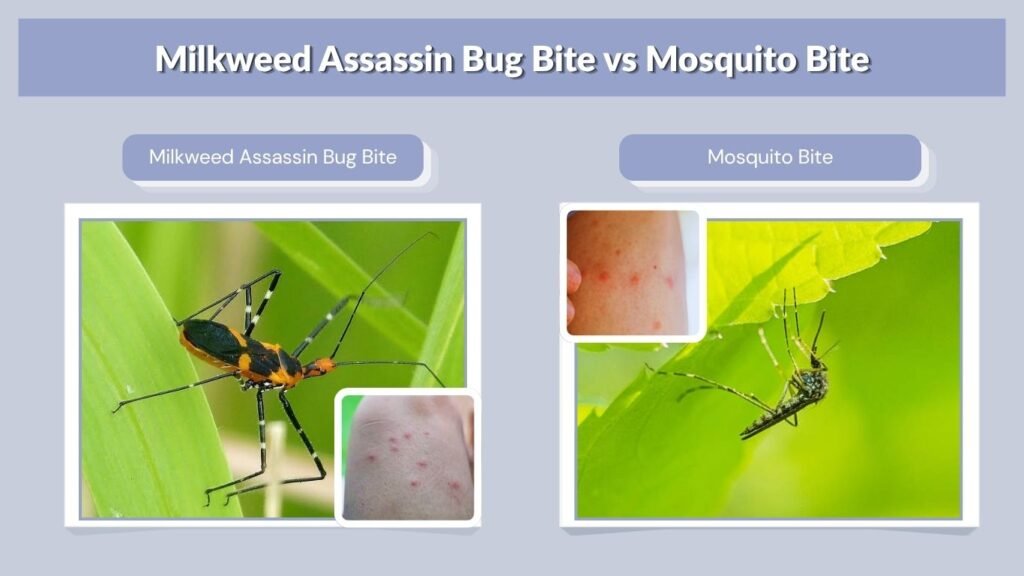
A mosquito bite and an assassin bug bite happen for very different reasons.
| Feature | Milkweed Assassin Bug | Mosquito |
| Why it bites humans | Usually defense | Blood feeding |
| Initial sensation | Can be painful or burning | Often mild or unnoticed |
| Swelling | Possible | Common |
| Itching | Possible | Very common |
| Human is intended food? | No | Yes |
| Chagas vector? | No | No |
A milkweed assassin bug’s painful defensive bite is therefore quite different biologically from the blood-feeding behavior of mosquitoes.
Milkweed Assassin Bug Bite vs Kissing Bug Bite
This distinction is especially important because milkweed assassin bugs and kissing bugs belong to the same larger family, Reduviidae, but their feeding habits are very different.
Milkweed assassin bugs are predators that hunt other insects. Kissing bugs, or triatomine bugs, are blood feeders.
| Milkweed Assassin Bug | Kissing Bug |
| Zelus longipes | Triatomine species |
| Hunts insects | Feeds on vertebrate blood |
| Bite usually defensive | Bites to obtain blood |
| Bite may be immediately painful | Bite can go unnoticed |
| Not a Chagas vector | Some carry T. cruzi |
Texas A&M notes that kissing bug bites are often gentle and painless because the insects are feeding on blood, unlike the painful defensive bites associated with predatory assassin bugs.
Can a Milkweed Assassin Bug Bite Cause Chagas Disease?
Milkweed assassin bugs are not recognized as the insects responsible for vector transmission of Chagas disease.
Chagas disease is caused by the parasite Trypanosoma cruzi. According to the CDC, insect-related transmission involves infected triatomine bugs, commonly called kissing bugs.
The parasite is typically transmitted when feces from an infected kissing bug contaminate a bite wound, eye, mouth, or another entry point.
A milkweed assassin bug (Zelus longipes) is a predatory species that feeds on other insects rather than blood.
Therefore, confusing every assassin bug bite with a Chagas-carrying kissing bug bite is incorrect.
Are Milkweed Assassin Bug Bites Dangerous?
For most people, a milkweed assassin bug bite is painful and irritating rather than medically dangerous. UF/IFAS describes Zelus longipes as not being a threat to humans while cautioning that its bite may cause burning and swelling for several days.
Avoiding bites is simple: do not pick these insects up with bare hands.
If you need to move one from your home, use a container or another method that avoids direct skin contact.
Can a Milkweed Assassin Bug Bite a Dog?
Milkweed assassin bugs hunt insects rather than dogs or other mammals. Their primary interaction with larger animals is defensive rather than predatory.
A curious dog could potentially encounter an assassin bug while sniffing or mouthing vegetation. Because specific veterinary evidence for Zelus longipes bites is limited, contact a veterinarian if your dog develops substantial facial or mouth swelling, persistent pain, breathing problems, vomiting, weakness, or another concerning reaction after interacting with an insect.
How to Prevent Milkweed Assassin Bug Bites
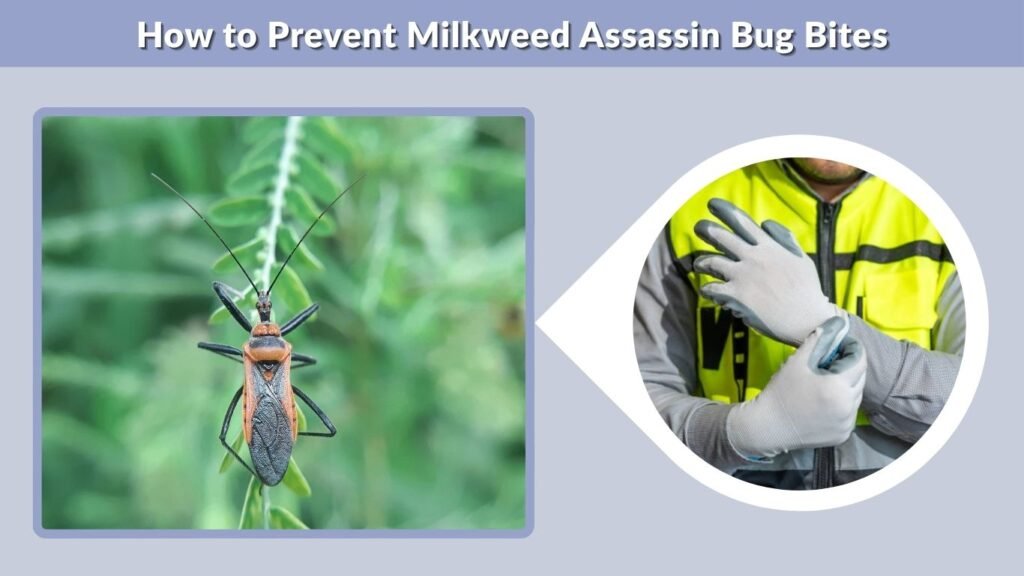
Milkweed assassin bugs can be valuable garden predators, so killing them simply because they are present is generally unnecessary. They prey on insects including mosquitoes, flies, cucumber beetles, and caterpillars.
To avoid bites:
- Don’t handle adults or nymphs with bare hands.
- Wear gloves when working around dense vegetation.
- Look before grabbing leaves or stems.
- Do not squeeze assassin bugs found indoors.
- Move indoor bugs outside using a container.
Most bites are avoidable simply by giving these insects space.
FAQs
How painful is a milkweed assassin bug bite?
A milkweed assassin bug bite can cause noticeable burning or pain. UF/IFAS reports that bites may produce a burning sensation followed by swelling that can persist for several days.
Do milkweed assassin bugs bite on purpose?
They do not normally seek humans as prey. Their bites are primarily defensive and are most likely when an insect is picked up, squeezed, trapped, or otherwise threatened. Zelus longipes normally feeds on other insects.
How long does swelling from a milkweed assassin bug bite last?
UF/IFAS reports that swelling may last for several days following a bite. If swelling becomes progressively worse, spreads substantially, or occurs with other concerning symptoms, medical evaluation is appropriate.
Does a milkweed assassin bug bite transmit Chagas disease?
Milkweed assassin bugs are not the triatomine kissing bugs responsible for Chagas transmission. The CDC identifies infected triatomine bugs as the insect vectors involved in transmitting Trypanosoma cruzi.
What should I do after a milkweed assassin bug bite?
Wash the bite area thoroughly and avoid scratching it. Texas A&M recommends cleaning assassin bug bites and using antiseptic; treatment for pain, itching, or swelling can be considered as appropriate. Seek medical attention if you develop severe or rapidly worsening symptoms.
