
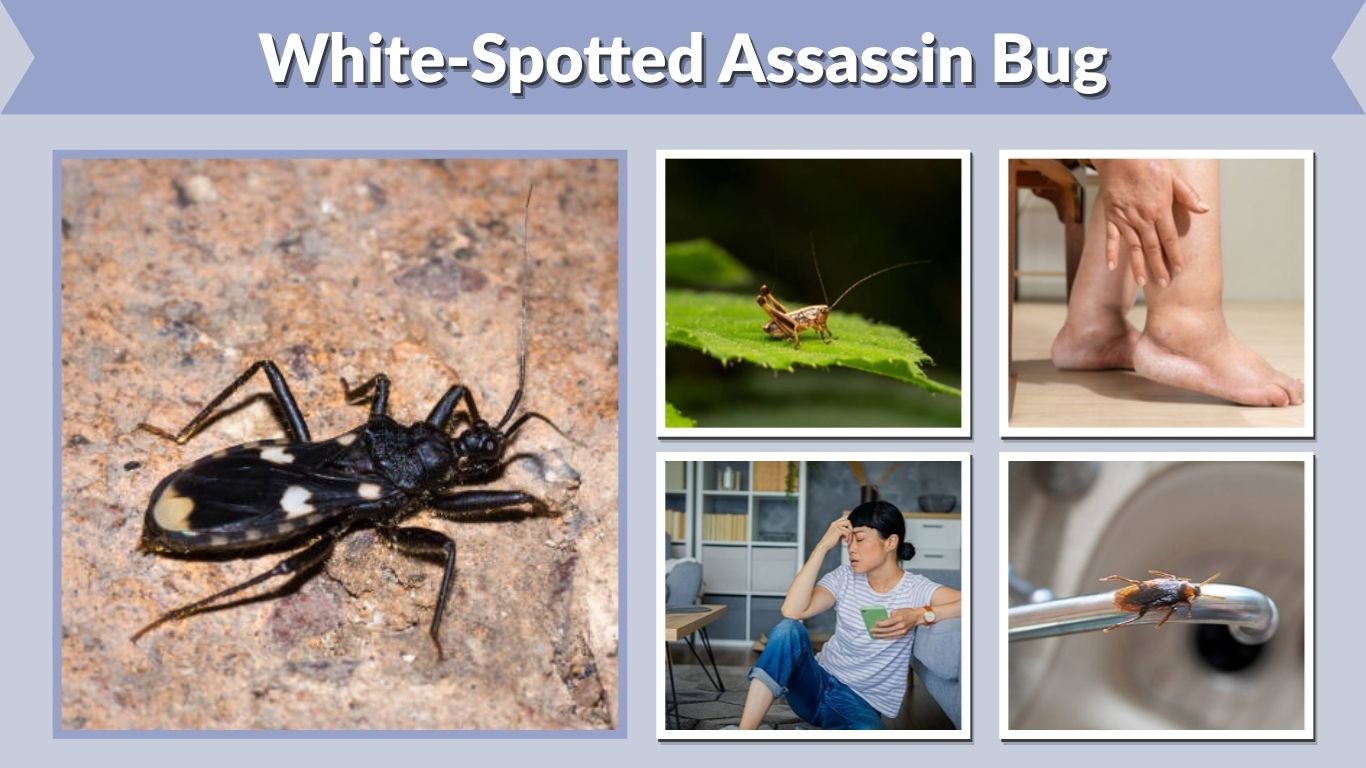
The white-spotted assassin bug (Platymeris biguttatus) is a large predatory true bug native to Africa. It is also known as the two-spotted assassin bug, twin-spotted assassin bug, or white spot assassin bug because adults have two distinctive pale spots on their dark wings. This species feeds on other insects using piercing mouthparts and venomous saliva. Although fascinating to observe and sometimes kept in insect collections, white-spotted assassin bugs can deliver a painful defensive bite and should not be handled with bare hands. Scientific literature recognizes P. biguttatus as a member of the assassin bug family Reduviidae.
What Is a White-Spotted Assassin Bug?
The white-spotted assassin bug is a predatory insect belonging to the family Reduviidae and genus Platymeris. Its accepted scientific name is Platymeris biguttatus, although some taxonomic databases also list Platymeris biguttata as the accepted combination.
Unlike plant-feeding true bugs, it hunts other insects. It pierces prey with a specialized rostrum, injects saliva that helps immobilize and digest the victim, and then consumes the liquefied tissues.
| Feature | White-Spotted Assassin Bug |
| Scientific name | Platymeris biguttatus |
| Family | Reduviidae |
| Common names | White-spotted, twin-spotted, two-spotted assassin bug |
| Native region | Africa |
| Diet | Other insects |
| Development | Egg → 5 nymphal stages → adult |
| Human concern | Painful defensive bite |
| Distinctive feature | Two large pale spots on wings |
White-Spotted Assassin Bug Identification
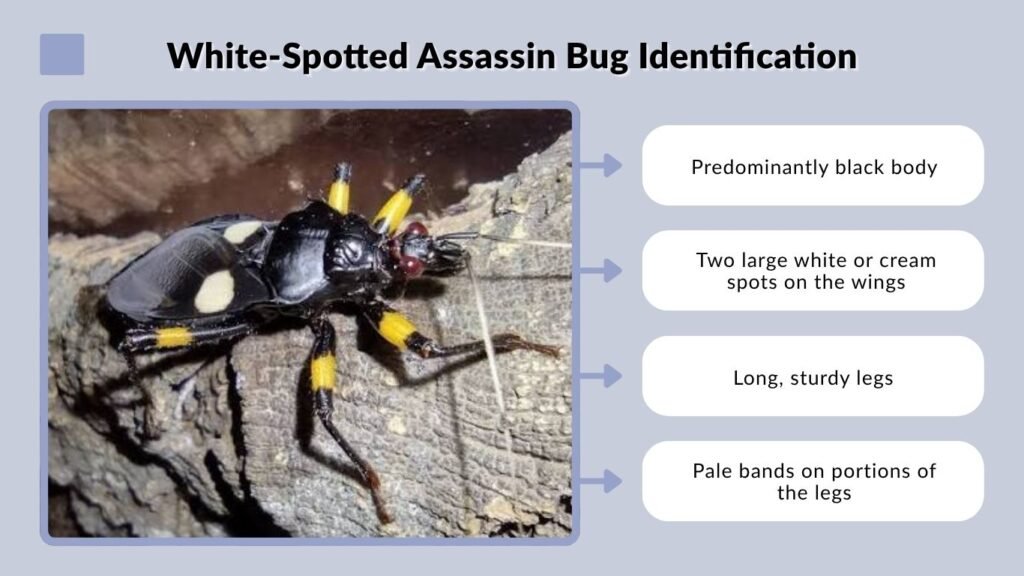
Adult white-spotted assassin bugs are relatively easy to recognize because of their bold coloration.
How to Identify One
Look for:
- Predominantly black body
- Two large white or cream spots on the wings
- Long, sturdy legs
- Pale bands on portions of the legs
- Narrow head and neck
- Strong piercing mouthpart beneath the head
- Broad, somewhat flattened abdomen
- Fully developed wings in adults
The two pale wing spots are responsible for common names such as white spot assassin bug and twin-spotted assassin bug. Scientific descriptions of the species also document its adult appearance and five immature stages.
Why Does the Assassin Bug Have Two White Spots?
The most noticeable identification feature is a pair of light-colored patches on the wings.
When the wings are folded across the back, one spot appears on each side, giving the impression of two large white dots against an almost black body.
This coloration makes Platymeris biguttatus quite different from many North American assassin bugs.
The markings are part of the adult insect’s natural coloration rather than eggs, parasites, damage, or fungal growth.
African White-Spotted Assassin Bug
The species originated in Africa and is commonly referred to as the African white-spotted assassin bug.
Published taxonomic work specifically describes Platymeris biguttatus as a large African assassin bug.
Because it is also maintained in zoos, laboratories, and private insect collections, people outside its native range may occasionally encounter captive specimens. For example, the California Academy of Sciences has displayed live white spot assassin bugs as part of its insect exhibits.
Therefore, an apparent sighting in places such as San Diego or elsewhere in California should not automatically be interpreted as evidence of an established native population.
White-Spotted Assassin Bug Nymph
Baby white-spotted assassin bugs are called nymphs.
They resemble smaller versions of adults but do not initially have fully developed wings. Scientific observations document five nymphal instars between the egg and adult stages.
Young nymphs gradually change appearance as they grow and molt.
Nymph Identification
Nymphs generally have:
- Dark bodies
- Long legs
- Visible pale or contrasting markings
- No complete adult wings
- Piercing mouthparts
- Increasingly adult-like appearance after each molt
Nymphs are predators just like adults and can capture small insects.
White-Spotted Assassin Bug Eggs
Female white-spotted assassin bugs lay eggs rather than giving birth to live young.
Research on the species documents eggs, first through fifth instar nymphs, and adults as separate developmental stages.
After hatching, the young assassin bug begins life as a small nymph. It must molt several times before reaching adulthood.
The basic life cycle is:
Egg → First instar → Second instar → Third instar → Fourth instar → Fifth instar → Adult
This type of development is called incomplete metamorphosis, because there is no pupal stage like that seen in butterflies or beetles.
What Do White-Spotted Assassin Bugs Eat?
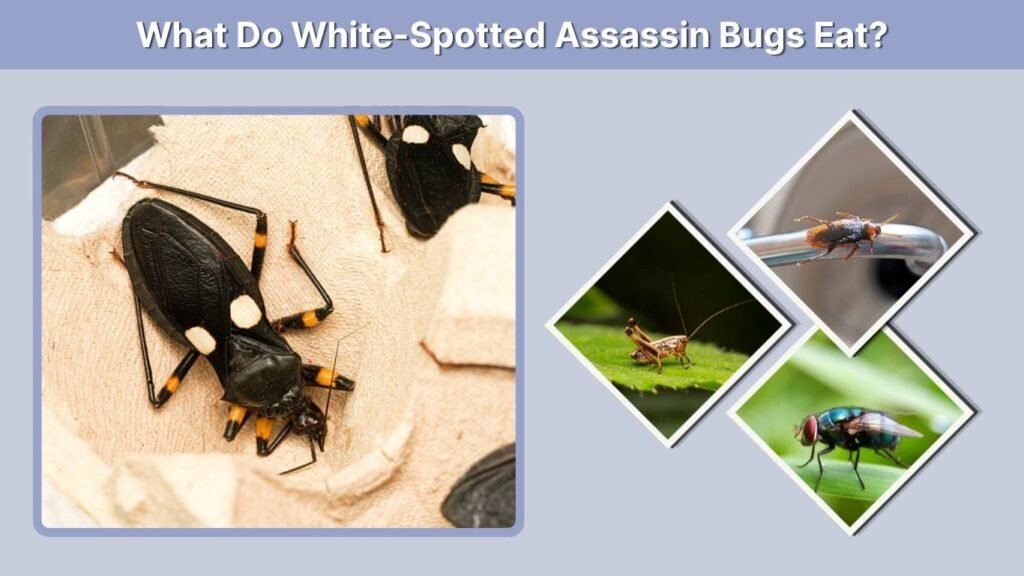
White-spotted assassin bugs are carnivorous predators.
They may feed on insects such as:
- Crickets
- Cockroaches
- Beetles
- Caterpillars
- Flies
- Mealworms
- Other appropriately sized insects
They capture prey with their front legs and piercing mouthparts. Assassin bug saliva serves several functions, including prey immobilization and extra-oral digestion. Research on P. biguttatus has examined the specialized salivary venom used during feeding.
Because they are active predators, they should not be confused with blood-feeding kissing bugs.
White-Spotted Assassin Bug Bite
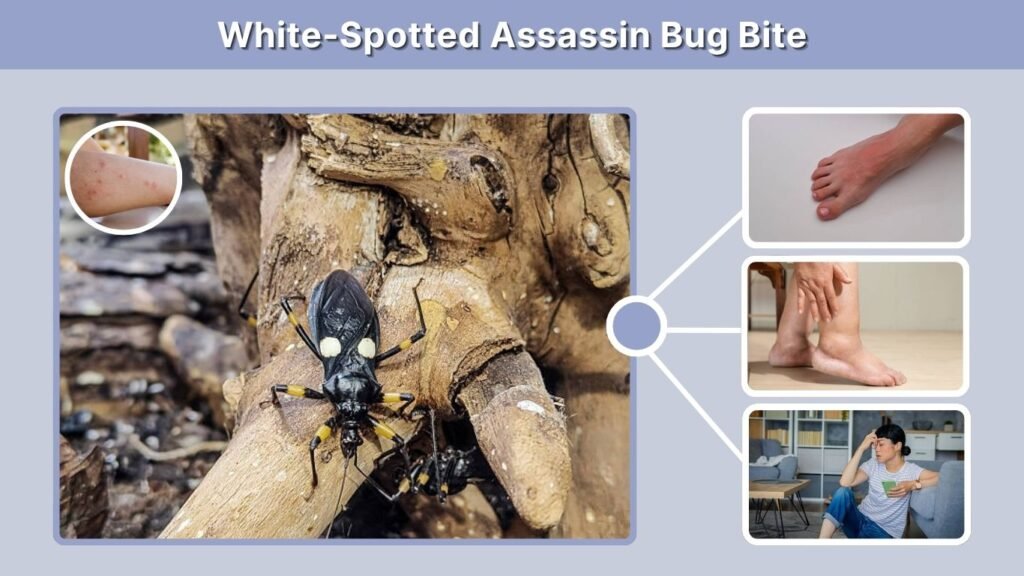
A white-spotted assassin bug can bite humans defensively.
People are not part of its normal diet. A bite is most likely if the insect is grabbed, squeezed, trapped against the skin, or otherwise feels threatened.
Assassin bugs possess venomous saliva used in both prey capture and defense. Research on assassin bug venom confirms that these insects can deploy different venom components depending on whether they are attacking prey or defending themselves.
What Does the Bite Feel Like?
A bite may cause:
- Sudden sharp pain
- Burning
- Redness
- Local swelling
- Tenderness
- Irritation around the puncture
The species should therefore be observed rather than handled.
The California Academy of Sciences also notes another unusual defense: white spot assassin bugs can spray eye-irritating venom when threatened.
Is a White-Spotted Assassin Bug Dangerous?
White-spotted assassin bugs deserve caution because of their defensive capabilities, but they do not normally seek out or attack humans.
The biggest risks come from:
- Handling the insect
- Allowing it to crawl onto bare skin
- Bringing the face close to a threatened individual
- Accidental escape from a captive enclosure
A person keeping the species should treat it as a hands-off display insect rather than something that can be safely handled like a harmless beetle.
White-Spotted Assassin Bug Care
White-spotted assassin bugs are sometimes maintained in insect collections because of their size, striking appearance, and predatory behavior.
Basic captive-care principles include:
Secure Enclosure
The enclosure should prevent escape while still allowing ventilation. Because these insects can bite and use defensive secretions, secure containment is especially important.
Hiding Places
Bark, cork, branches, and other structures give the insects places to climb and hide. Research observations have documented nymphs sheltering in bark cracks.
Appropriate Live Prey
They require animal prey rather than plant foods. Crickets, roaches, mealworms, and similar insects are commonly suitable prey depending on the predator’s size.
Avoid Handling
Direct handling is unnecessary and increases the likelihood of a defensive bite. Feeding and enclosure maintenance should be done carefully with suitable tools.
Male vs Female White-Spotted Assassin Bugs
Male and female white-spotted assassin bugs can look very similar from above.
Both sexes typically have:
- Black bodies
- Two white wing spots
- Similar leg markings
- Fully developed wings as adults
Reliable sex identification may require examining the end of the abdomen and reproductive structures rather than relying only on body color. Scientific taxonomic descriptions of P. biguttatus include male genital structures as important identification characteristics.
Females may also appear broader through the abdomen, particularly when carrying developing eggs, but body shape alone should not always be considered definitive.
White-Spotted Assassin Bug Lifespan
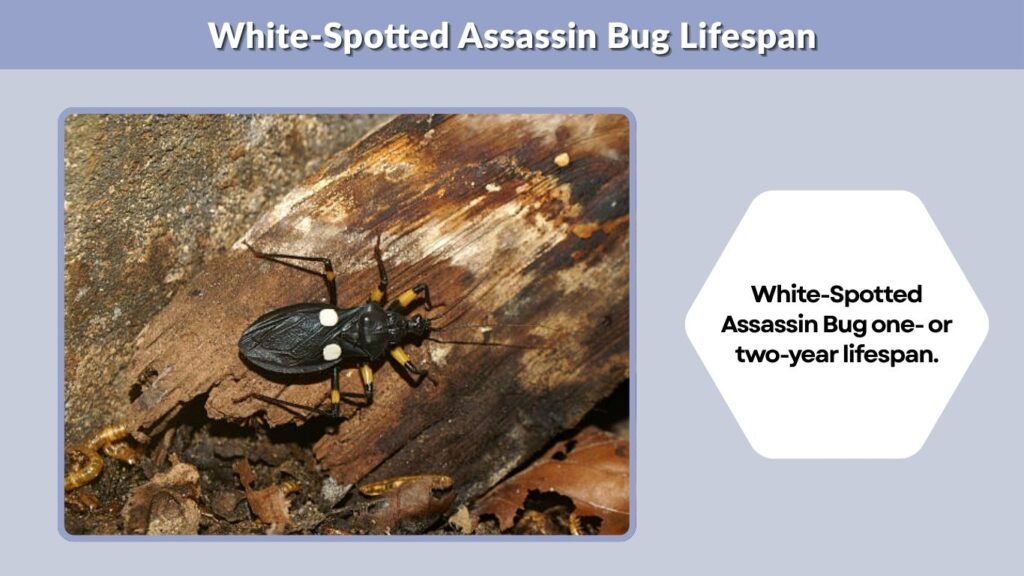
The exact lifespan varies according to temperature, food availability, sex, and captive conditions.
What is better established scientifically is that the species passes through five nymphal instars before adulthood.
Claims of an exact one- or two-year lifespan are common in hobby sources, but lifespan can vary substantially in captivity. For accuracy, it is better to think of their development and longevity as dependent on environmental conditions rather than assuming every individual lives exactly the same length of time.
White-Spotted Assassin Bug for Sale: What to Know
Because of their unusual appearance, white-spotted assassin bugs sometimes appear in the exotic-invertebrate trade.
Before keeping one, remember that this is a venomous predatory insect capable of a painful bite and defensive venom spraying.
Potential keepers should also verify local rules before obtaining exotic insects and ensure that the enclosure prevents accidental escape.
They are better suited to experienced invertebrate keepers who understand that they are observation animals rather than handling pets.
FAQs
Do white-spotted assassin bugs bite?
Yes. White-spotted assassin bugs can deliver a defensive bite if grabbed or threatened. Their piercing mouthparts normally serve to subdue insect prey, so direct handling should be avoided.
Are white-spotted assassin bugs venomous?
Yes. Assassin bugs use venomous saliva for prey capture, digestion, and defense. Research on Platymeris biguttatus has identified specialized venom systems involved in these functions.
Why does my assassin bug have two white spots?
Two large white or cream-colored patches on the wings are characteristic of adult Platymeris biguttatus. These markings are why the species is called the white-spotted, two-spotted, or twin-spotted assassin bug.
Can white-spotted assassin bugs fly?
Adults possess fully developed wings, although they often spend much of their time walking, hiding, and hunting. Nymphs do not yet have fully developed adult wings.
Are white-spotted assassin bugs found naturally in California?
The species is African in origin rather than a native California assassin bug. It may be seen in zoos or captive collections; the California Academy of Sciences, for example, has displayed Platymeris biguttatus.
