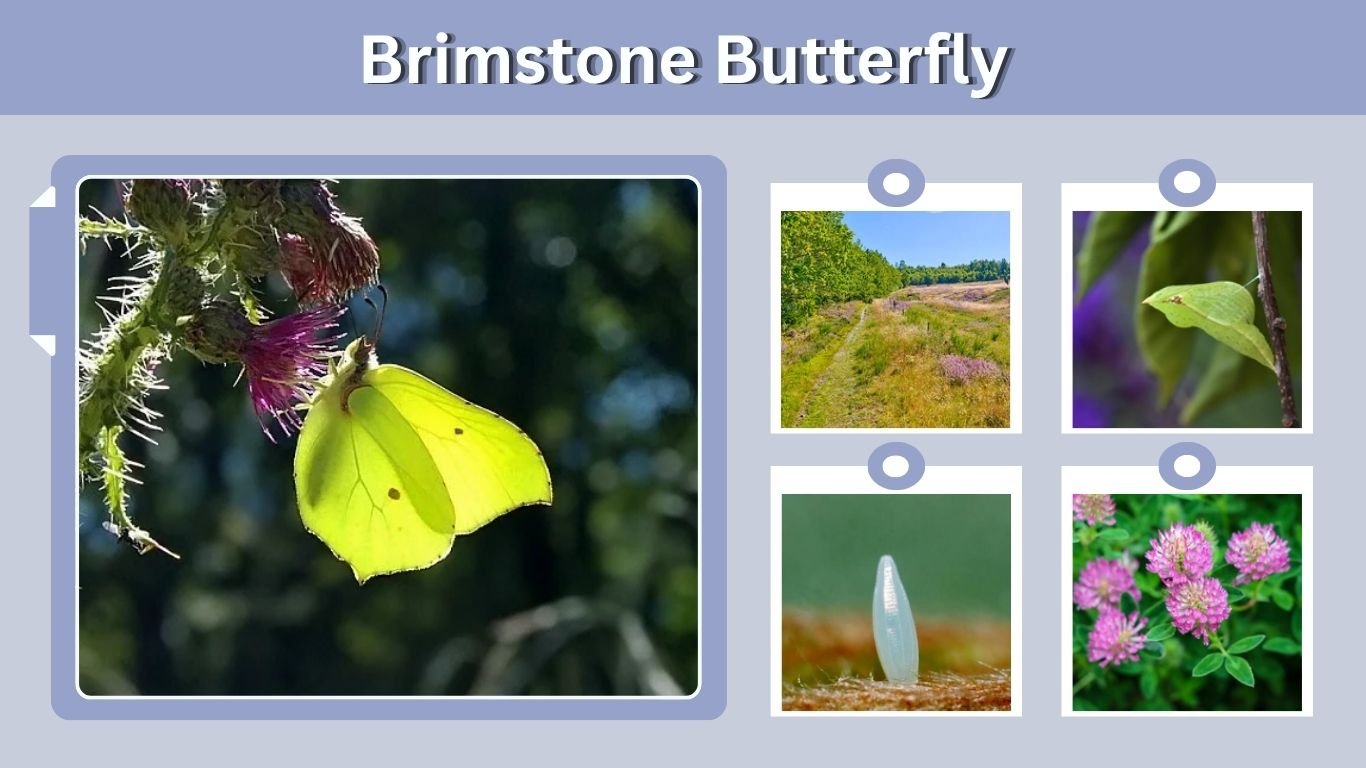
The brimstone butterfly (Gonepteryx rhamni) is one of the most recognizable yellow butterflies found across Europe, particularly in the United Kingdom. Known for its bright lemon-yellow wings, remarkable leaf-like camouflage, and early spring appearances, this beautiful insect often signals the arrival of warmer weather. Unlike many butterflies, brimstones survive winter as adults and can live for nearly a year. Learning about their identification, caterpillars, habitat, food plants, and life cycle reveals what makes this species special.
Brimstone Butterfly Identification
The common brimstone butterfly belongs to the Pieridae family, which includes many white and yellow butterflies. Its unusual wing shape, pale green underside, and bright yellow coloring make it relatively easy to identify. Unlike many butterfly species, brimstones usually rest with their wings closed, creating the appearance of a leaf. Their coloring also differs noticeably between males and females.
Physical Characteristics
- Scientific Name: Gonepteryx rhamni
- Common Name: Common Brimstone Butterfly
- Family: Pieridae
- Order: Lepidoptera
- Wingspan: Approximately 60–75 mm.
- Male Color: Bright lemon-yellow or sulfur-yellow.
- Female Color: Pale yellow-green or greenish-white.
- Wing Shape: Pointed, with distinctive leaf-like edges.
- Wing Markings: Small orange spots near the center of each wing.
- Body: Slender, with club-shaped antennae.
These characteristics distinguish brimstones from many other yellow butterflies. Their pointed wings and fine vein patterns help them blend naturally into surrounding vegetation.
Male vs. Female Brimstone Butterfly
Male brimstone butterflies have bright yellow wings that are especially noticeable during spring flights. Their vibrant coloration makes them easy to recognize against green vegetation.
Females, however, have much paler wings, often appearing almost white from a distance. This can cause confusion with cabbage white butterflies.
Both sexes have similarly pointed wings and small orange markings. Their wing shapes provide a more reliable identification feature than color alone.
Brimstone Butterfly Camouflage
Brimstone butterflies possess remarkable natural camouflage. Their wings resemble leaves, especially when folded together while resting.
The greenish underside, visible wing veins, and pointed edges help disguise them among vegetation. This camouflage provides protection from birds and other predators.
Brimstone Butterfly Habitat and Distribution
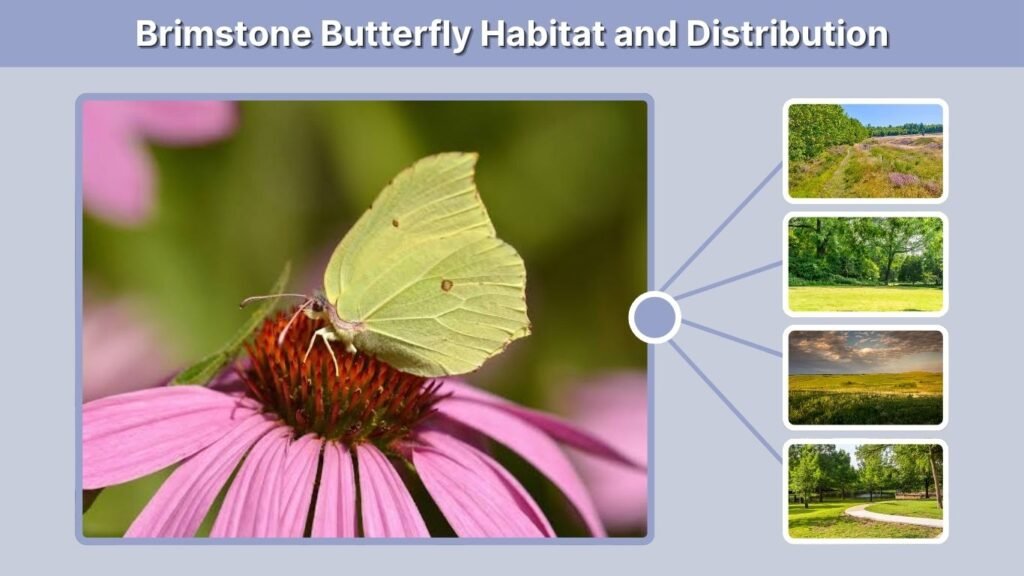
Brimstone butterflies inhabit a variety of environments containing suitable nectar flowers and caterpillar host plants. They are particularly associated with woodland edges, hedgerows, gardens, and scrubland. Although adults can travel considerable distances, successful breeding depends on the availability of specific buckthorn species. Their distribution varies across Europe according to climate and habitat conditions.
Where Do Brimstone Butterflies Live?
Common habitats include:
- Open woodlands and woodland clearings.
- Hedgerows and countryside boundaries.
- Wildflower meadows and grasslands.
- Parks and residential gardens.
- Wetlands and damp woodland edges.
- Scrubland with buckthorn shrubs.
Brimstones are widespread across much of Europe and extend into parts of temperate Asia.
Brimstone Butterfly in the UK
The common brimstone is widespread across England and Wales, particularly where buckthorn shrubs grow.
It is much rarer in Scotland, although its range has gradually expanded northward. Adults frequently visit gardens during sunny spring days, sometimes appearing as early as February when temperatures become mild.
Are Brimstone Butterflies Rare in Ireland?
Brimstone butterflies are relatively localized in Ireland compared with England.
They occur mainly in the Burren region and parts of the Irish midlands, where suitable buckthorn plants grow. Their limited distribution largely reflects the availability of caterpillar food plants.
Brimstone Butterfly Life Cycle
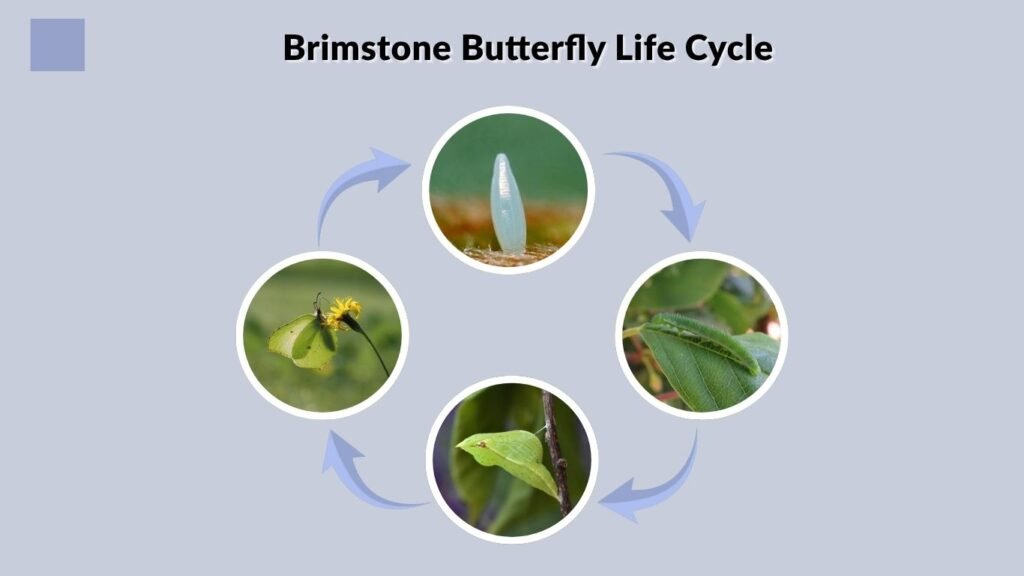
The brimstone butterfly undergoes complete metamorphosis, developing through four stages: egg, caterpillar, chrysalis, and adult. This species normally produces one generation annually in Britain and Ireland. Eggs are laid during spring and early summer, and new adults emerge during summer. These butterflies then survive winter before reproducing the following spring.
1. Brimstone Butterfly Eggs
Female brimstones lay small, pointed eggs individually on or near the leaves and buds of buckthorn plants.
Newly laid eggs are generally pale greenish or cream-colored and become more yellowish as they develop. Depending on temperature, they usually hatch within approximately one to two weeks.
2. Brimstone Butterfly Caterpillar
Brimstone butterfly caterpillars are green and blend closely with the leaves of their host plants.
Their bodies are elongated and smooth-looking, with a pale stripe running along each side. Young caterpillars feed on tender buckthorn leaves and become increasingly difficult to spot as they grow.
Unlike the black, spiny caterpillars of peacock butterflies, brimstone larvae rely primarily on camouflage for protection.
3. Brimstone Butterfly Chrysalis
After reaching maturity, the caterpillar attaches itself to vegetation and forms a chrysalis.
The chrysalis is generally green, with an angular shape that helps it resemble a leaf. Inside, the insect undergoes dramatic physical development.
The pupal stage typically lasts around two weeks in favorable summer conditions, although temperature can affect development.
4. Adult Brimstone Butterfly
A fully developed adult emerges from the chrysalis during summer.
Its wings initially require time to expand and dry before flight. Once active, the butterfly feeds on nectar and builds energy reserves for the coming winter.
Most newly emerged adults do not reproduce immediately. Instead, they overwinter and begin breeding the following spring.
What Do Brimstone Butterflies Eat?
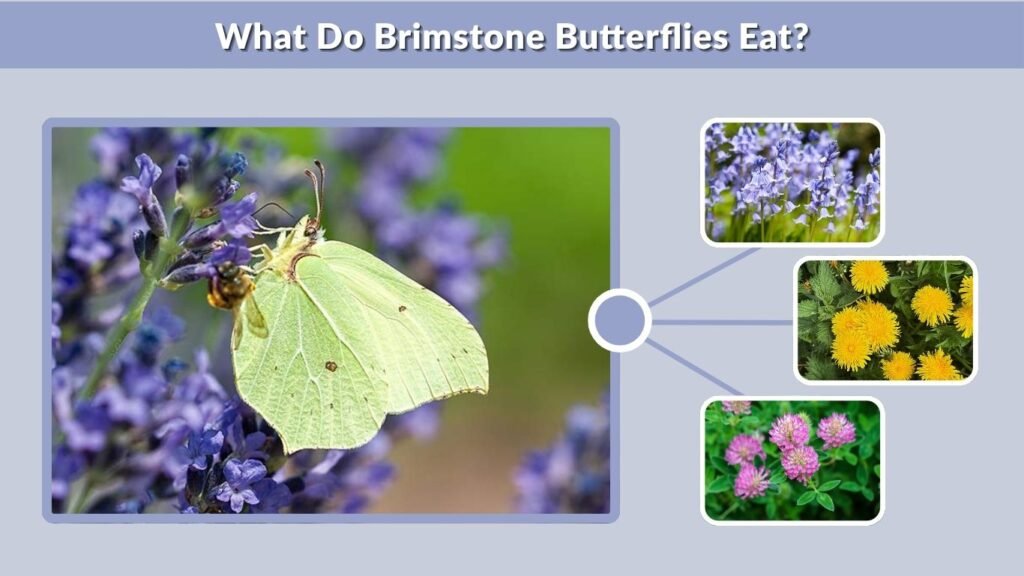
Adult brimstone butterflies and their caterpillars consume different foods. Adults primarily obtain energy from flower nectar, while caterpillars depend on the leaves of specific buckthorn shrubs. The butterfly’s long proboscis allows it to reach nectar inside flowers that some other insects cannot access. Having suitable food sources throughout the year supports adult survival and caterpillar development.
Adult Brimstone Butterfly Food
Brimstones regularly visit nectar-rich flowers, including:
- Bluebells
- Dandelions
- Thistles
- Common knapweed
- Buddleia
- Red clover
- Teasel
Spring flowers are especially important for butterflies emerging from hibernation, while late-summer flowers help the new generation prepare for winter.
Brimstone Butterfly Caterpillar Food Plants
The two main caterpillar host plants are:
- Alder Buckthorn (Frangula alnus): A shrub commonly growing in damp woodland and wet habitats.
- Purging Buckthorn (Rhamnus cathartica): A shrub or small tree often found in hedgerows and limestone-rich environments.
These plants are essential for breeding because females select them for egg laying. Without suitable buckthorn plants, brimstone populations cannot establish sustainable breeding colonies.
Brimstone Butterfly Hibernation and Lifespan
Brimstone butterflies are unusual because they overwinter as fully developed adults rather than eggs, caterpillars, or pupae. Their ability to survive cold weather contributes to their remarkably long lifespan. During autumn, they seek sheltered vegetation where they remain largely inactive until temperatures rise. Their winter survival strategy allows them to become some of the earliest butterflies seen in spring.
How Long Does a Brimstone Butterfly Live?
A brimstone butterfly can live for approximately 10–12 months, making it one of the longest-lived adult butterflies in Britain.
However, much of this lifespan is spent in a dormant overwintering state.
The surviving adults reproduce during spring before dying, while a new generation emerges during summer.
How Do Brimstone Butterflies Survive Winter?
Brimstones shelter among dense vegetation, evergreen leaves, ivy, and other protected locations.
Their bodies contain natural substances that help them tolerate freezing conditions. During winter, their metabolic activity decreases, conserving energy.
On unusually warm winter days, some individuals may briefly emerge and fly before returning to shelter.
Why Are Brimstones Seen in February?
Because brimstones overwinter as adults, they can become active whenever winter temperatures are sufficiently mild.
A sunny February day may encourage a butterfly to emerge temporarily from its shelter. Such sightings are particularly common in warmer parts of Britain.
Brimstone Butterfly Meaning and Interesting Facts
Brimstone butterflies have fascinated nature enthusiasts for generations because of their beautiful coloring and unusual behavior. Their early spring appearances make them closely associated with seasonal renewal. Some people also connect these butterflies with personal transformation and positivity. Beyond symbolic interpretations, their biological adaptations make them an important part of European butterfly diversity.
Brimstone Butterfly Symbolism
The brimstone butterfly is sometimes associated with hope, renewal, happiness, and positive change.
Its bright yellow wings and early spring activity naturally connect it with sunshine and the beginning of warmer seasons.
These interpretations are symbolic rather than scientifically established meanings specific to the species.
Interesting Brimstone Butterfly Facts
- Brimstones can survive winter as adult butterflies.
- Males are bright yellow, while females are considerably paler.
- Their wings resemble leaves when folded.
- They normally produce only one generation each year in Britain.
- They depend on alder buckthorn and purging buckthorn for reproduction.
- They are among the first butterflies visible during early spring.
- Their bright yellow coloring has sometimes been suggested as an inspiration for the English word butterfly, although this origin remains debated.
Brimstone Butterfly vs. Brimstone Moth
The brimstone butterfly (Gonepteryx rhamni) should not be confused with the brimstone moth (Opisthograptis luteolata).
Both insects have yellow wings, but they belong to different families. The butterfly has pointed, leaf-shaped wings, while the brimstone moth has a different wing pattern and generally rests with its wings spread.
Their caterpillars also have different appearances and food preferences.
Are Brimstone Butterflies Endangered?
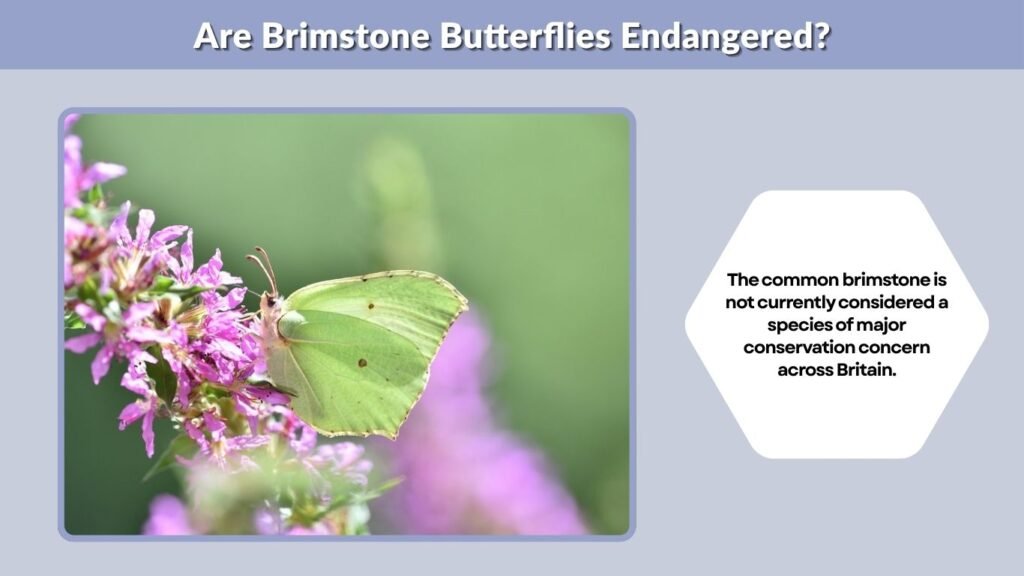
The common brimstone is not currently considered a species of major conservation concern across Britain.
However, local populations can be affected by habitat loss, removal of buckthorn shrubs, and reduced availability of nectar plants.
Gardeners can support brimstones by planting appropriate native buckthorn species, maintaining wildflowers, and avoiding unnecessary pesticide applications.
Preserving hedgerows and woodland edges also provides important breeding and overwintering habitats.
FAQs
1. Are Brimstone Butterflies Rare?
No. Brimstone butterflies are widespread across much of England and Wales. However, they are relatively uncommon in Ireland and very rare in Scotland. Their local abundance depends heavily on suitable habitats and host plants.
2. What Color Is a Female Brimstone Butterfly?
Female brimstone butterflies have pale greenish-yellow or almost white wings. Males have brighter lemon-yellow coloring. Both sexes have pointed wings with small orange markings.
3. What Do Brimstone Butterfly Caterpillars Eat?
Brimstone caterpillars mainly feed on alder buckthorn and purging buckthorn leaves. These plants provide the nutrition required for development before the caterpillars transform into chrysalises.
4. Do Brimstone Butterflies Hibernate?
Yes. Brimstone butterflies overwinter as adults, sheltering among dense vegetation. They become active again when temperatures rise, making them some of the earliest butterflies seen in spring.
5. How Long Do Brimstone Butterflies Live?
Adult brimstone butterflies can survive for approximately 10–12 months under favorable conditions. Much of this time is spent overwintering, which helps explain their unusually long lifespan compared with many other butterflies.