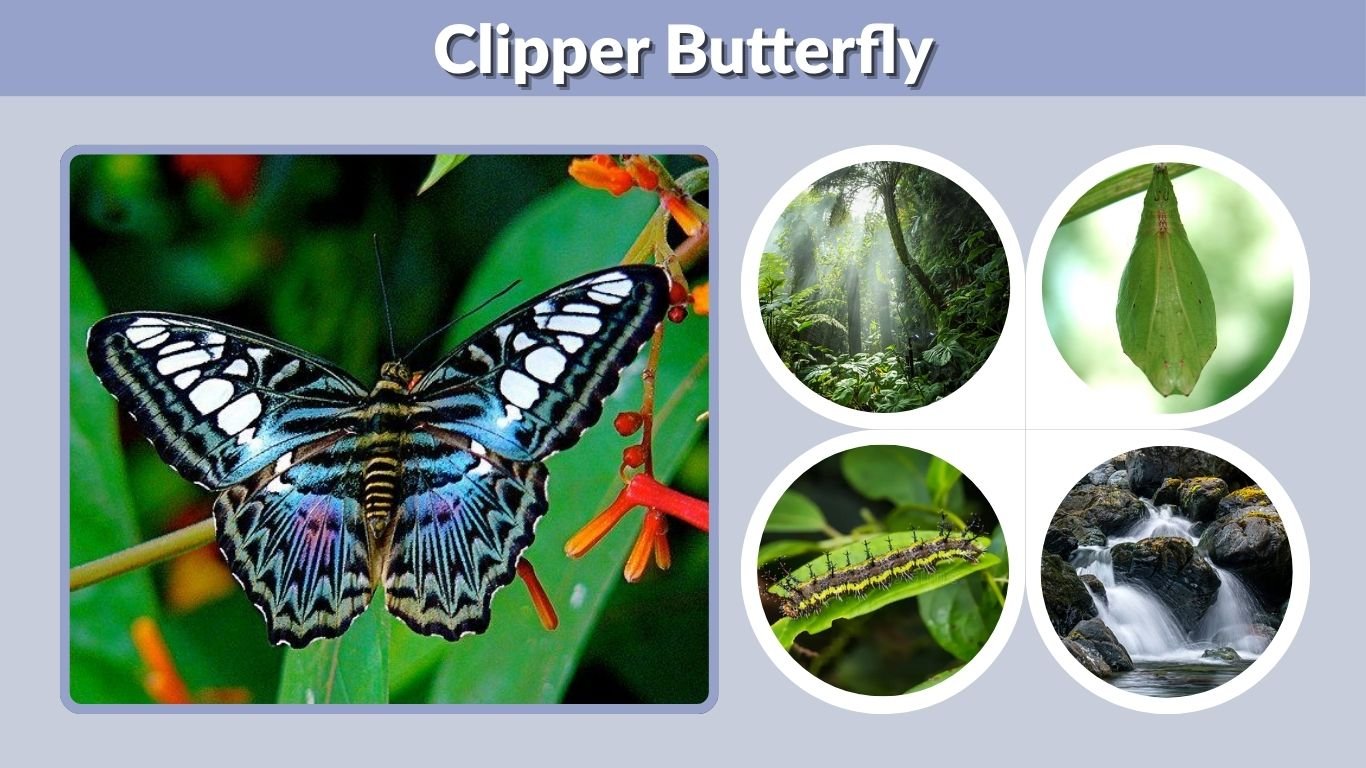
The clipper butterfly (Parthenos sylvia) is a striking tropical insect known for its broad wings, contrasting white markings, and fast gliding flight. Found across South and Southeast Asia, it appears in several color forms, including blue and brown. Its unusual wing patterns make it easy to recognize, while its spiny caterpillar and distinctive chrysalis reveal a fascinating life cycle. Whether you are identifying a butterfly in the wild or learning about tropical species, this guide explains the clipper butterfly’s appearance, habitat, feeding habits, development, and behavior.
What Is a Clipper Butterfly?
The clipper butterfly is a tropical species belonging to the Nymphalidae family, commonly called brush-footed butterflies. Its scientific name is Parthenos sylvia, and it is widely recognized for its intricate wing patterns and unusual flying style. Several geographical subspecies display different colors while retaining similar physical characteristics.
Scientific Classification
- Common Name: Clipper Butterfly
- Scientific Name: Parthenos sylvia
- Family: Nymphalidae
- Subfamily: Limenitidinae
- Genus: Parthenos
- Order: Lepidoptera
- Wingspan: Approximately 3–4 inches
- Habitat: Tropical forests and forest edges
- Distribution: South and Southeast Asia
Why Is It Called a Clipper Butterfly?
The name “clipper” is often associated with the fast sailing ships once used for long-distance travel. Its rapid flight and gliding movements resemble the graceful motion of these vessels.
Unlike butterflies that flutter continuously, clippers alternate quick wingbeats with smooth gliding. Their broad wings allow them to move efficiently through tropical forest openings.
How to Identify a Clipper Butterfly
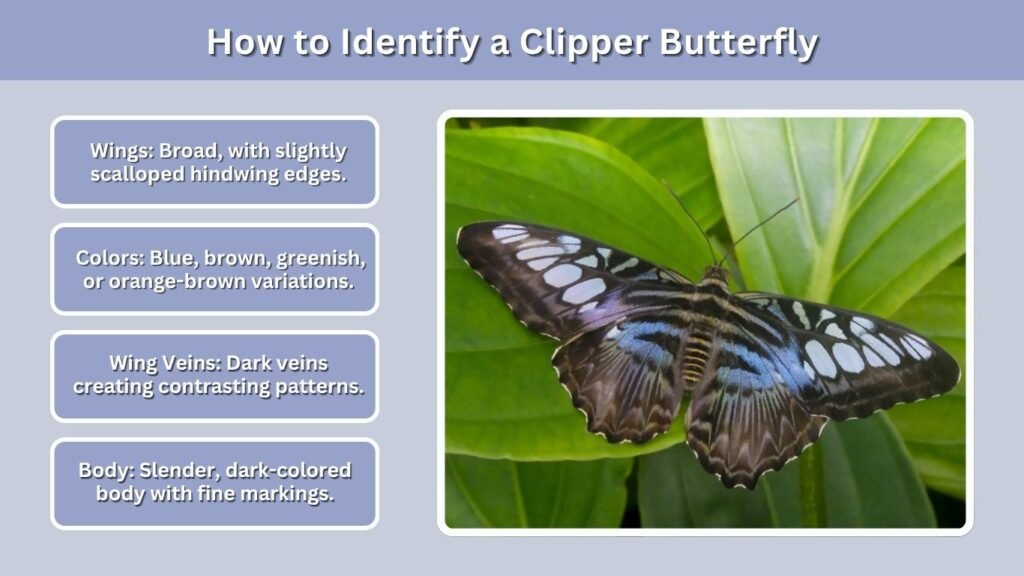
Identifying clipper butterflies involves examining their wing patterns, coloration, and overall body structure. Although colors vary between subspecies, the characteristic pale markings and dark wing veins remain important identification features. Their distinctive appearance makes them relatively recognizable among other large tropical butterflies.
Key Identification Features
- Wings: Broad, with slightly scalloped hindwing edges.
- Colors: Blue, brown, greenish, or orange-brown variations.
- Markings: Prominent white or cream patches on the forewings.
- Wing Veins: Dark veins creating contrasting patterns.
- Body: Slender, dark-colored body with fine markings.
- Antennae: Long, thin antennae with clubbed tips.
- Flight: Rapid wingbeats alternating with short glides.
Male and Female Appearance
Male and female clipper butterflies have similar wing patterns, making them difficult to distinguish at first glance.
Females may be slightly larger, although size alone is unreliable for identification. Both sexes display similar markings within their respective subspecies. Geographic variation can produce more noticeable differences than sex.
Different Colors of Clipper Butterflies
Clipper butterflies are especially interesting because their coloration changes across geographical populations. Different subspecies may display blue, brown, greenish, or other warm-toned markings. These color forms are not necessarily separate species, despite their noticeably different appearances.
Blue Clipper Butterfly
The blue clipper butterfly is one of the most recognizable forms of Parthenos sylvia. The subspecies Parthenos sylvia lilacinus features attractive blue or bluish-purple markings surrounded by dark veins and pale patches.
Its upper wings become particularly striking in natural sunlight. This form is associated with parts of Southeast Asia, including the Malay Peninsula and Singapore.
Brown Clipper Butterfly
The brown clipper butterfly has a darker appearance, with rich brown or orange-brown wings decorated with pale markings.
The subspecies Parthenos sylvia philippinensis is associated with the Philippine brown clipper. Despite its different coloration, it maintains the characteristic wing structure and patterns seen in other clippers.
Green and Other Color Variations
Some geographical forms exhibit greenish, yellowish, or orange-toned markings. These variations result from differences among subspecies and the arrangement of colored wing scales.
Lighting conditions can also influence how these colors appear. Therefore, accurate identification should consider wing patterns and geographical location rather than color alone.
Where Do Clipper Butterflies Live?
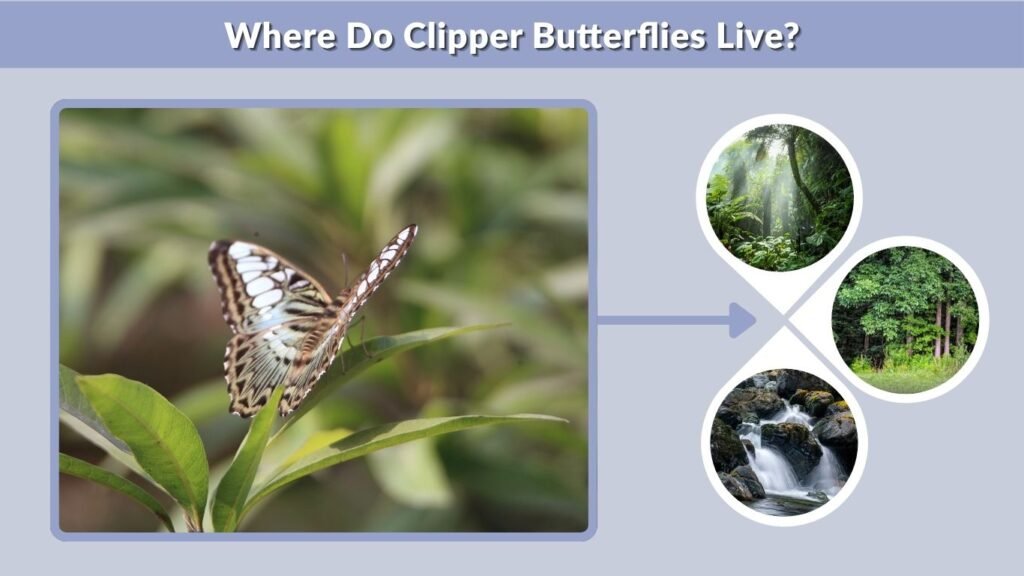
Clipper butterflies inhabit warm tropical regions where suitable vegetation and host plants are available. Their distribution covers a large geographical area, and different populations occupy various forest environments. They are frequently observed near rivers, forest openings, and other humid locations.
Geographic Distribution
Clipper butterflies occur in India, Bangladesh, Sri Lanka, Myanmar, Thailand, Malaysia, Indonesia, and the Philippines.
Their distribution also extends through parts of Borneo and New Guinea. Different subspecies occupy particular regions, contributing to the species’ remarkable diversity.
Preferred Natural Habitat
These butterflies commonly inhabit tropical rainforests, forest edges, and areas near streams.
They frequently fly through partially shaded environments where flowering plants provide nectar and climbing vines support developing caterpillars.
Their presence is closely connected to healthy vegetation and favorable tropical conditions.
Clipper Butterfly Life Cycle
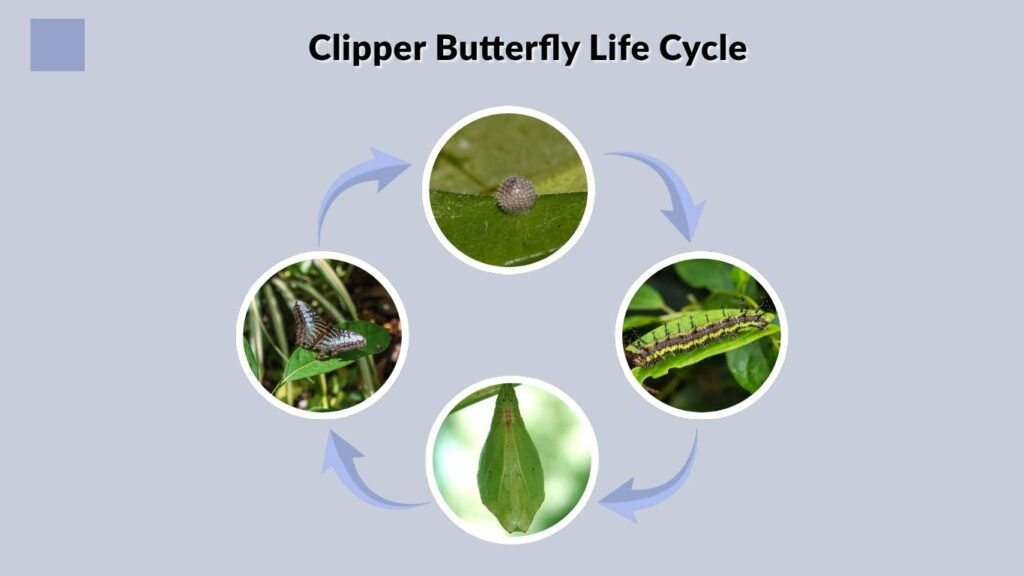
The clipper butterfly undergoes complete metamorphosis, passing through four developmental stages: egg, caterpillar, pupa, and adult. Each stage has a distinct appearance and function. Environmental conditions, including temperature and food availability, influence how quickly development occurs.
Egg Stage
Female clipper butterflies lay eggs on suitable larval host plants. After the eggs hatch, the young caterpillars begin feeding on nearby foliage.
Choosing the appropriate host plant is essential because the larvae depend on specific plants for survival and development.
Clipper Butterfly Caterpillar
Clipper butterfly caterpillars have elongated bodies covered with prominent branched spines.
Their coloration may include brown, reddish, and pale green markings, sometimes accompanied by light lateral stripes.
As they grow, caterpillars repeatedly shed their outer skin. They consume host plant leaves until reaching the final larval stage.
Clipper Butterfly Pupa
After completing the caterpillar stage, the insect forms a chrysalis suspended beneath vegetation.
The clipper butterfly pupa may appear pale green, olive, or brown, depending on its form and developmental condition.
Inside the chrysalis, the caterpillar’s body undergoes significant transformation before the adult butterfly emerges.
Adult Butterfly Stage
The newly emerged butterfly gradually expands and hardens its wings before flying.
Once fully developed, adults search for nectar, suitable resting locations, and potential mates. Reproduction begins another generation of clipper butterflies.
What Do Clipper Butterflies Eat?
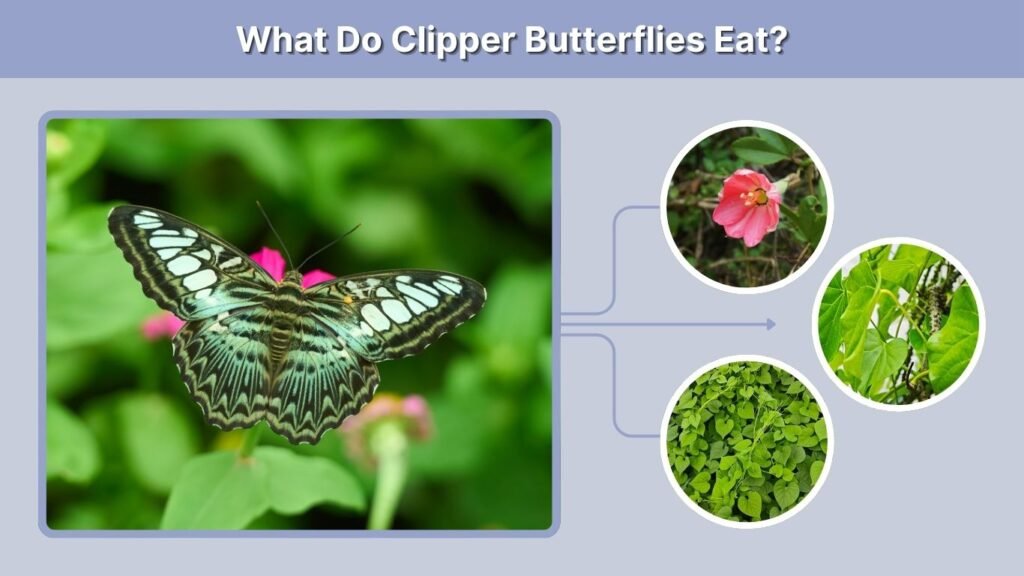
Clipper butterflies have different feeding requirements during their larval and adult stages. Caterpillars depend on specific host plants, while adults consume liquid food sources. These feeding habits connect them closely with tropical plant communities.
Clipper Butterfly Host Plants
Recorded caterpillar host plants include:
- Adenia hondala: A climbing plant used by certain populations.
- Tinospora sinensis: A vine recorded as a larval food plant.
- Tinospora cordifolia: Another reported host plant.
- Zanonia indica: A host recorded for populations in India’s Western Ghats.
Host plant preferences can vary depending on geographical location and subspecies.
Adult Feeding Habits
Adult clipper butterflies primarily consume nectar from flowering plants, including lantana.
They use their long, coiled proboscis to collect liquid food. Some individuals also visit moist ground, where they absorb water and dissolved minerals.
These feeding activities supply energy and nutrients necessary for flight and reproduction.
Clipper Butterfly Behavior
Clipper butterflies are active insects with distinctive movement patterns. Their flying abilities, feeding behavior, and resting positions make them particularly interesting to observe in natural environments.
Flight and Movement
Clipper butterflies are powerful fliers that alternate shallow, rapid wingbeats with graceful gliding.
They frequently move along forest edges, rivers, and open pathways. Their ability to glide distinguishes them from many butterflies that rely on continuous fluttering.
Are Clipper Butterflies Nocturnal or Diurnal?
Clipper butterflies are diurnal, meaning they are active during daylight hours.
They generally spend the day feeding, flying, and searching for mates. At rest, they may spread their wings, displaying their distinctive markings.
Conservation and Ecological Importance
Clipper butterflies contribute to tropical ecosystems through their interactions with flowering plants and other organisms. Adults may assist with pollination while visiting flowers, and caterpillars provide food for various predators.
Forest destruction and habitat fragmentation can reduce the availability of suitable host plants. Protecting tropical vegetation and minimizing unnecessary pesticide use can help support local butterfly populations.
FAQs
1. What Is the Scientific Name of the Clipper Butterfly?
The scientific name is Parthenos sylvia. It belongs to the Nymphalidae family and includes several geographical subspecies.
2. Are Blue and Brown Clipper Butterflies Different Species?
No. Blue and brown clippers are different color forms associated with subspecies of Parthenos sylvia.
3. How Big Is a Clipper Butterfly?
Adult clipper butterflies generally have a wingspan of approximately 3–4 inches, although individual sizes vary.
4. What Does a Clipper Butterfly Caterpillar Eat?
The caterpillars feed on selected host plants, including Adenia and Tinospora species.
5. Where Can You Find Clipper Butterflies?
They inhabit tropical forests across South and Southeast Asia, including India, Bangladesh, Thailand, Malaysia, Indonesia, and the Philippines.