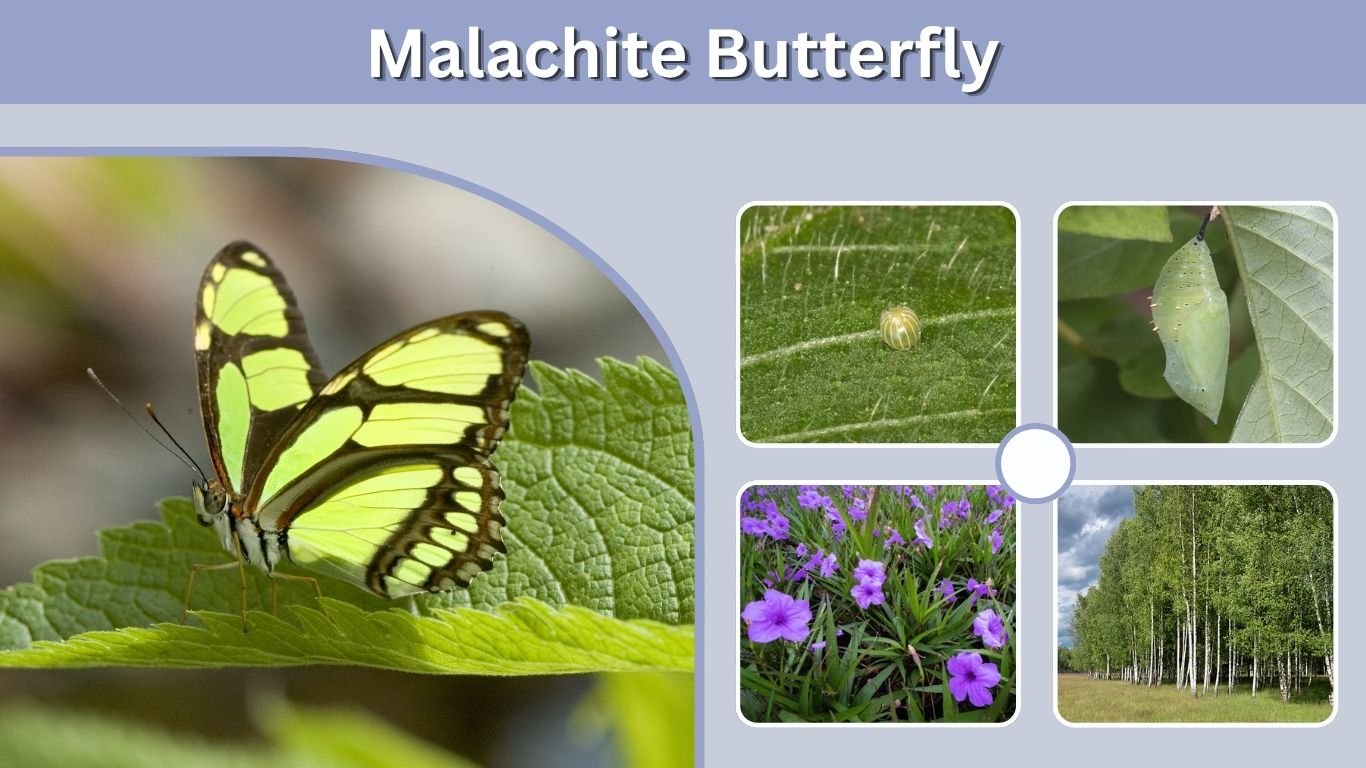
The malachite butterfly (Siproeta stelenes) is a striking tropical butterfly known for its bright green wing patches, dark brown borders, and graceful flight. Named after the green malachite mineral, this large butterfly inhabits forests, gardens, and warm landscapes across the Americas. Its unusual colors, spiny caterpillar, and green chrysalis make every stage of its life cycle fascinating to observe. This guide explains how to identify a malachite butterfly, where it lives, what it eats, how it develops, and what makes its behavior distinctive.
What Is a Malachite Butterfly?
The malachite butterfly is a large, colorful species belonging to the Nymphalidae family, commonly known as brush-footed butterflies. Its scientific name is Siproeta stelenes. This species is particularly recognizable because its wings feature translucent green markings surrounded by dark brown or nearly black patterns.
Scientific Classification
- Common Name: Malachite Butterfly
- Scientific Name: Siproeta stelenes
- Family: Nymphalidae
- Subfamily: Nymphalinae
- Genus: Siproeta
- Order: Lepidoptera
- Wingspan: Approximately 3–4 inches
- Habitat: Tropical forests, gardens, and woodland edges
- Distribution: Southern North America, Central America, the Caribbean, and South America
Why Is It Called the Malachite Butterfly?
The butterfly gets its name from malachite, a green copper mineral famous for its beautiful patterns.
Its wings display striking green patches resembling the colors of the mineral. These markings create a distinctive appearance that makes the butterfly easy to recognize among tropical species.
Malachite Butterfly Identification
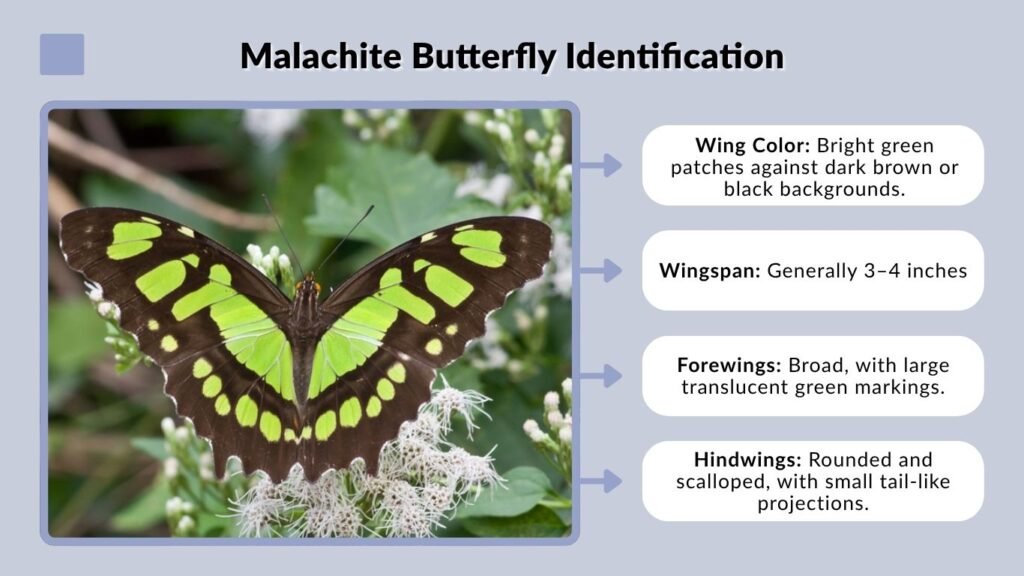
Identifying a malachite butterfly is relatively straightforward because its combination of green and dark brown wing markings is unusual. Its broad wings, slightly scalloped edges, and slow gliding flight are additional identifying characteristics. Both males and females share similar patterns.
Key Identification Features
- Wing Color: Bright green patches against dark brown or black backgrounds.
- Wingspan: Generally 3–4 inches (approximately 8–10 cm).
- Forewings: Broad, with large translucent green markings.
- Hindwings: Rounded and scalloped, with small tail-like projections.
- Underside: Orange-brown with lighter green markings.
- Body: Dark, slender body with fine markings.
- Antennae: Thin, club-shaped antennae.
Male vs. Female Malachite Butterfly
Male and female malachite butterflies look remarkably similar. Both display nearly identical green and brown wing patterns.
Females may be slightly larger, although this difference is not always obvious. Males frequently patrol forest openings or perch on vegetation while searching for potential mates.
Wing coloration alone is generally insufficient to identify their sex reliably.
Malachite Butterfly Colors and Wing Patterns
The malachite butterfly is best recognized by its translucent green markings and contrasting dark borders. However, its appearance can change depending on lighting, seasonal development, and whether the upper or lower wing surfaces are visible. These differences sometimes create confusion about its natural coloration.
Green Malachite Butterfly
The green malachite butterfly displays the species’ characteristic yellow-green or apple-green patches.
These markings appear especially vibrant when sunlight passes through the wings. Dark veins and borders separate the green areas, creating a mosaic-like appearance.
This distinctive pattern is the butterfly’s most recognizable identifying feature.
Blue and Brown Malachite Butterflies
Although people sometimes search for a blue malachite butterfly, blue is not the typical coloration of Siproeta stelenes.
The species normally has green and brown wings. Its underside appears more orange-brown, which may explain references to brown malachite butterflies.
Lighting and photography can alter perceived colors, but these appearances do not establish separate blue or brown species.
Where Do Malachite Butterflies Live?
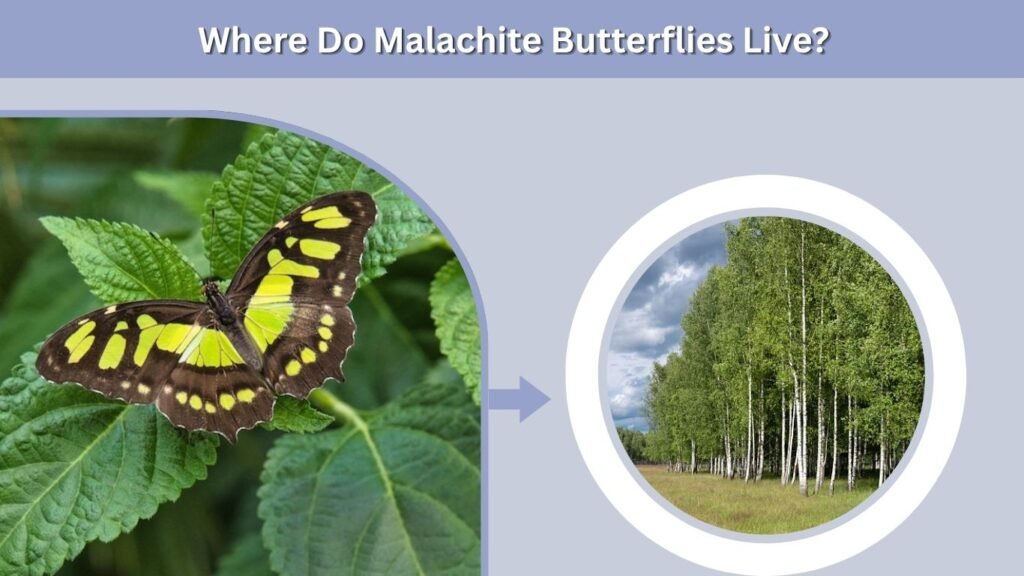
Malachite butterflies inhabit tropical and subtropical environments throughout the Americas. They prefer locations with abundant vegetation, suitable host plants, and accessible feeding areas. Their ability to use forest margins and disturbed habitats allows them to occur in several different landscapes.
Geographic Distribution
Malachite butterflies occur throughout Central America, the Caribbean, and parts of South America.
Countries such as Mexico, Belize, Costa Rica, Panama, Colombia, and Brazil provide suitable habitats.
Their geographical range also reaches the southern United States, although populations become less widespread toward the northern limits of their distribution.
Malachite Butterfly in Florida
In Florida, malachite butterflies are most closely associated with the southern part of the state.
They inhabit tropical hardwood hammocks, forest margins, gardens, and overgrown areas. Adults can be observed throughout the year where favorable conditions allow populations to persist.
The species is generally uncommon statewide but can become locally abundant.
Preferred Natural Habitat
Malachite butterflies frequently occupy forest edges, clearings, plantations, and partially shaded gardens.
They often rest beneath leaves or move slowly between vegetation. Their preferred environments provide protection, feeding opportunities, and suitable plants for caterpillar development.
Malachite Butterfly Life Cycle
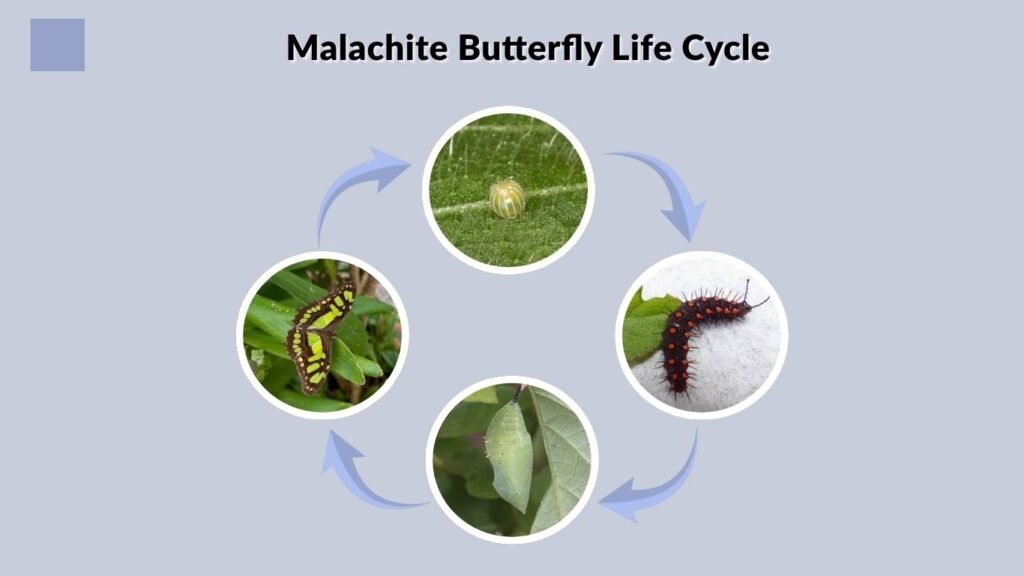
The malachite butterfly undergoes complete metamorphosis, passing through four developmental stages: egg, caterpillar, chrysalis, and adult. Each stage has distinct physical characteristics and environmental requirements. Temperature, food availability, and local conditions influence the duration of development.
Malachite Butterfly Eggs
Female malachite butterflies lay small green eggs individually on suitable host plants.
The eggs are commonly positioned on young leaves or other tender plant growth. After development, tiny caterpillars emerge and begin feeding on nearby foliage.
Malachite Butterfly Caterpillar
The malachite butterfly caterpillar has a dark body covered with prominent branched spines.
Mature larvae often appear black or dark olive with reddish-orange markings around the bases of their spines.
These caterpillars feed primarily on host plant leaves and undergo several molts before reaching maturity. Young larvae frequently remain underneath leaves, where they feed and rest.
Malachite Butterfly Chrysalis
After completing the caterpillar stage, the larva forms a chrysalis suspended from vegetation.
The malachite butterfly chrysalis is generally green and may feature distinctive pointed projections or metallic-looking details.
During this stage, the insect undergoes major internal transformation. Eventually, the fully developed butterfly emerges and gradually expands its wings.
Adult Butterfly Stage
Newly emerged adults remain relatively inactive until their wings expand and harden.
Once capable of flying, they begin searching for food and mates. Adults can survive for several weeks under favorable conditions, although longevity varies depending on the environment.
What Do Malachite Butterflies Eat?
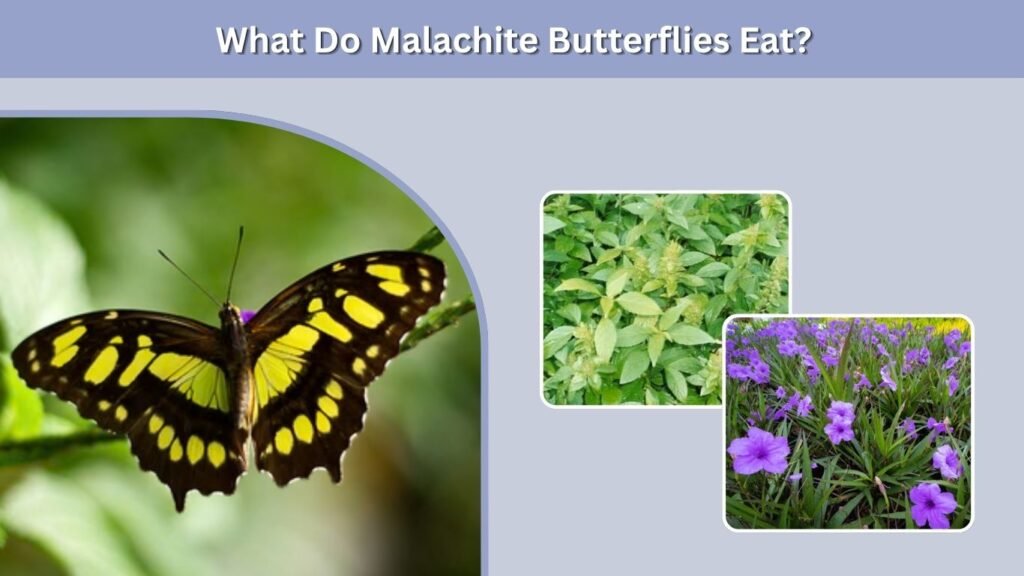
Malachite butterflies consume different foods during their larval and adult stages. Caterpillars depend on specific host plants, while adult butterflies obtain nutrients from several liquid food sources. Their feeding habits differ from those of many butterflies that rely mainly on flower nectar.
Malachite Butterfly Host Plants
Recorded larval host plants include:
- Green Shrimp Plant (Blechum pyramidatum): An important host plant for malachite caterpillars.
- Ruellia (Ruellia coccinea): Another recorded host species.
- Other Ruellia Species: Certain related plants may support larval development.
These plants belong to the Acanthaceae family. Females select suitable foliage for laying eggs, ensuring newly hatched larvae have access to food.
Adult Feeding Habits
Adult malachite butterflies frequently feed on rotting fruit, extracting sugars and other nutrients from fermenting material.
They also occasionally visit flowers for nectar and obtain nutrients from bird droppings or other decaying organic material.
Their flexible feeding habits help them survive in diverse tropical habitats.
Malachite Butterfly Behavior and Predators
Malachite butterflies display several interesting behaviors involving flight, resting, feeding, and reproduction. Their movements are especially noticeable along forest edges, where they glide between vegetation. Like other butterflies, they face threats from insect-eating predators throughout their lives.
Flight and Daily Activity
Malachite butterflies are diurnal, meaning they are active during daylight hours.
They often fly with slow, floating movements interrupted by occasional powerful wingbeats. Males may patrol suitable areas while searching for females.
At night, adults sometimes gather beneath leaves or within low vegetation to rest.
How Does a Malachite Butterfly Protect Itself?
Malachite butterflies rely partly on their surroundings to avoid predators. Their green and brown wing patterns can help them blend with vegetation.
Caterpillars possess conspicuous spines that may discourage predators from attacking.
Birds, spiders, and other insect-eating animals are potential threats, particularly to vulnerable developmental stages.
Ecological Importance of Malachite Butterflies
Malachite butterflies contribute to tropical food webs as both plant consumers and potential prey.
Their caterpillars feed on vegetation, while adults occasionally visit flowers and may contribute to pollination.
Protecting native vegetation and maintaining healthy forest habitats helps support these butterflies and other insects that depend on tropical ecosystems.
FAQs
1. What Is the Scientific Name of the Malachite Butterfly?
The scientific name is Siproeta stelenes. It belongs to the Nymphalidae family of brush-footed butterflies.
2. How Big Is a Malachite Butterfly?
Adult malachite butterflies generally have wingspans of approximately 3–4 inches (8–10 cm).
3. Where Are Malachite Butterflies Found?
They occur throughout Central America, the Caribbean, parts of South America, and southern Florida.
4. What Does a Malachite Butterfly Caterpillar Eat?
Malachite caterpillars feed on host plants belonging to the Acanthaceae family, particularly green shrimp plants and certain Ruellia species.
5. How Long Does a Malachite Butterfly Live?
Adult malachite butterflies can live for several weeks under favorable conditions. Their lifespan depends on food availability, temperature, and environmental conditions.