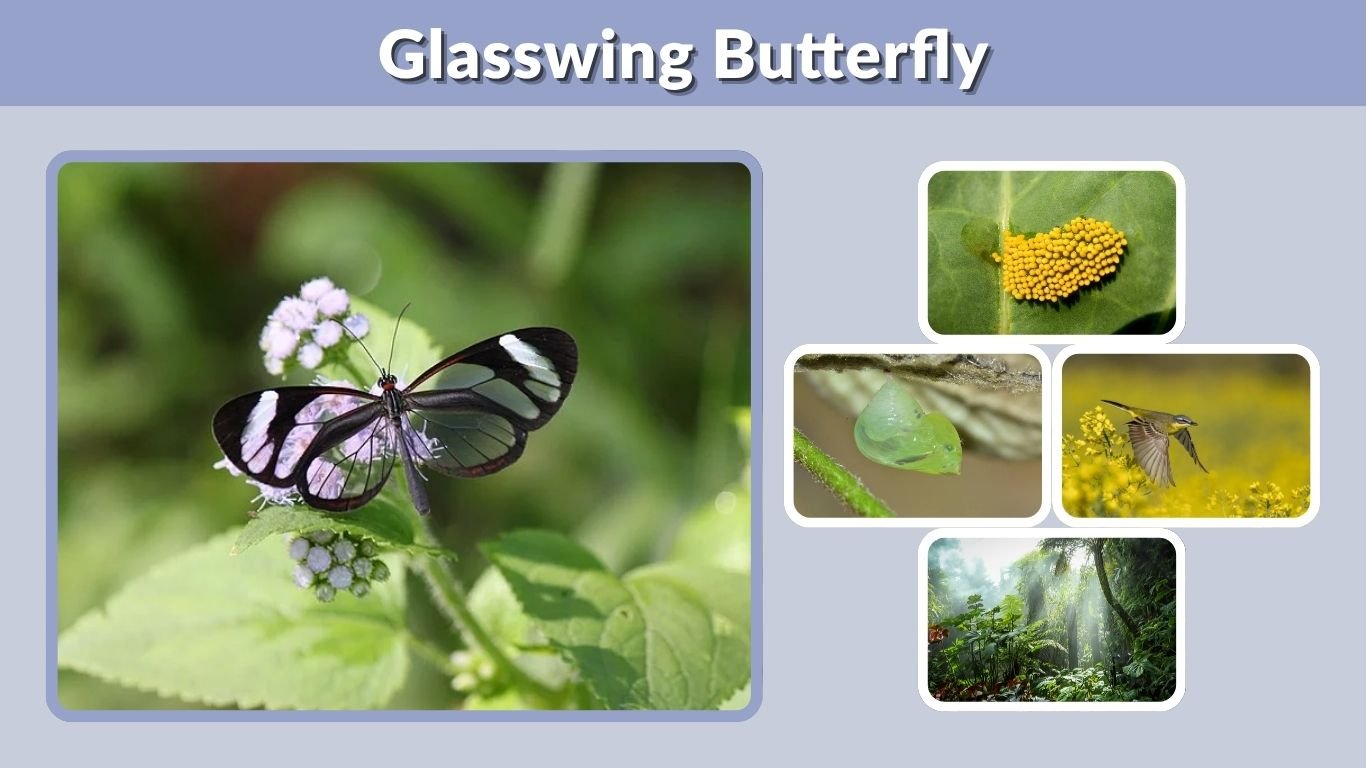
The glasswing butterfly (Greta oto) is a remarkable tropical insect known for its nearly transparent wings, which allow surrounding colors and shapes to show through. Unlike most butterflies, its wings have fewer conventional scales and microscopic structures that reduce reflected light. Native mainly to Central America and parts of South America, this delicate-looking species lives around humid forests and flowering vegetation. From its green caterpillar to its shimmering chrysalis, the glasswing offers a fascinating example of camouflage, adaptation, and transformation in the natural world.
What Is a Glasswing Butterfly?
The glasswing butterfly is a species belonging to the Nymphalidae family, commonly known as brush-footed butterflies. Its scientific name is Greta oto, and it belongs to the Ithomiini tribe. This remarkable insect is famous for its transparent wings, which make it appear almost invisible against certain backgrounds.
Scientific Classification
- Common Name: Glasswing Butterfly
- Scientific Name: Greta oto
- Family: Nymphalidae
- Subfamily: Danainae
- Tribe: Ithomiini
- Genus: Greta
- Order: Lepidoptera
- Wingspan: Approximately 2.2–2.4 inches
- Habitat: Tropical forests and woodland edges
- Distribution: Central America and parts of South America
Is the Glasswing Butterfly Real?
Yes, the glasswing butterfly is a real species found naturally in tropical environments.
Its transparent wings may appear digitally edited in photographs, but their unusual appearance results from specialized biological structures.
Scientists have studied these wings extensively because their transparency provides fascinating insights into natural camouflage and light reflection.
Glasswing Butterfly Identification
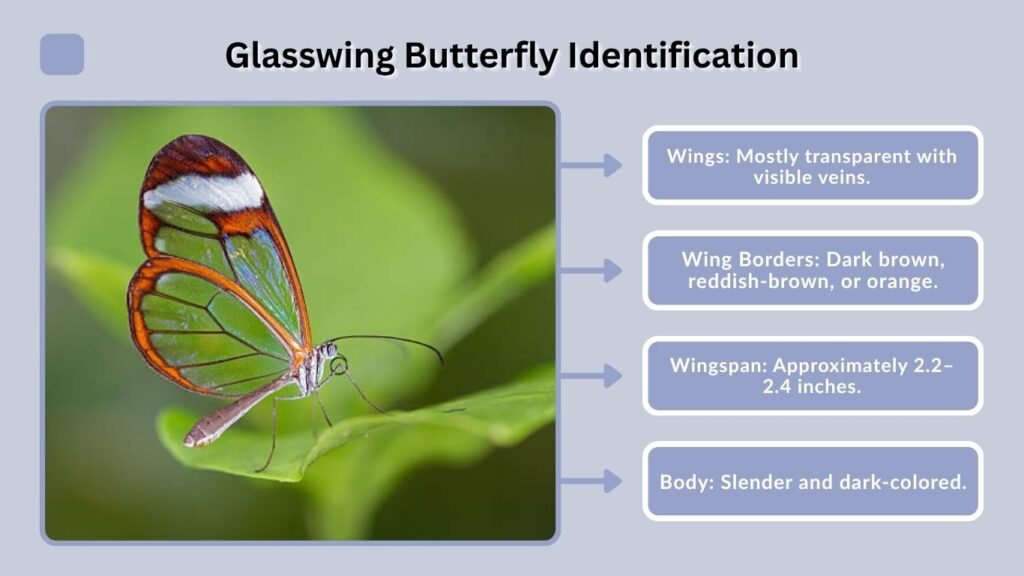
Identifying a glasswing butterfly involves examining its transparent wings, dark borders, and delicate body structure. Unlike colorful butterfly species with densely scaled wings, glasswings possess broad, nearly see-through wing sections. These features make them particularly recognizable in their natural habitats.
Key Identification Features
- Wings: Mostly transparent with visible veins.
- Wing Borders: Dark brown, reddish-brown, or orange.
- Wingspan: Approximately 2.2–2.4 inches (5.6–6.1 cm).
- Forewings: Transparent sections with dark and pale markings near the tips.
- Body: Slender and dark-colored.
- Antennae: Long, thin, and slightly clubbed.
- Flight: Gentle, fluttering movements through vegetation.
Male vs. Female Glasswing Butterfly
Male and female glasswing butterflies have similar physical appearances. Both possess transparent wings decorated with dark borders.
Males may gather at particular locations to attract females, a reproductive behavior known as lekking.
Females search for suitable host plants where they can deposit their eggs. Distinguishing the sexes through wing coloration alone is generally difficult.
Why Are Glasswing Butterfly Wings Transparent?
The transparent wings of Greta oto represent a remarkable biological adaptation. Most butterfly wings contain overlapping scales that produce visible colors. Glasswing butterflies have specialized transparent regions containing fewer scales and microscopic surface structures that reduce light reflection.
How Transparent Wings Work
The glasswing butterfly’s transparent wing membranes allow much of the incoming light to pass through.
Research has identified irregularly arranged nanoscale structures on the wing surfaces. These structures reduce reflection across different viewing angles.
As a result, the wings remain difficult to detect against surrounding vegetation, providing an effective form of camouflage.
Glasswing Butterfly Adaptations
Transparency helps glasswing butterflies blend into complex forest backgrounds, potentially making them harder for predators to locate.
Their wings remain functional despite their delicate appearance.
Scientists have also investigated these natural anti-reflective properties for possible applications in optical surfaces, display technology, and transparent coatings.
Where Do Glasswing Butterflies Live?
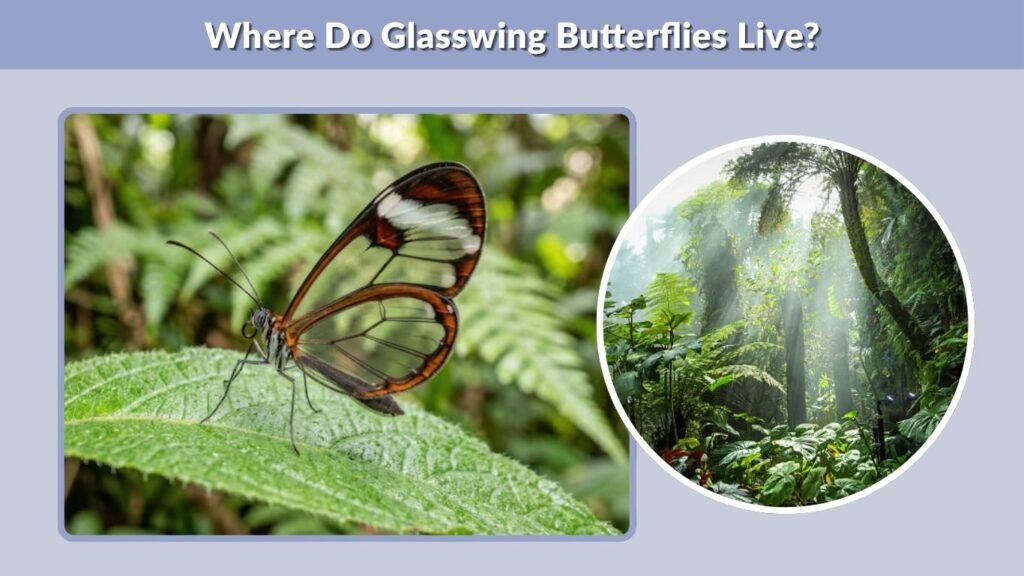
Glasswing butterflies inhabit warm, humid environments across Central America and parts of South America. They are particularly associated with tropical forests, where vegetation provides shelter, nectar, and suitable caterpillar host plants.
Geographic Distribution
Glasswing butterflies are found in countries such as Mexico, Costa Rica, Panama, Colombia, and Ecuador.
They are especially associated with Central American tropical forests. Their broader reported range extends into northern and western South America.
Occasional records farther north do not mean that the species maintains widespread permanent populations there.
Preferred Natural Habitat
Glasswing butterflies commonly inhabit forest edges, clearings, secondary forests, and vegetation near streams.
They frequently occur in humid environments containing flowering plants and suitable caterpillar food sources.
Although some transparent-winged butterflies inhabit Australia, Greta oto is not considered a native Australian species.
Glasswing Butterfly Colors and Appearance
The most recognizable feature of the glasswing butterfly is its almost colorless wing membrane. However, the borders and markings can appear brown, orange, reddish, or black. Lighting conditions may influence the appearance of these colors, creating confusion about different glasswing varieties.
Pink, Purple, and Blue Glasswing Butterflies
Online searches frequently mention pink, purple, and blue glasswing butterflies.
However, these are not established natural color forms of Greta oto. Some photographs may show altered colors, artistic interpretations, or entirely different butterfly species.
Authentic Greta oto butterflies have largely transparent wings with naturally darker borders and distinct pale markings.
Glasswing Butterfly Life Cycle
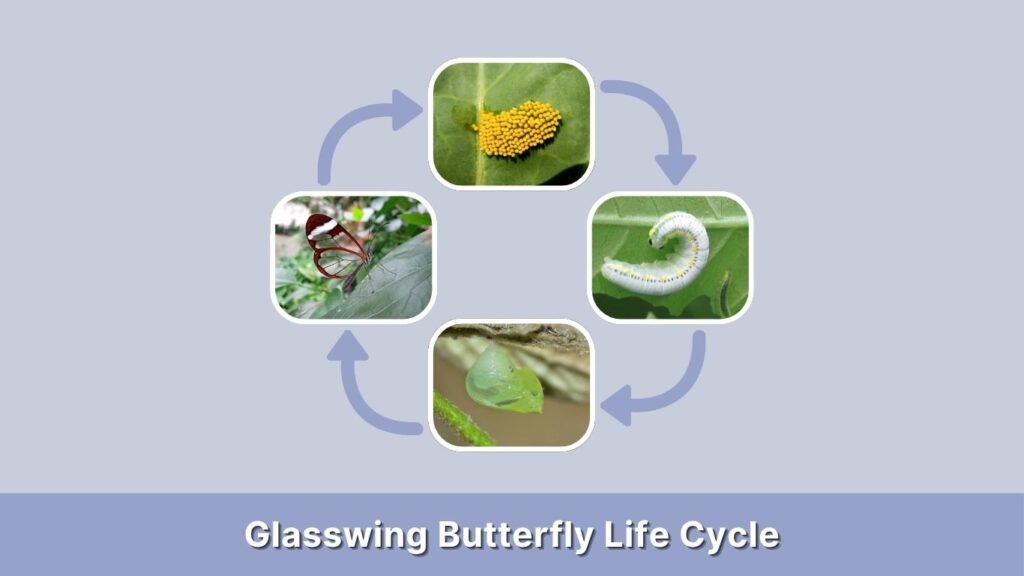
The glasswing butterfly undergoes complete metamorphosis, developing through four stages: egg, caterpillar, chrysalis, and adult. Each stage has unique characteristics that support growth, survival, and reproduction. Temperature and environmental conditions influence the overall development period.
Glasswing Butterfly Eggs
Female glasswing butterflies typically lay eggs individually on suitable host plants.
These small eggs are commonly placed on the undersides of leaves, providing newly hatched caterpillars with immediate access to food.
After embryonic development, the young caterpillars emerge and begin consuming plant tissue.
Glasswing Butterfly Caterpillar
Glasswing butterfly caterpillars have greenish bodies with pale yellow or white markings.
Mature larvae may display longitudinal stripes and small projections along their bodies.
They feed on selected plants in the nightshade family and pass through several molts before becoming fully grown.
Their coloration helps them blend with surrounding leaves.
Glasswing Butterfly Chrysalis
The glasswing butterfly chrysalis is particularly distinctive because of its shiny, metallic-looking appearance.
Initially greenish, the developing pupa may acquire silvery reflective surfaces that resemble a tiny mirror.
It hangs from vegetation while the insect undergoes internal transformation. The pupal stage can last approximately one week under favorable controlled conditions, although development varies.
Adult Butterfly Stage
After metamorphosis, the adult butterfly emerges from its chrysalis.
Its wings gradually expand and harden before flight becomes possible.
Mature butterflies begin feeding, searching for mates, and participating in the reproductive cycle.
What Do Glasswing Butterflies Eat?
Glasswing butterflies have different feeding requirements during their larval and adult stages. Caterpillars consume specific host plants, while adults obtain nectar and other liquid nutrients. Their food choices are closely connected to their natural habitat.
Glasswing Butterfly Host Plants
Recorded larval host plants include:
- Cestrum nocturnum: Night-blooming jasmine, used successfully in captive rearing.
- Cestrum lanatum: A recorded natural host plant.
- Cestrum standleyi: Another documented host species.
These plants belong to the Solanaceae family. Some contain toxic compounds, making them unsuitable for human consumption.
Adult Feeding Habits
Adult glasswing butterflies consume nectar from flowering plants, including lantana and other suitable tropical flowers.
They may also obtain nutrients from bird droppings.
Certain flowers provide chemical compounds that contribute to their reproductive biology and chemical defenses.
Are Glasswing Butterflies Poisonous?
Glasswing butterflies can acquire defensive chemicals from their food sources. Caterpillars feed on plants containing potentially harmful compounds, while adults may obtain protective chemicals from particular flowers.
These substances can make the butterflies unpalatable to certain predators.
However, glasswing butterflies are not dangerous to humans through ordinary observation or casual contact. They do not sting, and they should not be handled unnecessarily because their wings are delicate.
Glasswing Butterfly Predators and Survival
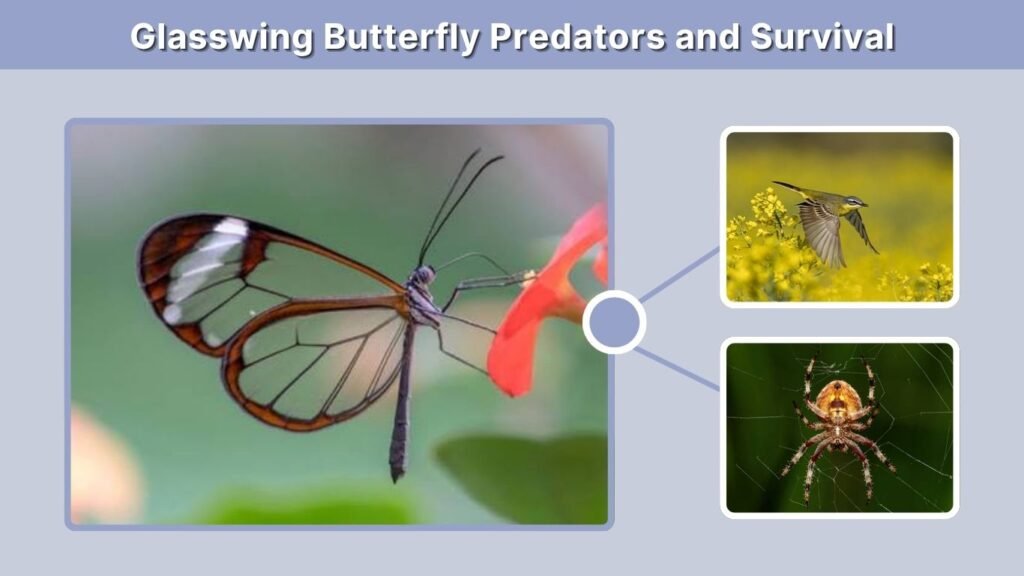
Glasswing butterflies face potential threats from birds, spiders, and other insect-eating predators. Their survival depends on camouflage, chemical defenses, and suitable habitats.
How Do Glasswing Butterflies Protect Themselves?
Their transparent wings make them less noticeable against vegetation.
Some defensive chemicals obtained through feeding may also discourage predators.
These adaptations work together to improve survival, although they do not provide complete protection.
Are Glasswing Butterflies Endangered?
Glasswing butterflies can be affected by deforestation, habitat fragmentation, and the disappearance of suitable host plants.
However, local environmental threats should not be confused with a confirmed global endangered classification.
Protecting tropical forests and native vegetation can help conserve glasswing butterflies and other specialized tropical insects.
Interesting Glasswing Butterfly Facts
Several distinctive characteristics make glasswing butterflies fascinating subjects for wildlife enthusiasts and scientific researchers.
- Their scientific name is Greta oto.
- Their transparent wings allow surrounding objects to remain visible through them.
- Specialized nanostructures help reduce reflections from their wings.
- Their chrysalis can develop a striking metallic appearance.
- Caterpillars depend on selected Cestrum host plants.
- Their wing structure has inspired research into anti-reflective materials.
FAQs
1. What Is the Scientific Name of the Glasswing Butterfly?
The scientific name is Greta oto. It belongs to the Nymphalidae family and the Ithomiini tribe.
2. Where Are Glasswing Butterflies Found?
Glasswing butterflies primarily inhabit Central America and parts of South America, especially tropical forests in countries such as Costa Rica, Panama, and Colombia.
3. Why Are Glasswing Butterfly Wings Transparent?
Their wings contain reduced or modified scales and microscopic structures that allow light to pass through while minimizing reflection.
4. What Does a Glasswing Butterfly Caterpillar Eat?
Glasswing caterpillars feed on selected Cestrum species, including Cestrum nocturnum, Cestrum lanatum, and Cestrum standleyi.
5. Are Pink and Purple Glasswing Butterflies Real?
Pink and purple are not recognized natural color forms of Greta oto. Such images may represent artistic modifications or different butterfly species.