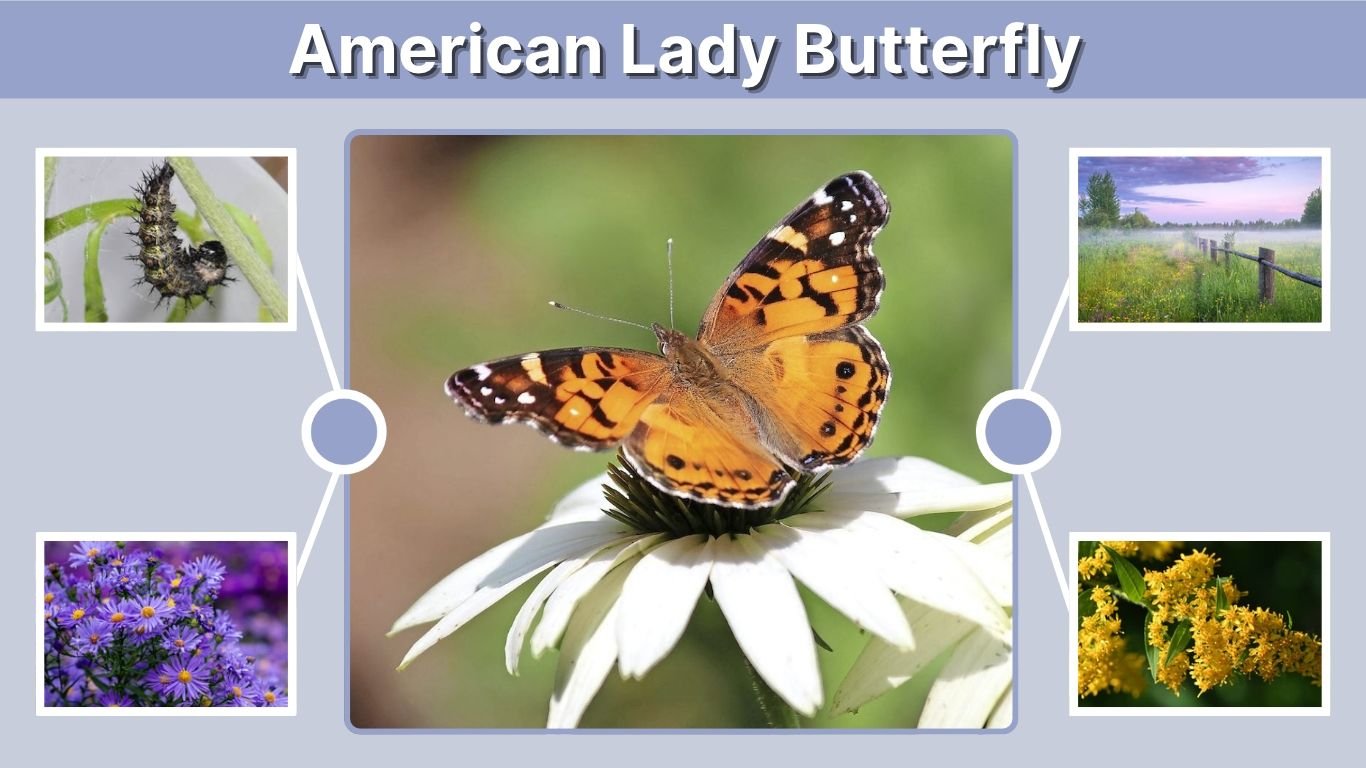
The American lady butterfly (Vanessa virginiensis), also called the American painted lady, is a colorful butterfly found across much of North America. Its orange, brown, and black wings resemble those of the painted lady, but two large eyespots underneath the hindwings make identification easier. This butterfly visits sunny gardens, meadows, and roadsides, while its caterpillars feed on plants such as cudweed, pussytoes, and pearly everlasting. Learning about its appearance, host plants, life cycle, and seasonal movements reveals how this adaptable butterfly survives in different environments.
What Is the American Lady Butterfly?
The American lady butterfly is a medium-sized species belonging to the brush-footed butterfly family, Nymphalidae. Its scientific name is Vanessa virginiensis, and it is closely related to the painted lady and West Coast lady butterflies.
American ladies are active during daylight, frequently visiting flowering plants for nectar. Their colorful wings and distinctive eyespots make them recognizable in gardens and natural habitats.
Unlike moths, American ladies have clubbed antennae and are primarily active during the day.
What Does an American Lady Butterfly Look Like?
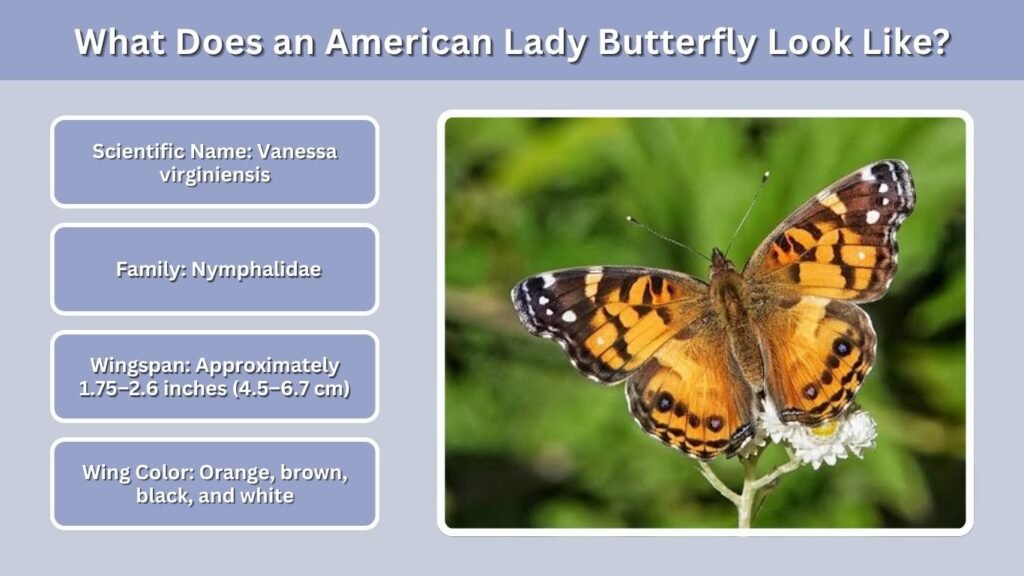
American lady butterflies have orange-brown wings decorated with black patches and white markings. Their hindwings display distinctive eyespots that help separate them from similar butterflies.
The underside features intricate gray, brown, and white patterns that provide camouflage when their wings are closed.
American Lady Butterfly Identification
- Scientific Name: Vanessa virginiensis
- Family: Nymphalidae
- Wingspan: Approximately 1.75–2.6 inches (4.5–6.7 cm)
- Wing Color: Orange, brown, black, and white
- Forewings: Dark tips with white spots and orange patches
- Hindwings: Two large eyespots underneath each hindwing
- Antennae: Slender with club-shaped tips
- Body: Brownish with fine hairs and six legs
Males and females have similar wing patterns, making them difficult to distinguish without closely examining their anatomy or behavior.
Where Do American Lady Butterflies Live?
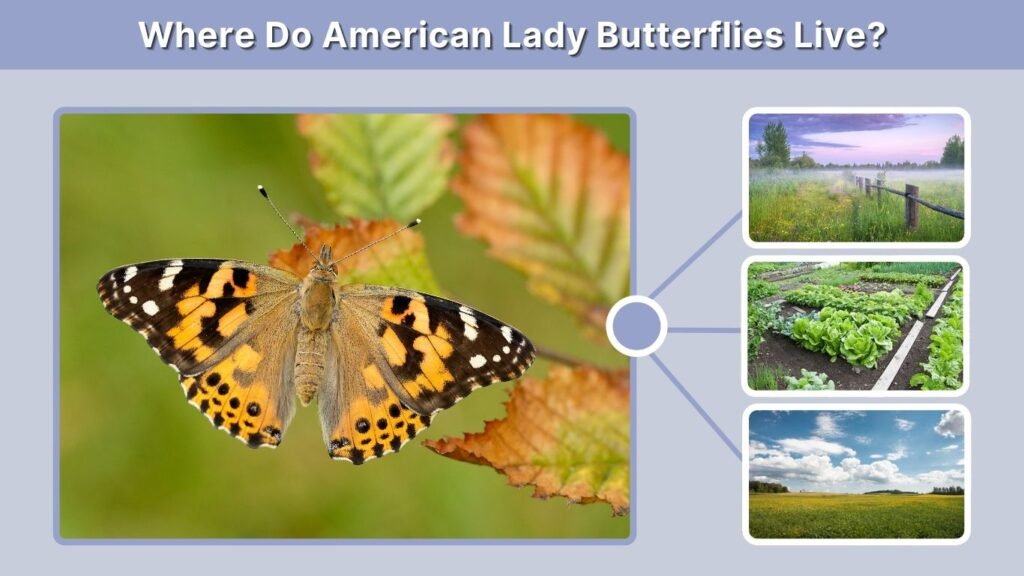
American lady butterflies inhabit much of North America, from southern Canada through the United States and Mexico into Central America. Their range also extends into northern South America.
They prefer open habitats where flowering plants and suitable caterpillar host plants grow.
American Lady Butterfly Habitat
These butterflies commonly inhabit meadows, gardens, grasslands, roadsides, dunes, abandoned fields, and forest edges.
They are particularly attracted to sunny locations containing nectar-producing flowers. Adults frequently rest on vegetation or exposed ground while searching for food and potential mates.
American ladies also occur in California, Ontario, Virginia, Michigan, and other regions, although their seasonal abundance varies.
What Are the Host Plants for American Lady Butterflies?
American lady caterpillars rely primarily on specific plants from the sunflower family, Asteraceae. Female butterflies lay eggs on suitable host plants so newly hatched caterpillars have immediate access to food.
These plants are essential for reproduction and successful larval development.
Common American Lady Butterfly Host Plants
- Cudweed (Gamochaeta spp.): Important host plants in warmer regions.
- Pearly Everlasting (Anaphalis margaritacea): A common caterpillar food plant in northern habitats.
- Pussytoes (Antennaria spp.): Low-growing plants that support developing caterpillars.
- Sweet Everlasting (Pseudognaphalium obtusifolium): Another recognized host plant, sometimes called rabbit tobacco.
- Pennsylvania Everlasting (Gamochaeta pensylvanica): A frequently used host in southeastern regions.
Planting locally native host species can encourage American ladies to reproduce in a garden.
What Does an American Lady Butterfly Caterpillar Look Like?
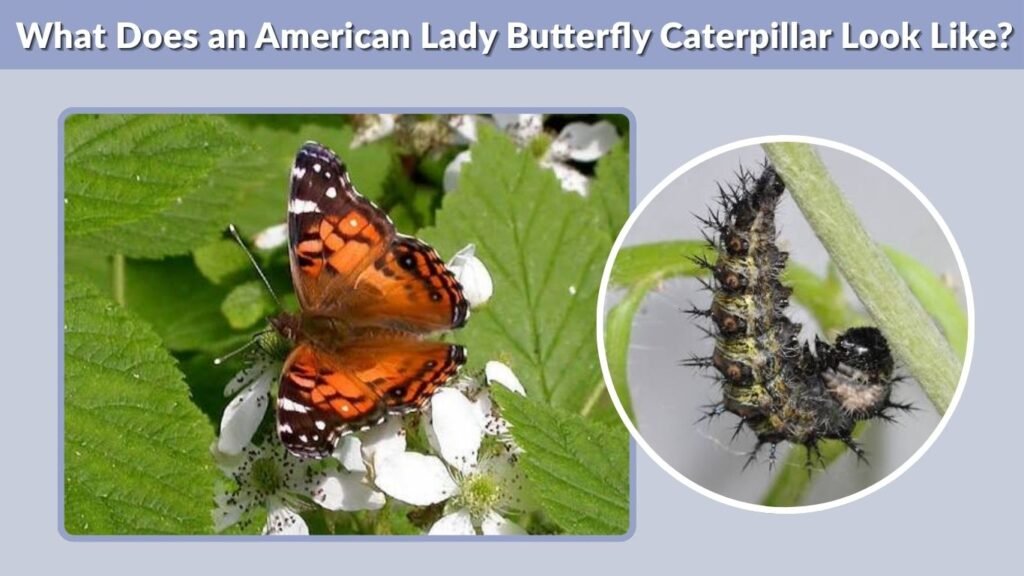
American lady butterfly caterpillars have striking patterns and spiny bodies. Their coloration varies, but mature larvae often appear black or yellowish with contrasting bands and pale spots.
The branched spines along their bodies help discourage predators.
Caterpillar Feeding Behavior
American lady caterpillars feed primarily on the leaves of their host plants. Unlike some caterpillars that feed openly, they create protective shelters by joining leaves and plant material together with silk.
These small nests help conceal them from predators and changing environmental conditions.
Caterpillars often remain inside their shelters during daylight and emerge to feed at night or during cloudy weather.
American Lady Butterfly Life Cycle
The American lady butterfly undergoes complete metamorphosis, developing through four distinct stages: egg, larva, pupa, and adult.
Development depends on temperature, food availability, and seasonal conditions.
Four Stages of the Life Cycle
- Egg Stage: Females lay small, pale yellow-green eggs individually on host plant leaves. Embryos develop inside before hatching.
- Caterpillar Stage: The larvae feed on host plants, construct protective silk shelters, and repeatedly molt as they grow.
- Chrysalis Stage: Mature caterpillars attach themselves to a silk pad and transform into hanging pupae. The chrysalis may appear greenish or gray with darker markings.
- Adult Stage: A fully developed butterfly emerges, expands and dries its wings, and eventually begins feeding and reproducing.
American ladies can produce several generations annually, especially in warmer regions with extended growing seasons.
American Lady Butterfly vs. Painted Lady Butterfly
American lady and painted lady butterflies look similar because both belong to the genus Vanessa. Their orange, black, and white wing patterns can make identification confusing.
However, the underside of their hindwings provides a reliable distinguishing feature.
Differences in Appearance
The American lady (Vanessa virginiensis) has two large eyespots on the underside of each hindwing. Its forewing also has a somewhat notched outer edge.
The painted lady (Vanessa cardui) generally has four smaller eyespots arranged along the underside of each hindwing.
Their caterpillar host plants also differ. American lady larvae commonly feed on everlastings and pussytoes, while painted lady caterpillars use a wider variety of plants, including thistles.
What Do American Lady Butterflies Eat?
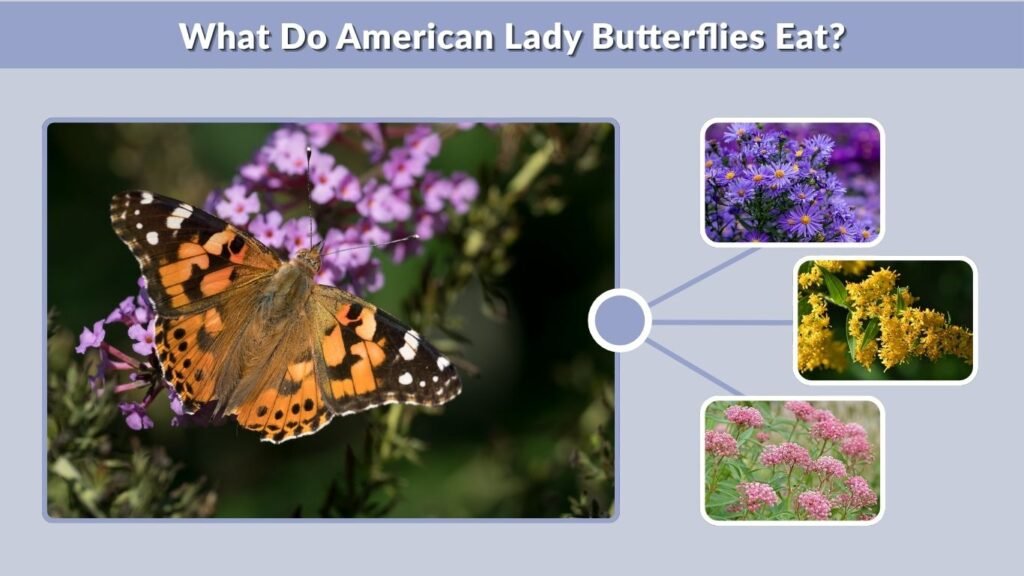
Adult American lady butterflies primarily feed on flower nectar. They use their long, coiled proboscis to collect liquid food from blossoms.
Common nectar sources include asters, goldenrod, milkweed, dogbane, coneflowers, and other flowering plants.
Adults occasionally consume tree sap, fermenting fruit juices, and moisture containing dissolved nutrients.
Caterpillars, however, feed on host plant foliage rather than flower nectar.
Do American Lady Butterflies Migrate?
American lady butterflies show seasonal movements across North America. Populations in warmer southern regions can survive winter and help repopulate northern areas during spring.
Northward movements are documented, but southward migration patterns are less clearly understood.
Their presence in colder regions, including parts of Canada, often depends on seasonal arrivals and favorable weather.
How to Attract American Lady Butterflies to Your Garden
Creating a butterfly-friendly garden requires both caterpillar host plants and nectar-rich flowers.
Providing these resources supports different stages of the American lady butterfly’s life cycle.
Gardening Tips for American Lady Butterflies
- Plant Host Species: Grow native pussytoes, cudweed, or pearly everlasting.
- Provide Nectar: Include asters, milkweed, goldenrod, and coneflowers.
- Choose Sunny Areas: Place flowering plants where they receive adequate sunlight.
- Avoid Pesticides: Minimize chemicals that can harm caterpillars and adult butterflies.
- Preserve Natural Vegetation: Allow suitable host plants to remain in less-managed garden areas.
A garden containing both food sources and protected vegetation can provide valuable breeding habitat.
FAQs
1. How Long Does an American Lady Butterfly Live?
Adult American lady butterflies generally live for several weeks, although their lifespan varies with weather, predators, and environmental conditions. Their complete development from egg to adult also changes with temperature and food availability.
2. Is the American Lady Butterfly Rare?
The American lady butterfly is widespread throughout much of North America. However, its abundance varies by region and season. Some northern populations depend on migrating butterflies arriving from warmer areas, causing noticeable yearly population changes.
3. What Do American Lady Butterfly Eggs Look Like?
American lady butterfly eggs are tiny, pale yellow-green, and somewhat barrel-shaped. Females generally place them individually on the upper surfaces of host plant leaves. The emerging caterpillars begin feeding on suitable vegetation.
4. What Does an American Lady Butterfly Chrysalis Look Like?
The American lady chrysalis is approximately three-quarters of an inch long. Its coloration varies from greenish with purplish markings to gray with darker patterns. It hangs vertically from a silk attachment while the developing butterfly undergoes metamorphosis.
5. Are American Lady Butterflies Harmful?
American lady butterflies are harmless to humans. They do not sting and are not dangerous to handle, although touching their delicate wings can cause damage. Their caterpillars feed on certain plants but generally do not pose serious problems in gardens.