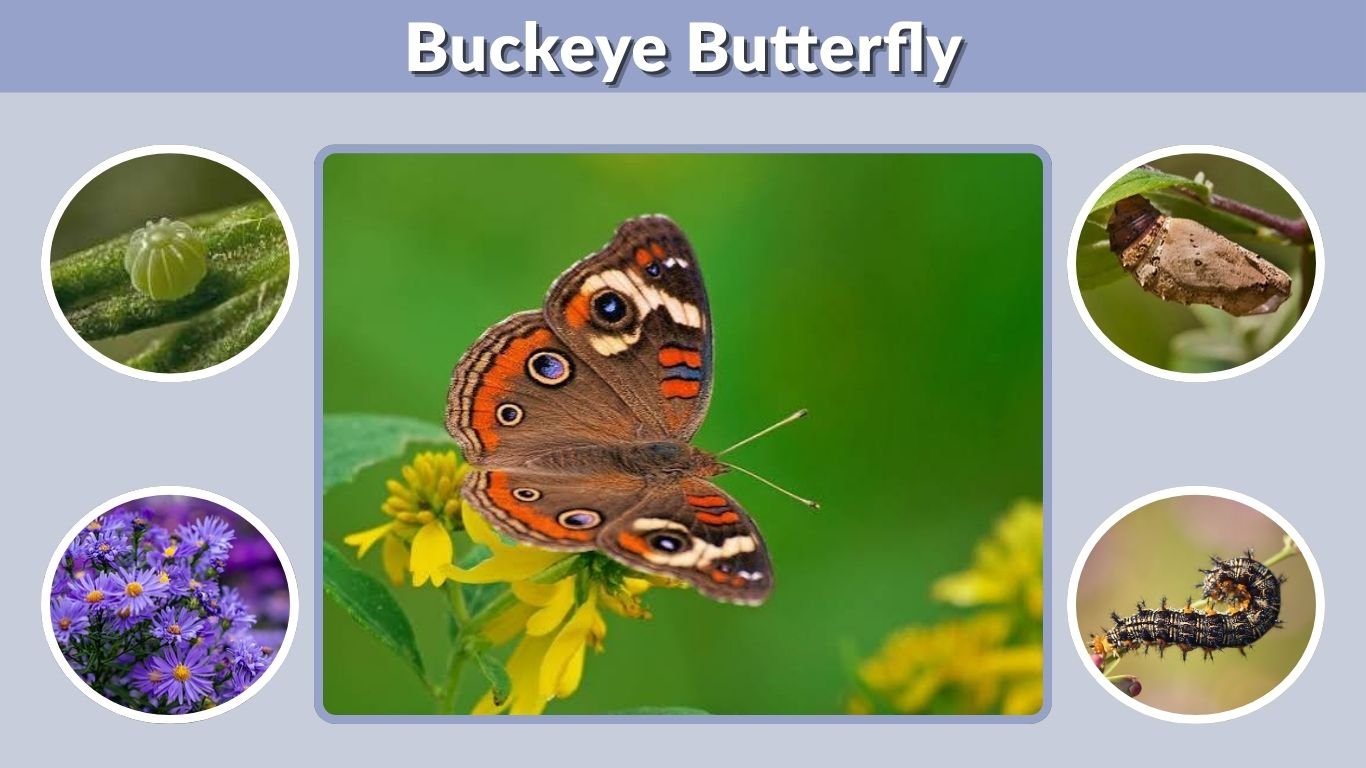
The buckeye butterfly (Junonia coenia), commonly called the common buckeye, is a beautiful North American butterfly recognized by its large, colorful eyespots. Its brown wings feature striking orange, black, white, and blue markings that resemble animal eyes. These butterflies inhabit sunny meadows, gardens, roadsides, and open fields, where they feed on flower nectar. Their caterpillars depend on host plants such as plantain, snapdragon, and false foxglove. Understanding the buckeye butterfly’s appearance, habitat, diet, and life cycle reveals fascinating details about this distinctive species.
What Is a Buckeye Butterfly?
The common buckeye belongs to the brush-footed butterfly family, Nymphalidae. Its scientific name is Junonia coenia, and it is widely distributed across the United States and parts of Mexico and Canada.
The butterfly gets its name from the conspicuous circular eyespots on its wings. These markings resemble eyes and may help discourage predators.
Common buckeyes are active during daylight and frequently visit flowering plants. They are also known for their quick, low flight and habit of resting on bare ground.
What Does a Buckeye Butterfly Look Like?
Buckeye butterflies have brown wings decorated with orange bands, white patches, and prominent eyespots. Their distinctive markings make them relatively easy to recognize when their wings are open.
Both males and females have similar appearances, although females are generally somewhat larger.
Buckeye Butterfly Identification
- Scientific Name: Junonia coenia
- Family: Nymphalidae
- Wingspan: Approximately 1.6–2.75 inches (4.2–7 cm)
- Wing Color: Brown with orange, black, white, and blue markings
- Forewings: Two orange bars, white markings, and prominent eyespots
- Hindwings: Two noticeable eyespots on each wing
- Antennae: Slender with club-shaped tips
- Body: Brownish with fine hairs
The underside of the wings often appears less colorful than the upper surface. Its coloration also changes seasonally, sometimes becoming reddish during fall.
What Does a Buckeye Butterfly Caterpillar Look Like?
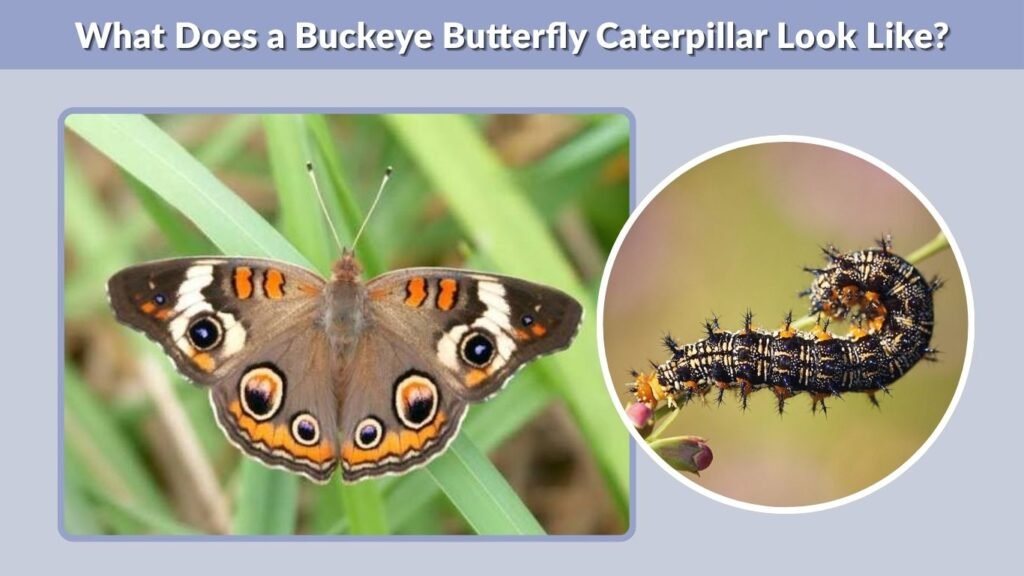
The buckeye butterfly caterpillar has a dark body covered with branched spines. Mature caterpillars commonly display black coloration with white markings and orange patches.
Although the spines may look intimidating, buckeye caterpillars are generally harmless to humans.
Caterpillar Feeding Behavior
Buckeye caterpillars feed on the leaves of selected host plants. They are usually solitary and spend much of their development eating and growing.
As they increase in size, they shed their outer skin several times.
Certain host plants contain defensive chemicals that caterpillars can retain, helping discourage some predators.
What Are the Host Plants for Buckeye Butterflies?
Female buckeye butterflies lay their eggs on plants that provide suitable food for developing caterpillars.
The species uses several herbaceous plants, particularly members of the plantain and related plant families.
Common Buckeye Butterfly Host Plants
- Plantain (Plantago spp.): One of the most important caterpillar host plants.
- Snapdragon (Antirrhinum spp.): Garden flowering plants that can support buckeye larvae.
- Toadflax (Linaria spp.): Herbaceous plants used for caterpillar development.
- False Foxglove (Agalinis spp.): Native wildflowers that provide larval food.
- Bluehearts (Buchnera americana): A recognized host plant in southeastern habitats.
- Frogfruit (Phyla nodiflora): A low-growing flowering plant used by buckeye caterpillars.
- Twinflower (Dyschoriste spp.): Another host plant group used in suitable regions.
Growing locally appropriate host plants can encourage female buckeyes to lay eggs in a butterfly garden.
Buckeye Butterfly Life Cycle
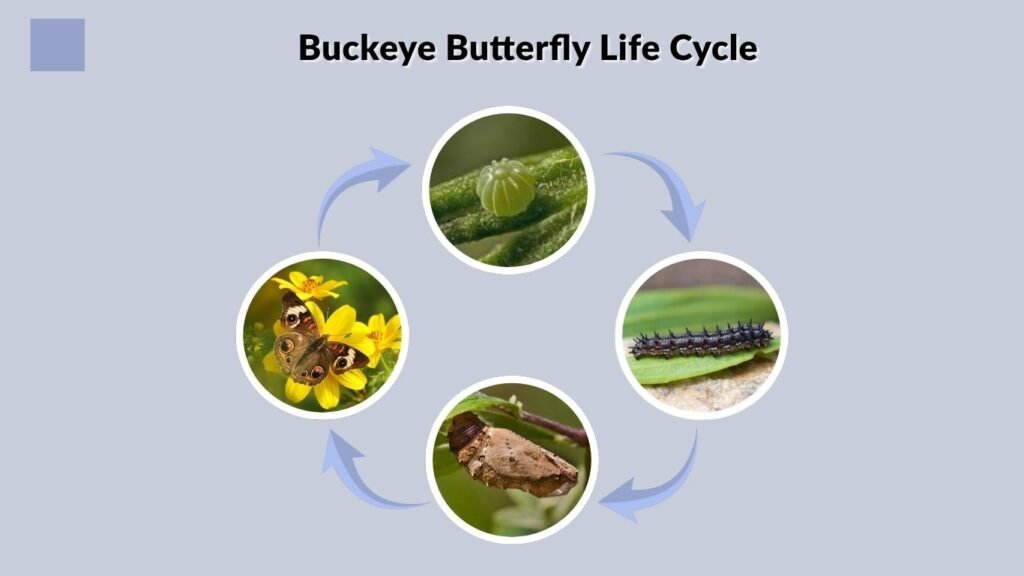
The buckeye butterfly undergoes complete metamorphosis, developing through four stages: egg, caterpillar, chrysalis, and adult.
Development varies depending on temperature, food availability, and environmental conditions. Multiple generations may develop during favorable growing seasons.
Four Stages of Buckeye Butterfly Development
- Egg Stage: Females lay small green eggs individually on host plant leaves or buds. The developing caterpillar eventually emerges from the egg.
- Caterpillar Stage: Young larvae feed on host plant leaves and undergo several molts as they grow. Mature caterpillars have dark bodies covered with branched spines.
- Chrysalis Stage: The mature caterpillar forms a hanging chrysalis. The pupa generally appears brown with darker markings, helping it blend into surrounding vegetation.
- Adult Stage: A developed butterfly emerges from the chrysalis, expands its wings, and begins searching for nectar and potential mates.
Buckeye butterflies can produce several generations annually in warmer regions.
Where Do Buckeye Butterflies Live?
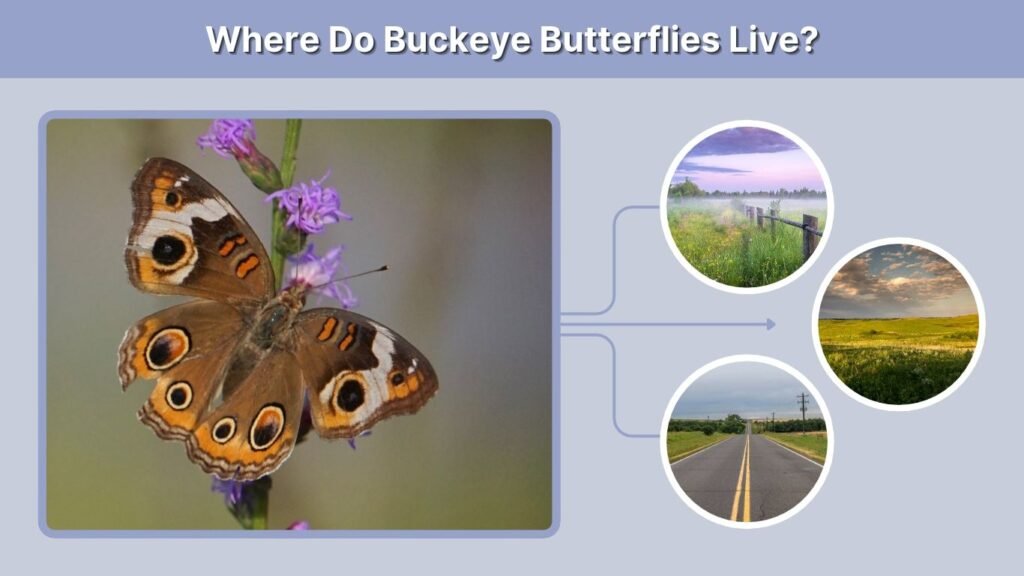
Common buckeye butterflies inhabit open, sunny environments with low vegetation and abundant flowering plants.
Their preferred habitats include meadows, grasslands, gardens, agricultural fields, roadsides, beaches, and woodland edges.
They are widespread across the southern United States and regularly expand northward during warmer months.
Buckeye Butterflies in California and Florida
In California, common buckeyes inhabit valleys, grasslands, gardens, and open coastal environments. Their numbers may fluctuate depending on winter survival and seasonal migration.
In Florida, common buckeyes occur throughout the state. The warm climate allows adults to remain active during much of the year.
What Do Buckeye Butterflies Eat?

Adult buckeye butterflies mainly consume flower nectar. They use a long, flexible proboscis to reach nectar inside blossoms.
Common nectar sources include asters, goldenrod, coneflowers, coreopsis, and other flowering plants.
Adults occasionally visit decaying fruit and moist ground to obtain additional nutrients.
Unlike adults, buckeye caterpillars consume host plant foliage and cannot survive on nectar alone.
Do Buckeye Butterflies Migrate?
Common buckeye butterflies undertake seasonal movements across North America.
Populations in warmer southern regions expand northward during spring and summer, reaching areas where they cannot reliably survive winter.
During late summer and fall, many adults migrate southward toward warmer habitats.
Buckeyes are often observed in northern states during summer, but their populations may disappear when freezing weather arrives.
Common Buckeye vs. Other Buckeye Butterflies
Several closely related buckeye species have similar wing patterns, making identification challenging in areas where their ranges overlap.
The common buckeye is the most widespread species in the United States, but other Junonia species occupy particular regions.
Tropical and Mangrove Buckeye Butterflies
Tropical buckeyes inhabit warmer environments, especially parts of southern Florida and the Caribbean. Their wing patterns resemble those of common buckeyes but differ in details.
Mangrove buckeyes primarily occupy coastal habitats associated with mangrove vegetation.
Names such as gray buckeye and blue buckeye may also appear in searches. Gray can describe color variations, while Blue Buckeye is also the name of an African violet cultivar, not a standard common name for a separate buckeye butterfly species.
How to Attract Buckeye Butterflies to Your Garden

Creating suitable breeding and feeding habitats can help attract common buckeyes to residential gardens.
These butterflies prefer sunny locations with nectar-producing flowers, caterpillar host plants, and areas of low vegetation.
Gardening Tips for Buckeye Butterflies
- Plant Host Species: Grow native plantain, false foxglove, or other suitable larval food plants.
- Provide Nectar Flowers: Include asters, goldenrod, coneflowers, and coreopsis.
- Choose Sunny Locations: Establish flowering areas with adequate sunlight.
- Avoid Pesticides: Minimize chemicals that can harm butterflies and caterpillars.
- Preserve Natural Vegetation: Maintain some low-growing plants and open ground.
Combining nectar sources and host plants creates a more complete butterfly habitat.
FAQs
1. How Long Do Buckeye Butterflies Live?
Adult common buckeye butterflies generally survive for several weeks, although their lifespan varies with temperature, predators, and food availability. Their complete life cycle takes longer and depends on environmental conditions. Multiple generations can develop during warm growing seasons.
2. Are Buckeye Butterflies Poisonous?
Buckeye butterflies are not dangerous to humans. Their caterpillars can retain defensive chemicals from certain host plants, which may discourage predators. However, their spines are not considered venomous, and the butterflies do not sting or bite people.
3. What Does a Buckeye Butterfly Symbolize?
Buckeye butterflies are sometimes associated with transformation, awareness, protection, and personal growth in symbolic interpretations. Their prominent eyespots can inspire associations with observation and vigilance. These meanings are cultural or personal interpretations rather than scientifically established characteristics of the species.
4. What Is the Difference Between Male and Female Buckeye Butterflies?
Male and female common buckeye butterflies have similar colors and wing patterns. Females are generally larger, while males frequently perch on bare ground or low vegetation while watching for potential mates. Behavior and body size can provide identification clues.
5. Why Do Buckeye Butterflies Have Eyespots?
Buckeye butterflies have large circular wing markings that resemble eyes. These eyespots may discourage predators or redirect attacks away from vulnerable body parts. Their appearance is one of the species’ most distinctive adaptations and helps distinguish common buckeyes from many other butterflies.