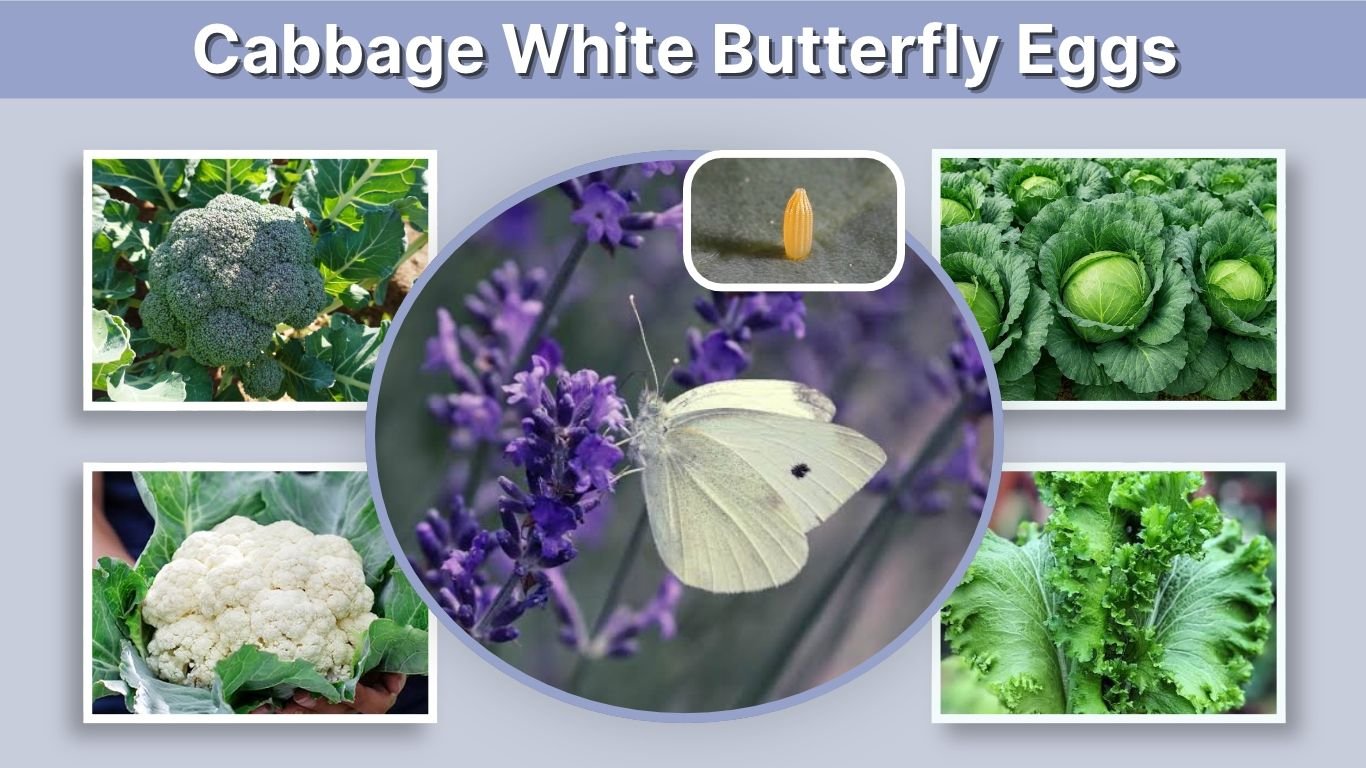
Cabbage white butterfly eggs are tiny, pale yellow structures commonly found on cabbage, kale, broccoli, and other plants in the mustard family. Female butterflies deposit their eggs on leaves, where they hatch into caterpillars that feed on the plants. The small cabbage white usually lays eggs individually, while the large cabbage white deposits them in clusters. Knowing what these eggs look like, where to find them, and how long they take to hatch can help gardeners protect their vegetables before caterpillar damage begins.
What Do Cabbage White Butterfly Eggs Look Like?
Cabbage white butterfly eggs are small, elongated, and usually pale yellow or cream-colored. Their surface contains fine vertical ridges, giving them a textured appearance when examined closely.
These eggs stand upright on the leaf surface rather than lying flat. Their color may become more yellow as the developing caterpillar approaches hatching.
Cabbage White Butterfly Egg Identification
- Color: Creamy white to pale or bright yellow.
- Shape: Elongated, bullet-shaped, or flask-shaped.
- Size: Approximately 1–1.5 millimeters long.
- Surface: Fine vertical ridges along the outer shell.
- Location: Usually attached to the underside of host plant leaves.
- Arrangement: Single eggs or clusters, depending on the butterfly species.
- Appearance Before Hatching: Eggs may become darker or more orange as development progresses.
Because the eggs are extremely small, gardeners may need to examine leaves closely to identify them.
Small vs. Large Cabbage White Butterfly Eggs
Two common butterflies associated with cabbage crops are the small white (Pieris rapae) and large white (Pieris brassicae).
Although their eggs look similar, their egg-laying habits provide an important identification clue.
Small Cabbage White Butterfly Eggs
Small white butterflies usually lay their pale yellow eggs individually on host plant leaves.
A female may visit several plants and deposit one egg at a time. This behavior spreads her offspring across a wider area.
Small white butterflies are widespread in North America, Europe, New Zealand, and numerous other regions.
Large Cabbage White Butterfly Eggs
Large white butterflies lay their bright yellow eggs in groups, commonly containing 20–100 eggs.
The eggs appear closely packed together, often on the underside of cabbage or other brassica leaves.
After hatching, the caterpillars initially feed in groups and can cause considerable damage to individual plants.
Large whites are widespread in Europe and parts of Asia but are not established across North America like small whites.
Where Do Cabbage White Butterflies Lay Their Eggs?
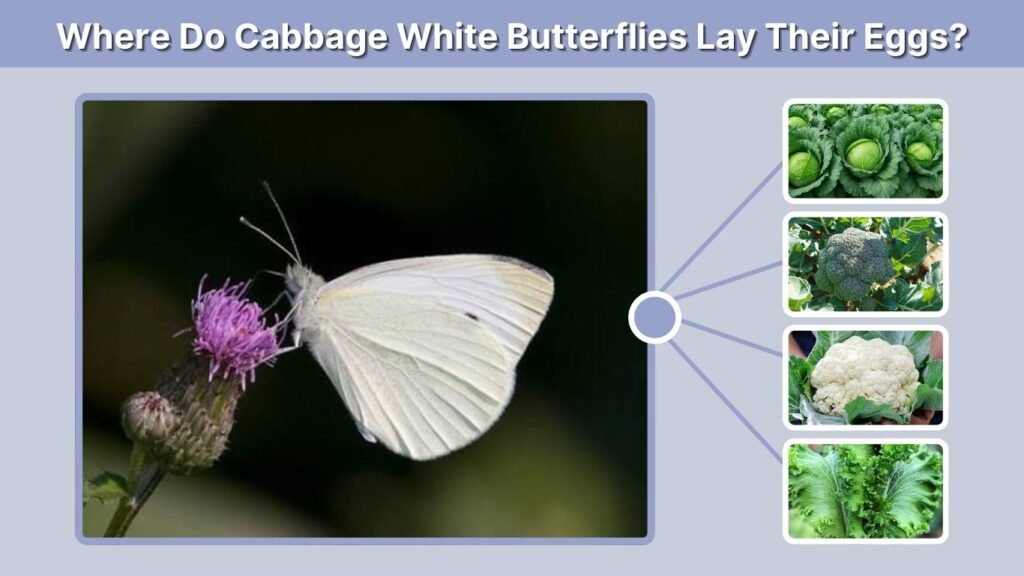
Female cabbage white butterflies select plants that provide suitable food for their developing caterpillars.
They commonly deposit eggs on plants belonging to the mustard family, Brassicaceae. These plants contain chemical compounds that help females recognize appropriate egg-laying locations.
Common Plants That Attract Cabbage White Eggs
- Cabbage: A frequently used host plant for both species.
- Kale: Leaves provide food for newly hatched caterpillars.
- Broccoli: Females deposit eggs on leaves surrounding developing heads.
- Cauliflower: Large leaves provide suitable egg-laying surfaces.
- Brussels Sprouts: Eggs may appear underneath the broad foliage.
- Collard Greens: Tender leaves support caterpillar development.
- Mustard Greens: These plants attract egg-laying females.
- Radishes and Turnips: Their leaves can also support cabbage white caterpillars.
Large white butterflies may additionally use nasturtiums as caterpillar host plants.
How Long Do Cabbage White Butterfly Eggs Take to Hatch?
Cabbage white butterfly eggs generally hatch within approximately three to eight days during favorable conditions.
The exact development period varies with temperature, butterfly species, and environmental conditions.
Warm weather usually accelerates embryonic development, while cooler temperatures slow it.
Once the caterpillar has developed fully inside the egg, it breaks through the shell and emerges onto the host plant.
Newly hatched small white caterpillars are tiny and greenish. They quickly begin feeding on tender leaf tissue, eventually producing small holes that become larger as they grow.
How Many Eggs Does a Cabbage White Butterfly Lay?
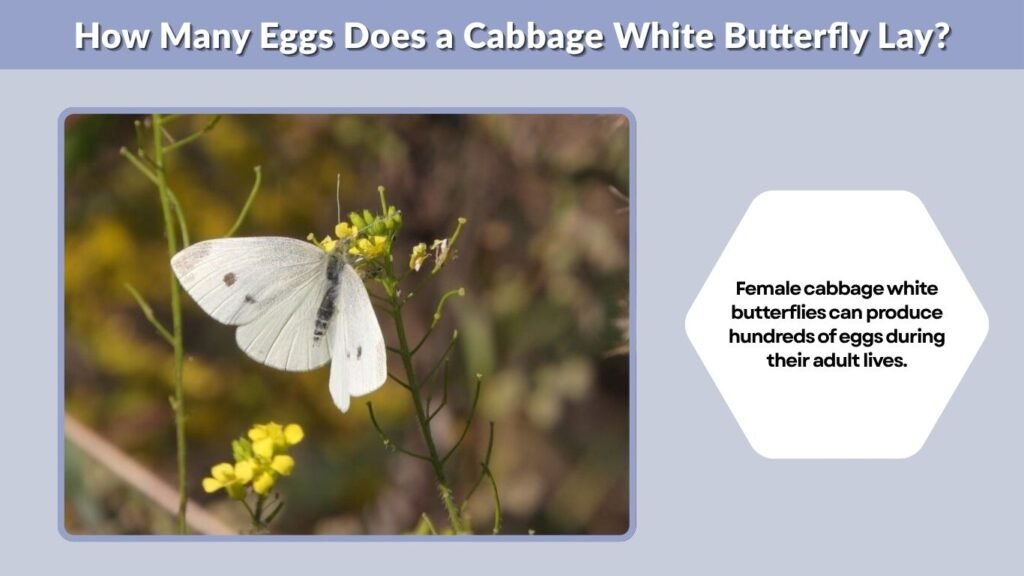
Female cabbage white butterflies can produce hundreds of eggs during their adult lives.
A small white female typically deposits her eggs individually, distributing them among suitable host plants.
Large white females lay their eggs in batches, often placing dozens together on a single leaf.
The total number of eggs varies according to species, lifespan, nutrition, temperature, and access to suitable plants.
Not every egg successfully develops into an adult butterfly. Eggs and caterpillars face threats from predators, parasitoid wasps, diseases, and unfavorable weather.
When Do Cabbage White Butterflies Lay Eggs?
Cabbage white butterflies lay eggs during their active breeding season, which depends heavily on regional climate.
In temperate regions, adults commonly begin appearing in spring and continue reproducing throughout summer.
Cabbage White Butterfly Egg-Laying Season
In the United Kingdom, cabbage whites usually begin flying during spring, with egg-laying activity continuing into autumn.
Two main generations are common, although additional generations can occur under favorable conditions.
In warmer regions, including parts of the southern United States and New Zealand, cabbage whites may reproduce over a longer period.
During winter in colder regions, these butterflies generally survive in the pupal stage rather than remaining as eggs.
How to Get Rid of Cabbage White Butterfly Eggs
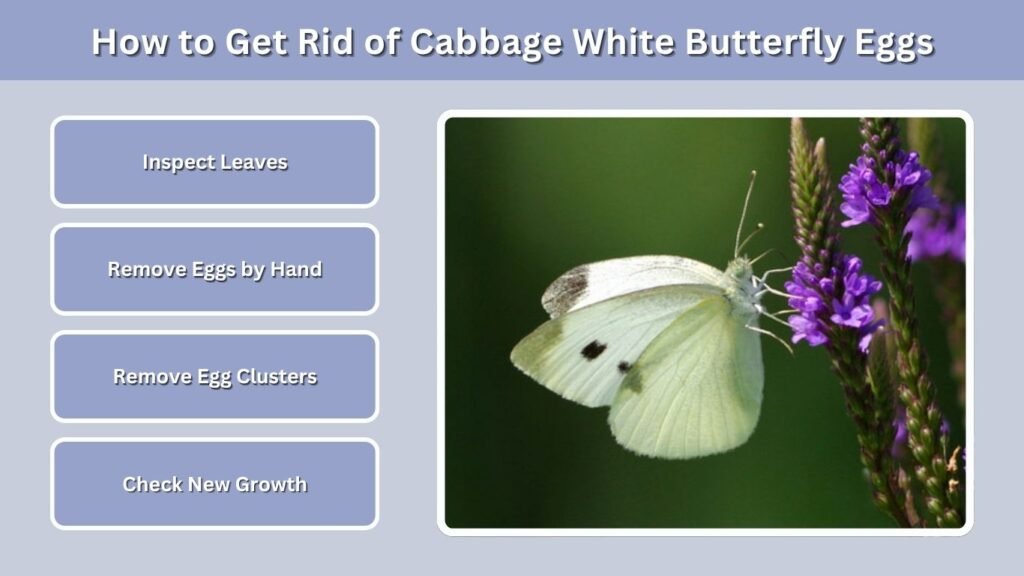
Removing cabbage white butterfly eggs before they hatch can prevent considerable feeding damage.
Manual removal is particularly practical in small vegetable gardens where plants can be inspected regularly.
Methods for Removing Cabbage White Eggs
- Inspect Leaves: Check both leaf surfaces, especially underneath, every few days.
- Remove Eggs by Hand: Gently rub or scrape eggs from the leaves without damaging the plants.
- Remove Egg Clusters: Carefully collect clustered eggs before caterpillars emerge.
- Check New Growth: Examine young leaves where females may recently have laid eggs.
- Remove Caterpillars: Handpick small caterpillars if the eggs have already hatched.
- Monitor Regularly: Continue inspecting crops throughout the butterfly breeding season.
Avoid relying on insecticides when simple physical removal is sufficient.
Products containing Bacillus thuringiensis var. kurstaki (Bt) target feeding caterpillars rather than unhatched eggs and should only be used according to their labels.
How to Stop White Butterflies Laying Eggs on Cabbages
Preventing female butterflies from reaching vegetable plants is one of the most effective ways to reduce egg-laying.
Fine insect netting or suitable horticultural fleece can protect brassica crops throughout the growing season.
Cabbage White Butterfly Prevention Tips
- Install Insect Netting: Cover cabbage and other brassicas before butterflies begin laying eggs.
- Secure the Edges: Keep netting firmly attached so butterflies cannot enter underneath.
- Use Support Frames: Prevent netting from touching leaves, where butterflies might otherwise lay eggs through it.
- Inspect Before Covering: Remove existing eggs or caterpillars before installing protective covers.
- Check Plants Frequently: Look for eggs during periods of increased butterfly activity.
- Encourage Natural Predators: Support birds and beneficial insects that feed on cabbage white caterpillars.
Protective netting is especially useful because it prevents egg-laying without requiring pesticides.
FAQs
1. Do Cabbage White Butterflies Lay Eggs on Kale?
Yes, cabbage white butterflies commonly lay eggs on kale. Female butterflies recognize kale as a suitable host plant because it belongs to the mustard family. Their caterpillars feed on kale leaves after hatching, sometimes causing noticeable holes.
2. What Time of Year Do Cabbage White Butterflies Lay Eggs?
Cabbage white butterflies usually lay eggs from spring through autumn in temperate climates. In the United Kingdom, activity commonly occurs between April and October. Warmer regions may experience longer breeding periods depending on local temperatures and weather conditions.
3. How Many Days Do Cabbage White Butterfly Eggs Take to Hatch?
Small cabbage white butterfly eggs typically hatch within three to eight days under favorable conditions. Warm temperatures can accelerate development, while cooler weather slows it. Hatching time also varies according to the species and environmental conditions.
4. Can Cabbage White Butterfly Eggs Survive Winter?
In colder climates, cabbage white butterflies generally survive winter as pupae rather than eggs. The chrysalis remains dormant until suitable temperatures return. In warmer regions, breeding activity may continue longer, allowing eggs and caterpillars to appear during milder seasons.
5. Are Cabbage White Butterfly Eggs Harmful to Plants?
Cabbage white butterfly eggs do not directly damage plants because they do not feed. However, the caterpillars that hatch from them consume leaves and can cause significant damage. Removing eggs early helps protect cabbage, kale, broccoli, and other vegetables.