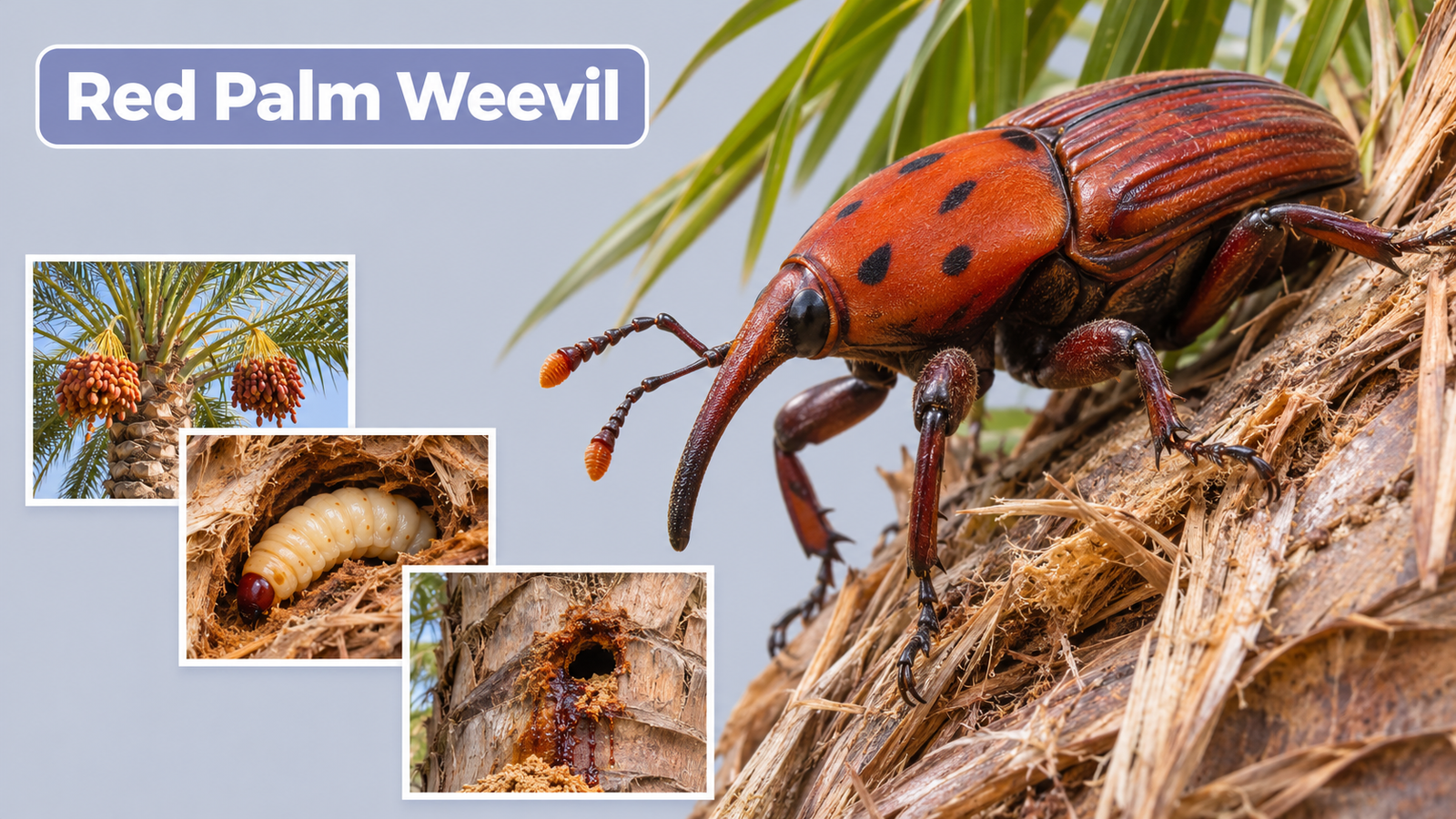
The red palm weevil (Rhynchophorus ferrugineus) is a palm-feeding beetle whose larvae tunnel inside palm trunks and crowns. Because much of the feeding happens beneath the outer fibers, a palm can be seriously damaged before obvious symptoms appear. Small holes, brown fluid, chewed fibers, and wilting leaves can signal an infestation, but these signs may be easy to miss at first. This guide explains how to identify the red palm weevil, what it eats, how its life cycle progresses, what damage to look for, and how to respond.
What Is a Red Palm Weevil?
The red palm weevil is a large snout beetle in the family Dryophthoridae. It is also called the Asian palm weevil, coconut weevil, or red stripe weevil. Its scientific name is Rhynchophorus ferrugineus. The species is native to parts of Asia and has spread to many palm-growing regions, where it is considered a serious pest.
The insect attacks palm trees rather than ordinary garden plants. Its larvae feed inside the soft tissues of a palm, often hidden in the trunk, crown, or bases of the leaves. Infested palms may decline slowly at first, then suffer severe structural damage. Different authorities may regulate the weevil or the movement of host plants, so local pest guidance matters if you suspect an infestation.
How to Identify a Red Palm Weevil
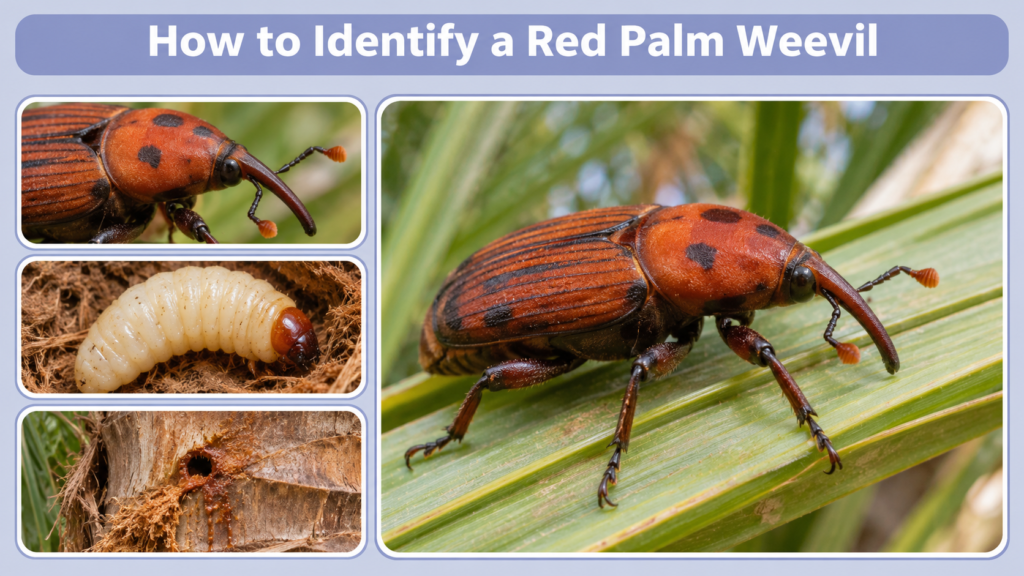
Adult Beetles
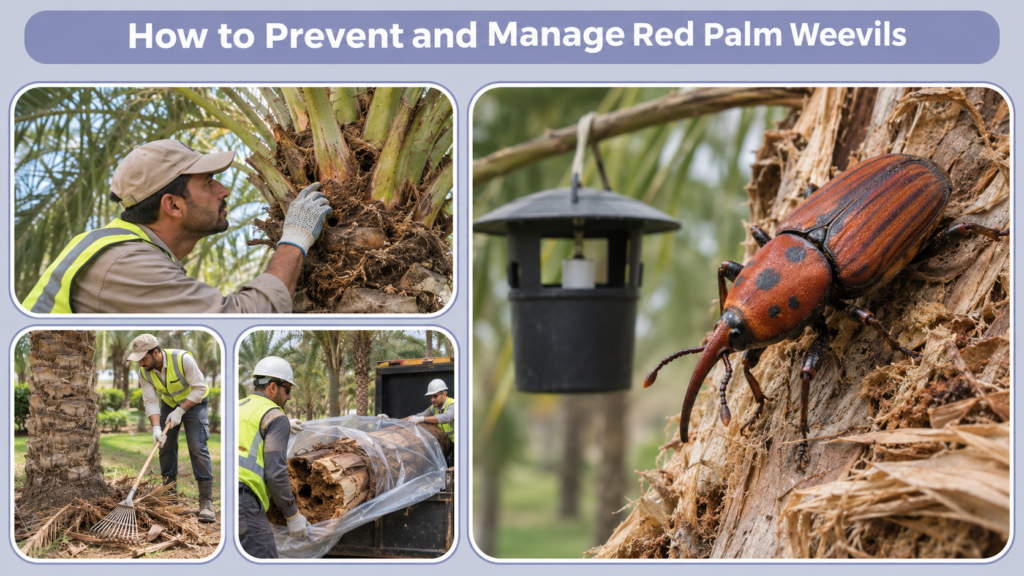
Adult red palm weevils are robust beetles, commonly about 2–5 cm long. Their color varies: many are reddish brown with dark markings, but individuals may be darker or show different patterns. The body is elongated and hard-shelled, with a long, curved snout and elbowed antennae attached to it. The weevil’s appearance can vary by region, so color alone is not a reliable identification clue.
Adults can fly and crawl. They may be active during both day and night, though their activity and flight patterns vary with conditions. A beetle seen near a palm does not by itself confirm that the tree is infested, but it is a reason to inspect nearby palms for signs of damage.
Eggs and Larvae
The eggs are pale and small. Females place them in cracks, wounds, or soft areas of the palm, including leaf bases and parts of the trunk. They are usually difficult to spot without close inspection.
The larvae are legless, creamy white to yellowish grubs with brown heads. They can grow several centimeters long. Unlike adults, larvae stay inside the palm and feed on its soft internal tissues. Mature larvae make oval cocoons from palm fibers before pupating. These cocoons may be found within or around infested plant material.
Which Palms Do Red Palm Weevils Attack?
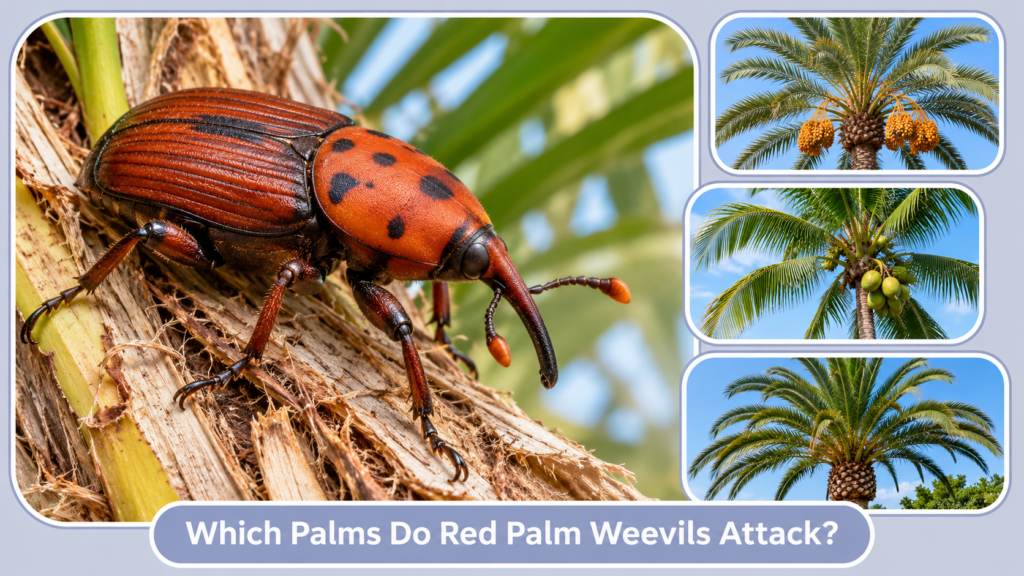
Red palm weevils attack many species of palm. Important hosts include date palms, coconut palms, oil palms, and ornamental palms such as Canary Island date palms. The pest’s known host range includes more than 40 palm species, although the most affected species can differ from region to region.
Young palms and palms with soft or damaged tissue can be especially vulnerable. Fresh wounds from pruning, storm damage, or other injury may attract egg-laying females. Palms should not be moved from an infested area without checking local plant-health rules, since moving infested palms or plant material can spread the pest to new places.
What Do Red Palm Weevils Eat?
Adult red palm weevils feed on palm tissues and use palms as breeding sites. Females lay eggs in suitable openings or wounds. When the eggs hatch, larvae bore inward and feed on the soft tissue inside the trunk, crown, or leaf bases.
Larvae cause most of the serious damage because they can feed for weeks inside the palm, where they are protected from view. They may create long tunnels and large internal cavities. As the larvae grow, they can damage tissues near the palm’s growing point, weakening the tree’s ability to produce healthy new leaves.
What Does Red Palm Weevil Damage Look Like?
Early damage can be difficult to detect. Look closely at the trunk, crown, and bases of the fronds for small holes, chewed fibers, or brown fluid oozing from openings. You may also notice a fermented smell, loose or split leaf bases, or fibrous material pushed out of a tunnel.
As the infestation progresses, leaves may yellow, wilt, or die. New central leaves may become damaged, and the crown can weaken or lean. In severe cases, the inside of the trunk becomes hollowed out, and the palm may collapse. A palm can sustain considerable internal injury before its canopy shows clear symptoms, so waiting for obvious wilting can mean the infestation is already advanced.
Other conditions can cause yellowing, wilting, or crown decline. Look for a combination of symptoms, such as holes, oozing fluid, frass or chewed fibers, and damaged leaf bases. If you suspect red palm weevil, have the palm assessed by a qualified arborist or local plant-health authority rather than cutting into it yourself.
Red Palm Weevil Life Cycle
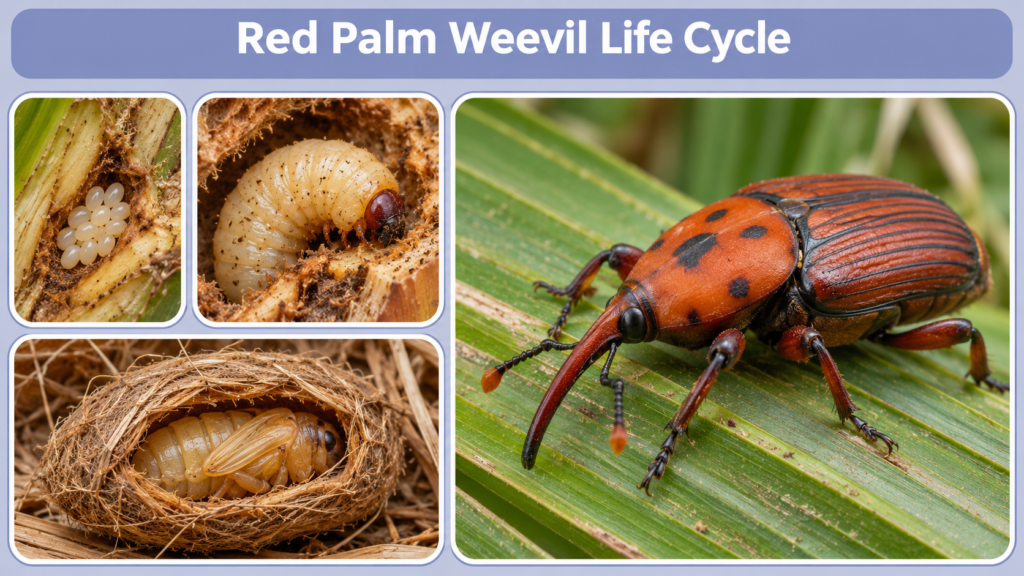
The red palm weevil develops through four stages: egg, larva, pupa, and adult. The timing depends on temperature, palm condition, and location. In warm regions, development can be rapid, and multiple generations may overlap within an infested palm.
Eggs and Larvae
Females lay eggs in wounds or soft parts of the palm. One female can lay more than 200 eggs over an extended period. Eggs may hatch within a few days under warm conditions. The young larvae then bore into the palm and feed internally.
The larval stage is the main damaging period. It can last several weeks or longer, depending on climate. While feeding, the grubs create tunnels that weaken the trunk or crown. Because the larvae remain concealed, visual inspection from the outside may not reveal how much tissue has been damaged.
Pupae and Adults
When mature, larvae form oval cocoons from palm fibers. Pupation takes place inside these cocoons, often within the palm or among its fibers. Adults emerge from the pupal stage and may remain in the cocoon briefly before leaving to find another host.
Under some conditions, the full cycle from egg to adult can take roughly 80 days, but this is not a universal timeline. Cooler conditions can slow development, while warm climates may support more than one generation per year. Several stages may be present at the same time in a heavily infested palm.
How to Inspect Palms for Red Palm Weevils
Inspect palms regularly, focusing on the trunk, crown, leaf bases, and offshoots. Look for holes, wet or dark patches, oozing fluid, loose fibers, and unusual odors. Check whether leaves are wilting or drying from the center of the crown. Since damage can be hidden, a single quick look may not be enough.
Pheromone traps can help monitor adult activity when used and maintained correctly. They do not prove that a particular palm is infested, and they should be part of a broader inspection plan. In areas where the pest is regulated or uncommon, contact local plant-health officials for instructions on identification and reporting.
How to Prevent and Manage Red Palm Weevils
Reduce Wounds and Keep Palms Healthy
Avoid unnecessary injury to trunks and leaf bases. Fresh wounds can attract egg-laying females, so plan pruning carefully and follow local recommendations about timing and technique. Remove dead or decaying plant material around palms, and manage offshoots so the bases remain accessible for inspection.
Healthy palms may better tolerate stress, but good care alone will not stop an established infestation. Regular inspection remains important, particularly where red palm weevils are known to occur.
Monitor and Use Traps Responsibly
In affected regions, use monitoring programs recommended by local agricultural or plant-health services. Pheromone traps can help detect adult activity and support area-wide monitoring, but placement, maintenance, and disposal of captured insects should follow local guidance. Trapping one palm’s surroundings does not replace examining the palm itself.
Get Professional Help for Suspected Infestations
Red palm weevil management may involve trained inspection, approved treatments, or removal of badly infested palms. The right response depends on the palm species, infestation severity, local regulations, and available treatment options. Do not inject chemicals, cut into a palm, or move potentially infested material unless a qualified professional or local authority advises you to do so.
Severely infested palms may need safe removal and disposal to prevent adult weevils from emerging and spreading. Disposal rules vary. Follow local plant-health procedures rather than transporting, dumping, or burning infested palm material without authorization.
Frequently Asked Questions
Can a red palm weevil infestation be detected early?
Sometimes. Small holes, oozing fluid, frass, damaged fibers, or unusual odors may appear before the crown shows severe decline. However, larvae feed inside the palm, so early infestations can be difficult to detect.
Do red palm weevils attack plants other than palms?
They are primarily pests of palms. Their important hosts include date, coconut, oil, and ornamental palms. Reports involving non-palm plants do not necessarily mean those plants are common field hosts.
How many generations of red palm weevils occur each year?
The number varies with climate. Cooler regions may have less than one generation per year on average, while warmer areas can support more than two generations annually. Multiple life stages may overlap inside an infested palm.
What should I do if I find a red palm weevil?
Photograph the insect and the palm symptoms without cutting into the tree. Contact a local plant-health authority, extension service, or qualified palm specialist for identification and next steps. If the species is regulated where you live, follow official reporting and movement instructions.