The white pine weevil is a small snout beetle that can kill the top growth of young pine and spruce trees. Its damage often appears as a drooping, reddish-brown leader called a “shepherd’s crook.” Although an infestation can distort a tree’s shape, early identification and timely pruning can limit lasting effects. This guide explains how to recognize white pine weevils, understand their life cycle, distinguish their damage from other problems, and choose practical management steps.
What Is a White Pine Weevil?
The white pine weevil (Pissodes strobi) is a native North American beetle in the weevil family. It is known for attacking the uppermost shoot, or leader, of young conifers. The insect can affect eastern white pine and several other pine and spruce species, although its preferred hosts and the severity of damage vary by region.
Appearance
Adult white pine weevils are small, roughly a quarter-inch long, and have a distinctive elongated snout. Their bodies are brown to nearly black, with irregular pale or golden scales on the wing covers. A prominent light patch near the rear can help with identification, though the beetles may blend into bark and be hard to spot.
The larvae look quite different. They are creamy white, legless grubs with brown heads and curved bodies. They feed beneath the bark of the leader, so they may be hidden until the shoot is cut or peeled back. Finding larvae or their feeding galleries beneath damaged bark can help confirm an infestation.
Trees It Attacks
Eastern white pine is a major host, but the weevil may also attack other pines and spruces, including Norway spruce, blue spruce, and Scots pine. Douglas-fir may be attacked in some locations. A tree’s risk depends on the local weevil population, the host species, and growing conditions.
Young trees are especially vulnerable because an attack on the central leader can change their form. Trees exposed to strong sunlight may be more likely to be attacked in some settings. That does not mean every sunny-site pine will develop an infestation, but it can help explain why damage appears more often on certain trees.
White Pine Weevil Life Cycle
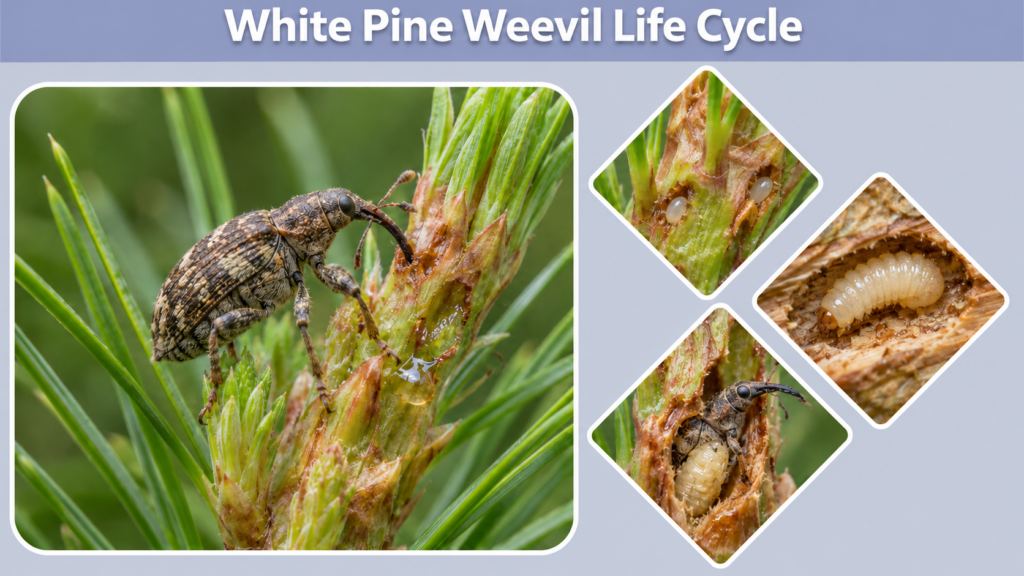
White pine weevils typically produce one generation each year. The seasonal timing varies with climate, but adults generally spend winter in leaf litter or other debris near host trees. As spring temperatures rise, they move or fly to the upper parts of suitable trees. Knowing this pattern helps gardeners look for early signs before larvae become protected beneath the bark.
Spring Feeding and Egg Laying
In spring, adult weevils feed on bark near the terminal buds. Females lay eggs in small feeding wounds on the leader. Resin or pitch may ooze from these spots, and close inspection may reveal small holes or paired feeding marks.
The eggs hatch within roughly a week or two, depending on conditions. The young larvae then tunnel beneath the bark and feed on the tissues that carry water and nutrients through the shoot. Because this feeding occurs inside the leader, visible symptoms may not appear until the damage is more advanced.
Larvae, Pupae, and Adult Emergence
As larvae feed, they can girdle the leader, interrupting the movement of water and nutrients. The upper shoot then wilts, droops, and changes color. Mature larvae form pupal chambers inside the affected leader, often filling these spaces with shredded wood fibers.
New adults emerge from the damaged shoot in mid- to late summer in many areas. They feed briefly and then seek protected places near the tree to overwinter. Regional weather affects the calendar, so local extension guidance can help determine when adults are active in a specific area.
Signs and Symptoms of White Pine Weevil Damage
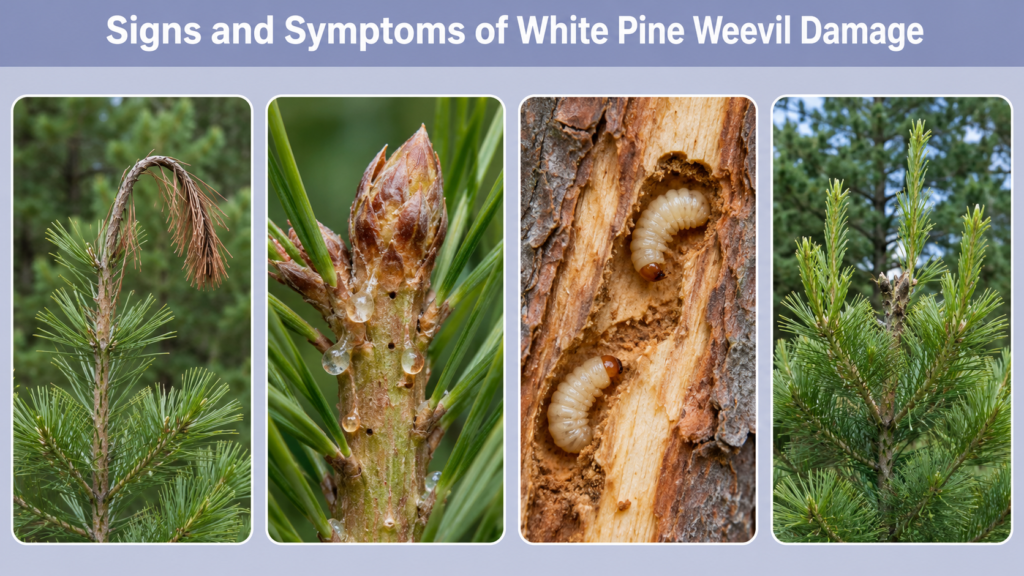
The most recognizable sign is a dead or dying leader that bends downward into a shepherd’s crook shape. The top may first look pale green or yellow, then turn reddish brown as it dries. Damage often becomes noticeable in late spring or early summer, after the larvae have been feeding for some time.
Look for These Clues
- A wilted, curled, or bent terminal leader
- Browning or yellowing at the top of the tree
- Small holes and resin flow on the leader from adult feeding or egg laying
- Loose or dead bark on the affected shoot
- Larval tunnels or white grubs beneath the bark
- Wood fibers or chip-filled chambers inside a dead leader
- New side shoots growing upward after the central leader dies
The appearance can vary. Some trees show one dead top; others develop several competing upright branches as lateral shoots try to take over. This can leave the crown crooked or multi-stemmed. A single damaged leader usually does not mean the entire tree is dying, but repeated attacks may stunt it or affect its shape.
How to Tell White Pine Weevil Damage From Other Problems
A bent or brown tree top does not always mean white pine weevils are present. Drought, winter injury, disease, other insects, or mechanical damage can also kill a leader. Look for several clues together rather than relying on the shape of the shoot alone.
Check Beneath the Bark
If the leader is already dead, carefully peel back a small area of bark or cut into the damaged section. White pine weevil larvae, winding feeding galleries, or pupal chambers packed with wood fibers support the diagnosis. Adults may be visible on the upper trunk or around the terminal in spring, but their small size and bark-like coloring make them easy to miss.
Consider the season and location of the symptoms. Fresh resin or feeding holes near the top in spring, followed by a wilted leader in early summer, fit the weevil’s seasonal pattern. If you do not find signs of larvae or galleries, compare the symptoms with local disease and insect guidance before pruning extensively or applying a pesticide.
How to Control White Pine Weevil
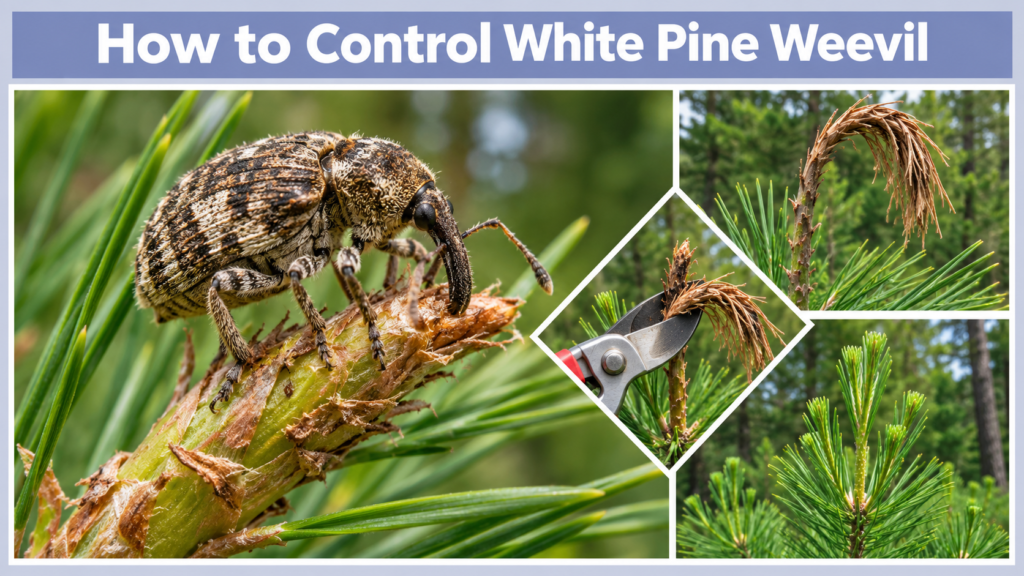
For many landscape trees, pruning and training a replacement leader are practical first steps. Since the larvae are concentrated in the damaged upper shoot, removing that portion can reduce the number of developing insects and help restore the tree’s shape. Timing matters: the infested shoot should be removed while larvae are still inside, before new adults emerge.
Prune and Train a New Leader
Cut below the damaged portion far enough to remove the larvae and affected tissue. Dispose of the cut shoot rather than leaving it beneath the tree. Avoid removing more healthy growth than necessary.
Choose a vigorous side branch near the top to become the new central leader. Gently guide it upward and secure it to a stake if needed. Remove or shorten competing upright shoots gradually so the chosen leader can take over. The tree may remain somewhat crooked, but many young conifers can continue growing after a single leader is lost.
Reduce Conditions That Favor Repeat Attacks
Keep trees healthy by watering during prolonged dry periods, protecting roots from soil compaction, and avoiding unnecessary injury to the trunk. In forest or plantation settings, foresters may manage spacing and partial shade to reduce the risk or impact of damage. These strategies depend on the site and tree stand, so they may not suit every yard.
Inspect young pines and spruces each spring. Look near the terminal buds for adult weevils, small feeding wounds, or fresh pitch. Catching an attack early makes it easier to remove the affected shoot before the insects complete development.
Use Insecticides Carefully
Insecticides, where appropriate, are generally aimed at adult weevils during their spring feeding and egg-laying period. They are less useful once larvae are protected beneath the bark. Products and timing vary by location, tree species, and label directions.
Do not spray a tree based only on browning at the top. First confirm the pest, then check local extension recommendations and the product label. If the tree is large, valuable, or part of a managed forest, consult a certified arborist or forestry professional for a site-specific plan.
Can a Tree Recover From White Pine Weevil Damage?
A tree can often survive after losing one leader, especially if it is otherwise healthy. A side branch may grow upward and replace the damaged top. The tree’s shape may remain uneven for a time, but careful training can encourage a straighter central stem.
Repeated attacks can cause more lasting distortion, slow growth, or multiple leaders. Monitor the tree over the next growing seasons, and remove new infested leaders promptly. If the trunk is damaged, the tree is declining throughout its crown, or you are unsure what caused the symptoms, seek an assessment from a local arborist or extension office.
FAQs
Are white pine weevils harmful to people?
No. White pine weevils feed on conifers and do not bite or sting people. Their concern is damage to the top growth of susceptible trees. If you find one indoors, it likely wandered in by accident; it does not infest food or household materials.
What does white pine weevil damage look like?
The top shoot often wilts, bends downward, and turns yellow, reddish brown, or brown. This shepherd’s crook shape is a common clue. Resin, small feeding holes, larvae beneath the bark, or chip-filled pupal chambers can help confirm the cause.
When should I prune a weevil-damaged leader?
Prune as soon as you can identify the damaged leader and while larvae are likely still inside it. Cut below the infested section and dispose of the material. Local timing varies, so check regional extension advice, especially if the shoot may already have produced adult weevils.
Which trees are susceptible to white pine weevils?
Eastern white pine is a major host. The insect can also attack other pines and spruces, including Norway spruce, blue spruce, and Scots pine. Susceptibility and damage levels vary by region and by the condition and age of the tree.
Will pruning kill my pine tree?
Removing a damaged leader usually does not kill a healthy tree. A side branch can be trained to replace the central leader, although the tree may develop a bend or several competing tops. Repeated damage or other stress can make recovery harder.