
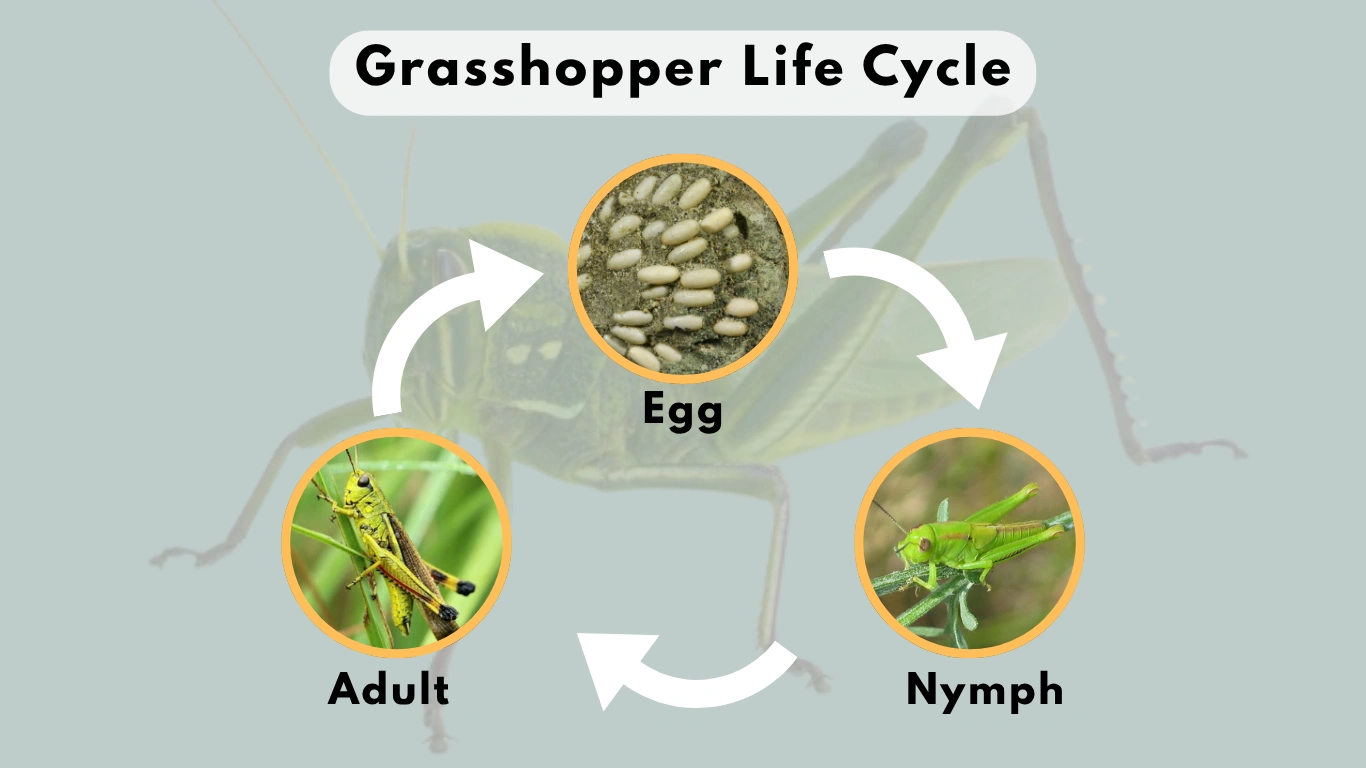
Grasshoppers are among the most recognizable insects in gardens, fields, and grasslands. Known for their strong legs and ability to leap great distances, they also have a fascinating life cycle that differs from many other insects. Unlike butterflies or beetles, grasshoppers do not undergo complete metamorphosis. Instead, they follow a simpler path known as incomplete metamorphosis—a three-stage process that takes them from egg to nymph and finally to adulthood. In this article, you’ll learn about each stage of the grasshopper life cycle, how long it takes, and the behaviors associated with each transformation.
Overview of Grasshopper Life Cycle
Grasshoppers undergo incomplete metamorphosis, which means their life cycle consists of only three distinct stages: egg, nymph, and adult. There’s no pupal stage like you’d see in butterflies or moths. This more straightforward development still results in a dramatic transformation over a short period.
Incomplete Metamorphosis
In insects with incomplete metamorphosis, each stage looks somewhat similar, with the young gradually maturing into their adult form. Grasshoppers hatch from eggs as miniature, wingless versions of adults called nymphs. Over several molts, they grow larger and develop wings and reproductive organs.
Duration of the Full Life Cycle
The complete grasshopper life cycle typically lasts between 40 to 60 days, though this varies by species and environmental conditions. In warmer regions, some species may complete multiple generations per year. In cooler climates, most species produce just one generation annually, with eggs overwintering in the soil.
Stage 1 – Grasshopper Eggs

The grasshopper life cycle begins when a female lays eggs. This process happens in late summer or early fall, depending on the climate.
Egg Laying Behavior
Female grasshoppers use a structure called an ovipositor to deposit their eggs in the soil. They choose loose, warm, and often sandy or moist areas, like the edges of fields, garden beds, or roadside ditches. Each female may lay several clusters of eggs, often in hidden or protected areas.
Egg Appearance and Number
Grasshopper eggs are small, oval, and typically yellowish or tan. They are laid in groups, often referred to as egg pods, with each pod containing anywhere from 20 to 100 eggs. These pods are covered in a frothy secretion that hardens and helps protect the eggs from drying out or being disturbed by predators.
Development Period
In most species, the eggs lie dormant throughout the winter months, surviving beneath the surface until the temperature rises. In spring or early summer, the eggs hatch once the soil warms up and conditions are favorable.
Stage 2 – Nymph (Juvenile Stage)
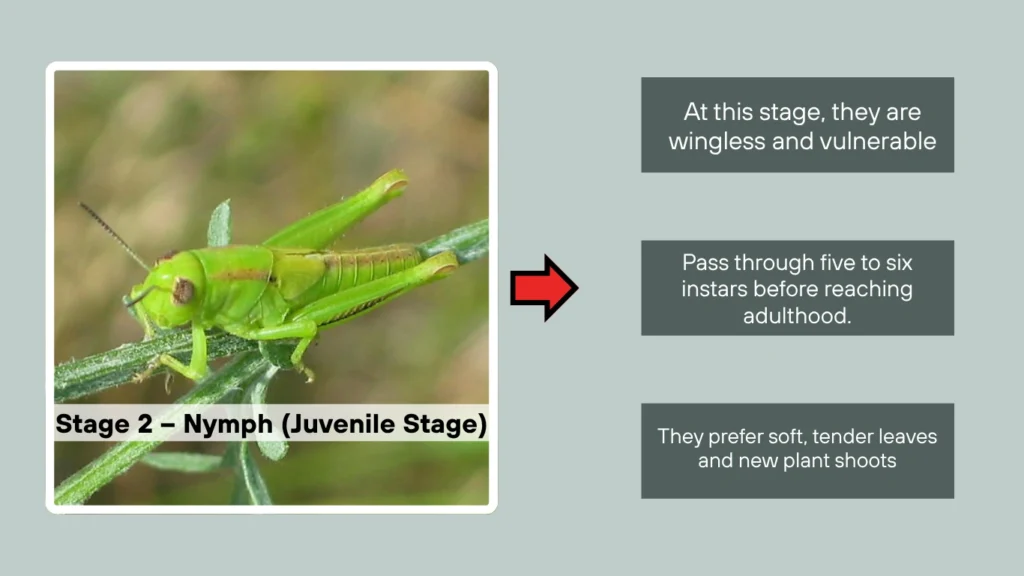
When the eggs hatch, tiny nymphs emerge—these are the juvenile form of the grasshopper and the most active stage of development.
Hatching Process
Nymphs break through their eggs using specialized structures on their heads. Once they emerge, they immediately begin to feed, as energy is essential for rapid growth. At this stage, they are wingless and vulnerable but already resemble adults in form.
Molting and Growth
Nymphs grow through a process called molting, where they shed their outer exoskeleton multiple times. Each molt is called an instar, and grasshoppers usually pass through five to six instars before reaching adulthood.
With each molt, the nymph grows larger and begins to develop wing buds. By the final molt, these buds will expand into functional wings. The entire nymph stage lasts 30 to 40 days, depending on species and environmental conditions.
Behavior and Feeding
Grasshopper nymphs are extremely active feeders. They prefer soft, tender leaves and new plant shoots, making them a common threat to young garden plants. Because they are small and soft-bodied, they are also highly vulnerable to predators like birds, spiders, and ants during this stage.
Stage 3 – Adult Grasshopper
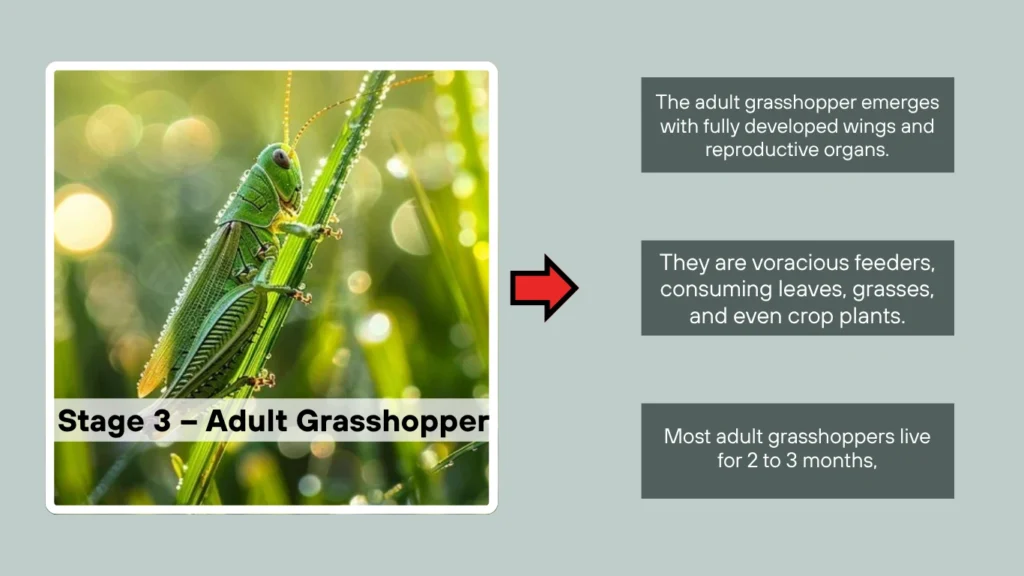
After the final molt, the grasshopper becomes a full-grown adult capable of reproduction.
Final Molt and Full Maturity
The adult grasshopper emerges with fully developed wings and reproductive organs. Within a few days, its exoskeleton hardens, its wings become functional, and it begins the search for a mate.
Adult Behavior
Adult grasshoppers are highly mobile and will often travel to find new feeding grounds or breeding locations. They are voracious feeders, consuming leaves, grasses, and even crop plants. Some species form large groups or swarms, causing serious agricultural damage when food sources become limited.
Reproduction and Egg Laying
Mating begins shortly after adulthood is reached. Males attract females using sound—produced by rubbing their hind legs against their wings (a process called stridulation). After mating, females lay eggs in the soil, starting the life cycle anew. Most adult grasshoppers live for 2 to 3 months, just long enough to reproduce and ensure the next generation.
Seasonal Cycle and Survival
Grasshoppers are highly adapted to seasonal changes and environmental conditions.
Life Cycle in Different Climates
In tropical and subtropical regions, where conditions remain warm year-round, some grasshopper species may go through two or three generations per year. However, in temperate regions, grasshoppers typically have a single generation, with eggs entering a period of diapause (dormancy) during the cold winter months.
Overwintering Stage
The egg is the only stage capable of surviving through winter. As temperatures drop, adult grasshoppers die off, and the eggs remain protected underground. Once spring returns, the cycle begins again, often with large hatching events that lead to a spike in grasshopper populations.
Why Understanding the Life Cycle Matters
Whether you’re a gardener, farmer, student, or simply curious about nature, knowing how grasshoppers develop is both practical and fascinating.
For Gardeners and Farmers
By understanding when grasshoppers are most vulnerable (especially during the early nymph stage), it becomes easier to implement effective control measures. Monitoring fields for nymph activity can help prevent significant plant damage before adult grasshoppers take over.
For Students and Nature Enthusiasts
Observing a grasshopper molt or watching a nymph grow into an adult can be an educational and exciting experience. Their simple, gradual development offers a great introduction to insect biology and ecology.
FAQs
1. How long do grasshoppers live?
Grasshoppers usually live for about 2 to 3 months as adults. Including the egg and nymph stages, their full life cycle can last 40 to 60 days or more, depending on temperature, food availability, and species.
2. Do all grasshoppers lay eggs underground?
Yes, female grasshoppers use their ovipositor to deposit eggs beneath the soil surface. They prefer soft, sandy, or loose soil to protect the eggs from predators and harsh weather, especially during the winter months when the eggs lie dormant.
3. What season do grasshopper eggs hatch?
Grasshopper eggs usually hatch in spring or early summer, once the soil warms and environmental conditions are favorable. The exact timing depends on local climate, but most hatchings occur after a period of winter dormancy in the ground.
4. How can you tell a nymph from an adult?
Nymphs look like miniature adults but lack fully developed wings and reproductive organs. They are smaller, wingless, and molt several times. Adults have functional wings, hardened exoskeletons, and are capable of mating and laying eggs.
5. Can grasshoppers reproduce more than once per year?
In warmer regions, some grasshopper species can reproduce two or three times per year, completing multiple life cycles. In cooler climates, they typically produce only one generation annually, with eggs overwintering and hatching in the next season.
