

The granary weevil (Sitophilus granarius) is one of the most common and destructive pests found in stored grains around the world. Despite its small size, this beetle can cause significant damage in both households and large-scale grain storage facilities. Known for its ability to bore into kernels and reproduce rapidly, the granary weevil poses a serious threat to food supplies, particularly wheat, rice, oats, barley, and corn.
In this comprehensive guide, we’ll take a close look at the granary weevil—its appearance, life cycle, signs of infestation, damage, and proven methods for removal and prevention.
What Is a Granary Weevil?
The granary weevil, also referred to as the wheat weevil, is a member of the beetle family Curculionidae. Unlike the rice weevil, it has a wingless body and is unable to fly. This makes it somewhat slower to spread between storage areas, but it remains a persistent pest due to its strong reproductive cycle and ability to survive in a wide range of storage environments.
It primarily infests whole grains and is often found in pantries, silos, grain elevators, warehouses, and food processing facilities.
Granary Weevil Identification

Granary weevils are small beetles measuring about 3–5 millimeters (⅛–⅕ inch) in length. They have a hard-shelled body, typically reddish-brown to nearly black in color, and feature a long, slender snout or “rostrum,” which is a defining characteristic of weevils.
Unlike many other weevils, the granary weevil:
- Has no wings under its hardened wing covers
- Cannot fly
- Has smooth, polished elytra (wing covers) without pale markings
- Displays a cylindrical body shape with fine punctures
If you find small, snouted insects crawling inside or near stored grain, and you notice signs of holes in the grains, you’re likely dealing with a granary weevil.
Granary Weevil Life Cycle

The granary weevil undergoes complete metamorphosis, consisting of four stages: egg, larva, pupa, and adult. Its life cycle, when uninterrupted by cold temperatures or lack of food, can be completed in 30 to 40 days.
Egg
The female granary weevil chews a hole into a grain kernel and lays a single egg inside. She then seals the hole with a waxy secretion to protect it. One female can lay up to 250–300 eggs during her lifetime.
Larva
After a few days, the egg hatches into a white, legless larva. This stage remains completely inside the grain kernel, feeding on the internal contents and hollowing it out.
Pupa
Once the larva is fully developed, it enters the pupal stage, where it transforms into an adult. This stage typically lasts about a week, though it can be longer in cooler temperatures.
Adult
The adult weevil chews its way out of the grain and emerges to find a mate. It can live for several months and continues feeding and breeding as long as conditions are favorable.
Cold temperatures below 10°C (50°F) can slow or stop the granary weevil’s development, while temperatures below 5°C (41°F) can kill larvae and adults.
Damage Caused by Granary Weevils
The damage from granary weevils is not just physical—it’s also economic and nutritional. These pests infest whole grains and destroy the interior content, making the grain unusable for human or animal consumption.
Common Signs of Damage:
- Hollow or powdery grain kernels
- Reduced grain weight and quality
- Heat buildup in bulk storage from metabolic activity
- Decreased germination rate in seed stock
- Grain dust at the bottom of containers
The granary weevil’s ability to lay eggs inside grains also makes early detection difficult. Often, by the time adult beetles are seen, the damage has already been done by the internal feeding of the larvae.
How Do Granary Weevils Enter Homes or Storage?
In most cases, granary weevils are introduced via already-infested grain products. They are rarely found flying around or entering from outside, as adults cannot fly.
They often arrive in:
- Bulk bags of wheat, oats, or barley
- Infested flour or pasta
- Grain-based pet food or birdseed
Once inside, they can spread to nearby dry goods if storage conditions are favorable, especially in warm and humid environments.
Are Granary Weevils Dangerous to Humans?
Granary weevils do not pose a direct threat to humans. They do not bite, sting, or carry disease. However, consuming infested grains may be unappealing and potentially cause mild digestive discomfort due to the presence of larvae or waste materials.
In commercial storage, however, the risk is more serious—grain damage from weevils can result in regulatory rejections, significant financial loss, and the need for costly fumigation procedures.
How to Get Rid of Granary Weevils
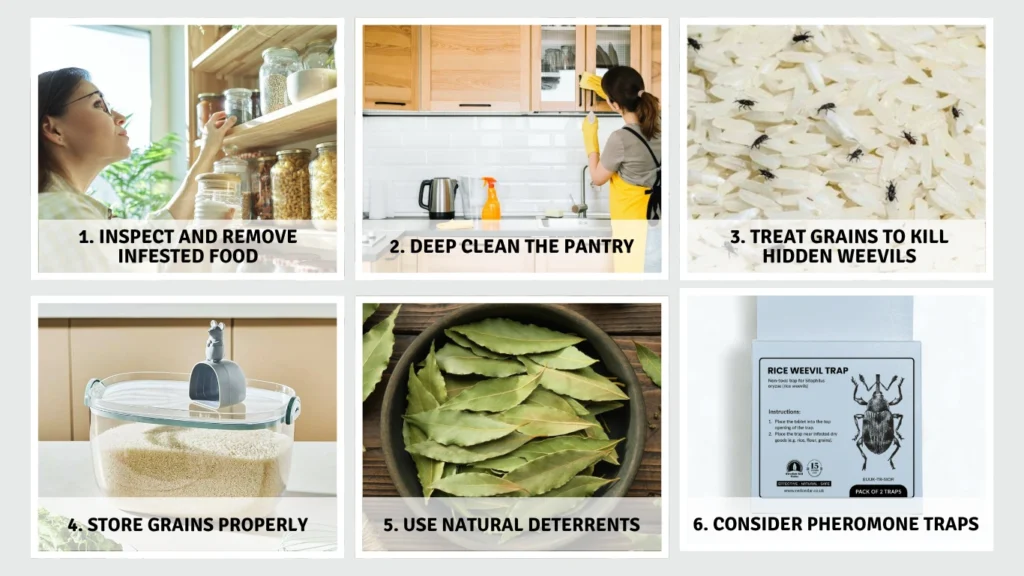
Effective weevil control includes a combination of inspection, sanitation, grain treatment, and preventive storage.
1. Inspect and Remove Infested Food
Go through all grains, flour, and pantry items. Discard anything with visible holes in grains, powdery residue, or live weevils. Check unopened packages too—adults can chew through cardboard or paper.
2. Deep Clean the Pantry
- Vacuum cracks, corners, and shelf joints
- Wash containers with hot, soapy water
- Wipe pantry surfaces with vinegar or a mild disinfectant
- Dispose of vacuum bag immediately after cleaning
3. Treat Grains to Kill Hidden Weevils
If you want to salvage slightly infested grain:
- Freeze at 0°F (−18°C) for 4–7 days
- Or heat in the oven at 130°F (54°C) for 30 minutes
These methods kill all life stages inside the grain.
4. Store Grains Properly
Always store food in airtight, pest-proof containers. Ideal materials include thick plastic, glass jars with rubber seals, or metal tins.
Avoid leaving grains in original packaging or thin bags. For bulk storage, monitor moisture and temperature levels.
5. Use Natural Deterrents
Bay leaves, cloves, and garlic have strong odors that can help repel weevils. Place them near storage bins or in pantry corners.
6. Consider Pheromone Traps
In larger storage areas, pheromone traps can help detect and reduce adult weevil populations. These traps won’t eliminate weevils but serve as an early warning system.
Granary Weevil vs. Rice Weevil
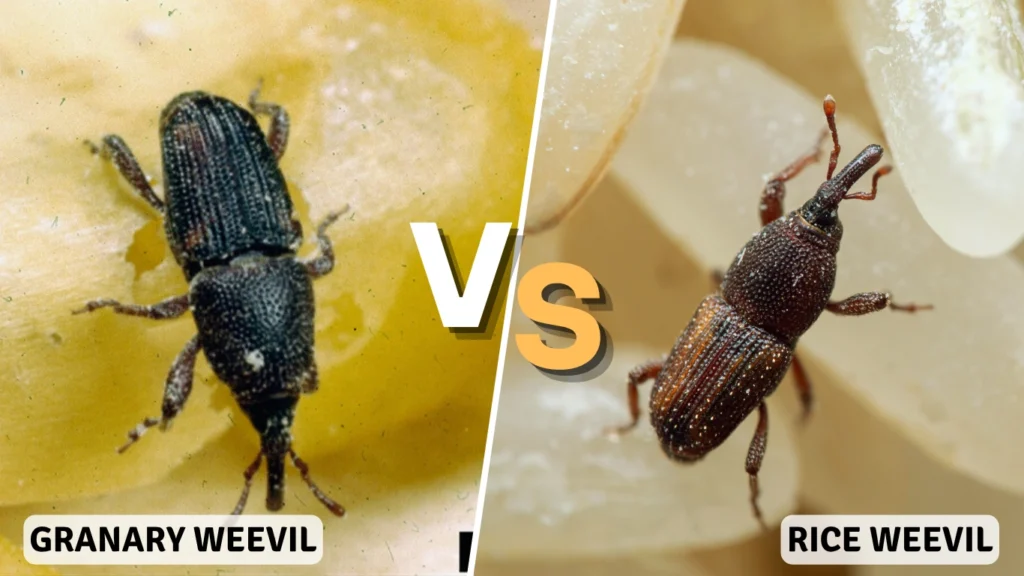
Though similar in shape, these two weevils differ in key aspects:
| Feature | Granary Weevil | Rice Weevil |
| Flight capability | Cannot fly | Can fly |
| Color | Reddish-brown, no spots | Brown with four light spots |
| Body size | 3–5 mm | 2.5–4 mm |
| Elytra texture | Smooth | Pitted |
| Common hosts | Wheat, barley, oats | Rice, corn, wheat |
Understanding these differences helps in accurate identification and selecting the right control measures.
FAQs About Granary Weevils
Can granary weevils infest flour or processed food?
They prefer whole grains but may be found in flour if eggs or larvae were present before milling.
Are granary weevils active in winter?
They become less active in cold weather but can survive in heated storage or kitchens.
Do granary weevils infest pet food?
Yes, if the pet food contains whole grains or cereals and is poorly sealed.
Can I eat grains that had weevils in them?
It’s possible, but not advisable. Even if cooked, grains may contain larvae, waste, or mold resulting from the infestation.
