
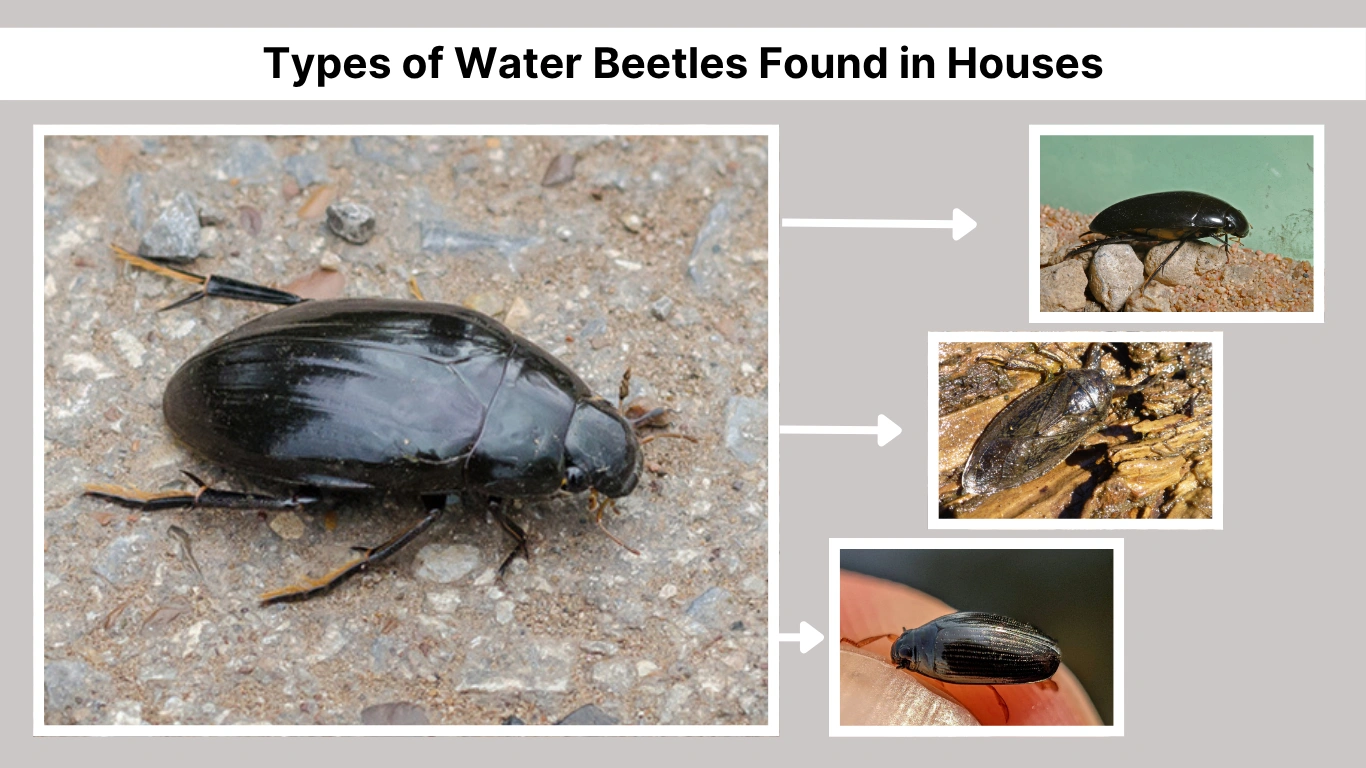
Water beetles are usually associated with ponds, lakes, and slow-moving streams, but under certain conditions, they can find their way into homes. Attracted by lights, moisture, and sometimes indoor water sources, these insects may appear in basements, bathrooms, or even swimming pools. While they are generally harmless to humans, their sudden presence can be surprising—and sometimes unsettling.
In this guide, we’ll look at the most common types of water beetles that may enter homes, explain when they’re most likely to be found, break down each species’ life cycle, and share effective methods for getting rid of them safely and preventing future visits.
Predaceous Diving Beetle

When They’re Found in Houses
These beetles are typically seen indoors during warm months, often by accident. They are drawn to bright lights and water sources near homes.
Seasonal Appearance
Predaceous diving beetles are most commonly found indoors during the warmer months, particularly from late spring through summer. This is when adults are more active and often take to the air in search of new water sources for feeding and breeding. Outdoor lighting can be a major attractant, drawing them toward porches, windows, and open doors at night.
Common Entry Points
These beetles typically enter homes through open or poorly sealed windows, gaps in door frames, or basement vents located near outdoor water features. In some cases, they are accidentally brought inside with potted aquatic plants or equipment from ponds and pools.
Life Cycle
Egg Stage
Female predaceous diving beetles lay their eggs in submerged aquatic plants in ponds, lakes, or other still water bodies. The eggs are usually oval-shaped and hidden among vegetation to protect them from predators.
Larval Stage
The larvae, often called “water tigers” because of their voracious appetites, are elongated and equipped with strong, curved jaws. They are active hunters, preying on mosquito larvae, tadpoles, and small fish fry. This stage lasts several weeks, depending on water temperature and food availability.
Pupal Stage
Once fully grown, the larvae crawl out of the water to pupate in moist soil along the water’s edge. This stage typically lasts 1–2 weeks, during which the insect undergoes metamorphosis into an adult.
Adult Stage
Adult predaceous diving beetles are oval-shaped, streamlined, and powerful swimmers. They use their hind legs, fringed with hairs, like oars to propel themselves through water. Adults are capable fliers and may leave their aquatic habitats at night in search of new environments.
How to Get Rid of Predaceous Diving Beetles
Immediate Removal
If you find one indoors, avoid picking it up with bare hands as it can deliver a mild pinch. Instead, use a small container or net to capture it, then release it near a natural water source far from your home.
Long-Term Prevention
To reduce the chances of these beetles entering your home, keep outdoor lighting to a minimum during peak activity seasons or use yellow “bug” bulbs that are less attractive to insects. Ensure windows and doors are well-sealed, and cover pools or ornamental ponds when not in use. Regularly cleaning pool water and removing debris will make the environment less appealing to them.
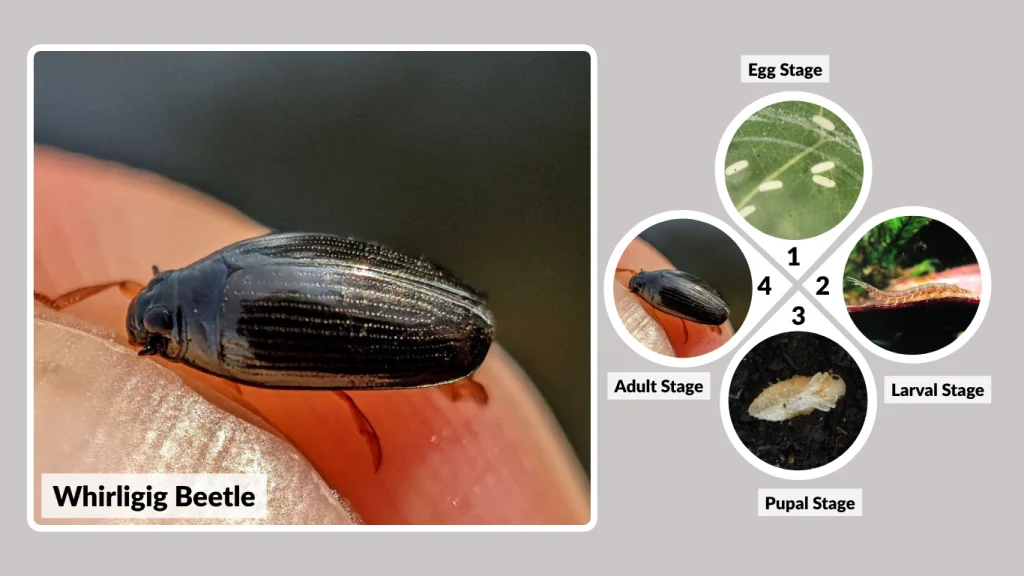
Whirligig Beetle
When They’re Found in Houses
These beetles are occasional indoor visitors, especially in warmer months. They are mainly drawn by bright lights and the presence of nearby water sources.
Seasonal Appearance
Whirligig beetles are most active in the warmer months, particularly late spring through early autumn. They spend most of their lives on the water’s surface, but during breeding periods or when disturbed, they can take short flights. Bright indoor or outdoor lights at night can lure them toward houses, especially if you live near ponds, lakes, or slow-moving streams.
Common Entry Points
They usually make their way indoors through open doors, windows, or gaps in screens. Homes with water features, outdoor pools, or ponds close to entry points are at higher risk of attracting them. Occasionally, they can also be carried inside accidentally on aquatic plants, fishing gear, or water buckets.
Life Cycle
Egg Stage
Female whirligig beetles lay their eggs on submerged plant stems or other underwater structures in still or slow-moving water. These eggs are usually attached securely to prevent them from being washed away.
Larval Stage
The larvae are elongated and aquatic, equipped with gills and strong jaws. They actively hunt small aquatic insects and other tiny prey. This stage may last several weeks, with growth speed depending on water temperature and food supply.
Pupal Stage
When ready to transform, the larvae leave the water and pupate in damp soil or debris near the water’s edge. The pupal stage generally lasts 1–2 weeks before the adult emerges.
Adult Stage
Adult whirligig beetles are small, oval, and shiny, with unique divided eyes—one half for seeing above water and the other below. They are named for their habit of swimming in rapid circles on the water surface. Adults feed on insects that fall onto the water and can live for several months.
How to Get Rid of Whirligig Beetles
Immediate Removal
If you find a whirligig beetle indoors, gently capture it with a small net or container. They are not aggressive and will not bite humans, making relocation safe. Release them into a nearby pond or lake.
Long-Term Prevention
Install tight-fitting window and door screens, and keep them in good repair. Reduce outdoor lighting during summer evenings or switch to insect-repelling bulbs. Ensure any indoor water features are clean and free of algae, as this will make the area less attractive to aquatic insects. Cover swimming pools when not in use to minimize accidental beetle landings.
Giant Water Scavenger Beetle

When They’re Found in Houses
Seasonal Appearance
Giant water scavenger beetles are most often seen during late summer and early autumn, although they may appear in spring after heavy rains. Adults are strong fliers and are frequently attracted to bright lights at night, which can lead them toward residential areas. If your home is near ponds, wetlands, or marshes, the chances of seeing them indoors increase during these active periods.
Common Entry Points
They can enter through open windows, poorly sealed doors, and vents—especially in basements or ground-level rooms. Sometimes they are accidentally brought inside with aquatic plants, pool cleaning equipment, or fishing gear. Homes with outdoor water features may see more of them.
Life Cycle
Egg Stage
Females lay eggs on aquatic plants, often in still or slow-moving freshwater. The eggs are enclosed in protective cases to guard against predators and environmental damage.
Larval Stage
The larvae are aquatic and predatory, with elongated bodies and strong mandibles. They feed on small invertebrates, insect larvae, and sometimes tiny fish. This stage can last several weeks to a couple of months depending on conditions.
Pupal Stage
When ready to pupate, the larvae leave the water and burrow into moist soil near the shoreline. The pupal stage lasts about 1–2 weeks, during which metamorphosis into an adult occurs.
Adult Stage
Adults are large, smooth-bodied beetles that can reach up to 1.5 inches in length. Unlike their predatory larvae, adult scavenger beetles are mostly omnivorous, feeding on decaying plant matter, algae, and sometimes live prey. They are excellent swimmers and can store air under their wings for extended dives.
How to Get Rid of Giant Water Scavenger Beetles
Immediate Removal
Use gloves or a small container to pick them up, as their strong legs and claws can make handling difficult. Relocate them to a nearby pond or wetland. Avoid crushing them indoors, as this can leave behind an unpleasant odor.
Long-Term Prevention
Reduce outdoor lighting during peak activity seasons or use yellow bug lights to deter them. Seal gaps in windows, doors, and foundation vents. Keep swimming pools covered when not in use, and maintain outdoor ponds to prevent overgrowth of algae, which can attract scavenger beetles in search of food.
Water Scavenger Beetle

When They’re Found in Houses
Seasonal Appearance
Water scavenger beetles are most often found indoors after heavy rains or flooding, when water levels rise and force them to seek new habitats. They can also appear during the warmer months, especially at night, as they are attracted to artificial lights. Rural homes or houses near ponds, wetlands, or ditches are more likely to encounter them.
Common Entry Points
These beetles can slip indoors through small cracks in walls, open basement windows, or poorly sealed doorways. In some cases, they arrive attached to aquatic plants, water buckets, or even in damp soil brought inside from gardens or ponds.
Life Cycle
Egg Stage
Female water scavenger beetles lay eggs in underwater cocoons, often attaching them to submerged vegetation. The cocoons protect the eggs from predators and environmental fluctuations.
Larval Stage
The larvae are aquatic and feed on decaying organic matter, algae, and small invertebrates. They play a valuable role in breaking down waste materials in aquatic environments. This stage may last several weeks depending on temperature and food availability.
Pupal Stage
Fully developed larvae leave the water to pupate in damp soil near shorelines. The pupal stage lasts about 1–2 weeks before emerging as adults.
Adult Stage
Adults are medium to large, smooth, and shiny, usually brown or black. They are mostly scavengers, feeding on decaying plants, dead insects, and algae. While primarily aquatic, they are capable of flight, which is how they often end up indoors.
How to Get Rid of Water Scavenger Beetles
Immediate Removal
Gently collect the beetle using a net, jar, or cup. These beetles do not bite, making them safe to handle with care. Relocate them to a natural water source away from the home.
Long-Term Prevention
Eliminate standing water around the property, fix leaky outdoor faucets, and maintain clean gutters to reduce breeding areas. Keep windows and doors tightly sealed, and repair any damaged screens. Avoid leaving lights on near open entry points at night, as these can draw beetles inside.
FAQs
1. Are water beetles dangerous to humans?
No, most water beetles are harmless to humans. Some species can bite if handled roughly, but their bites are not poisonous and cause only mild discomfort.
2. Why do water beetles come into houses?
They may be attracted to bright lights at night or seek shelter after heavy rains or flooding. Homes near ponds, pools, or wetlands are more likely to have occasional visitors.
3. Can water beetles survive out of water?
Yes, adult water beetles can survive for several hours or even days outside of water, especially in humid conditions, but they prefer aquatic environments.
4. How can I prevent water beetles from entering my home?
Seal gaps in windows and doors, repair damaged screens, reduce outdoor lighting during peak beetle activity, and keep nearby water sources clean and well-maintained.
5. Do water beetles help the environment?
Yes, water beetles play an important ecological role by controlling mosquito larvae and other pests, and by contributing to the breakdown of organic matter in aquatic habitats.
