
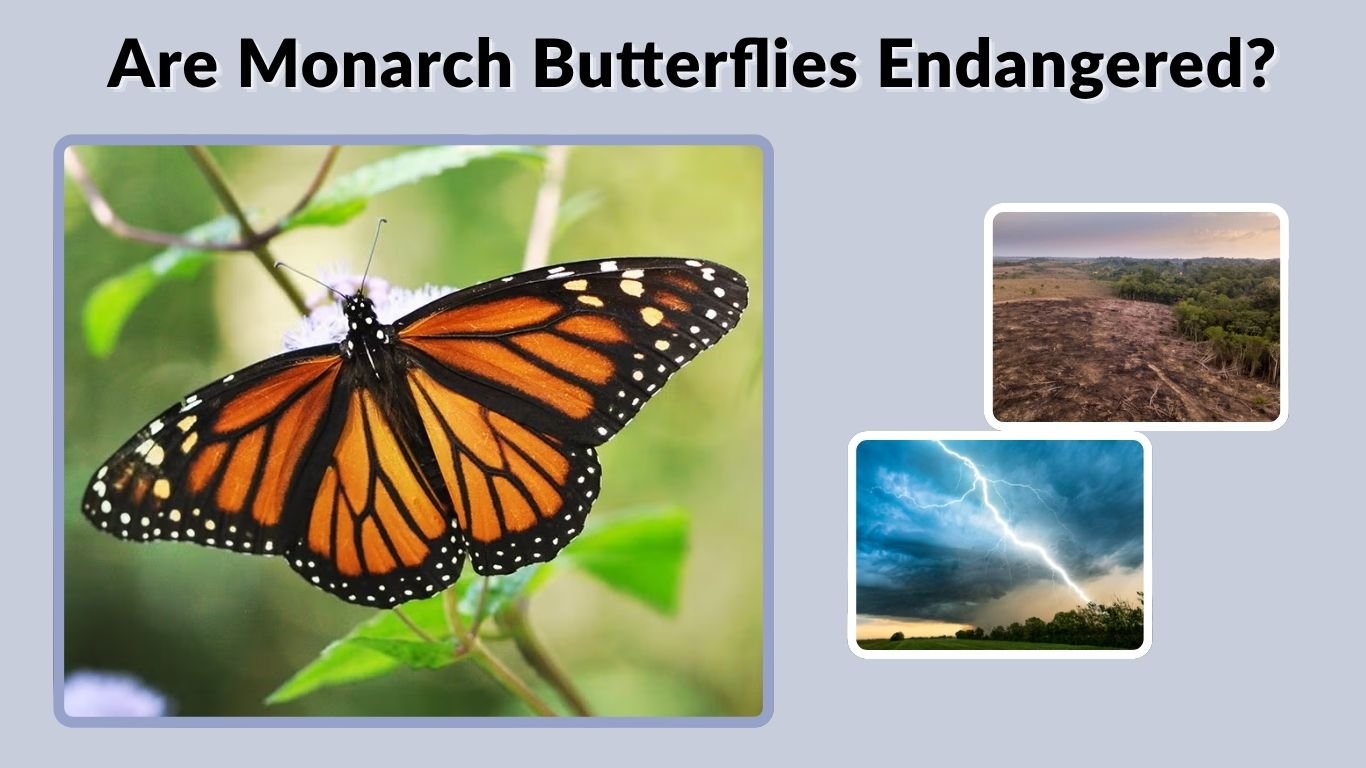
Are monarch butterflies endangered? The answer depends on which conservation system and country you mean. As of 2026, Canada legally lists the monarch as Endangered, while the migratory monarch is classified as Vulnerable on the IUCN Red List. In the United States, the U.S. Fish and Wildlife Service has proposed listing the monarch as Threatened, but a final rule has not yet been issued. Despite some recent population increases, habitat loss, pesticides, climate change, and declining milkweed continue to threaten monarch populations.
Are Monarch Butterflies Endangered in 2026?
The conservation status of monarch butterflies can be confusing because different organizations use different categories and legal systems. A species may be considered endangered under one country’s law without carrying the same designation globally. For monarchs, the current status differs significantly between the IUCN, Canada, and the United States.
IUCN Status of Monarch Butterflies
The migratory monarch butterfly, Danaus plexippus plexippus, is currently classified as Vulnerable on the IUCN Red List.
This means it remains considered threatened with extinction, but it is not currently in the IUCN’s Endangered category. The migratory monarch was originally assessed as Endangered in 2022 before its status was reassessed and changed to Vulnerable.
Are Monarch Butterflies Endangered in the United States?
As of October 2026, monarch butterflies are not yet federally listed as Endangered or Threatened under the U.S. Endangered Species Act.
The U.S. Fish and Wildlife Service proposed listing the monarch as Threatened in December 2024. However, the agency’s current information states that there has not yet been a final ruling, so the proposed federal protections are not currently in effect.
Are Monarch Butterflies Endangered in Canada?
Yes. Canada officially lists the monarch butterfly as Endangered under the federal Species at Risk Act (SARA).
The classification took effect on December 8, 2023, replacing its previous designation of Special Concern. This provides legal protection for monarchs on federal lands in Canada, including their eggs, caterpillars, chrysalises, and adults.
Why Are Monarch Butterflies Endangered or Threatened?
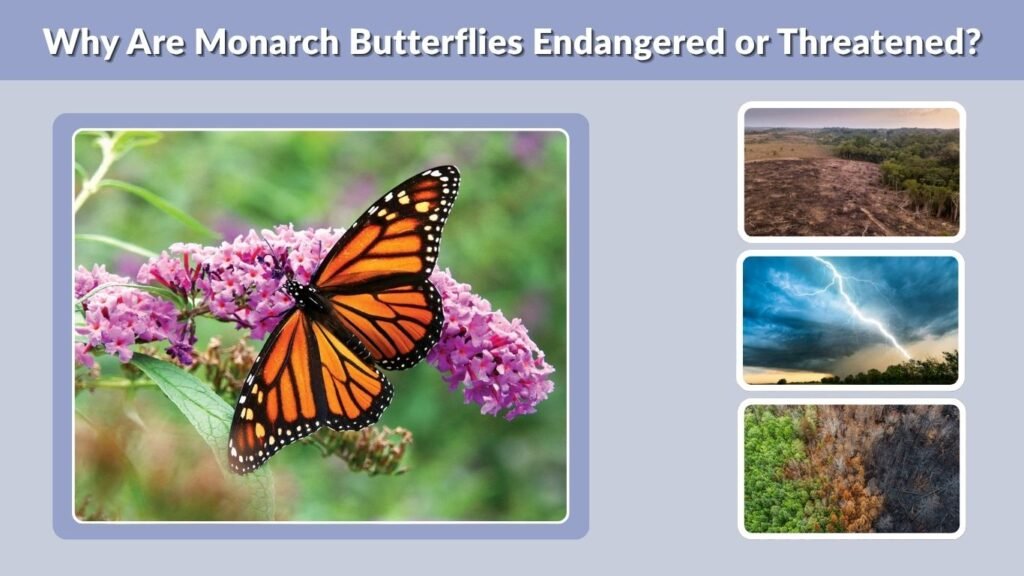
The decline of monarch butterflies does not have one single cause. Their remarkable migration requires healthy habitat across enormous areas of North America, meaning problems in breeding grounds, migration corridors, or overwintering sites can affect the same population. Scientists identify habitat loss, pesticide exposure, climate change, and changes in milkweed availability among the principal pressures.
Main Threats to Monarch Butterflies
Important threats include:
- Loss of milkweed: Caterpillars can only develop on milkweed host plants.
- Habitat destruction: Development and agricultural changes remove breeding and feeding areas.
- Herbicide use: Herbicides can reduce milkweed and nectar-producing wildflowers.
- Insecticide exposure: Some insecticides can directly harm monarch adults and larvae.
- Climate change: Drought, temperature extremes, storms, and shifting seasons affect survival.
- Overwintering habitat loss: Forest degradation threatens eastern monarchs wintering in Mexico.
- Loss of California overwintering sites: Development and unsuitable habitat management affect western monarchs.
- Extreme weather: Severe storms, droughts, heat, and freezes can cause substantial mortality.
The U.S. Fish and Wildlife Service specifically identifies habitat loss and degradation, insecticide exposure, drought, and climate change among major threats.
How Endangered Are Monarch Butterflies?
Monarch numbers fluctuate considerably from year to year because weather, drought, breeding conditions, migration success, and overwintering survival all influence annual populations. A strong year therefore does not necessarily mean that the long-term decline has been reversed. Eastern and western monarch populations also need to be considered separately because their recent numbers differ dramatically.
Eastern Monarch Population
There has been encouraging recent improvement in the eastern migratory population.
During the 2025–2026 overwintering season, monarch colonies in central Mexico occupied approximately 7.24 acres, or 2.93 hectares, of forest. That represented a 64% increase from 4.42 acres during the previous winter.
This increase is positive, but short-term population growth should not be interpreted as proof that the species has fully recovered. Monarch populations naturally fluctuate, while the long-term threats affecting migration and reproduction remain.
Western Monarch Population
The western population remains particularly concerning.
The 2025 Western Monarch Count recorded about 12,260 monarchs at 249 overwintering sites, making it the third-lowest peak-season count since monitoring began in 1997.
By the late-season survey ending in January 2026, approximately 6,464 butterflies were recorded across 193 sites. Such low numbers leave western monarchs especially vulnerable to poor weather, habitat loss, and other environmental pressures.
Why Is Milkweed Important for Monarch Survival?
Milkweed is fundamental to the monarch life cycle because monarch caterpillars depend on plants in the milkweed genus Asclepias. Female butterflies search for suitable milkweed when laying their eggs, and newly hatched caterpillars begin eating its leaves. Adult monarchs can drink nectar from numerous flowers, but larvae cannot simply switch to ordinary garden plants when milkweed disappears.
Milkweed Loss and Monarch Decline
Modern land-use changes can remove milkweed from agricultural landscapes, roadsides, fields, and developing areas.
When milkweed becomes scarce, females have fewer places to lay eggs and fewer caterpillars can complete development. Canada has identified increased herbicide use and the resulting decline of milkweed as a significant threat affecting monarchs across their North American range.
How Does Climate Change Affect Monarch Butterflies?
Climate change can affect monarchs during almost every part of their annual cycle. Temperature influences when butterflies reproduce and migrate, while rainfall determines the condition of milkweed and nectar plants. Severe weather can also cause direct mortality. Because migratory monarchs depend on seasonal timing across thousands of miles, disruptions in one region can affect later portions of their journey.
Weather and Migration Problems
Drought can reduce milkweed and flowering plants, leaving caterpillars with less food and adults with fewer nectar sources.
Extreme heat can affect developing eggs and larvae, while severe winter weather can kill large numbers of overwintering butterflies. Climate changes may also alter when plants emerge compared with when migrating monarchs arrive, potentially creating mismatches between butterflies and essential resources.
How Can People Help Monarch Butterflies?
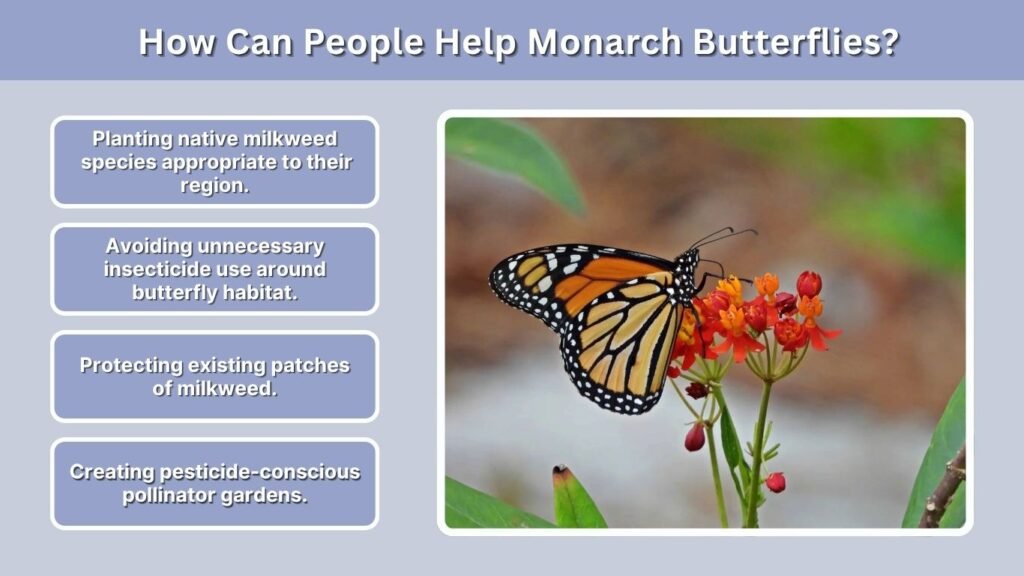
Monarch conservation requires large-scale habitat protection, but individual gardens and community spaces can also contribute useful breeding and feeding habitat. The most helpful actions focus on providing appropriate native plants while reducing unnecessary pesticide exposure. Connecting patches of habitat is especially valuable because monarchs travel through enormous areas during migration.
Ways to Support Monarch Conservation
People can help by:
- Planting native milkweed species appropriate to their region.
- Growing nectar-rich native flowers that bloom across different seasons.
- Avoiding unnecessary insecticide use around butterfly habitat.
- Protecting existing patches of milkweed.
- Creating pesticide-conscious pollinator gardens.
- Supporting restoration of grasslands and native wildflower areas.
- Protecting migration stopover habitat.
- Supporting conservation of overwintering forests in Mexico and California.
- Participating in scientifically organized monarch monitoring projects.
- Learning to recognize monarch eggs and caterpillars before trimming milkweed.
Will Monarch Butterflies Become Extinct?
Monarch butterflies are not currently on the verge of disappearing everywhere, and recent eastern population growth demonstrates that populations can respond positively when conditions improve. However, their long-term future remains uncertain. The extremely low western population, continued habitat degradation, pesticide exposure, and climate pressures mean conservation efforts remain important even during years when monarch numbers temporarily increase.
Can Monarch Populations Recover?
Recovery is possible because monarchs have high reproductive potential and occupy an enormous geographic range.
However, successful recovery depends on maintaining milkweed-rich breeding habitat, nectar resources along migration corridors, and secure overwintering areas. Protecting only one stage of their migration is insufficient because monarchs depend on a chain of habitats spanning several countries.
Monarch Butterfly Conservation Facts
Understanding the terminology surrounding monarch conservation helps explain why apparently contradictory answers can all appear online. Older articles may also reflect classifications that have since changed, making the publication date particularly important when researching whether monarch butterflies are endangered.
Quick Status Facts
- Canada lists monarch butterflies as Endangered under SARA.
- Canada’s Endangered listing has applied since December 8, 2023.
- The IUCN currently classifies the migratory monarch as Vulnerable.
- The United States proposed a Threatened ESA listing in December 2024.
- As of October 2026, the U.S. proposal has not been finalized.
- Eastern monarch numbers increased 64% in the 2025–2026 overwintering survey.
- Western monarch numbers remain historically low.
- Milkweed loss remains an important conservation concern.
- Habitat degradation, pesticides, drought, and climate change continue to threaten monarch populations.
FAQs
Understanding whether monarchs are endangered requires separating legal protection from broader conservation status. The answers below address their current classification, population decline, major threats, and differences among the United States, Canada, and global conservation assessments.
1. Are monarch butterflies endangered in 2026?
Their status depends on location and classification system. Canada federally lists monarchs as Endangered. The IUCN currently classifies the migratory monarch as Vulnerable. In the United States, the Fish and Wildlife Service has proposed listing the monarch as Threatened, but that proposal has not yet become a final rule.
2. Why are monarch butterflies endangered?
Monarch populations face several interacting threats, including loss of milkweed and nectar habitat, agricultural and urban development, insecticide exposure, drought, extreme weather, climate change, and degradation of overwintering habitat. Their long migration makes them particularly dependent on suitable habitat across multiple regions and countries.
3. Are monarch butterflies on the U.S. endangered species list?
No, not currently. The U.S. Fish and Wildlife Service proposed in December 2024 that monarch butterflies be listed as Threatened under the Endangered Species Act. As of October 2026, the Service states that no final ruling has been issued, meaning the proposed listing has not yet taken effect.
4. Are monarch butterfly populations increasing?
Some recent numbers have improved. Eastern monarchs occupied 7.24 acres of overwintering forest in Mexico during 2025–2026, a 64% increase from the previous winter. However, western monarch numbers remain extremely low, so one favorable eastern season does not mean monarch conservation concerns have disappeared.
5. What can I do to help endangered monarch butterflies?
Planting appropriate native milkweed and nectar-producing flowers can provide breeding and feeding habitat. Avoid unnecessary pesticide use, protect naturally occurring milkweed, and maintain flowers throughout the growing season. Supporting larger habitat-restoration and overwintering conservation programs can also contribute to monarch recovery across their migratory range.
