
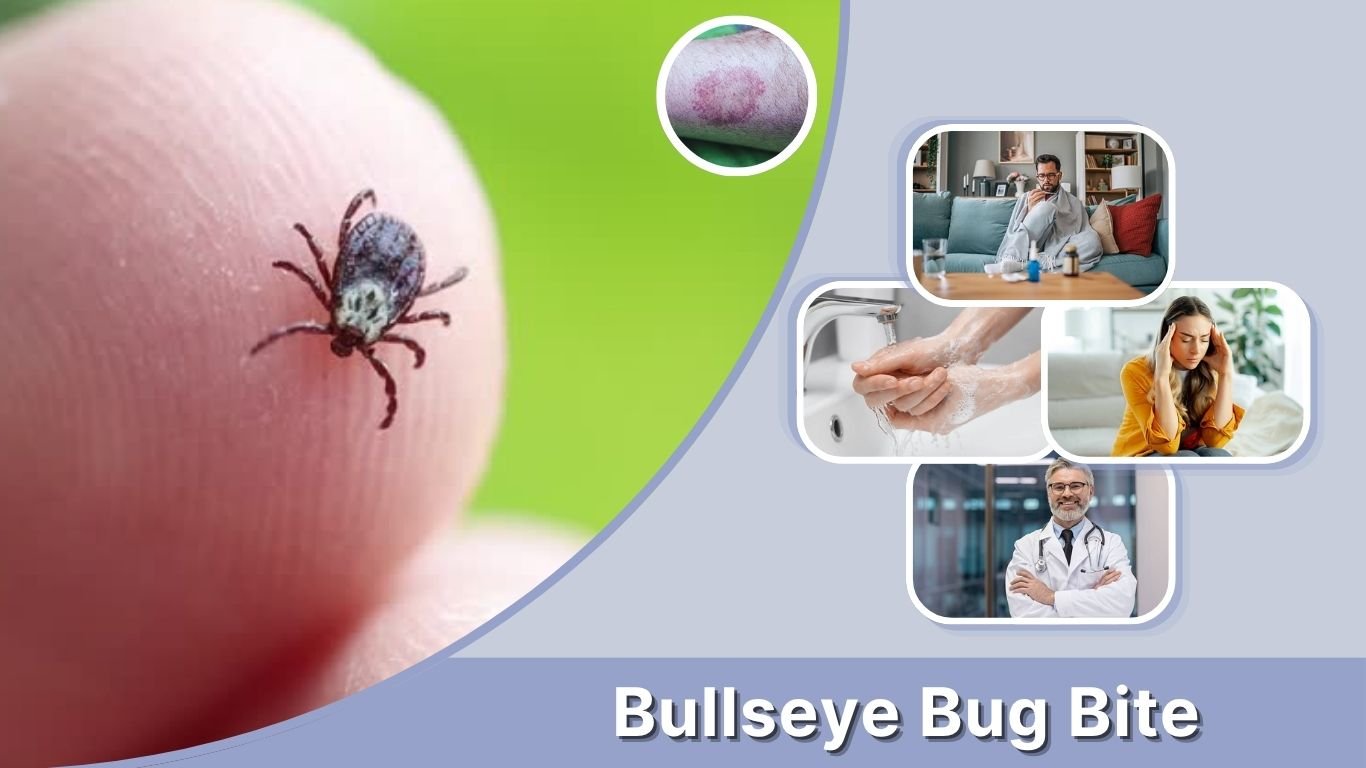
A bullseye bug bite is a circular skin mark with rings or an area of central clearing that resembles a target. Although people often associate this pattern with a tick bite and Lyme disease, not every circular rash has the same cause. Mosquito bites, local allergic reactions, other tick-related conditions, and some skin problems can look similar. Because an expanding bullseye rash can sometimes indicate a tick-borne illness, recognizing its appearance, timing, and accompanying symptoms can help you decide when medical evaluation is appropriate.
What Does a Bullseye Bug Bite Look Like?
A bullseye bug bite usually describes a red or discolored skin lesion with one or more rings surrounding a central spot. However, “bullseye” is a description rather than a diagnosis. The color, size, itchiness, and speed of expansion can provide useful clues. A true Lyme disease rash can also look different from the classic target pattern.
Common Bullseye Bite Features
A target-like bite or rash may have:
- A red or pink outer ring
- A darker or lighter center
- Gradually increasing diameter
- Warm skin around the area
- Mild swelling
- A small central puncture or bump
- Little or no itching in some cases
- Purple or bruise-like coloration in others
An expanding rash deserves more attention than a small area of redness that remains the same size.
Small Bullseye Bug Bite
A small red circle immediately after a bite does not automatically indicate Lyme disease. The CDC notes that a small bump or redness around a tick bite can resemble a mosquito bite and usually disappears within one or two days.
In contrast, Lyme-related erythema migrans typically develops several days after an infected tick bite and gradually expand.
What Bug Bites Cause a Bullseye Rash?
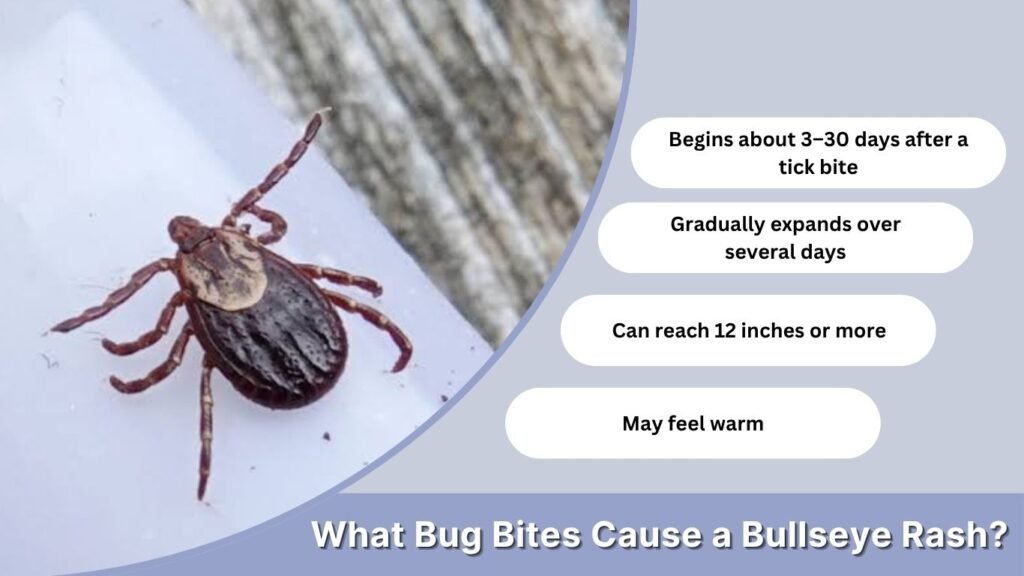
Ticks are the most important consideration when discussing a developing bullseye rash, but they are not the only possible explanation for circular skin changes. Local immune reactions, mosquito bites, and other skin conditions can sometimes create ring-like redness. This makes it difficult to identify the cause solely from a photograph or the shape of the rash.
Tick Bite and Lyme Disease
The classic bullseye rash associated with Lyme disease is called erythema migrans, or EM. Lyme disease is caused by Borrelia bacteria transmitted through infected blacklegged ticks.
According to the CDC, an EM rash commonly:
- Begins about 3–30 days after a tick bite
- Gradually expands over several days
- Can reach 12 inches or more
- May feel warm
- Is usually not very itchy or painful
- Sometimes develops central clearing
- Does not always form a perfect bullseye
Approximately 70–80% of people with Lyme disease develop erythema migrans.
Another Tick-Related Bullseye Rash
Southern tick-associated rash illness, or STARI, can produce an expanding red rash after a lone star tick bite. It sometimes develops a classic target appearance.
STARI is not the same as Lyme disease, and its cause remains unknown. The CDC reports that the rash generally appears within about seven days and may expand to 3–12 inches across.
Bullseye Bug Bite Not From a Tick
Finding a ring around a suspected bite does not prove that a tick was responsible. Skin inflammation can change shape while healing, and some reactions develop lighter centers as surrounding redness spreads. If no tick was seen, several other possibilities may need consideration, especially when the spot is strongly itchy, appears immediately, or does not progressively enlarge.
Mosquito Bullseye Bug Bite
Mosquito bites typically produce itchy, raised bumps rather than the gradually expanding erythema migrans rash associated with Lyme disease.
However, a strong local reaction can create substantial redness and swelling around the original bite. Scratching can further enlarge or irritate the area, sometimes making it appear ring-shaped.
A very itchy spot that develops soon after mosquito exposure and gradually improves is different from the typical pattern of an expanding Lyme rash, although appearance alone cannot confirm the cause.
Spider Bullseye Bug Bite
People frequently search for a spider bullseye bug bite, particularly when worried about a brown recluse. Spider bites can sometimes produce redness, swelling, blistering, or changes in skin color.
However, many lesions blamed on spiders occur without anyone actually seeing a spider bite. A bullseye appearance by itself cannot identify a spider species.
If a suspected spider bite becomes increasingly painful, blistered, dark, ulcerated, or severely swollen, medical evaluation is appropriate.
Bed Bug Bites
Bed bug bites usually appear as itchy red bumps, sometimes grouped together or arranged in a line. A classic expanding bullseye rash is not their typical pattern.
Individual bites can nevertheless become surrounded by larger areas of inflammation in sensitive individuals, particularly after scratching or an allergic skin reaction.
Itchy, Bruised or Swollen Bullseye Bug Bites
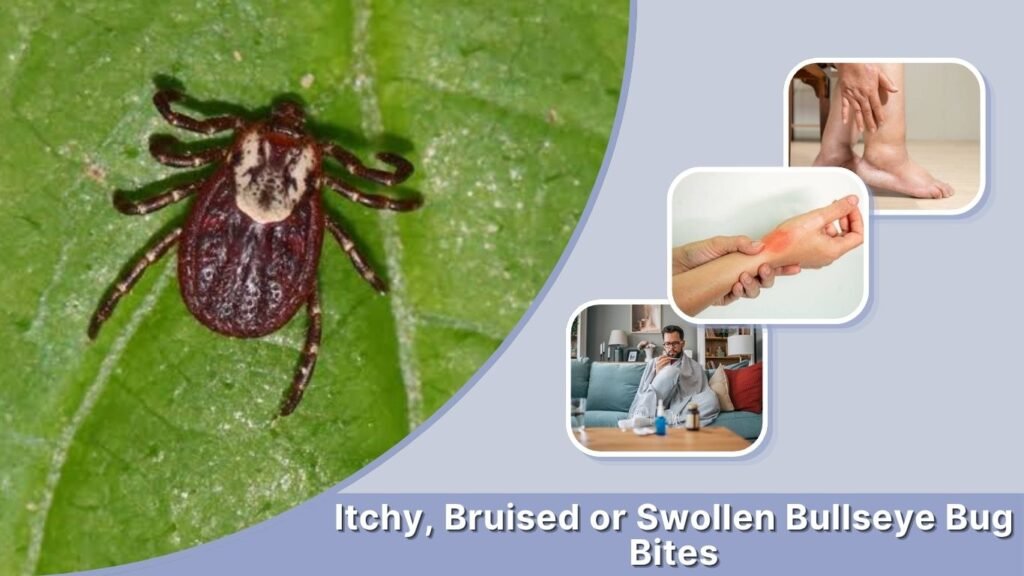
The way a target-shaped lesion feels can provide additional information, although symptoms still cannot identify the exact cause with certainty. Ordinary insect reactions tend to be itchy, while the typical Lyme erythema migrans rash is rarely painful or itchy. Bruising, swelling, blistering, or increasing tenderness may suggest another reaction or complication.
Itchy Bullseye Bug Bite
An itchy bullseye bug bite may result from a local immune response. Mosquito, flea, mite, and other insect bites commonly produce itching.
Look for changes such as:
- Rapidly increasing redness
- Increasing warmth or tenderness
- Significant swelling
- Drainage or pus
- Blister formation
- Fever or feeling unwell
Increasing redness, swelling, or pain can also occur with secondary skin infection, particularly after repeated scratching.
Bullseye Bruise Around a Bug Bite
Some bites can be surrounded by purple, blue, or dark-red discoloration. Bruising may develop after scratching, local inflammation, minor bleeding beneath the skin, or trauma around the bite.
A purple bullseye mark is not specific to a particular insect. Seek medical advice if discoloration spreads, the center becomes black, pain becomes severe, or the skin begins breaking down.
Raised or Swollen Bullseye Bite
Mild swelling is common with insect bites because the immune system reacts to saliva, venom, or other substances introduced into the skin.
Large or worsening swelling deserves closer observation. Swelling of the lips, tongue, face, or throat combined with breathing difficulty can indicate a serious allergic reaction requiring emergency care.
What to Do for a Bullseye Bug Bite
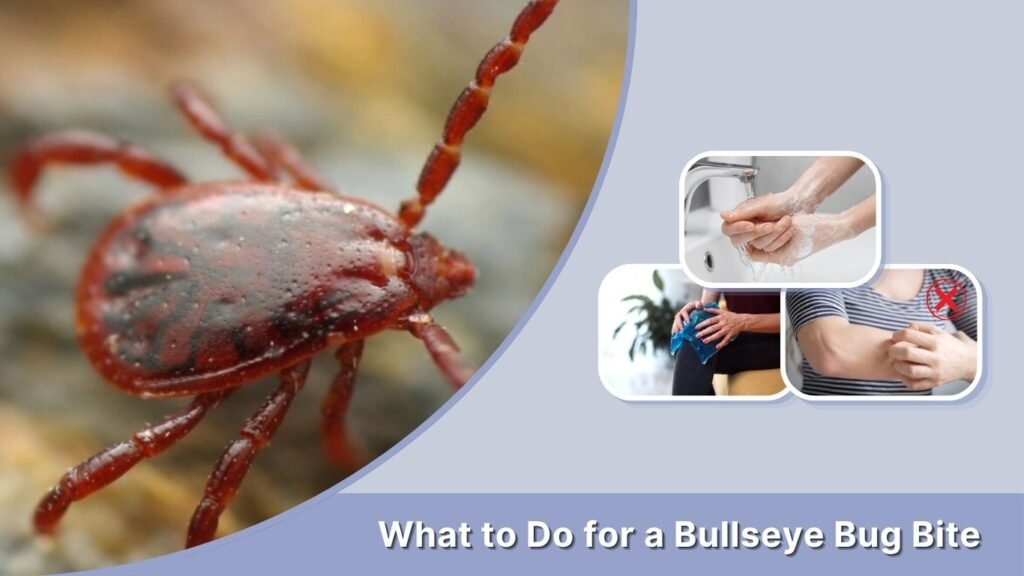
Treatment depends on what caused the skin reaction. A small, mildly itchy bite may only require simple home care. An expanding target rash following possible tick exposure is different because Lyme disease or another tick-related illness may need medical assessment. Avoid diagnosing a bite solely from its shape, especially when the rash continues to enlarge.
Basic Care for a Mild Bug Bite
For a minor bite or sting:
- Wash the skin gently with soap and water.
- Apply a cool compress to reduce discomfort.
- Avoid scratching the area.
- Keep the skin clean and dry.
- Monitor the size of the redness.
- Consider photographing it daily for comparison.
Most uncomplicated insect bites cause temporary itching, swelling, or stinging and can be managed at home.
What If You Find a Tick?
Remove an attached tick as soon as possible. The CDC recommends grasping it close to the skin with clean fine-tipped tweezers and pulling upward with steady, even pressure.
After removal, watch for a rash, fever, headache, fatigue, or other illness during the following days and weeks. Contact a healthcare professional if these symptoms develop.
When Should You See a Doctor?
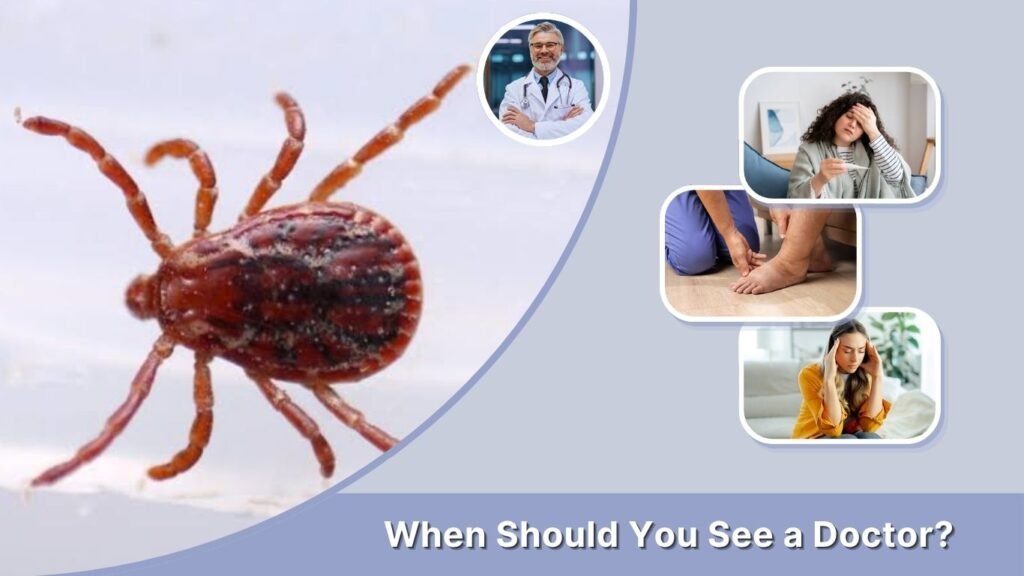
An expanding bullseye rash deserves medical attention when Lyme disease or another tick-borne illness is possible. The absence of a remembered tick bite does not completely exclude exposure because ticks can be extremely small. Healthcare professionals consider the appearance of the rash, symptoms, travel or outdoor exposure, geographic location, and other clinical information when evaluating suspected tick-borne disease.
Warning Signs to Watch For
Seek medical evaluation for:
- A circular rash that continues expanding
- Fever or chills after a possible tick bite
- Headache or unusual fatigue
- Muscle or joint aches
- Swollen lymph nodes
- Increasing pain or swelling
- Pus or worsening warmth and redness
- Multiple unexplained rashes
Get emergency help for difficulty breathing, fainting, throat tightness, or significant swelling of the face, lips, mouth, or tongue.
Bullseye Rash Without Seeing a Tick
You do not need to remember seeing a tick for an expanding rash to deserve attention. If the lesion steadily becomes larger over several days, especially after spending time in wooded or grassy areas where ticks occur, contact a healthcare professional.
Also remember that Lyme disease does not always produce a textbook bullseye. EM can be uniformly red or have other appearances.
FAQs
1. What bug bite gives you a bullseye?
An infected blacklegged tick bite can lead to Lyme disease and an expanding erythema migrans rash that sometimes resembles a bullseye. Lone star tick bites can also produce a similar rash associated with STARI. Other skin reactions may occasionally look circular, so appearance alone cannot identify the cause.
2. Can you have a bullseye bug bite that is not from a tick?
Yes. Local reactions to insects, irritation, bruising, and some other skin conditions can have ring-like appearances. However, a gradually expanding rash following possible tick exposure should be medically evaluated.
3. Is a bullseye bug bite always Lyme disease?
No. Even tick-related bullseye rashes are not necessarily Lyme disease. STARI can produce a similar expanding target rash. Conversely, Lyme disease does not always cause a classic bullseye pattern.
4. Is a bullseye bug bite supposed to itch?
It depends on the cause. Ordinary insect bites commonly itch, while Lyme erythema migrans is usually not particularly itchy or painful. Strong itching therefore does not confirm or exclude any diagnosis by itself.
5. When should I worry about a bullseye bug bite?
Contact a healthcare professional if the rash keeps expanding, especially after possible tick exposure, or if you develop fever, headache, fatigue, muscle aches, joint pain, or swollen lymph nodes. Seek emergency assistance for difficulty breathing, fainting, or facial or throat swelling.
