
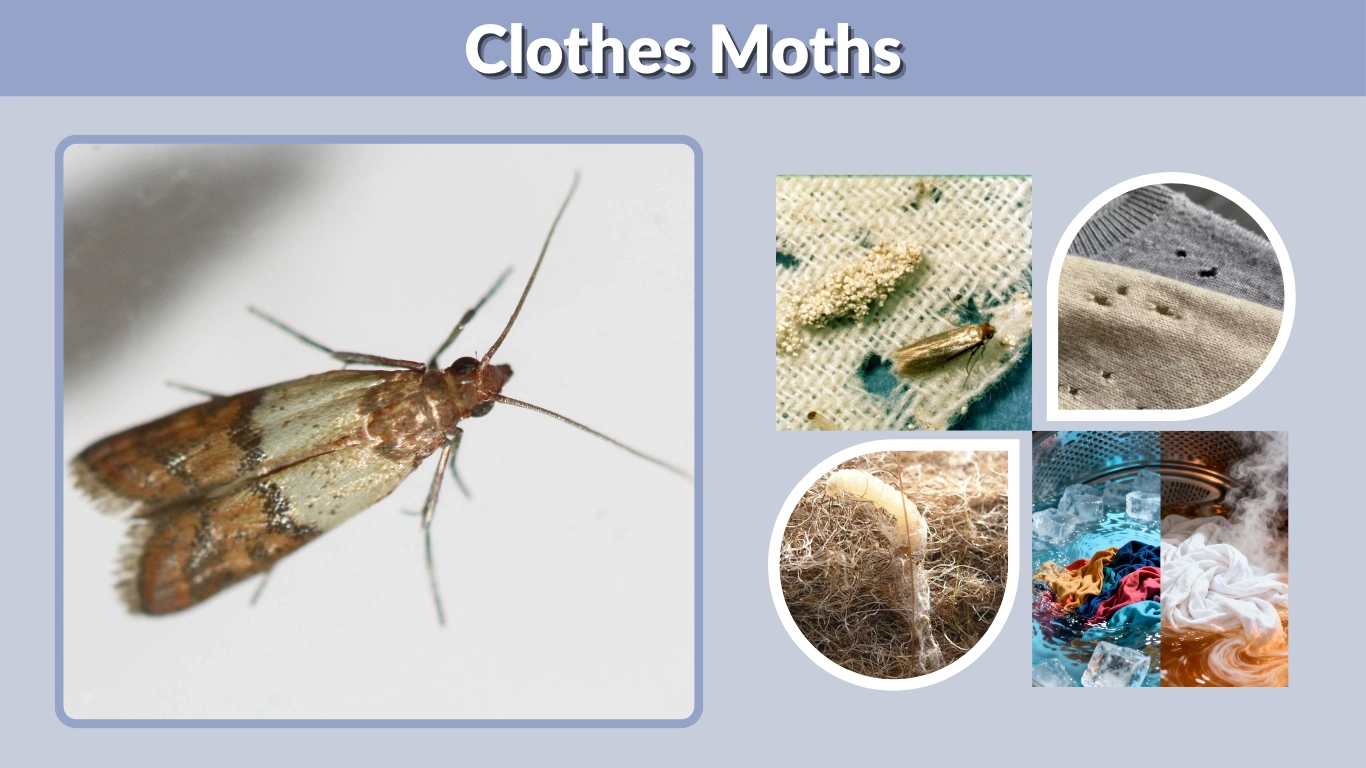
Clothes moths are one of the most frustrating household pests because they quietly damage clothing, carpets, and stored fabrics before homeowners notice the problem. Unlike pantry moths, clothes moths target natural fibers such as wool, cashmere, silk, and fur. The real damage comes from their larvae, which feed on fabric and leave behind holes, webbing, and ruined garments. Understanding how clothes moths live, spread, and survive is essential for stopping infestations early and protecting valuable clothing from long-term damage.
What Are Clothes Moths?
Clothes moths are small household insects that thrive in dark, undisturbed storage spaces. They are commonly found in closets, drawers, carpets, and boxes containing natural fabrics. Adult moths themselves do not eat clothing, but they lay eggs on fabric surfaces where larvae can feed after hatching.
These pests prefer warm, quiet environments with limited airflow. Clothing that is rarely used or stored for long periods becomes especially vulnerable. Even a small infestation can quickly grow if eggs and larvae remain unnoticed.
Common Types of Clothes Moths
There are two main types of clothes moths commonly found in homes.
- Webbing clothes moths
- Case-bearing clothes moths
- Casemaking clothes moths
Webbing clothes moths are the most widespread and leave behind silky tunnels or webbing on fabric surfaces. Case-bearing moth larvae create portable protective cases made from fibers and fabric particles while feeding on clothing.
What Do Clothes Moths Look Like?
Clothes moths are usually small and light gold or beige in color. They are much quieter than pantry moths and tend to avoid light. Instead of flying openly around kitchens or windows, they stay close to closets, carpets, and fabric storage areas.
Larvae are creamy white with brown heads and are easier to identify than adult moths because they are responsible for visible fabric damage. You may also notice tiny silk tubes, cocoons, or patches of webbing near affected clothing.
Do Moths Really Eat Clothes?
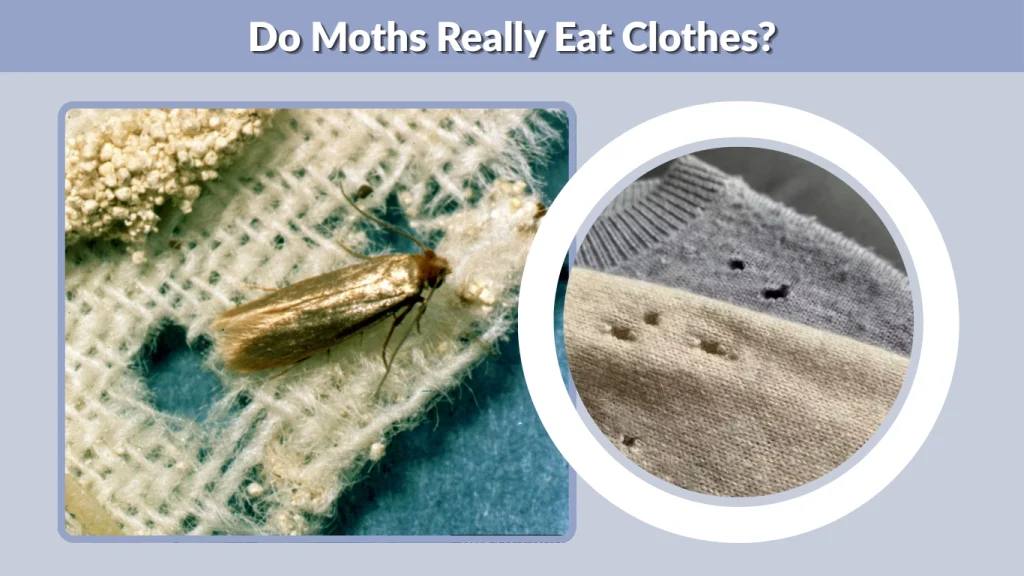
Many people assume adult moths chew through clothing, but the real problem comes from moth larvae. After eggs hatch, larvae begin feeding on fibers that contain keratin, a protein naturally found in animal-based materials.
Because synthetic materials contain very little keratin, clothes moths are far more attracted to natural fabrics. Clothing with sweat, food stains, or body oils becomes even more appealing because contaminants make fibers easier to digest.
Fabrics Most at Risk
Certain materials are much more vulnerable to clothes moth damage than others.
- Wool sweaters
- Cashmere clothing
- Silk garments
- Fur and feather items
- Wool carpets and rugs
Blended fabrics may also become damaged if they contain a significant amount of natural fiber. Seasonal storage boxes and unused winter clothing are common targets for infestations.
Do All Moths Eat Clothes?
Not all moth species damage fabrics. Pantry moths, for example, infest dry foods such as grains, flour, cereal, and pet food rather than clothing. Clothes moths specifically seek out fibers containing keratin.
This difference is important because treatment methods vary depending on the type of moth infestation. Using food-storage solutions will not stop clothes moths, and clothing treatments will not eliminate pantry moths.
Signs of a Clothes Moth Infestation
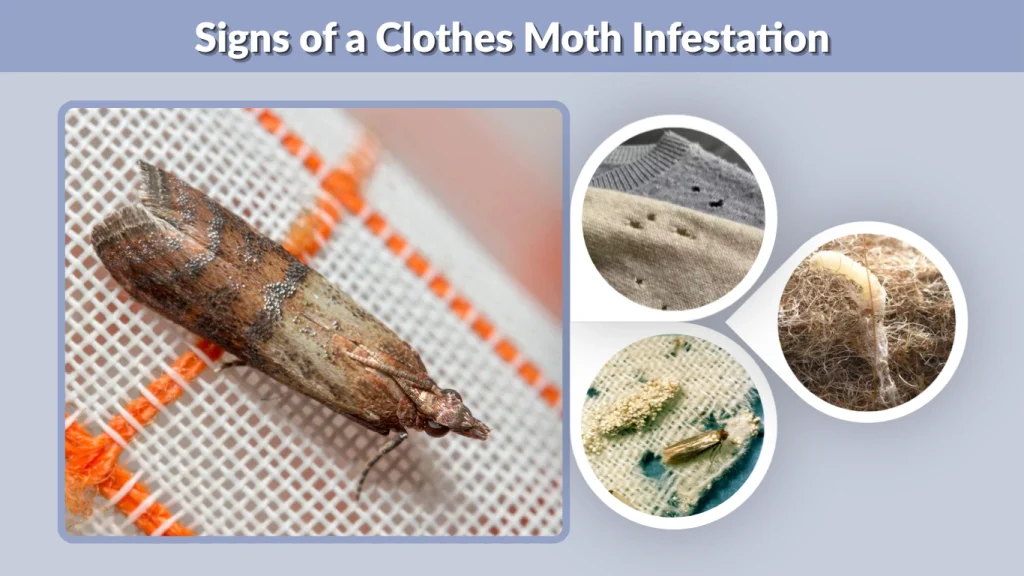
Clothes moth infestations often remain hidden until fabric damage becomes obvious. Since these pests prefer dark and quiet areas, they can continue reproducing for months before being discovered.
Early detection is important because larvae can spread from closets into rugs, carpets, upholstered furniture, and storage boxes. Regular inspections help prevent extensive damage.
Common Warning Signs
Several indicators can reveal the presence of clothes moths in a home.
- Small irregular holes in clothing
- Silky webbing on fabric
- Tiny larvae crawling on clothing
- Adult moths near closets or carpets
- Shed skins or cocoon-like structures
Damage is usually concentrated in hidden or undisturbed areas, including under collars, inside folded garments, or along carpet edges near walls.
How to Identify Clothes Moth Eggs and Larvae
Clothes moth eggs are extremely small and difficult to spot without close inspection. Female moths lay eggs directly on fabric surfaces where larvae will have immediate access to food after hatching.
Larvae are easier to recognize because they actively feed on fibers. They often appear as cream-colored worms with darker heads and may leave behind silk trails or feeding tubes while moving across fabric surfaces.
How to Get Rid of Clothes Moths
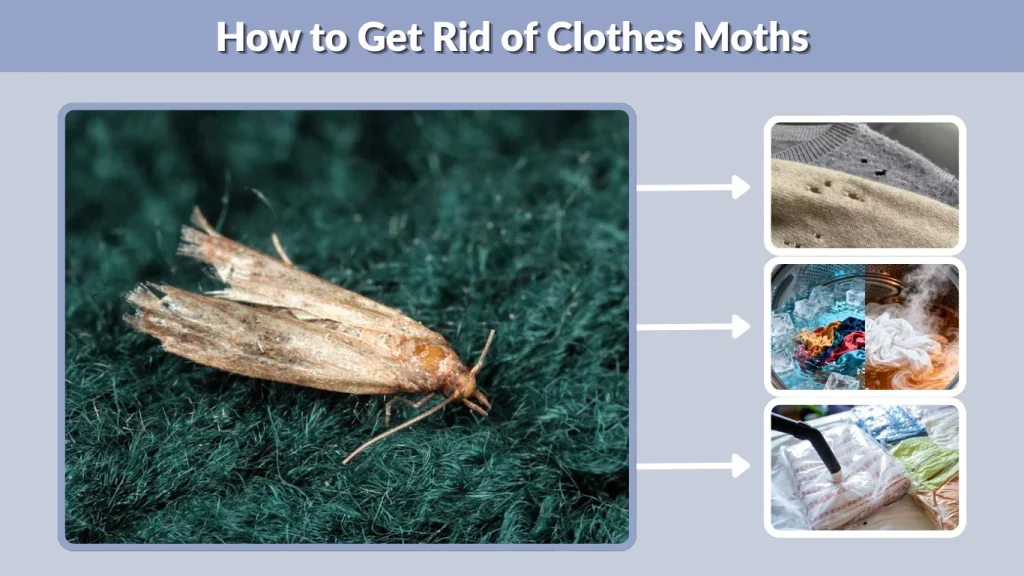
Getting rid of clothes moths requires more than simply killing adult moths. Eggs and larvae are usually hidden deep inside fabrics, carpets, and storage spaces, which means a complete cleaning process is necessary to stop the infestation from returning.
A combination of washing, vacuuming, trapping, and proper storage works best for long-term control. Acting quickly can prevent further damage to expensive clothing and household fabrics.
Inspect Your Home Thoroughly
The first step is identifying every area where moth activity may exist. Clothes moths prefer dark locations with little disturbance, so inspections should focus on storage spaces and fabric-heavy areas throughout the home.
Common hiding places include:
- Closets and drawers
- Wool carpets and rugs
- Upholstered furniture
- Seasonal storage boxes
- Blanket and linen storage areas
Pay close attention to corners, folds in fabric, and carpet edges near walls. Even if damage appears limited to one closet, larvae may already be spreading into nearby rooms.
Clean and Treat Infested Clothing
All affected clothing should be cleaned immediately to destroy eggs and larvae. Washing clothes in hot water is one of the most effective methods when fabrics allow it. Dry cleaning is another reliable option for delicate materials such as wool or cashmere.
Freezing clothing can also help kill moth eggs and larvae. Garments should remain sealed in a plastic bag and frozen for at least several days before returning to storage.
After cleaning, avoid placing clothing back into contaminated areas until closets and storage spaces have been thoroughly treated.
Best Ways to Prevent Clothes Moths
Preventing clothes moths is much easier than dealing with a major infestation. Consistent cleaning and proper fabric storage reduce the chances of moths settling inside closets or storage containers.
Homes with large amounts of wool clothing, rugs, or seasonal fabrics should pay particular attention to prevention because these materials attract moth larvae.
Proper Clothing Storage Tips
Simple storage habits can significantly lower the risk of future infestations.
- Wash clothes before storing them
- Use airtight storage containers
- Keep closets dry and ventilated
- Avoid overcrowding clothing
- Inspect stored fabrics regularly
Dirty clothing is especially attractive to moth larvae because oils, sweat, and stains make natural fibers easier to consume. Cleaning garments before storage removes these attractants.
Closet Maintenance Habits
Regular maintenance prevents moths from finding safe breeding areas inside the home. Vacuuming closets, rugs, and baseboards removes dust, hair, and fabric particles that larvae may feed on.
Humidity control is also important because damp conditions encourage moth survival. Improving airflow and exposing clothing to sunlight occasionally can make storage spaces less appealing to pests.
Closets that remain untouched for months are far more likely to develop infestations than spaces that receive regular use and cleaning.
Clothes Moths vs Pantry Moths
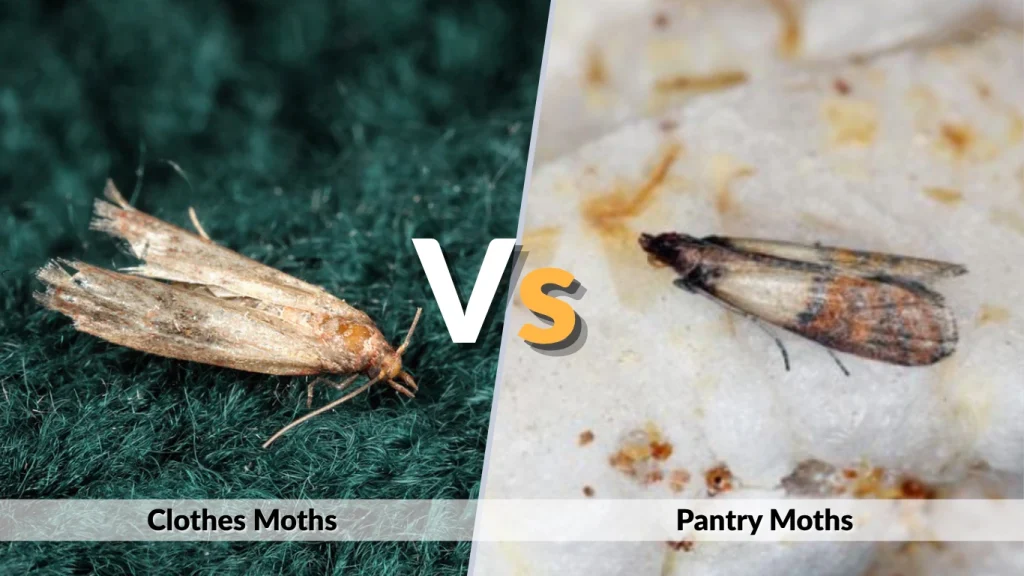
Although clothes moths and pantry moths may look similar at first glance, they infest completely different areas of the home and feed on different materials. Clothes moths damage fabrics made from natural fibers, while pantry moths target stored food products such as grains, flour, cereal, rice, and pet food.
Understanding the difference between these pests is important because the treatment methods are not the same. Misidentifying the infestation can allow the problem to continue spreading throughout the home.
| Feature | Clothes Moths | Pantry Moths |
| Main Food Source | Wool, silk, fur, cashmere, carpets | Flour, grains, cereal, nuts, pet food |
| Common Location | Closets, carpets, storage boxes | Kitchens and food storage areas |
| Damage Caused | Holes in clothing and fabrics | Contaminated food products |
| Larvae Behavior | Feed on natural fibers | Feed on dry food items |
| Adult Moth Activity | Avoid light and stay hidden | Frequently fly around lights |
| Appearance | Small, light gold or beige | Brown or gray with patterned wings |
| Signs of Infestation | Fabric holes, webbing, larvae | Webbing inside food packages |
| Preferred Environment | Dark, undisturbed fabric storage | Warm pantry and kitchen spaces |
| Main Prevention Method | Proper clothing storage and cleaning | Airtight food containers |
| Typical Household Risk | Clothing and carpet damage | Food contamination |
Are Clothes Moths Dangerous?
Clothing moths are not dangerous to humans because they do not bite, sting, or spread diseases. However, they can become financially costly due to the damage they cause to clothing, rugs, and upholstery.
Severe infestations may destroy expensive garments and valuable household fabrics if left untreated for long periods. Some people may also experience mild irritation from moth scales or accumulated debris in heavily infested spaces.
Why Clothes Moth Damage Becomes Expensive
Clothes moth larvae feed slowly but continuously, which allows damage to spread unnoticed over time. A single infestation may affect multiple closets, carpets, and stored fabrics before homeowners realize the extent of the problem.
Repairing or replacing wool coats, rugs, cashmere sweaters, and upholstered furniture can become costly, especially when infestations continue for several months without treatment.
FAQs
What attracts clothes moths to closets?
Clothes moths are attracted to dark, quiet spaces containing natural fibers such as wool, silk, cashmere, and fur. Dirty clothing with sweat, food stains, or body oils is especially appealing because larvae can digest contaminated fibers more easily than clean fabrics.
Can clothes moths live in carpets?
Yes, clothes moth larvae commonly live in wool carpets, rugs, and carpet edges. Low-traffic areas under furniture or along walls are particularly vulnerable because they remain undisturbed for long periods and collect dust and natural fibers.
How long does it take to get rid of clothes moths?
The time required depends on the severity of the infestation. Small infestations may be controlled within a few weeks through cleaning, vacuuming, laundering, and trapping. Larger infestations can take several months and may require professional pest control treatment.
Do cedar blocks really repel clothes moths?
Cedarwood can help discourage clothes moths because of its natural oils and scent. However, cedar alone usually cannot eliminate an active infestation. It works best as a preventive measure when combined with regular cleaning and proper clothing storage.
Can clothes moths spread throughout a house?
Yes, clothes moths can spread beyond closets into carpets, upholstered furniture, blankets, and storage boxes. If left untreated, larvae may continue feeding in multiple rooms, leading to widespread fabric damage throughout the home.
