
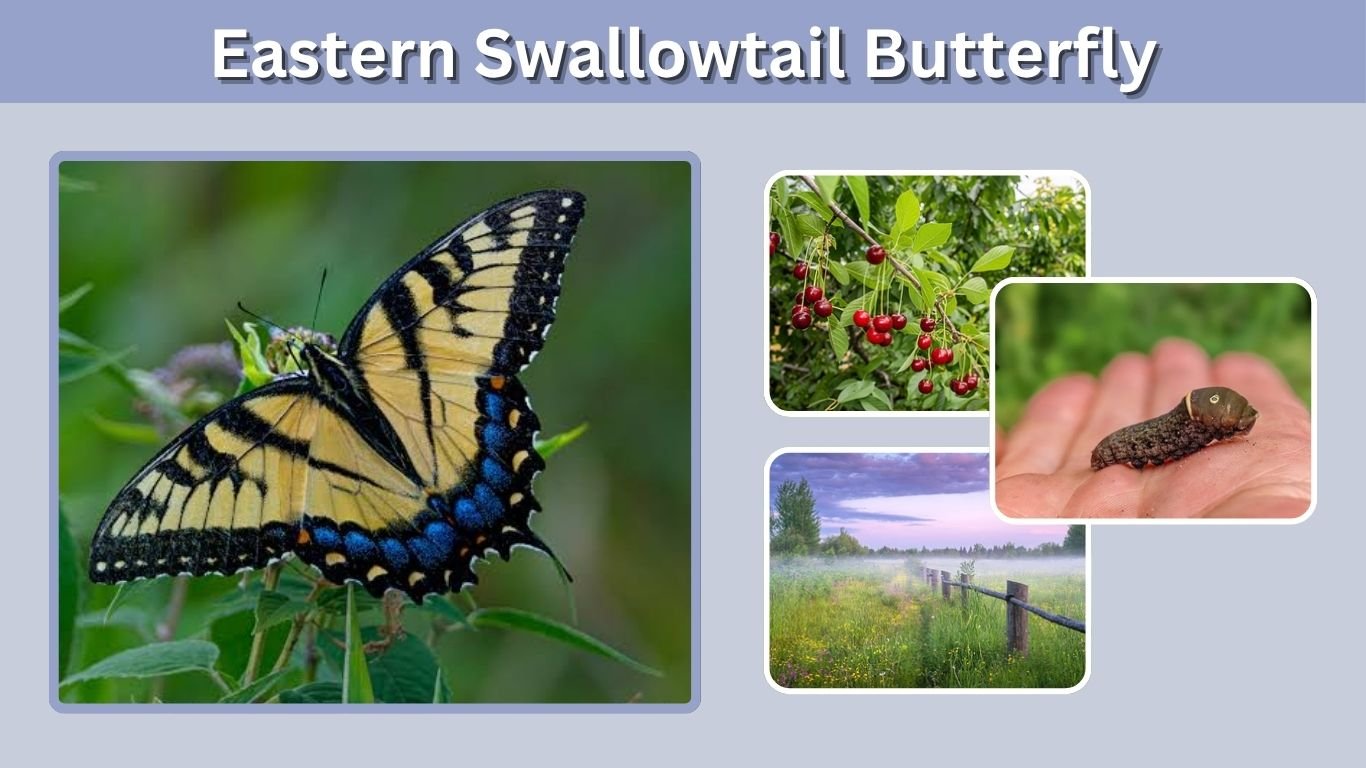
The eastern swallowtail butterfly is one of North America’s most recognizable butterflies, admired for its colorful wings and graceful flight. The eastern tiger swallowtail (Papilio glaucus) displays yellow wings with striking black stripes, while some females develop a beautiful dark appearance. Its caterpillars undergo dramatic changes before becoming adults. These butterflies inhabit forests, gardens, and open landscapes throughout eastern North America. This guide explores eastern swallowtail identification, caterpillar stages, host plants, habitat, lifespan, and differences between eastern tiger swallowtails and eastern black swallowtails.
Eastern Swallowtail Butterfly Identification
The eastern tiger swallowtail belongs to the family Papilionidae, which includes many large, colorful butterflies. Its distinctive yellow wings, black stripes, and tail-like hindwing extensions make it recognizable in gardens and woodland habitats. However, some females develop dark wings, creating confusion with other swallowtail species. Examining wing patterns, coloration, and body characteristics helps identify this beautiful butterfly.
Physical Characteristics
Eastern tiger swallowtails have several recognizable features.
- Scientific name: Papilio glaucus.
- Wingspan: Approximately 3–5.5 inches.
- Wing color: Typically bright yellow with black tiger-like stripes.
- Hindwings: Long, narrow extensions resembling tails.
- Wing markings: Black borders with yellow spots and occasional blue or orange accents.
- Body: Slender, dark-colored body with yellow markings.
Male vs. Female Eastern Tiger Swallowtail
Male eastern tiger swallowtails have bright yellow wings with distinctive black stripes.
Females occur in two color forms. Yellow females resemble males but usually display more noticeable blue markings on their hindwings.
Dark-form females have predominantly black wings with blue markings and faint traces of tiger stripes.
Why Are Some Eastern Swallowtails Black?
Dark female eastern tiger swallowtails demonstrate a defensive adaptation called Batesian mimicry.
Their coloration resembles the chemically protected pipevine swallowtail, potentially discouraging predators that associate similar wing patterns with unpleasant prey.
Only females of the eastern tiger swallowtail exhibit this dark form.
Eastern Swallowtail Caterpillar and Life Cycle
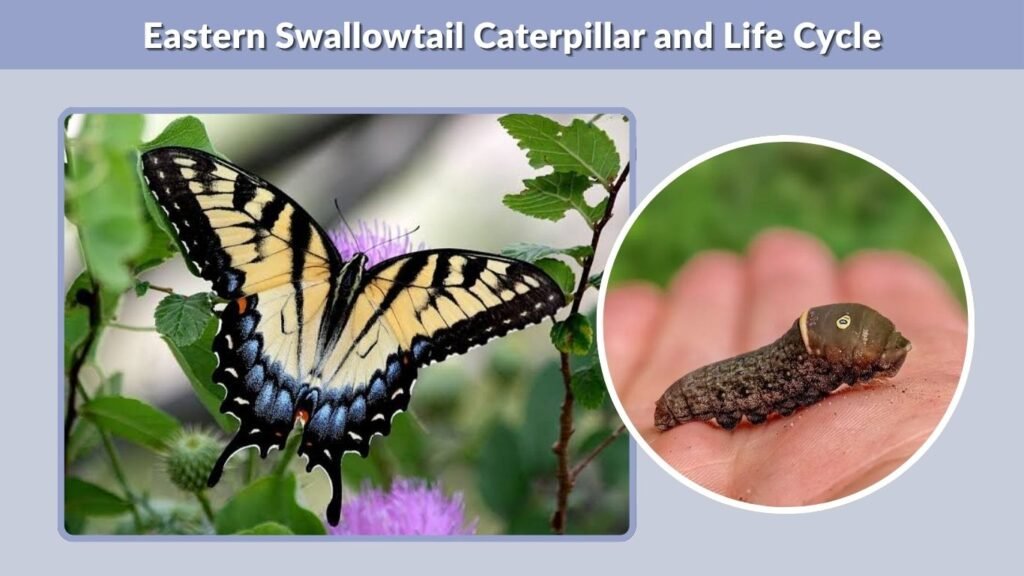
The eastern tiger swallowtail undergoes complete metamorphosis, developing through four life stages: egg, larva, pupa, and adult. Its caterpillar changes dramatically during development, initially resembling bird droppings before turning green with large false eyespots. These adaptations help protect the developing insect from predators. Seasonal temperature and geographical location influence how quickly each generation completes its development.
Eastern Swallowtail Eggs
Female eastern tiger swallowtails lay small, green eggs individually on suitable host plant leaves.
They generally place eggs on the upper surfaces of leaves, where newly hatched caterpillars can begin feeding.
After hatching, young larvae may consume their empty eggshells before feeding on plant material.
Eastern Swallowtail Caterpillar Stages
Young eastern tiger swallowtail caterpillars are dark brown with a noticeable white patch across the middle of their bodies.
This appearance resembles bird droppings, helping conceal them from predators.
As caterpillars mature, they become green with swollen front body segments and prominent false eyespots.
Fully grown caterpillars can reach approximately 2.5 inches long.
Eastern Swallowtail Chrysalis
Before pupating, mature caterpillars change color and search for sheltered locations.
They attach themselves to a suitable surface and develop into brownish chrysalises.
In colder regions, eastern tiger swallowtails commonly overwinter as pupae before emerging as adult butterflies in spring.
Eastern Tiger Swallowtail Host Plants and Diet
Host plants are essential for eastern tiger swallowtail reproduction because caterpillars depend on their leaves for nourishment. Adult butterflies feed primarily on nectar, while females search for suitable trees on which to lay eggs. Different plant species may be preferred across the butterfly’s geographical range. Providing appropriate native host plants and nectar-producing flowers can support these butterflies throughout their development.
Common Eastern Tiger Swallowtail Host Plants
Caterpillars feed on leaves from several trees and shrubs.
- Tulip Tree (Liriodendron tulipifera): An important host throughout parts of eastern North America.
- Black Cherry (Prunus serotina): Frequently used by developing caterpillars.
- Sweetbay Magnolia (Magnolia virginiana): A particularly important host in Florida.
- Willow (Salix species): Used by caterpillars in suitable habitats.
- Birch (Betula species): Supports larvae in portions of their range.
- Ash (Fraxinus species): Another recorded host group.
- Basswood (Tilia species): Provides suitable foliage for caterpillars.
What Do Eastern Swallowtail Butterflies Eat?
Adult eastern tiger swallowtails primarily drink nectar from flowering plants.
They visit lilacs, milkweeds, thistles, and numerous other nectar sources.
Male butterflies may gather on damp soil to absorb water and dissolved minerals, a behavior known as puddling.
Eastern Swallowtail Habitat, Distribution, and Lifespan
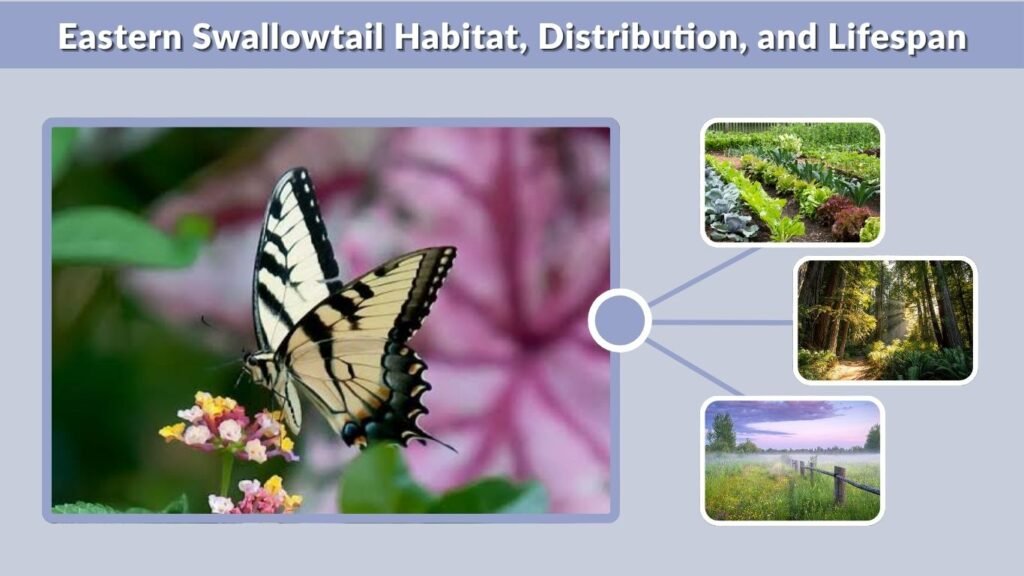
Eastern tiger swallowtails inhabit a broad geographical range across eastern North America. They occur in woodland edges, gardens, parks, and meadows where host trees and flowering plants are available. Their seasonal activity varies according to regional climate, with longer breeding seasons in warmer areas. Understanding their habitat and lifespan helps explain when and where these butterflies are most commonly observed.
Where Do Eastern Tiger Swallowtails Live?
Eastern tiger swallowtails occur from portions of southern Canada through much of the eastern United States, extending south into Florida and Texas.
They frequently inhabit deciduous woodlands, river valleys, suburban gardens, and forest edges.
Adults often fly around treetops before descending to flowers or damp soil.
Eastern Tiger Swallowtail Lifespan
Adult eastern tiger swallowtails generally live for a few weeks, although individual longevity varies with weather, predation, and food availability.
Their complete life cycle can last several months, particularly when the chrysalis survives through winter.
Northern populations typically produce fewer generations annually than southern populations.
When Are Eastern Swallowtails Most Active?
In northern areas, adult eastern tiger swallowtails are commonly observed from spring through summer.
In Florida and other warm southern regions, their flight season can extend from late winter into autumn.
Weather conditions and regional temperatures influence emergence and activity.
Eastern Tiger Swallowtail vs. Eastern Black Swallowtail
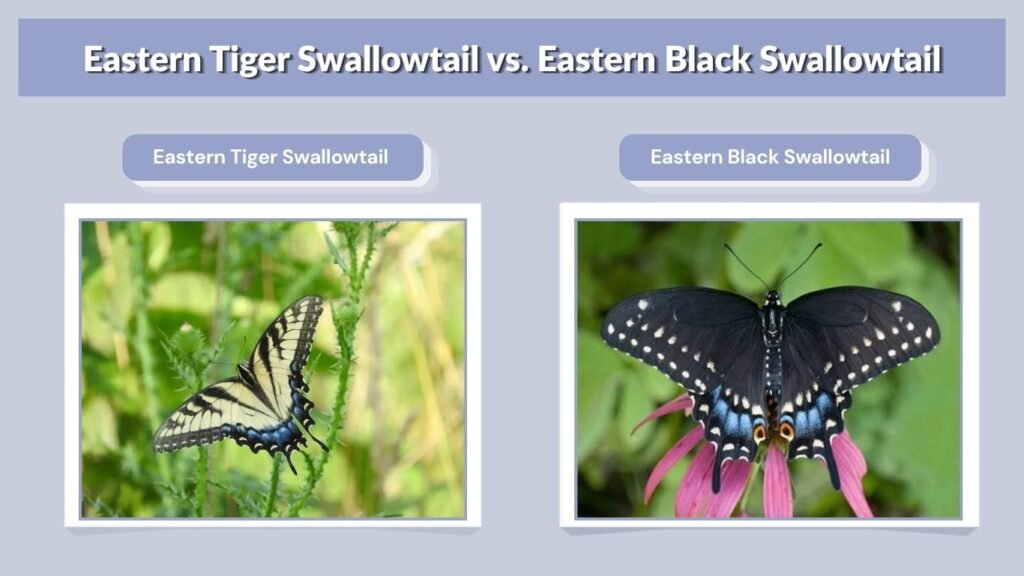
Eastern tiger swallowtails and eastern black swallowtails belong to the same butterfly family but represent different species. They differ in coloration, caterpillar appearance, and host plant preferences. Dark female tiger swallowtails can resemble black swallowtails, making identification challenging. Comparing adult markings and larval feeding habits provides useful clues for distinguishing these beautiful North American butterflies.
Eastern Black Swallowtail Identification
The eastern black swallowtail (Papilio polyxenes) has predominantly black wings decorated with yellow, blue, and orange markings.
Males usually display more noticeable yellow bands, while females have prominent blue coloration on their hindwings.
Its caterpillars are commonly found feeding on parsley, dill, fennel, and related plants in the carrot family.
Main Differences Between Eastern Swallowtails
| Feature | Eastern Tiger Swallowtail | Eastern Black Swallowtail |
| Scientific name | Papilio glaucus | Papilio polyxenes |
| Typical color | Yellow and black | Predominantly black |
| Female appearance | Yellow or dark | Black with blue markings |
| Caterpillar | Green with false eyespots | Green with black bands and yellow spots |
| Main host plants | Trees and shrubs | Parsley-family plants |
| Habitat | Woodlands and gardens | Fields, gardens, and open habitats |
Can Black and Tiger Swallowtails Live Together?
Yes. Both species may inhabit the same gardens, parks, and surrounding landscapes.
However, they generally use different plants for caterpillar development.
Providing suitable host plants and nectar sources can support both species within the same garden.
How to Attract Eastern Swallowtail Butterflies
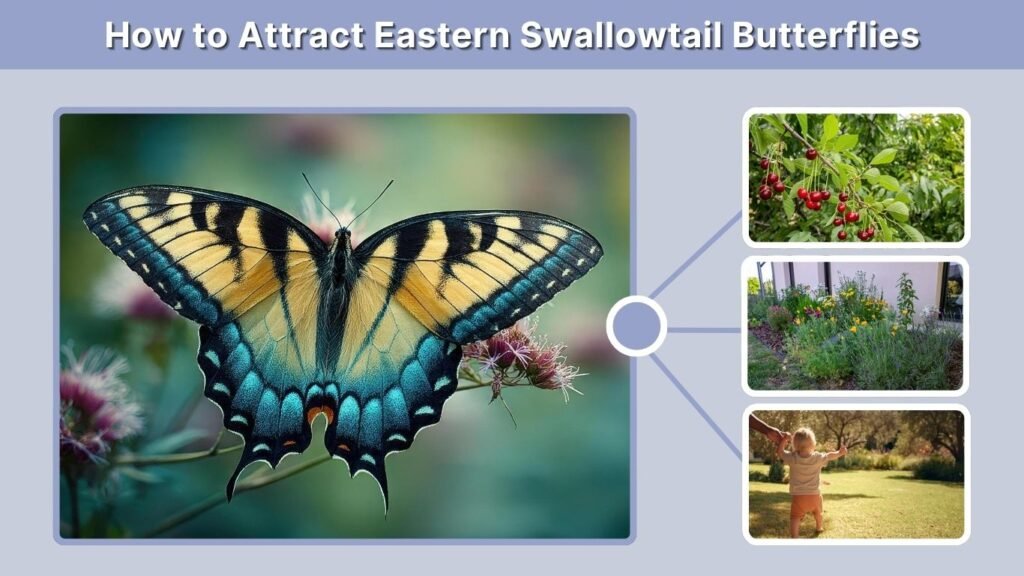
Creating a butterfly-friendly garden involves providing nectar, caterpillar host plants, and suitable shelter. Eastern tiger swallowtails benefit from landscapes containing native flowering plants and trees that support their reproduction. Gardeners can also protect developing caterpillars by reducing pesticide applications. Combining food sources with undisturbed habitat helps support successive generations throughout the butterfly season.
Best Ways to Attract Eastern Swallowtails
Several gardening practices can encourage butterfly activity.
- Plant native host trees: Choose appropriate cherry, tulip, or magnolia species for your region.
- Grow nectar flowers: Include milkweeds, coneflowers, and other suitable flowering plants.
- Provide sunny spaces: Butterflies often use sunlight to warm their bodies.
- Avoid unnecessary pesticides: Insecticides can harm caterpillars and adult butterflies.
- Maintain diverse vegetation: Combine flowering plants, shrubs, and trees.
- Protect overwintering habitats: Avoid excessive removal of leaf litter and sheltered vegetation.
Can You Raise Eastern Swallowtail Caterpillars?
Eastern tiger swallowtail caterpillars can be raised using suitable host plant foliage.
They require fresh leaves, clean conditions, and sufficient space for pupation.
Whenever possible, observing caterpillars outdoors on their natural host plants is preferable to unnecessary collection.
FAQs
Eastern swallowtail butterflies are admired for their impressive wings, unusual caterpillars, and seasonal appearances in North American gardens. However, their different color forms and similarities to other swallowtail species can create identification confusion. The following questions explain important facts about their appearance, diet, lifespan, and natural behavior, helping readers understand these remarkable butterflies.
1. Is the Eastern Swallowtail the Same as the Tiger Swallowtail?
The term eastern swallowtail often refers to the eastern tiger swallowtail (Papilio glaucus), although eastern North America also has other swallowtail species.
2. What Do Eastern Swallowtail Caterpillars Eat?
Eastern tiger swallowtail caterpillars eat leaves of suitable trees, including tulip trees, black cherry, sweetbay magnolia, and several other species.
3. Are Eastern Tiger Swallowtail Butterflies Endangered?
Eastern tiger swallowtails are generally widespread and are not federally listed as endangered in the United States. However, local populations depend on suitable habitat and host plants.
4. How Long Do Eastern Tiger Swallowtail Butterflies Live?
Adults generally survive for a few weeks. The entire life cycle may extend for several months when butterflies overwinter as chrysalises.
5. Are Eastern Tiger Swallowtails Poisonous?
Eastern tiger swallowtails are not considered poisonous to humans. Their caterpillars possess a defensive scent-producing organ, while dark females mimic chemically protected butterflies.
