

Dust mites are microscopic creatures that live in our homes, often undetected. Though invisible to the naked eye, they can be a major trigger for allergies and asthma. If you suffer from persistent sneezing, congestion, or itchiness without an obvious cause, dust mites might be the culprit. This article explains what dust mites look like, where they hide, and how to spot them using charts and detailed descriptions.
What Are Dust Mites?
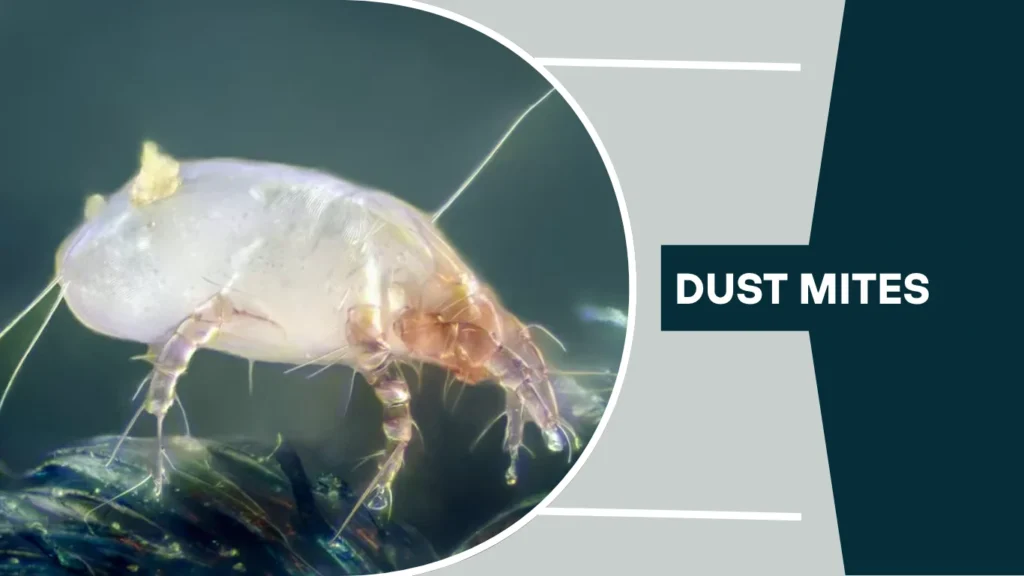
Dust mites are tiny arachnids, closely related to ticks and spiders. They feed primarily on flakes of human and animal skin and thrive in warm, humid environments. Unlike bed bugs, they don’t bite or sting, but their presence can cause allergic reactions due to the proteins in their waste and decomposed bodies.
What Do Dust Mites Look Like?

Size and Shape
Dust mites are incredibly small, measuring about 0.2 to 0.3 millimeters long. Their bodies are oval-shaped and feature eight tiny legs, which classify them as arachnids. They have no eyes and no antennae.
Color and Texture
Dust mites are typically pale white or creamy in color. Their semi-transparent bodies make them nearly impossible to see with the naked eye. Because of their size and color, they easily blend into dust and fabric fibers.
Microscopic Appearance
Under a microscope, dust mites appear as round-bodied creatures with long, clawed legs and fine bristles on their bodies. Their outer shell looks slightly ridged or wrinkled. Some of the more detailed features can be seen clearly at 10x to 100x magnification.
Identification Chart with Features
| Feature | Description | Visual Hint (Image Label) |
| Size | 0.2–0.3 mm | Microscopic |
| Color | Pale white / translucent | Blends with dust |
| Body Shape | Oval, 8 legs | Arachnid-like |
| Movement | Slow, hard to detect | Seen only under magnification |
| Common Locations | Bedding, pillows, carpets | Bedroom hotspots |
Where Do Dust Mites Hide?
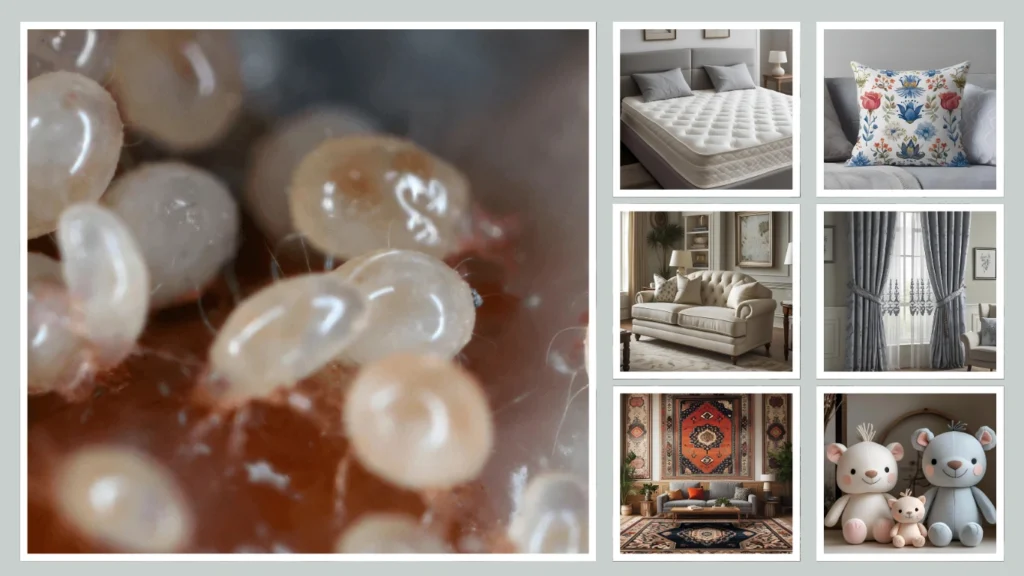
Dust mites are found in areas that retain warmth, moisture, and human or pet dander. They commonly inhabit:
- Mattresses
- Pillows
- Upholstered furniture
- Curtains
- Carpets and rugs
- Soft toys
They can also thrive inside air vents, under beds, and behind furniture where cleaning is infrequent.
Signs of Dust Mite Infestation

Since you can’t see them, signs of dust mites are often indirect:
- Frequent sneezing and nasal congestion, especially in the morning
- Red, watery eyes
- Skin rashes or eczema flares
- Increased asthma symptoms
- Worsening allergies in bed or after vacuuming
- Dust build-up in corners and textiles
How to Confirm They Are Dust Mites

Use a Home Test Kit
Dust mite test kits collect dust samples from your home, which are then analyzed for mite allergens. These kits help verify if dust mites are contributing to your symptoms.
Microscopic Observation
A microscope with at least 10x magnification can reveal dust mites in collected samples from beds or carpets. Use clear tape or a small brush to collect fibers and dust.
Professional Lab Testing
Pest control professionals or allergists may collect samples and test for dust mite allergens to confirm presence and severity.
Dust Mites vs. Other Household Mites
Not all mites are the same. Here’s how dust mites compare to other types:
| Mite Type | Color | Location | Harms Humans? |
| Dust Mite | Pale White | Bedding, fabrics | Yes (allergies) |
| Clover Mite | Reddish | Windowsills, grass | No |
| Mold Mite | White/Fuzzy | Damp areas | Rarely |
| Bird Mite | Grayish | Near birds/nests | Sometimes |
FAQs
1. Can you see dust mites with the naked eye?
No, dust mites are microscopic and typically measure between 0.2–0.3 mm in length. This makes them nearly impossible to see without a microscope. However, their presence can be inferred from allergy symptoms or when viewed under high magnification, revealing their translucent bodies and eight legs.
2. What is the main difference between dust mites and bed bugs?
Dust mites are not visible to the naked eye, do not bite, and feed on dead skin cells. Bed bugs, on the other hand, are visible (around 5 mm), bite humans to feed on blood, and leave behind itchy red welts. Bed bugs also leave black spots (feces), shed skins, or blood stains on bedding—signs not associated with dust mites.
3. Where do dust mites live in a house?
Dust mites thrive in warm, humid environments, especially in household items that trap moisture and organic matter. Common hiding places include mattresses, pillows, upholstered furniture, rugs, stuffed toys, curtains, and even car seats. They feed on dead skin flakes, which are plentiful in these areas.
4. How do I know if I have a dust mite infestation?
You likely won’t see the mites themselves, but signs include frequent allergic reactions like sneezing, coughing, itchy eyes, and nasal congestion—especially upon waking up. Using a home allergen test kit can detect the presence of dust mite allergens in fabrics, carpet, or bedding.
5. What tools can I use to view dust mites?
A microscope with at least 10x–40x magnification is needed to clearly view dust mites. USB digital microscopes are now affordable and commonly used for this purpose. Dust mites appear translucent, oval-shaped, and have eight short legs.
