

When you see a fast-flying, black-and-yellow insect buzzing around your yard, it’s easy to wonder: is it a wasp, a yellow jacket, or something else? Paper wasps and yellow jackets are two common species that often get mixed up because of their similar colors and aggressive behavior. However, despite their appearances, they are quite different in their looks, nesting habits, and how they interact with people.
In this article, we’ll break down the key differences between paper wasps and yellow jackets — including how to identify them, how their nests vary, which one stings harder, and more. Whether you’re trying to avoid an unpleasant encounter or you’re just curious, understanding these two insects will make your summer a lot less stressful!
Paper Wasp vs Yellow Jacket: Quick Overview
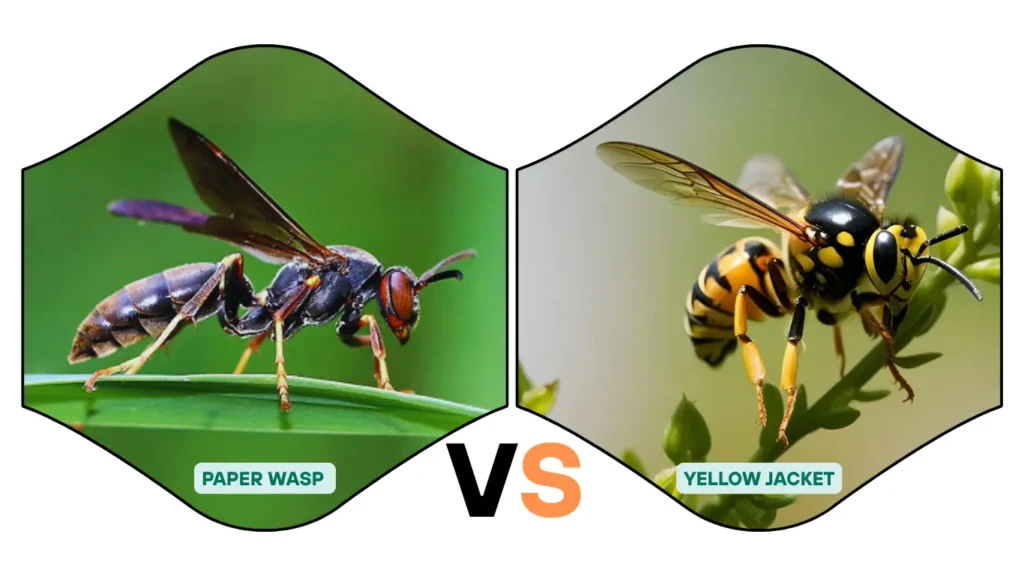
Both paper wasps and yellow jackets are often confused because of their similar colors, but they have many clear differences, as shown below.
| Feature | Paper Wasp | Yellow Jacket |
| Body Shape | Slim with long legs | Stockier and more compact |
| Color | Brownish with yellow markings | Bright yellow with black stripes |
| Nest Location | Open umbrella-shaped nests | Enclosed nests underground or hidden |
| Aggressiveness | Less aggressive unless threatened | Highly aggressive, especially near nests |
| Sting Pain | Painful but usually one sting | Painful and can sting multiple times |
| Size | 0.5 to 1 inch (larger appearance) | 0.5 inch (smaller, stockier) |
Identification Guide: Paper Wasp or Yellow Jacket?
Telling the difference between a paper wasp and a yellow jacket can be tricky at first glance, but with a few key details, you can identify them easily.
Here’s what to look for:
1. Body Shape and Size
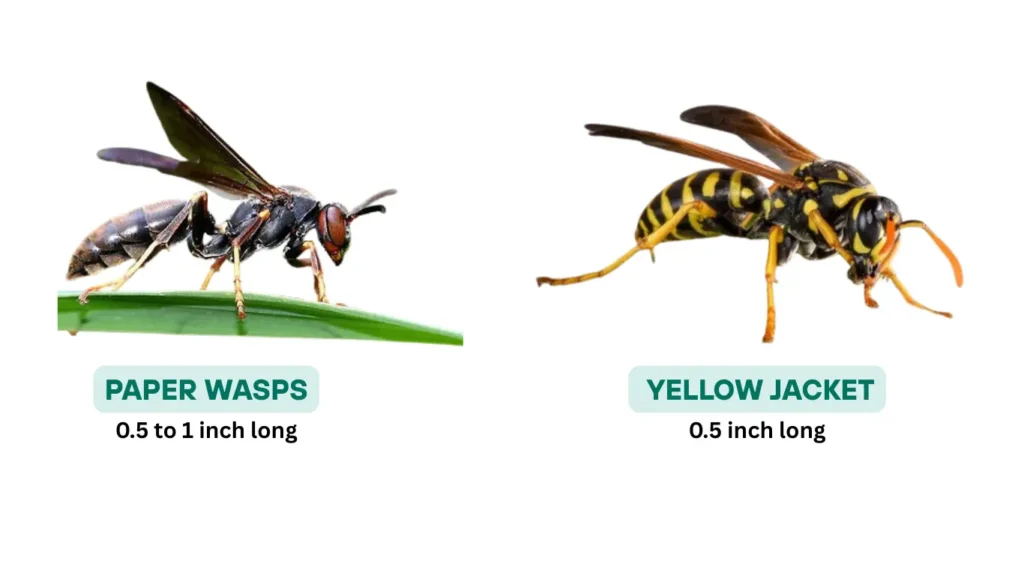
- Paper Wasps: Have a long, slender body with thin waistlines and long dangling legs when flying. They are generally 0.5 to 1 inch long.
- Yellow Jackets: Look more compact and thicker-bodied, with shorter legs that are tucked under their bodies during flight. They are usually about 0.5 inch long.
2. Color and Markings
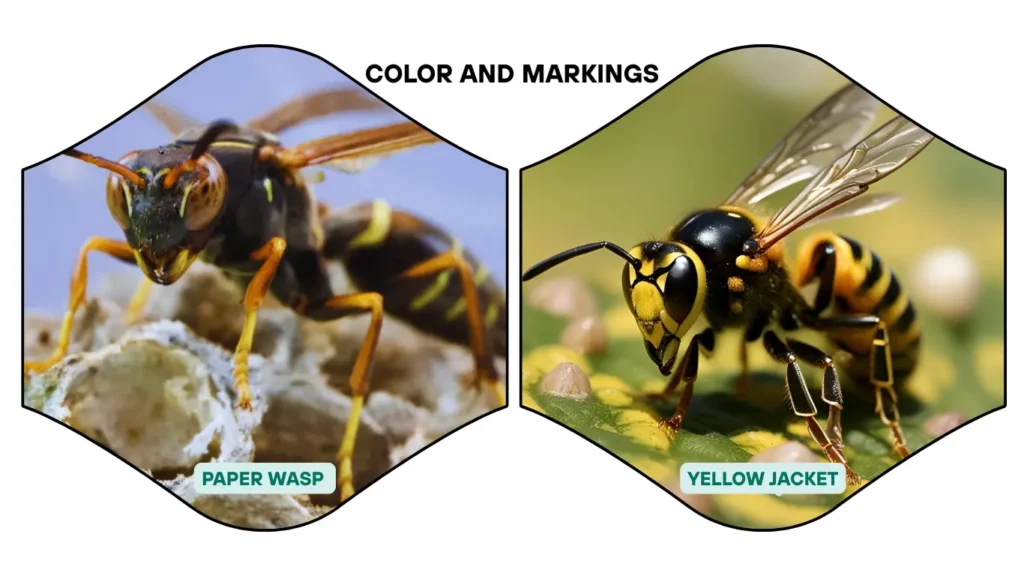
- Paper Wasps: Often brownish with yellow markings. Some types, like the black and yellow paper wasp, can look brighter but still have a more muted, dull appearance compared to yellow jackets.
- Yellow Jackets: Bright yellow with clear, vivid black stripes — making them look much “flashier.”
3. Nest Structure
- Paper Wasps: Build open, umbrella-shaped nests with visible hexagonal cells. These are often found hanging under eaves, tree branches, or outdoor fixtures.
- Yellow Jackets: Construct enclosed, ball-shaped nests, often hidden underground, inside walls, or in bushes.
4. Behavior
- Paper Wasps: Are territorial but generally less aggressive unless you get very close to their nest.
- Yellow Jackets: Highly aggressive, especially around food sources or when defending their nests. They can chase and sting multiple times.
Black and Yellow Paper Wasp: Are They Mistaken for Yellow Jackets?
Some species of paper wasps, especially the black and yellow paper wasp, can look very similar to yellow jackets at first glance. Their body patterns include bold black and yellow colors, which often leads to confusion.
However, you can still tell them apart:
- Black and yellow paper wasps have longer, more slender bodies and clearly visible legs dangling during flight.
- Yellow jackets are more compact and tend to fly with their legs tucked up.
When in doubt, observe the nest type and behavior — black and yellow paper wasps are usually calmer and build open, umbrella-like nests, while yellow jackets are more aggressive and hide their nests.
Common Wasp vs Yellow Jacket: How Are They Different?
The term common wasp often refers to species like the European wasp or Vespula vulgaris. They look a lot like yellow jackets, but there are slight differences:
- Common wasps and yellow jackets are both stocky, yellow and black, and aggressive when disturbed.
- Common wasps may appear slightly larger and have a more pointed face compared to some yellow jackets.
- Nesting habits are similar — hidden, enclosed nests in the ground, walls, or bushes.
For most people, the differences are so small that unless you’re very close, they seem almost identical!
European Paper Wasp vs Yellow Jacket
Another common source of confusion is between the European paper wasp and yellow jackets.
Here’s how to tell them apart:
- European paper wasps (Polistes dominula) are slightly more colorful than native paper wasps and often have strong black and yellow coloring, making them resemble yellow jackets.
- However, they have the typical slim paper wasp shape with longer legs and a narrower waist.
- Yellow jackets still look stockier and more compact, with shorter legs.
Additionally, European paper wasps prefer building their umbrella-style open nests in more exposed areas like under roof eaves, while yellow jackets hide their nests underground or in dark cavities.
Paper Wasp Nest vs Yellow Jacket Nest
One of the easiest ways to identify whether you’re dealing with paper wasps or yellow jackets is by looking at their nests.
Paper wasps create open, umbrella-shaped nests where the cells are fully visible. These nests usually hang from branches, eaves, or outdoor structures and look delicate, almost like they were crafted from grey paper.
Yellow jackets, on the other hand, build enclosed nests that are well-hidden. Their nests have a papery outer shell covering the cells inside. Yellow jackets often choose protected spots like underground burrows, wall cavities, or dense shrubs. If you spot a nest without being able to see the open cells, there’s a good chance you’re looking at a yellow jacket home.
Understanding their nesting styles can help you avoid unwanted stings by staying away from dangerous areas.
Paper Wasp vs Yellow Jacket Sting: Which Hurts More?
Both paper wasps and yellow jackets are capable of delivering painful stings, but there are some differences to note.
A paper wasp sting is usually sharp and immediate, causing swelling and redness, but in most cases, they only sting once unless repeatedly provoked. They’re defensive mainly around their nests, not when flying around casually.
Yellow jackets, however, are far more aggressive and can sting multiple times. Their stings are sharper, often described as burning, and yellow jackets can even chase after intruders. If a nest is disturbed, dozens of yellow jackets might attack at once, making them much more dangerous in certain situations.
While both stings can cause allergic reactions, yellow jackets are generally considered the bigger threat because of their tendency to attack in large numbers.
Yellow Jacket and Wasp Difference Explained
Even though both belong to the wasp family, paper wasps and yellow jackets differ greatly in their looks, nesting habits, and aggression levels. Paper wasps are slimmer, calmer, and prefer exposed nesting spots. Yellow jackets are thicker, highly aggressive, and prefer to stay hidden.
One easy way to think of it is: if you can easily spot a nest hanging in the open, it’s probably a paper wasp. If you can’t find the nest but keep seeing a lot of angry black-and-yellow insects buzzing around a hole in the ground or a wall, it’s likely yellow jackets.
Both play important roles in ecosystems by controlling pest insects, but caution is important — especially around yellow jackets.
Yellow Jacket Size Compared to Wasp
Size is another helpful clue when trying to tell the difference between yellow jackets and paper wasps.
Paper wasps are typically larger, ranging from 0.5 to 1 inch long, and their bodies appear more stretched and thin. Their wings are longer too, and when at rest, paper wasps fold their wings lengthwise along their body, making them look even slimmer.
Yellow jackets, in comparison, are about 0.5 inch long. They have a sturdier, more compact appearance, with shorter wings that lay flat over their back when resting.
In simple terms: paper wasps look longer and more “elegant,” while yellow jackets look rounder and “tougher.”
Paper Wasps vs Yellow Jackets vs Hornets: The Bigger Picture

When comparing paper wasps, yellow jackets, and hornets, it’s important to understand where they all fit in.
Hornets are actually a type of wasp but are usually much larger and more aggressive than both paper wasps and yellow jackets. They also build large, enclosed nests similar to yellow jackets, but often higher up in trees or on buildings.
Here’s a quick way to remember:
- Paper wasps: Slim, medium-sized, open nests.
- Yellow jackets: Stocky, small, aggressive, hidden nests.
- Hornets: Large, very aggressive, enclosed high nests.
Each has a role in nature, helping to control pest populations, but when disturbed, hornets and yellow jackets are definitely the more dangerous ones.
Special Case: Red Wasp vs Yellow Jacket

A red wasp is another member of the paper wasp family and can easily be confused with yellow jackets too, though they look quite different.
Red wasps have reddish-brown bodies with darker wings and are typically larger and less colorful than yellow jackets. They behave more like paper wasps: defensive but not overly aggressive unless their nest is threatened.
Yellow jackets, as mentioned, are black and yellow, much more aggressive, and quicker to sting. If you see a reddish insect calmly flying around flowers or wood piles, it’s likely a red wasp, not a yellow jacket.
Yellow Jacket Wasp vs Bee: Not the Same!
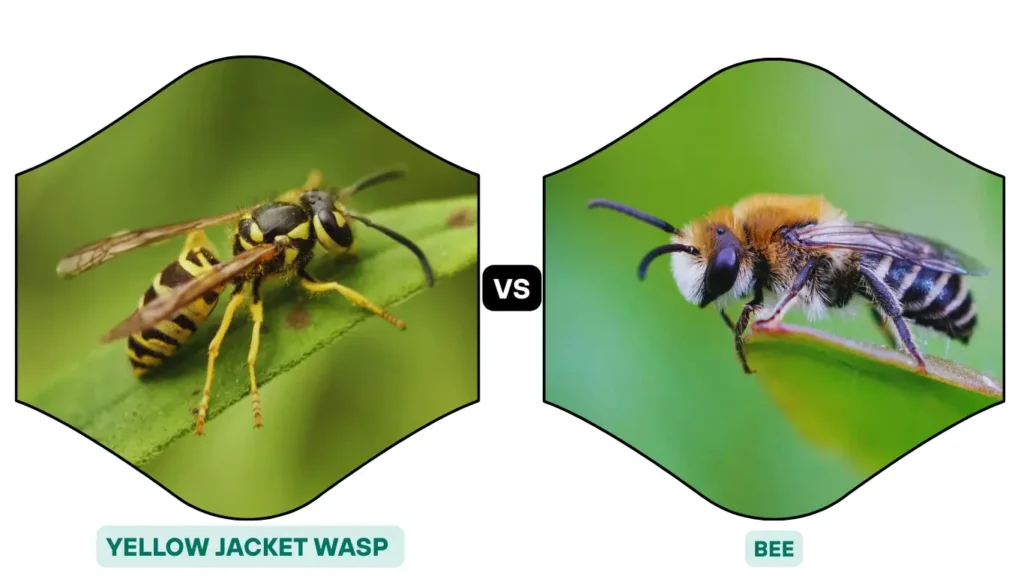
It’s also common to mix up yellow jackets with bees, but they are very different.
Bees are generally fuzzy, rounder, and designed for collecting pollen. They rarely sting unless provoked and usually die after stinging once.
Yellow jackets, by contrast, have smooth bodies, are faster, and can sting multiple times without dying. They’re carnivores too, often scavenging for sweets, meat, or sugary drinks — especially in late summer and fall.
If you see a fuzzy, slow-moving insect around flowers, it’s probably a bee. If it’s fast, shiny, and aggressive, it’s most likely a yellow jacket.
Are Yellow Jackets Paper Wasps?
No, yellow jackets are not paper wasps.
Even though both are types of wasps and share similar colors, they belong to different groups.
Paper wasps are part of the Polistes genus, while yellow jackets belong to the Vespula or Dolichovespula genera. Their nesting styles, body shapes, behaviors, and aggression levels are all different.
It’s a common misconception, but now you know the truth: yellow jackets and paper wasps are cousins, not twins!
