
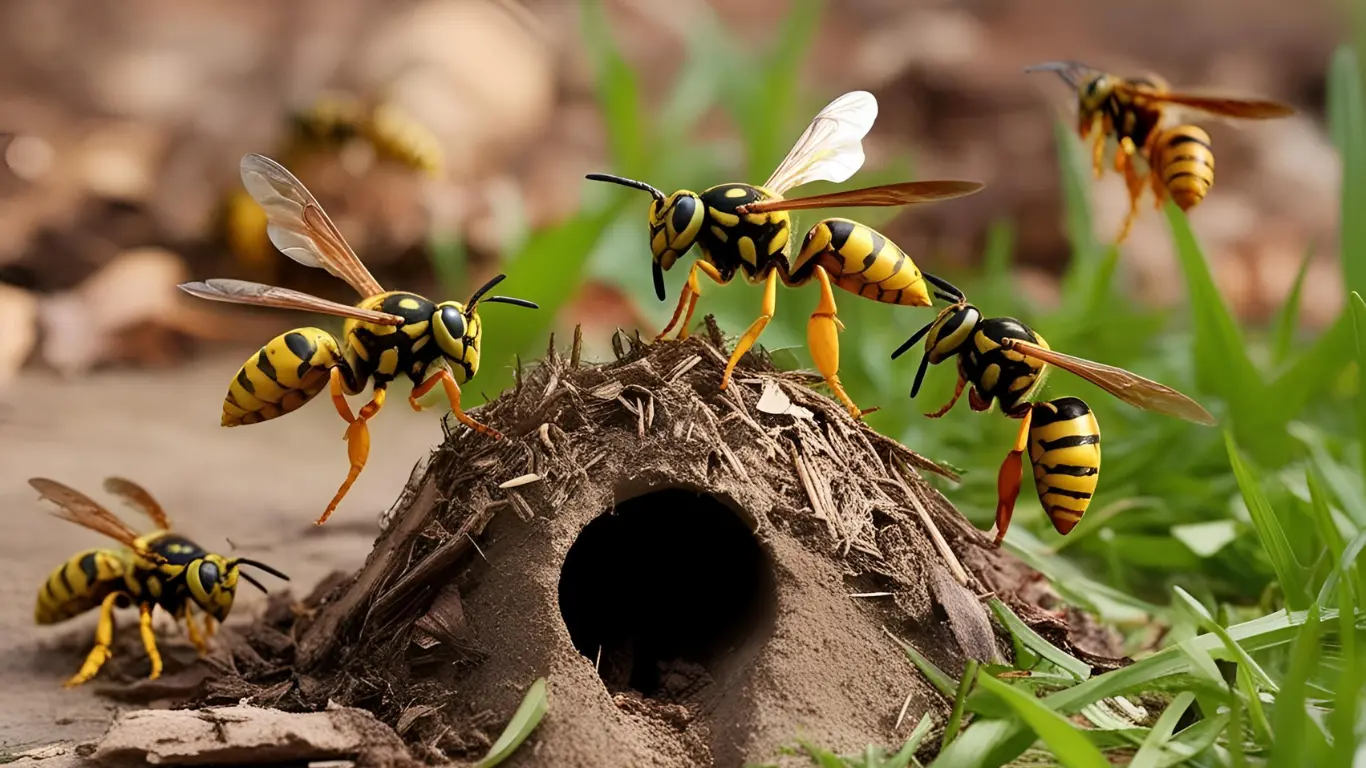
Yellow jackets are aggressive wasps known for their painful stings and defensive behavior, especially when their underground nests are disturbed. If you have a ground nest in your yard, getting rid of it safely and effectively is crucial to protect yourself, your family, and pets. In this guide, we’ll walk you through everything you need to know — from locating the nest to eliminating the colony and preventing future problems.
Understanding Yellow Jackets

Yellow jackets are small, wasp-like insects with bold black and yellow markings. Unlike bees, they can sting multiple times, making them particularly dangerous when defending their nest. Many yellow jackets build nests underground, using old rodent burrows, hollow spaces, or even cracks near structures. You’ll often notice them flying low to the ground, especially during summer and early fall when colonies reach their peak size.
Identifying a ground nest involves watching their flight patterns: look for wasps consistently entering and exiting a small hole in the ground. Sometimes the entrance may be hidden by grass, mulch, or debris.
Preparing for Removal

Before you attempt to remove a yellow jacket nest, preparation is key.
Here’s what you need to do:
- Best Time: Remove the nest early in the morning or late in the evening. Yellow jackets are less active, cooler, and slower during these times.
- What to Wear: Protect yourself with thick clothing, gloves, boots, and a face covering. Wearing light-colored clothes (instead of dark colors) can also make you less of a target.
- Supplies Needed:
- Dish soap and water solution (for natural methods)
- Insecticide dust (for chemical methods)
- Flashlight covered with red cellophane (they can’t see red light well)
- Shovel or heavy object to block the nest afterward
Step-by-Step Guide to Remove Yellow Jackets
Step 1: Locate the Nest

Spend a day observing yellow jacket behavior. They usually fly directly to and from their nest, so track them until you find the entrance. Mark the location discreetly without disturbing the wasps.
Step 2: Choose Your Method

There are two main options for nest removal: natural and chemical.
- Natural Solution:
Mix about 2 cups of water with 1/4 cup of dish soap. The soap suffocates the wasps by clogging their breathing pores. - Chemical Solution:
Use an insecticide dust designed specifically for ground-dwelling wasps. Dust works better than sprays because yellow jackets track the powder into the nest, spreading it to others.
If you are allergic to stings or feel unsure, it’s safest to hire a pest control professional.
Step 3: Apply the Treatment
For the Soap Method:
- Approach the nest slowly and quietly at dusk or dawn.
- Pour the soapy water directly into the nest entrance.
- Immediately move away to a safe distance.
For the Chemical Dust Method:
- Sprinkle the insecticide dust around and into the entrance.
- Don’t block the hole yet; allow wasps to move in and out, spreading the poison inside.
Regardless of the method you choose, make sure you stay calm and ready to retreat if yellow jackets start to swarm.
Step 4: Block the Nest Entrance
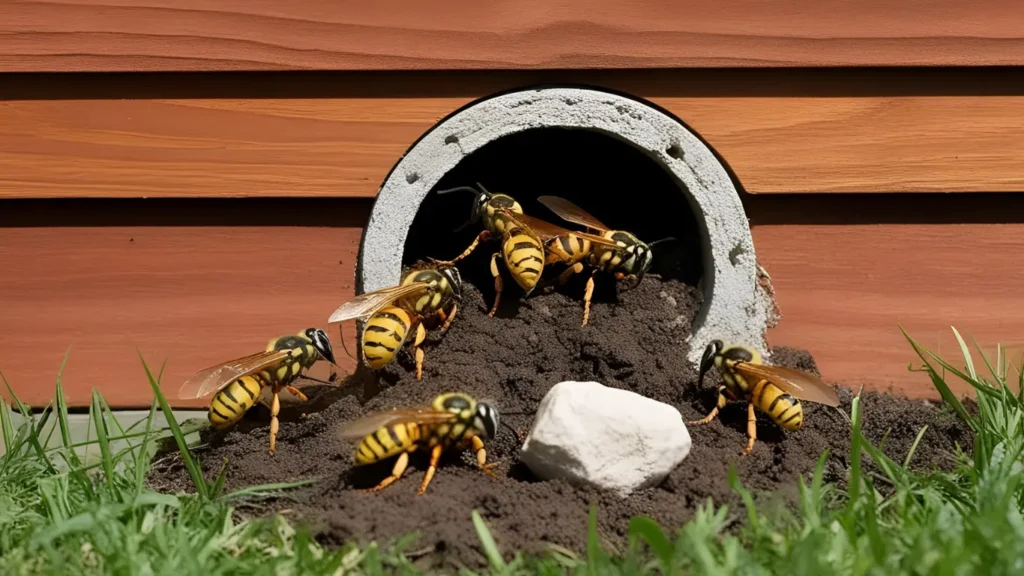
After you treat the nest and allow one to two days to pass, check for activity:
- If you no longer see yellow jackets entering or leaving, it’s safe to block the hole.
- Use soil, rocks, or a heavy object to prevent re-colonization.
Blocking too early could trap live wasps underground, encouraging them to dig a new exit and continue causing trouble.
Step 5: Monitor for Activity
Continue monitoring the area for several days:
- Look for any signs of remaining yellow jackets.
- If necessary, repeat the treatment if you still see activity.
- Sometimes a second application of dust or soapy water is needed for full extermination.
Safety Tips
Yellow jackets can be highly aggressive when defending their nest. Here are a few important safety measures to keep in mind:
- Always have an escape route planned before approaching a nest.
- Avoid loud noises, quick movements, or vibrations near the nest.
- If attacked, run in a straight line and cover your face with your arms.
- Never swat at yellow jackets — it can make them more aggressive.
- If stung, clean the area with soap and water. Apply ice to reduce swelling. If you experience signs of an allergic reaction (difficulty breathing, swelling of the face or throat, dizziness), seek emergency medical help immediately.
Preventing Future Infestations
Once you’ve removed a nest, take steps to prevent yellow jackets from coming back:
- Eliminate food sources: Cover garbage cans tightly, clean up fallen fruits, and keep outdoor food and drinks sealed.
- Fill in holes and burrows: After the season, fill any ground holes, abandoned burrows, or gaps around structures that could attract a new colony.
- Use natural repellents: Planting peppermint and other strong-smelling plants can discourage wasps from nesting nearby.
- Inspect regularly: In spring and early summer, check your yard for new nests when colonies are still small and easier to handle.
Conclusion
Getting rid of yellow jackets in the ground can be challenging, but with the right approach, you can do it safely and effectively. Always prioritize your safety by working at the right time, wearing protective clothing, and staying calm. Whether you prefer a natural method or chemical solution, persistence and caution are the keys to success.
If you ever feel overwhelmed or unsafe, don’t hesitate to call a pest control expert. Your safety is more important than tackling a nest alone!
