

Yellow jackets are known for their striking black and yellow coloring and aggressive behavior, but at the heart of every colony is a single queen. Understanding the yellow jacket queen’s life and behavior can help you better manage and prevent infestations around your home.
What is a Yellow Jacket Queen?

The yellow jacket queen is the founder, leader, and primary egg-layer of the colony. Without her, the colony cannot survive. While worker yellow jackets are sterile females, the queen is fertile and plays the vital role of reproduction.
Key Differences Between Queen and Workers
| Feature | Queen | Worker |
|---|---|---|
| Size | Larger (0.75 inches or more) | Smaller |
| Appearance | Elongated, robust abdomen | Slimmer body |
| Role | Lays eggs | Maintains nest, gathers food |
How to Identify a Yellow Jacket Queen

Spotting a queen is easier during early spring when she emerges from hibernation to start a new colony.
Identification Tips
- Size: Noticeably bigger than other yellow jackets.
- Behavior: Queens often search for nesting sites alone.
- Location: Found near woodpiles, attics, hollow trees, and underground spaces.
Life Cycle of a Yellow Jacket Queen
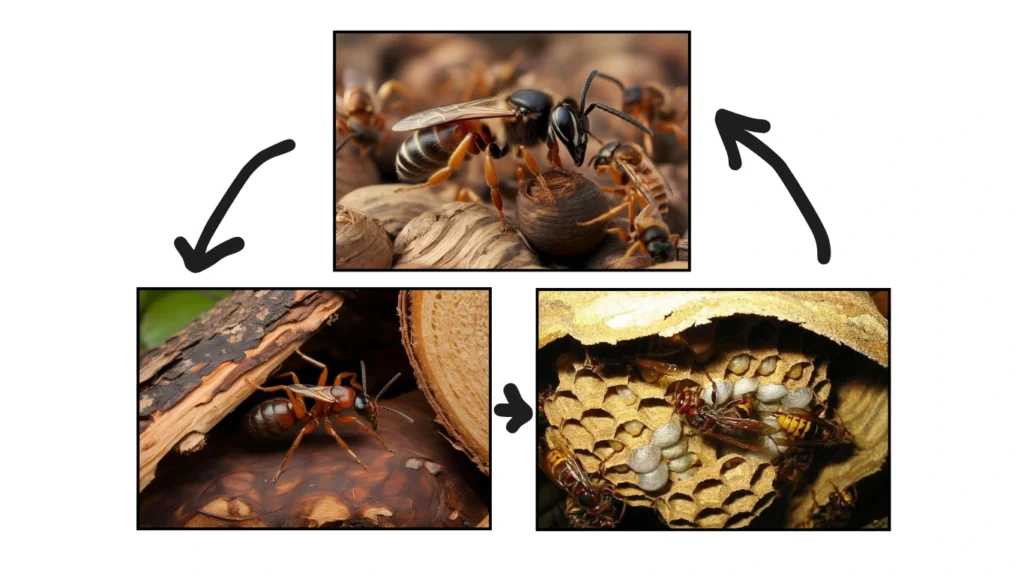
Understanding the queen’s life cycle reveals why early spring is crucial for pest control.
Birth and Mating
New queens are born in late summer or early fall. They leave the nest, mate with males (drones), and then prepare for winter.
Hibernation
After mating, the queen seeks a sheltered place to hibernate, such as under bark, inside hollow logs, or around man-made structures.
Spring Awakening
In spring, she emerges from hibernation to find a new nesting location. She begins the painstaking work of building a small nest and laying her first eggs.
Nest Building: How the Queen Starts a Colony
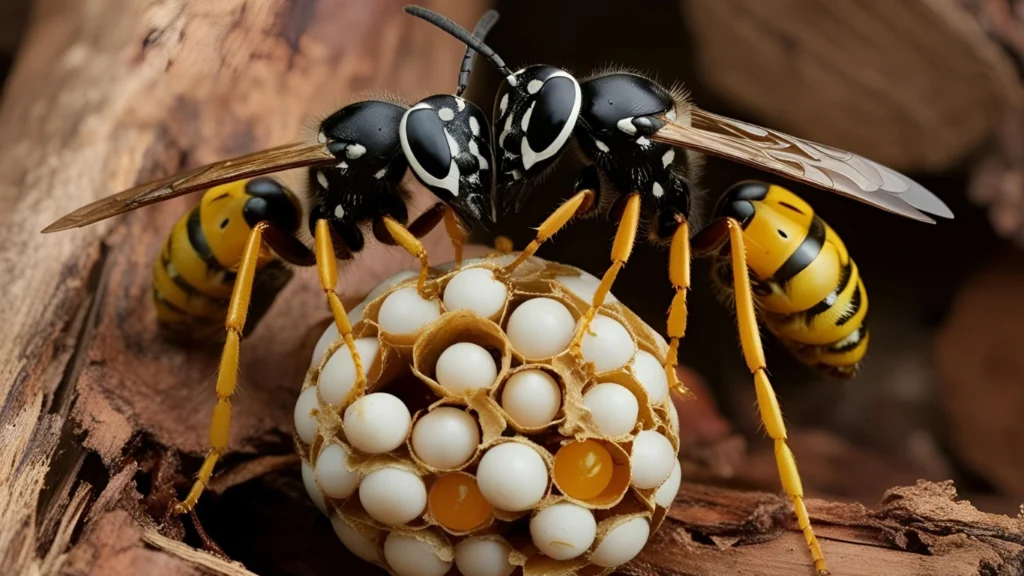
After choosing a nesting spot, the queen chews wood fibers to create a paper-like nest. She lays the first batch of eggs and cares for the larvae until they develop into worker yellow jackets.
Once the workers mature, they take over nest expansion, foraging, and defense, freeing the queen to focus entirely on egg production.
Behavior and Duties of a Queen Yellow Jacket
Early Season
- Builds the first nest cells.
- Hunts for food to feed the first larvae.
- Protects the nest from threats.
Mid to Late Season
- Lays thousands of eggs.
- Rarely leaves the nest.
- Relies on workers for feeding and protection.
How Long Does a Yellow Jacket Queen Live?
Typically, a yellow jacket queen lives for about one year. She is born in late summer, mates, hibernates through winter, starts a colony in spring, and dies in late fall or early winter.
Environmental threats, predators, and lack of food can sometimes shorten her lifespan.
Threats to a Yellow Jacket Queen
Several factors can endanger a queen’s life:
- Natural Predators: Birds, raccoons, skunks, and spiders.
- Human Interference: Destroying nests or using pesticides.
- Environmental Conditions: Harsh winters or late freezes.
How to Deal with a Yellow Jacket Queen Around Your Home
Dealing with a queen early in the season can prevent an entire colony from forming.
Safe Removal Tips
- Traps: Use queen traps in early spring when queens are most active.
- Insecticides: Apply approved sprays directly to visible nests.
- Professional Help: If you’re unsure, hire pest control services.
Prevention Tips
- Seal entry points around your home.
- Remove food sources like garbage and pet food.
- Maintain yards to eliminate nesting sites.
Fun Facts About Yellow Jacket Queens
- A single queen can create a colony of up to 5,000 workers.
- Queens can travel miles to find a nesting spot.
- Late-season queens produce only reproductive males and future queens.
Conclusion
The yellow jacket queen is the heart of her colony. Without her, the colony cannot survive or grow. By recognizing and understanding her life cycle, behavior, and nesting habits, you can take proactive steps to prevent yellow jacket infestations and protect your home.
Understanding the queen means understanding the entire colony. Stay alert in spring, and you might just stop a problem before it starts!
