
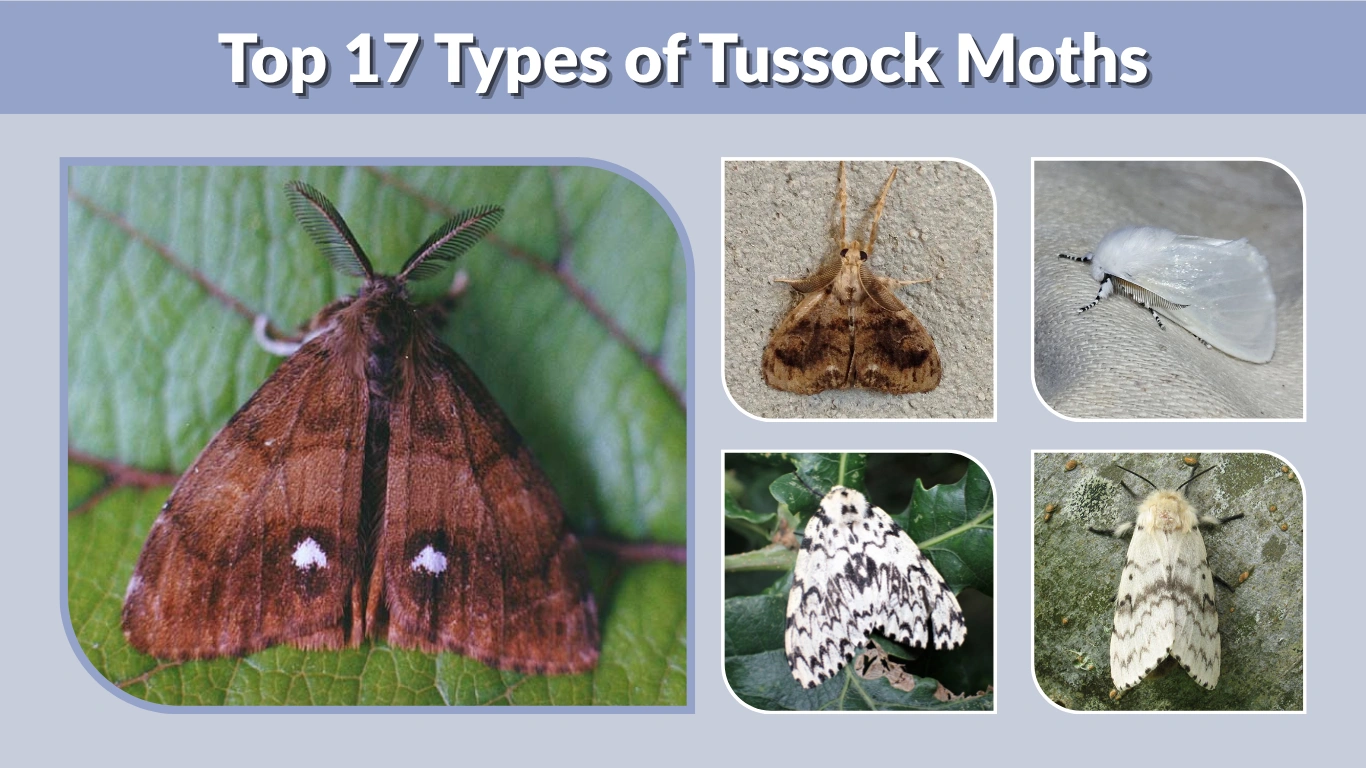
Tussock moths are fascinating insects known for their hairy caterpillars, unique body patterns, and diverse habitats. Belonging mainly to the family Erebidae, these moths are found in forests, gardens, grasslands, and woodland regions around the world. Many species are recognized for their colorful tufts of hair, while others are important forest pests capable of damaging trees during large outbreaks. From the striking White-Marked Tussock Moth to the colorful Milkweed Tussock Moth, these insects display remarkable variety in appearance, behavior, diet, and lifecycle across different ecosystems and environmental conditions.
1. White-Marked Tussock Moth
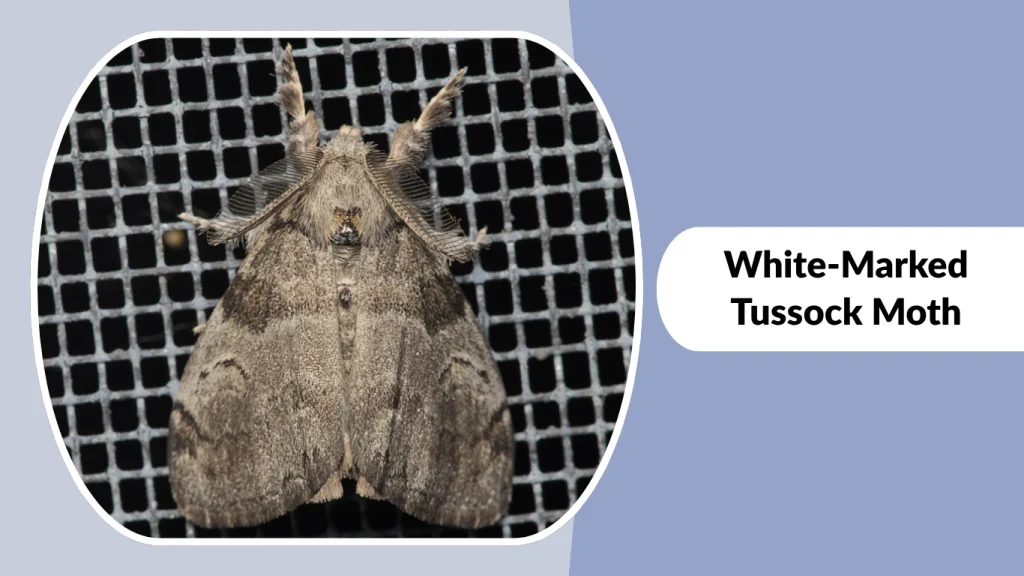
The White-Marked Tussock Moth is a distinctive North American moth known for its unusual caterpillar covered with tufts of white, black, and yellow hair. This species is commonly found in forests, gardens, and urban areas where its larvae feed on a wide variety of trees and shrubs. While the adult moth appears relatively plain, the caterpillar is highly recognizable because of its colorful and hairy appearance.
Identification
- Scientific name: Orgyia leucostigma
- Adult moths are grayish-white with wavy wing markings
- Males have feathery antennae and can fly
- Females are wingless and remain near cocoons
- Caterpillars have bright tufts of white and yellow hair
- Distinct red spots appear on the caterpillar’s back
Habitat and Distribution
The White-Marked Tussock Moth is widely distributed across North America. It commonly inhabits forests, parks, gardens, orchards, and suburban environments where host trees and shrubs are abundant. This species adapts well to both natural and urban habitats.
Behavior and Diet
Adult moths are mostly active during warmer months. Male moths fly in search of females, while females remain near their cocoons after emerging. Caterpillars feed on leaves from many deciduous trees and shrubs, including oak, maple, birch, and apple trees.
Lifecycle
Females lay eggs directly on their cocoons after mating. Caterpillars hatch and feed actively through several developmental stages before spinning cocoons for pupation. Adult moths emerge later, continuing the reproductive cycle during suitable seasonal conditions.
2. Vapourer Moth
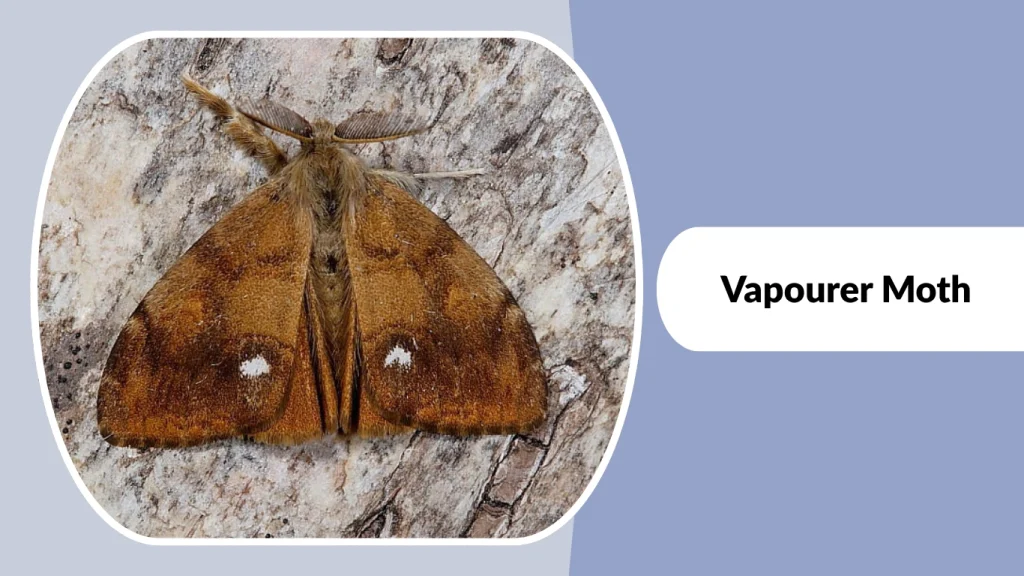
The Vapourer Moth is a small tussock moth species well known for its furry caterpillars and the unusual wingless females. This moth is commonly found in gardens, woodlands, and hedgerows throughout Europe and parts of Asia. Its caterpillars feed on many different plants, while the adult males are active daytime fliers that search for females during the breeding season.
Identification
- Scientific name: Orgyia antiqua
- Male moths have rusty-brown wings with white markings
- Females are wingless and remain near the cocoon
- Wingspan of males ranges from 3 to 4 cm
- Caterpillars have colorful tufts of hair along the body
- Red and black markings appear on the caterpillar’s back
Habitat and Distribution
The Vapourer Moth is widely distributed across Europe, Asia, and North America. It commonly inhabits gardens, forests, hedgerows, orchards, and urban green spaces where shrubs and deciduous trees provide food and shelter.
Behavior and Diet
Male moths are active during the daytime and fly rapidly while searching for mates. Females stay close to the cocoon after emerging. Caterpillars feed on leaves from many trees, shrubs, and garden plants, including rose, apple, oak, and hawthorn species.
Lifecycle
Females lay eggs on the outside of the cocoon after mating. Caterpillars hatch and pass through several feeding stages before spinning cocoons for pupation. Adult males emerge later and continue the reproductive cycle during suitable seasonal conditions.
3. Rusty Tussock Moth

The Rusty Tussock Moth is a widespread tussock moth species recognized for its hairy caterpillars and reddish-brown adult males. It is commonly found in forests, gardens, and shrub-filled habitats where the larvae feed on a wide variety of plants. The species is highly adaptable and can survive in both natural and urban environments across many temperate regions.
Identification
- Scientific name: Orgyia antiqua
- Male moths have rusty-brown wings with pale markings
- Females are wingless and remain near cocoons
- Wingspan ranges from 3 to 4 cm
- Caterpillars display tufts of yellow, white, and black hair
- Bright red spots appear along the caterpillar’s back
Habitat and Distribution
The Rusty Tussock Moth is widely distributed across Europe, Asia, and North America. It commonly inhabits woodlands, hedgerows, gardens, orchards, and parks where host plants are abundant throughout the growing season.
Behavior and Diet
Adult males are active fliers during daytime and evening hours, searching for females that remain close to their cocoons. Caterpillars feed on leaves from deciduous trees, shrubs, and garden plants, including oak, apple, willow, and hawthorn species.
Lifecycle
Females lay eggs directly on their cocoons after mating. Caterpillars hatch and feed through several developmental stages before forming cocoons for pupation. Adult moths emerge afterward and continue the breeding cycle during favorable environmental conditions.
4. Hickory Tussock Moth

The Hickory Tussock Moth is a striking tussock moth species best known for its fuzzy white caterpillar marked with black tufts of hair. Although visually attractive, the caterpillar’s hairs can cause skin irritation in humans. This moth is commonly found in wooded regions where its larvae feed on hardwood trees, especially hickory, walnut, and ash species.
Identification
- Scientific name: Lophocampa caryae
- Adult moths are white with black wing spots
- Wingspan ranges from 4 to 6 cm
- Body is covered with soft white hairs
- Caterpillars are white with black tufts along the body
- Hairy larvae may cause mild skin irritation
Habitat and Distribution
The Hickory Tussock Moth is found mainly in eastern North America. It commonly inhabits forests, parks, suburban woodlands, and areas with deciduous trees where suitable host plants are widely available.
Behavior and Diet
Adult moths are nocturnal and are attracted to lights during warm nights. Caterpillars feed on leaves from hickory, walnut, elm, ash, and maple trees. They often remain grouped together during early stages of development before spreading out as they mature.
Lifecycle
Females lay clusters of eggs on host plant leaves. Caterpillars hatch and feed actively through several growth stages before spinning cocoons for pupation. Adult moths emerge later and continue the reproductive cycle during favorable seasonal conditions.
5. Satin Moth
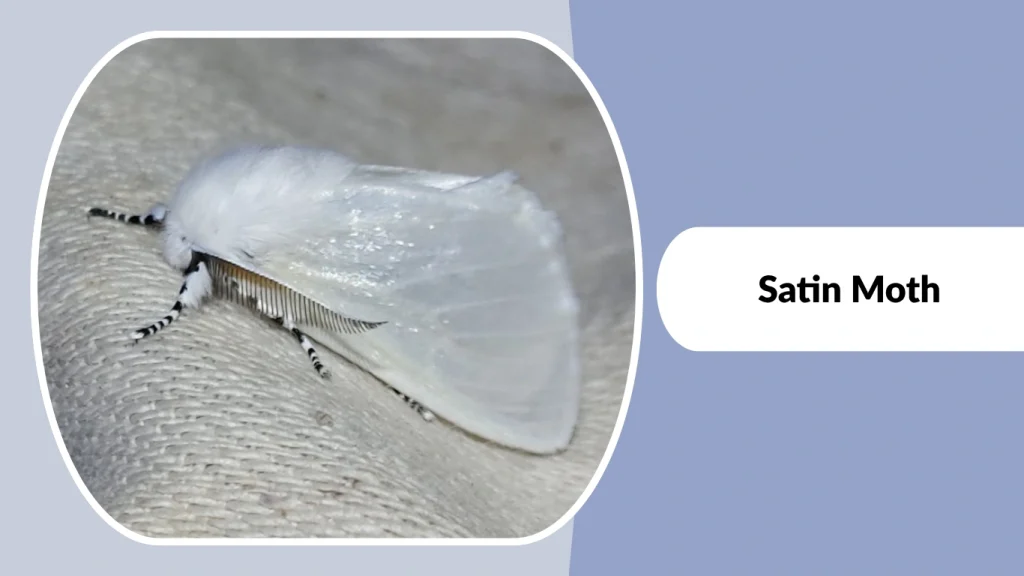
The Satin Moth is a pale-colored tussock moth species known for its silky white wings and black-spotted caterpillars. Originally native to Europe, this moth has spread to parts of North America where it is considered a pest of poplar and willow trees. Its larvae can cause significant defoliation when large populations develop during the growing season.
Identification
- Scientific name: Leucoma salicis
- Adult moths are bright satin-white in color
- Wings have a smooth and silky appearance
- Wingspan ranges from 4 to 5 cm
- Caterpillars are dark with white spots and orange markings
- Body is covered with short fine hairs
Habitat and Distribution
The Satin Moth is found across Europe and parts of North America. It commonly inhabits forests, riversides, parks, and urban areas where poplar and willow trees are abundant.
Behavior and Diet
Adult moths are nocturnal and attracted to lights during summer evenings. Caterpillars feed heavily on poplar and willow leaves, sometimes stripping entire branches of foliage during severe infestations.
Lifecycle
Females lay eggs in clusters on tree bark or leaves. Caterpillars hatch and feed through several developmental stages before creating cocoons for pupation. Adult moths emerge during warm months and continue the reproductive cycle under favorable environmental conditions.
6. Gypsy Moth
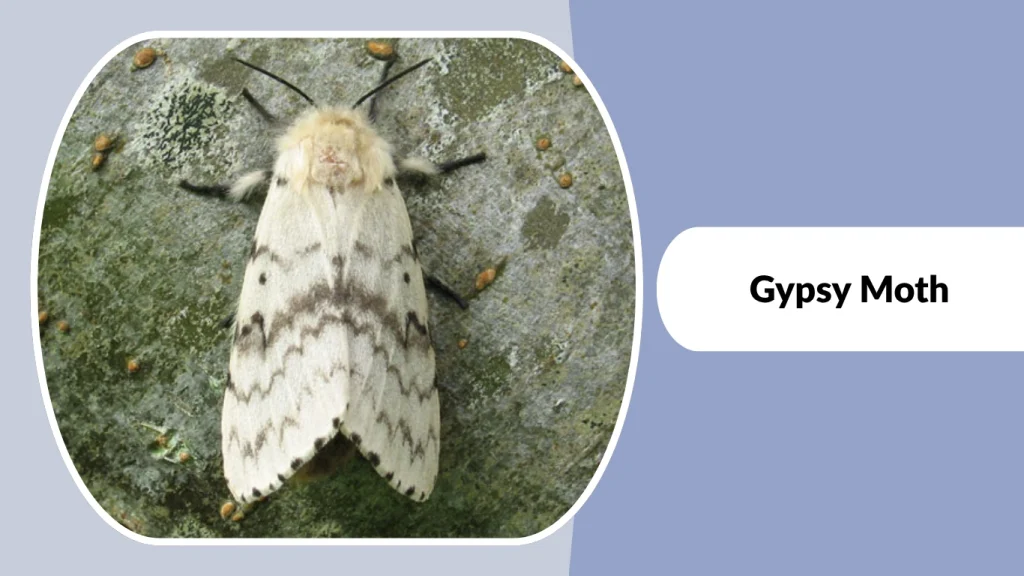
The Gypsy Moth is a well-known tussock moth species recognized for its destructive caterpillars that feed on hundreds of tree species. Native to Europe and Asia, it became a serious forest pest in North America after accidental introduction. Large infestations can strip trees of leaves, weakening forests and causing major ecological and economic damage during active outbreak periods.
Identification
- Scientific name: Lymantria dispar
- Male moths are brown with dark wing markings
- Females are larger and pale cream or white
- Wingspan ranges from 3.5 to 6 cm
- Caterpillars are hairy with blue and red spots on the back
- Adult females in some regions are unable to fly
Habitat and Distribution
The Gypsy Moth is widely distributed across Europe, Asia, and North America. It commonly inhabits forests, woodlands, parks, orchards, and suburban areas where deciduous trees such as oak are abundant.
Behavior and Diet
Adult moths emerge during summer, with males actively flying in search of females. Caterpillars feed aggressively on leaves from many hardwood tree species and may completely defoliate large forest areas during heavy infestations.
Lifecycle
Females lay egg masses on tree bark, outdoor structures, and other surfaces. Caterpillars hatch in spring and feed through several growth stages before pupating in sheltered areas. Adult moths later emerge and continue the seasonal reproductive cycle.
7. Sycamore Tussock Moth

The Sycamore Tussock Moth is a colorful tussock moth species best known for its striking caterpillar covered with long orange and white hairs. This species is commonly associated with sycamore trees, where its larvae feed during late summer and autumn. Although the caterpillars appear attractive, their hairs can sometimes irritate human skin after direct contact.
Identification
- Scientific name: Halysidota harrisii
- Adult moths are pale cream or light tan in color
- Wings are covered with fine soft hairs
- Wingspan ranges from 3 to 5 cm
- Caterpillars have dense orange and white hair tufts
- Long black hair pencils extend from both ends of the body
Habitat and Distribution
The Sycamore Tussock Moth is found mainly across eastern North America. It commonly inhabits forests, parks, suburban neighborhoods, and riverside areas where sycamore and related deciduous trees grow abundantly.
Behavior and Diet
Adult moths are nocturnal and often attracted to lights during warm evenings. Caterpillars feed mainly on sycamore leaves but may also consume foliage from maple, birch, and ash trees in some regions.
Lifecycle
Females lay eggs in clusters on the undersides of leaves. Caterpillars hatch and feed through multiple growth stages before spinning cocoons for pupation. Adult moths emerge later in the season and continue the reproductive cycle under suitable environmental conditions.
8. Fir Tussock Moth

The Fir Tussock Moth is a forest-dwelling tussock moth species known for its hairy caterpillars that feed on fir and other conifer trees. This species can become a serious forestry pest during population outbreaks, causing heavy defoliation in affected forests. Its caterpillars are easily recognized by their colorful tufts of hair and distinctive body markings.
Identification
- Scientific name: Orgyia detrita
- Adult moths are grayish-brown with subtle wing patterns
- Males have feathery antennae and can fly
- Females are larger and less active
- Caterpillars display tufts of yellow and black hair
- Bright markings appear along the caterpillar’s body
Habitat and Distribution
The Fir Tussock Moth is commonly found in coniferous forests across parts of North America. It prefers woodland habitats with fir, spruce, and pine trees where suitable food sources are widely available.
Behavior and Diet
Adult moths are mainly active during warmer months. Caterpillars feed heavily on needles from fir and related conifer trees. During severe infestations, large groups of larvae may strip branches and weaken forest vegetation.
Lifecycle
Females lay eggs on tree bark or nearby surfaces after mating. Caterpillars hatch and feed through several developmental stages before spinning cocoons for pupation. Adult moths emerge later and continue the reproductive cycle under favorable environmental conditions.
9. Douglas-Fir Tussock Moth

The Douglas-Fir Tussock Moth is a destructive forest pest known for damaging Douglas-fir and true fir trees in western North America. Its caterpillars feed heavily on conifer needles and can weaken or kill trees during major outbreaks. This tussock moth is important in forest management because repeated infestations may seriously affect timber production and ecosystem health.
Identification
- Scientific name: Orgyia pseudotsugata
- Adult males are grayish-brown with feathery antennae
- Females are wingless and remain near cocoons
- Wingspan of males ranges from 2.5 to 3.5 cm
- Caterpillars have colorful tufts of orange, yellow, and black hair
- Bright red spots appear along the larval body
Habitat and Distribution
The Douglas-Fir Tussock Moth is found mainly in western North America. It commonly inhabits coniferous forests dominated by Douglas-fir, grand fir, and other true fir species in mountainous and woodland environments.
Behavior and Diet
Adult males fly actively in search of females during the breeding season, while females stay near their cocoons after emerging. Caterpillars feed aggressively on conifer needles and may cause severe defoliation during outbreak years.
Lifecycle
Females lay egg masses on cocoons after mating. Caterpillars hatch in spring and pass through several feeding stages before spinning cocoons for pupation. Adult moths emerge later in summer and continue the seasonal reproductive cycle.
10. Pale Tussock Moth

The Pale Tussock Moth is a soft-colored tussock moth commonly recognized by its fluffy appearance and pale wing coloration. Its caterpillars are brightly colored with striking tufts of hair that make them easy to identify in gardens and woodlands. This species is widespread and feeds on a variety of deciduous trees, especially during the larval stage.
Identification
- Scientific name: Calliteara pudibunda
- Adult moths are pale gray or cream-colored
- Wings have a soft and fuzzy appearance
- Wingspan ranges from 4 to 6 cm
- Caterpillars display yellow or green tufts of hair
- Long hair pencils extend from the front and rear of the body
Habitat and Distribution
The Pale Tussock Moth is widely distributed across Europe and parts of Asia. It commonly inhabits forests, gardens, parks, orchards, and woodland edges where deciduous trees and shrubs are abundant.
Behavior and Diet
Adult moths are nocturnal and attracted to lights during warm nights. Caterpillars feed on leaves from oak, beech, birch, willow, and many other deciduous trees. Their feeding activity increases during late spring and summer.
Lifecycle
Females lay eggs on host plants during the breeding season. Caterpillars hatch and feed through several developmental stages before spinning cocoons for pupation. Adult moths emerge afterward and continue the reproductive cycle under favorable environmental conditions.
11. Black Arches Moth

The Black Arches Moth is a striking tussock moth species recognized for its white wings marked with bold black zigzag patterns. It is mainly associated with conifer forests where its caterpillars feed on pine, spruce, and fir trees. During severe outbreaks, this species can become a significant forest pest by causing heavy defoliation in affected woodland areas.
Identification
- Scientific name: Lymantria monacha
- Wings are white with bold black wavy markings
- Adult females are larger than males
- Wingspan ranges from 4 to 6 cm
- Caterpillars are dark with long tufts of hair
- Body displays red and blue spotting patterns
Habitat and Distribution
The Black Arches Moth is widely distributed across Europe and parts of Asia. It commonly inhabits coniferous forests, woodland areas, and mountainous regions where pine, fir, and spruce trees dominate the landscape.
Behavior and Diet
Adult moths are mostly nocturnal and are attracted to lights at night. Caterpillars feed aggressively on conifer needles and may also consume leaves from deciduous trees when food is limited. Heavy infestations can weaken large forested areas.
Lifecycle
Females lay egg masses on tree bark and branches during the breeding season. Caterpillars hatch in spring and feed through several developmental stages before pupating in sheltered locations. Adult moths emerge later and continue the annual reproductive cycle.
12. Nun Moth

The Nun Moth is a forest-dwelling tussock moth known for its black-and-white wing patterns that resemble the clothing traditionally worn by nuns. This species is considered a serious forestry pest in some regions because its caterpillars feed heavily on conifer trees. Large outbreaks may cause widespread defoliation and weaken forest ecosystems over time.
Identification
- Scientific name: Lymantria monacha
- Wings are white with dark zigzag markings
- Body is dark with lighter hair covering
- Wingspan ranges from 4 to 5.5 cm
- Caterpillars are grayish-black with tufts of hair
- Red and blue spots appear along the larval body
Habitat and Distribution
The Nun Moth is widely distributed across Europe and parts of Asia. It commonly inhabits coniferous forests, mountainous woodlands, and mixed forest environments where spruce, pine, and fir trees are abundant.
Behavior and Diet
Adult moths are nocturnal and frequently attracted to lights during summer evenings. Caterpillars feed mainly on conifer needles but may also consume leaves from deciduous trees when necessary. Severe infestations can damage large forest areas.
Lifecycle
Females lay egg masses on tree bark and branches during the breeding season. Caterpillars hatch in spring and feed through several growth stages before pupating in protected areas. Adult moths emerge later and continue the yearly reproductive cycle.
13. Milkweed Tussock Moth

The Milkweed Tussock Moth is a brightly colored tussock moth species commonly associated with milkweed plants. Its caterpillars are covered with bold black, white, and orange tufts of hair that warn predators of their unpleasant taste. This species is often found in gardens and meadows where milkweed grows naturally during warm seasons.
Identification
- Scientific name: Euchaetes egle
- Adult moths are grayish with soft fuzzy bodies
- Wings are pale gray with subtle markings
- Wingspan ranges from 3 to 4 cm
- Caterpillars display black, white, and orange hair tufts
- Body is covered with dense colorful hairs
Habitat and Distribution
The Milkweed Tussock Moth is found throughout much of North America. It commonly inhabits meadows, gardens, grasslands, roadsides, and open fields where milkweed plants are abundant and provide suitable food sources for larvae.
Behavior and Diet
Adult moths are mainly nocturnal and are attracted to lights during warm evenings. Caterpillars feed almost entirely on milkweed leaves, absorbing plant toxins that help protect them from predators such as birds and small mammals.
Lifecycle
Females lay clusters of eggs on milkweed plants during the breeding season. Caterpillars hatch and feed together during early stages before dispersing as they mature. After pupation inside cocoons, adult moths emerge and continue the reproductive cycle.
14. Definite Tussock Moth

The Definite Tussock Moth is a hairy tussock moth species recognized for its colorful caterpillars and distinctive tufts of hair. This moth is commonly found in forests and suburban areas where its larvae feed on many deciduous trees and shrubs. Although usually not harmful in small numbers, large populations may cause noticeable defoliation during active feeding periods.
Identification
- Scientific name: Orgyia definita
- Adult moths are grayish-brown with subtle wing patterns
- Males have feathery antennae and can fly
- Females are wingless and remain near cocoons
- Caterpillars have yellowish tufts and long black hair pencils
- Bright red markings appear along the larval body
Habitat and Distribution
The Definite Tussock Moth is mainly distributed across eastern North America. It commonly inhabits deciduous forests, parks, gardens, orchards, and wooded suburban environments where suitable host plants are available.
Behavior and Diet
Adult males are active fliers during the breeding season, while females remain stationary after emerging. Caterpillars feed on leaves from oak, maple, elm, apple, and several other deciduous trees and shrubs found in woodland habitats.
Lifecycle
Females lay eggs on their cocoons after mating. Caterpillars hatch and feed through multiple developmental stages before spinning cocoons for pupation. Adult moths emerge later and continue the seasonal reproductive cycle under favorable environmental conditions.
15. Orgyia antiqua

Orgyia antiqua, commonly known as the Rusty Tussock Moth or Vapourer Moth, is a distinctive tussock moth species famous for its hairy caterpillars and wingless females. This moth is widely distributed and highly adaptable, living in forests, gardens, and hedgerows. The brightly colored caterpillars are easy to recognize because of their unique tufts of hair and striking body patterns.
Identification
- Scientific name: Orgyia antiqua
- Male moths are rusty-brown with pale wing markings
- Females are wingless and remain near cocoons
- Wingspan of males ranges from 3 to 4 cm
- Caterpillars have yellow, white, and black hair tufts
- Red spots appear along the caterpillar’s back
Habitat and Distribution
Orgyia antiqua is widely distributed across Europe, Asia, and North America. It commonly inhabits woodlands, gardens, orchards, hedgerows, parks, and suburban areas where shrubs and deciduous trees provide suitable feeding and breeding habitats.
Behavior and Diet
Adult males actively fly during daytime and evening hours while searching for females. Caterpillars feed on leaves from many trees and shrubs, including oak, apple, hawthorn, willow, and rose plants. Their broad diet helps the species survive in diverse environments.
Lifecycle
Females lay eggs directly on their cocoons after mating. Caterpillars hatch and pass through several feeding stages before spinning cocoons for pupation. Adult moths emerge afterward and continue the reproductive cycle during suitable seasonal conditions.
16. Banded Tussock Moth

The Banded Tussock Moth is a hairy tussock moth species known for the banded patterns and colorful tufts found on its caterpillars. This species is commonly associated with woodland habitats where the larvae feed on various deciduous trees and shrubs. Its fuzzy appearance helps make it one of the more recognizable tussock moth caterpillars in forested environments.
Identification
- Scientific name: Halysidota tessellaris
- Adult moths are pale tan or yellowish-brown
- Wings display faint banded or spotted patterns
- Wingspan ranges from 3.5 to 5 cm
- Caterpillars are covered with long tufts of hair
- Black and white hair pencils extend from the body
Habitat and Distribution
The Banded Tussock Moth is widely distributed across North America. It commonly inhabits forests, gardens, parks, suburban woodlands, and areas with abundant deciduous trees and shrubs.
Behavior and Diet
Adult moths are nocturnal and are often attracted to lights during warm evenings. Caterpillars feed on leaves from oak, elm, maple, willow, and several other hardwood trees, allowing the species to survive in diverse habitats.
Lifecycle
Females lay eggs on host plant leaves during the breeding season. Caterpillars hatch and feed through multiple developmental stages before spinning cocoons for pupation. Adult moths later emerge and continue the reproductive cycle under favorable environmental conditions.
17. Western Tussock Moth

The Western Tussock Moth is a North American tussock moth species recognized for its hairy caterpillars and ability to feed on a variety of trees and shrubs. This species is commonly found in western forests and woodland habitats. During heavy infestations, the caterpillars may cause noticeable defoliation, especially on conifer and deciduous trees growing in natural and suburban environments.
Identification
- Scientific name: Orgyia vetusta
- Adult males are brownish-gray with patterned wings
- Females are wingless and remain near cocoons
- Wingspan of males ranges from 2.5 to 3.5 cm
- Caterpillars have dense tufts of yellow and black hair
- Long black hair pencils extend from both ends of the body
Habitat and Distribution
The Western Tussock Moth is mainly found in western regions of North America. It commonly inhabits forests, shrublands, woodland edges, parks, and suburban environments where host plants are widely available.
Behavior and Diet
Adult males are active fliers that search for females during the breeding season. Caterpillars feed on leaves and needles from various trees and shrubs, including oak, ceanothus, pine, and fir species found in western habitats.
Lifecycle
Females lay eggs on their cocoons after mating. Caterpillars hatch and pass through several feeding stages before spinning cocoons for pupation. Adult moths emerge later and continue the reproductive cycle during favorable seasonal conditions.
FAQs
What are tussock moths?
Tussock moths are a group of hairy moths belonging mainly to the family Erebidae. They are best known for their fuzzy caterpillars covered with colorful tufts of hair. Many species live in forests, gardens, and woodland habitats across different parts of the world.
Are tussock moth caterpillars dangerous?
Some tussock moth caterpillars can cause mild skin irritation because of their tiny hairs or spines. Direct contact may lead to itching or rashes in sensitive individuals. It is usually best to avoid touching hairy caterpillars with bare hands.
What do tussock moth caterpillars eat?
Tussock moth caterpillars mainly feed on leaves from deciduous and coniferous trees, shrubs, and garden plants. Different species prefer different host plants, including oak, maple, willow, fir, pine, and milkweed.
Where are tussock moths commonly found?
Tussock moths are found in forests, parks, gardens, orchards, grasslands, and suburban areas throughout North America, Europe, Asia, and other regions. They prefer habitats with abundant vegetation and suitable host plants for their larvae.
Why are tussock moths important in forests?
Tussock moths play a role in forest ecosystems as part of the food chain, but some species can become serious pests during outbreaks. Large populations may defoliate trees, weaken forests, and affect timber production and overall forest health.
