
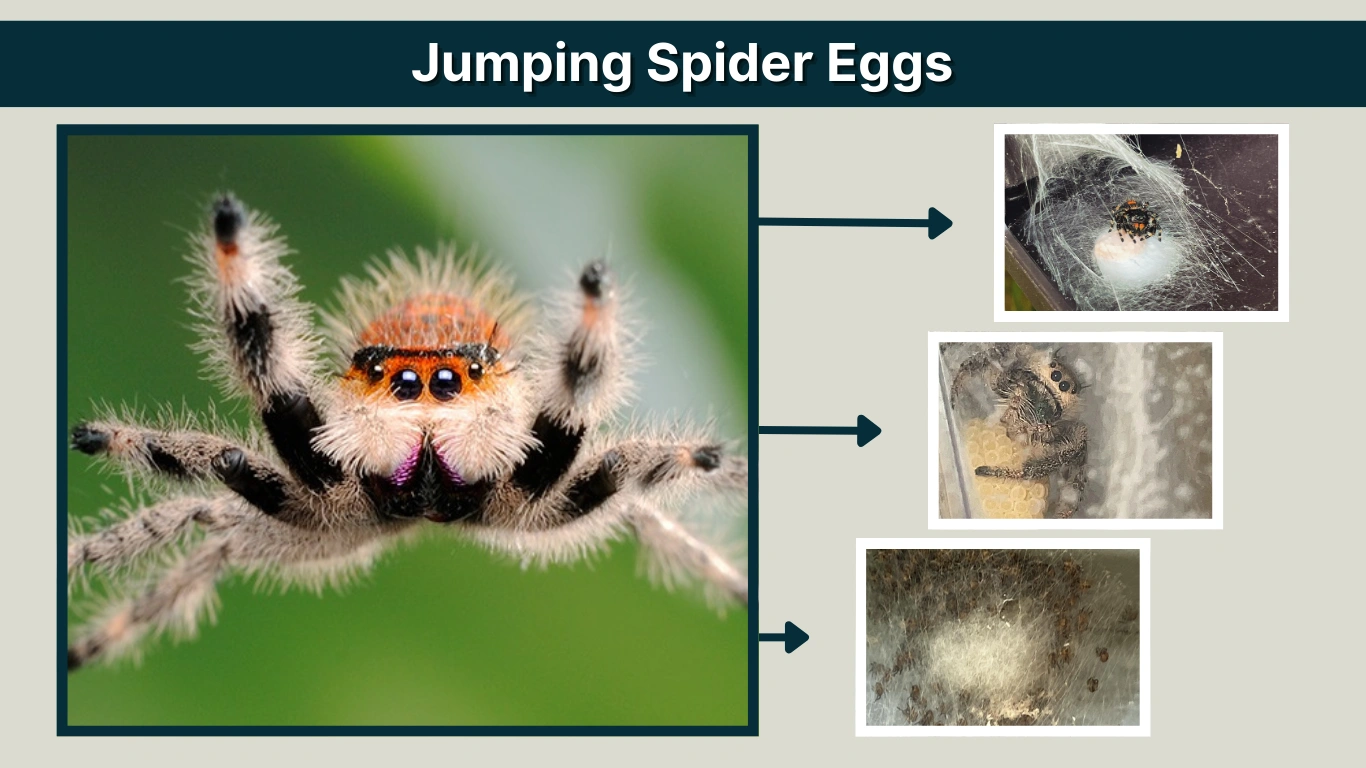
Jumping spiders are fascinating arachnids known for their intelligence, bright colors, and curious behavior. When kept as pets, one of the most intriguing moments for keepers is when a female lays an egg sac. Understanding what these egg sacs are, how they develop, and how to care for them is essential for anyone keeping jumping spiders.
Jumping Spider Egg Sacs

Jumping spider egg sacs are protective silk cases where females deposit and guard their eggs. These sacs vary in size, shape, and color, depending on the species and environment.
What Is an Egg Sac?
A female spider creates her egg sac using silk produced from her spinnerets. Inside, she deposits dozens to hundreds of eggs, sealing them tightly for protection. This silk barrier not only shields the eggs from predators but also helps maintain the right humidity and temperature.
Egg Sac vs Molting Web vs Nest
Many new keepers confuse an egg sac with other silk structures. A molting web is usually thinner and serves as a temporary shelter when the spider sheds its exoskeleton. A nest may be a resting place or retreat. An egg sac, however, is rounder, thicker, and more tightly sealed, since it needs to safeguard developing embryos.
Colors and Variations
Egg sacs are often white or cream-colored but may darken with age or depending on the environment. In some cases, sacs may appear brown or even slightly black if dirt or substrate sticks to the silk. Bold, regal, and daring jumping spiders can all produce slightly different sac textures and appearances.
What Jumping Spider Eggs Look Like

Jumping spider eggs are small, round, and pearl-like. They are laid in clusters inside the sac, often numbering anywhere from 30 to over 100 depending on the species.
Appearance and Texture
The eggs usually appear white or pale yellow and are soft when first laid. Over time, as development progresses, they may become slightly opaque. Healthy eggs tend to stay plump and uniform, while infertile or non-viable eggs may shrivel, discolor, or fail to develop.
Fertile vs Infertile Eggs
A fertile egg sac will often look fuller and stay well-formed. Over time, spiderlings may be faintly visible through the silk as they near hatching. Infertile eggs, on the other hand, may collapse, turn dark, or show no signs of spiderling movement. Female spiders can still lay infertile sacs even without mating.
Reproduction and Egg Laying

Jumping spider reproduction is a careful process that involves courtship, mating, and eventually egg laying.
Fertilization Process
Males deposit sperm into small silk structures and transfer it to the female during mating. Once fertilized, the female can store sperm and use it later to produce viable eggs. Without mating, however, any egg sac she creates will be infertile.
Can Spiders Lay Eggs Without Mating?
Yes, females often lay eggs even without mating, but these will not hatch. For new keepers, this can be confusing, since the egg sac may look normal at first but later prove infertile.
Egg Count by Species
- Bold jumping spiders (Phidippus audax): Often lay 50–100 eggs.
- Regal jumping spiders (Phidippus regius): Can lay 100–200 eggs in one sac.
- Daring jumping spiders (Phidippus audax variant): Typically produce similar numbers to bold jumpers.
Egg Sac Stages
After laying, eggs undergo a series of developmental stages before hatching.
Development Timeline
The process begins with freshly laid eggs, then embryo development, and finally the emergence of tiny spiderlings. During this time, the female usually guards the sac closely. Environmental conditions like temperature and humidity can speed up or slow down development.
How Long Until Eggs Hatch
Most jumping spider eggs take about 2–6 weeks to hatch. Warmer conditions generally lead to quicker hatching, while cooler or unstable environments can delay it.
Egg Sac Care in Captivity

Caring for a jumping spider egg sac requires patience and caution. Since sacs are delicate and vital for spiderling survival, proper husbandry is key.
Environmental Needs
The enclosure should remain stable in both temperature and humidity. A moderate level of humidity prevents the sac from drying out, while good ventilation reduces mold risk. Direct sunlight or sudden heat should be avoided, as these can kill developing embryos.
Handling Precautions
Egg sacs should rarely, if ever, be disturbed. Moving or opening a sac can harm the eggs or stress the mother. If you must transfer the enclosure, do so gently and avoid shaking. The female typically guards the sac, ensuring its safety until hatching.
Hatching and Spiderling Care

When the time comes, spiderlings emerge from the sac, beginning their fragile first days of life.
Signs of Hatching
The egg sac may start to sag or thin as spiderlings prepare to emerge. You might notice faint movement within the silk or small slits where young spiders begin breaking through. The mother may also become more defensive at this stage.
First Days of Spiderlings
Newly emerged spiderlings, also known as slings, are very small and fragile. Initially, they cluster together in or near the sac. During this time, they do not need food, as they still rely on internal yolk reserves.
Separation and Rearing
After about a week, the spiderlings become more active and begin dispersing. At this stage, they require tiny live prey such as fruit flies. Some keepers choose to separate the spiderlings into small containers to prevent cannibalism, while others allow them to remain together in small groups with plenty of food.
Common Problems with Egg Sacs
Even with the best care, issues can arise that prevent successful hatching.
Infertile or Non-Viable Sacs
Unmated females often produce infertile sacs. These sacs may appear normal at first but never hatch. In some cases, the eggs shrivel or turn brown. While disappointing, this is natural and requires no intervention.
Environmental Hazards
Mold is one of the most common threats to egg sacs in captivity. It grows quickly in damp enclosures without airflow and can kill developing eggs. Predatory mites or other small pests can also invade the sac. Keeping the enclosure clean and balanced greatly reduces these risks.
Buying and Selling Jumping Spider Eggs
Some enthusiasts purchase egg sacs or spiderlings from breeders, but this practice comes with risks.
Egg Sacs for Sale
Egg sacs and spiderlings are sometimes listed online, especially for popular species like bold or regal jumpers. While this can be a way to start a colony, buyers should exercise caution.
Legal and Ethical Considerations
Not all regions allow the sale or transport of spiders and their eggs. Always check local wildlife laws before buying or selling. Captive-bred sacs are preferred, as wild collection may harm local populations.
Risks of Buying Online
When purchasing, there’s no guarantee the eggs are fertile or healthy. Transport stress can also reduce hatching success. Many hobbyists recommend starting with live juveniles or subadults instead of eggs for a more reliable experience.
Conclusion
Jumping spider egg sacs are one of the most fascinating parts of spider keeping. From the careful way females construct their silk cases to the tiny slings that eventually emerge, the process is full of wonder. For keepers, understanding how to identify fertile vs. infertile sacs, providing proper care, and avoiding common problems ensures the best chance of success. Responsible care and ethical practices will not only protect the spiderlings but also enrich your experience as a keeper.
FAQs
What do jumping spider eggs look like?
They are small, round, and pearl-like, usually white or pale yellow. They cluster together inside the sac and remain soft until development progresses.
How long does it take for jumping spider eggs to hatch?
Most species hatch in 2–6 weeks, depending on temperature and humidity. Warmer conditions typically speed up the process.
How can you tell if a jumping spider egg sac is fertile?
Fertile sacs stay plump and may eventually show signs of movement inside. Infertile sacs often collapse, darken, or never change.
Can a female jumping spider lay eggs without mating?
Yes, females frequently lay infertile eggs without mating. These will not hatch into spiderlings.
What should I do if my jumping spider lays eggs?
Leave the sac with the mother if possible, ensuring stable conditions. Avoid handling it, and prepare for spiderling care in case they hatch.