

Florida is home to a wide variety of spiders, but few are as fascinating as the jumping spiders. Known for their big forward-facing eyes, acrobatic leaps, and curious personalities, these spiders often capture the attention of nature lovers and homeowners alike. From the large and bold Regal Jumping Spider to the tiny and colorful species that blend into gardens and trees, Florida offers a rich diversity of these hunters. In this guide, we’ll look at seven types of jumping spiders you can spot in the Sunshine State, how to identify them, and what makes each species unique.
1. Regal Jumping Spider (Phidippus regius)
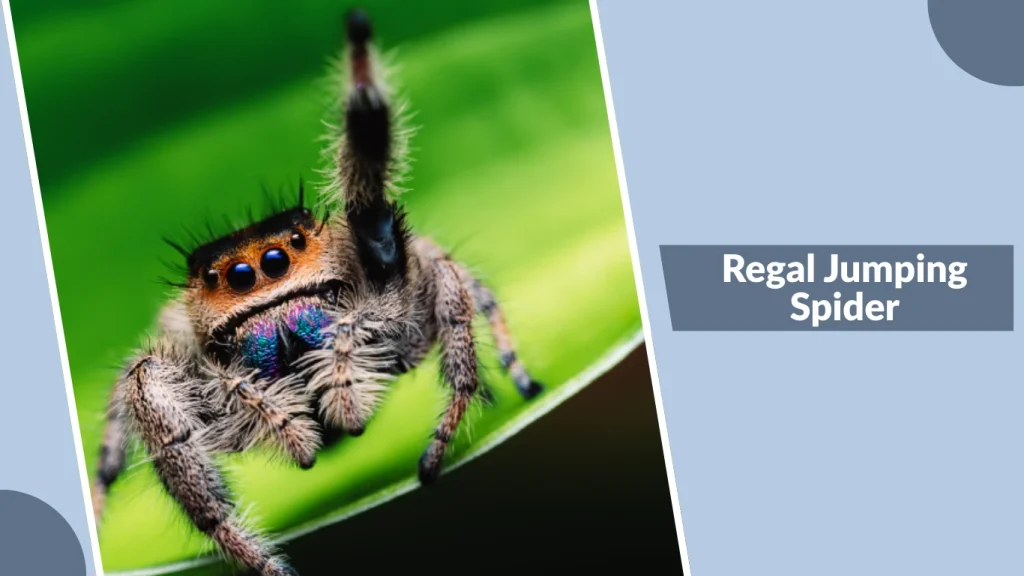
The Regal Jumping Spider is the largest and most iconic jumping spider found in Florida. Its striking appearance and bold behavior make it one of the most recognizable spiders in the state.
Identification
- Females are larger, often gray or brown with pale markings.
- Males are black with distinct white patterns on the body and legs.
- Both sexes have iridescent green or blue mouthparts (chelicerae).
- Size ranges between 0.6–0.9 inches, making them quite large for jumping spiders.
Habitat & Distribution
This spider thrives in a wide range of environments, from forests and fields to suburban backyards. They are especially common in Central and South Florida, where they often live on fences, walls, and vegetation.
Behavior
Regal Jumping Spiders are daytime hunters that rely on keen eyesight to stalk and pounce on their prey. They do not spin webs for trapping but use silk as a safety line when leaping. Despite their intimidating size, they are not aggressive toward humans and bites are extremely rare.
2. Bold Jumping Spider (Phidippus audax)
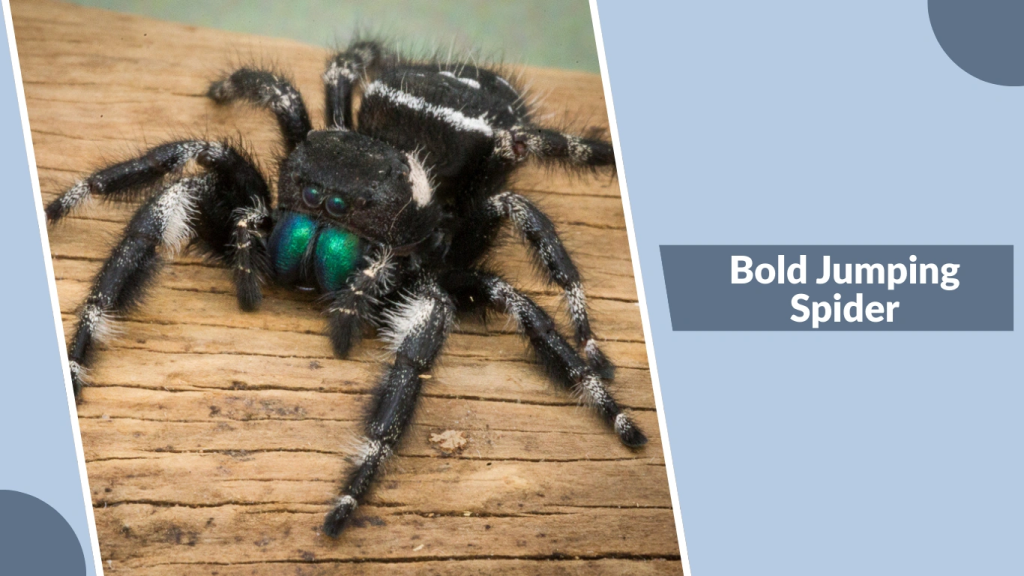
The Bold Jumping Spider, also known as the Daring Jumping Spider, is one of the most widespread jumping spiders in North America and is commonly seen across Florida. Its bold patterns and energetic hunting style make it a frequent sight in gardens and on walls.
Identification
- Black body with distinct white spots on the abdomen.
- Iridescent green or blue metallic mouthparts (chelicerae).
- Medium size, usually ranging from 0.3–0.6 inches.
- Compact, robust body shape with short, strong legs.
Habitat & Distribution
This species adapts easily to many environments. In Florida, it can be found in grasslands, agricultural fields, suburban backyards, and even inside homes. It is especially common in North and Central Florida.
Behavior
The Bold Jumping Spider is an active hunter with excellent vision, often seen chasing and leaping onto insects much larger than itself. While their color pattern sometimes causes people to confuse them with black widows, they are harmless to humans and play an important role in controlling pest insects.
3. Magnolia Green Jumping Spider (Lyssomanes viridis)

The Magnolia Green Jumping Spider is one of the most unique and eye-catching spiders in Florida. With its bright green body, it blends perfectly with vegetation, making it a master of camouflage.
Identification
- Bright green translucent body with long, slender legs.
- Males may have red markings near the eyes.
- Small in size, typically less than 0.4 inches.
Habitat & Distribution
As the name suggests, this spider is often found on magnolia trees but can also be seen on shrubs, leaves, and flowers. It is widespread in Florida’s woodlands, parks, and residential areas with dense vegetation.
Behavior
This species relies on stealth and camouflage to ambush its prey. It moves slowly through leaves, waiting for insects to come close before striking. Despite its delicate appearance, it is a skilled hunter and rarely noticed unless closely observed.
4. Tan Jumping Spider (Platycryptus undatus)

The Tan Jumping Spider is a flat-bodied species often seen resting on tree bark, wooden fences, or walls. Its ability to blend in with rough surfaces makes it one of the best camouflaged jumping spiders in Florida.
Identification
- Brown to tan body with wavy, undulating patterns that resemble bark.
- Flattened body shape, allowing it to press closely against surfaces.
- Average size of about 0.4 inches.
- Short, sturdy legs designed for quick bursts of movement.
Habitat & Distribution
This spider is widespread across Florida and can be found in both urban and rural areas. It commonly lives on tree trunks, stone walls, wooden posts, and even the sides of houses, where its bark-like camouflage keeps it hidden from predators.
Behavior
The Tan Jumping Spider is a patient ambush hunter. Instead of actively chasing prey, it waits motionless until an insect comes close, then launches a sudden and precise attack. Its flattened body helps it stay hidden, making it an efficient predator in both natural and human-made environments.
5. Twin-Flagged Jumping Spider (Anasaitis canosa)

The Twin-Flagged Jumping Spider is a small but striking species recognized by the “flag-like” white tufts on its head. It is a lively and fast-moving spider often spotted in gardens and around homes in Florida.
Identification
- Black body with two distinct white tufts resembling flags on the cephalothorax.
- Legs may have shiny or iridescent reflections.
- Small to medium size, usually less than 0.3 inches.
Habitat & Distribution
This spider is common throughout southern Florida and thrives in backyards, flower gardens, and wooded areas. They are often seen darting around leaves, fences, and low plants.
Behavior
Twin-Flagged Jumping Spiders are highly active and display quick, jerky movements. They are territorial and sometimes show visual displays toward rivals. Despite their speed, they are harmless to humans and often overlooked due to their small size.
6. Hentzia Jumping Spider (Hentzia mitrata)
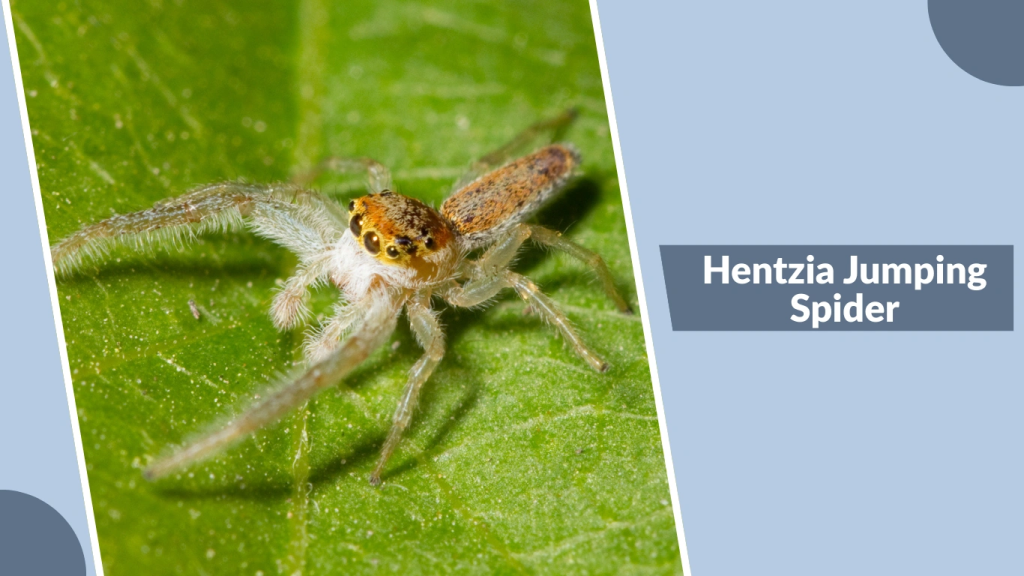
The Hentzia Jumping Spider is a small but colorful species often seen in gardens and on plants in Florida. Its delicate size and reddish markings make it stand out among the state’s smaller jumping spiders.
Identification
- Body is reddish-orange to brown with white or cream markings.
- Slender build compared to bulkier jumping spiders.
- Very small, usually under 0.3 inches in length.
- Males are often brighter in color than females.
Habitat & Distribution
This species is widespread in North and Central Florida, especially in areas with flowering plants. They prefer leaves, shrubs, and flower clusters where they can easily find prey like small flies and gnats.
Behavior
Hentzia Jumping Spiders are fast, darting hunters that rely on their quick reflexes and keen eyesight. They are often seen exploring flowers, where they ambush insects that visit for nectar. Despite their tiny size, they are confident hunters and contribute to natural pest control in gardens.
7. Pantropical Jumping Spider (Plexippus paykulli)
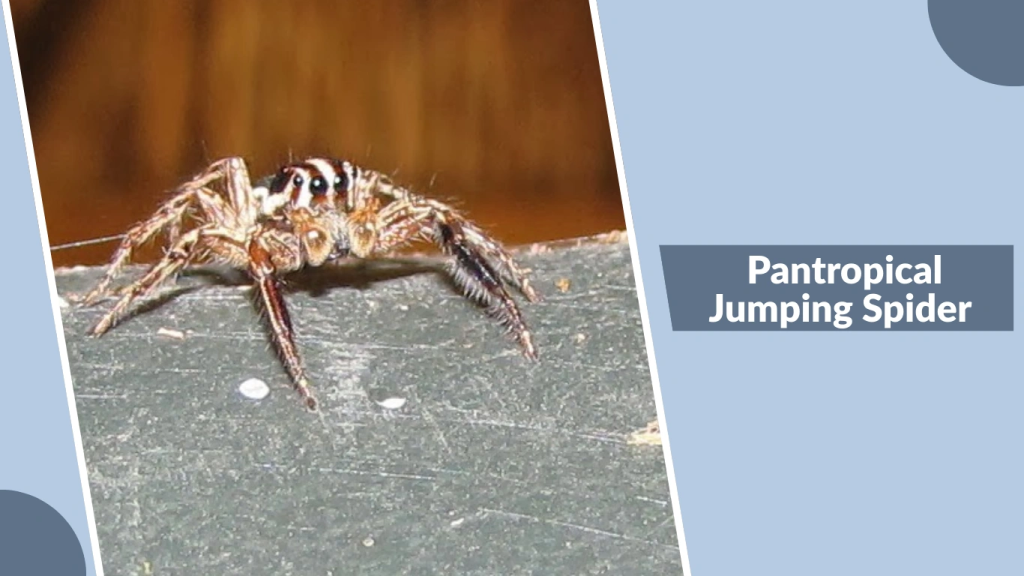
The Pantropical Jumping Spider is an introduced species from Asia that has successfully adapted to Florida’s climate. It is one of the larger and more robust jumping spiders found near human settlements.
Identification
- Males are black with a bold white stripe running down the body.
- Females are brown with lighter, less distinct markings.
- Size ranges from 0.4–0.6 inches, making them larger than many local species.
Habitat & Distribution
This spider thrives around human-made structures and is commonly seen on walls, fences, and ceilings in South Florida. Its ability to adapt to urban settings has made it one of the most widespread introduced jumping spiders in the region.
Behavior
Pantropical Jumping Spiders are aggressive hunters, often chasing insects across walls and windowsills. They are active during the day and rely on their sharp eyesight to stalk prey. Although more assertive than some native species, they remain harmless to people.
Florida Jumping Spider Bite: Are They Dangerous?
Overview
Jumping spiders in Florida, like their relatives elsewhere, are generally harmless to humans. While their appearance and bold movements may cause alarm, they pose little threat and are more beneficial than dangerous.
Bite Symptoms
- Mild redness or swelling at the bite site
- Slight itching or irritation
- Rarely, minor pain similar to a mosquito bite
- Symptoms usually disappear within a few hours to a day
Medical Significance
Jumping spider venom is designed to subdue small insects, not harm humans. Their fangs are too small to cause serious injury, and documented cases of problematic bites are extremely rare. Unlike dangerous spiders such as the black widow or brown recluse, Florida’s jumping spiders are not medically significant.
Safety Around Humans
- They usually bite only if handled roughly or trapped against the skin.
- In most cases, they prefer to leap away rather than defend themselves.
- Keeping them in homes or gardens can actually help control pests like flies, mosquitoes, and small moths.
FAQs
What is the largest jumping spider in Florida?
The Regal Jumping Spider (Phidippus regius) is the largest in Florida, with females reaching nearly an inch in length.
Are Florida jumping spiders poisonous?
They have mild venom used to subdue prey, but it is not dangerous to humans. At most, a bite may cause slight irritation.
Can you keep a Florida jumping spider as a pet?
Yes, many people keep species like the Regal or Bold Jumping Spider as pets. They are easy to care for and have curious, interactive behavior.
Where are jumping spiders most commonly found in Florida?
They are widespread and can be found in gardens, trees, walls, fences, and even inside homes. Southern Florida tends to have the highest diversity.
What do Florida jumping spiders eat?
They feed on small insects such as flies, mosquitoes, moths, and ants. Their diet makes them valuable natural pest controllers.
