
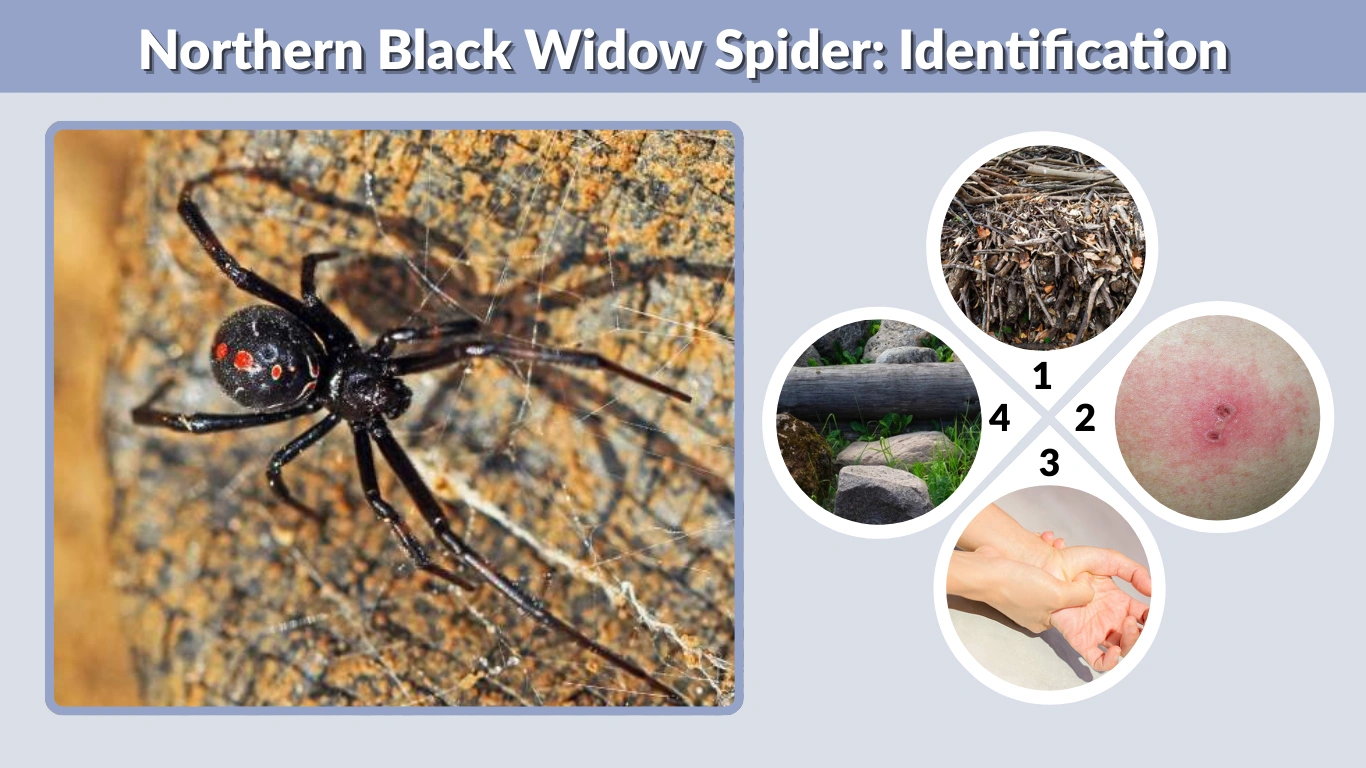
The northern black widow spider is one of the most recognizable venomous spiders in North America. Known for its shiny black body and distinctive red markings, this spider often attracts attention because of its powerful venom. Although the northern black widow can deliver a painful bite, serious complications are uncommon when proper medical care is available. Understanding how to identify this spider, where it lives, and how it behaves can help people avoid unwanted encounters and respond appropriately if a bite occurs.
What Is the Northern Black Widow Spider?
The northern black widow spider, scientifically known as Latrodectus variolus, is a species of venomous spider belonging to the widow spider group. It is closely related to other widow spiders such as the southern black widow and the western black widow.
The name “black widow” comes from the behavior sometimes observed in female spiders, where the female may consume the male after mating. Although this behavior does not always occur, it contributed to the spider’s dramatic name.
Northern black widow spiders are part of the Latrodectus genus, which includes several species of widow spiders found around the world. These spiders are known for their potent venom and distinctive markings.
Despite their reputation, northern black widows are generally shy and avoid human contact. They typically bite only when they feel threatened or are accidentally pressed against the skin.
Northern Black Widow Spider Identification
Identifying a northern black widow spider is important because it helps distinguish this species from harmless spiders that may look similar.
Physical Appearance
The northern black widow spider is most easily recognized by its dark, glossy body. The spider’s body is usually jet black, giving it a shiny and smooth appearance.
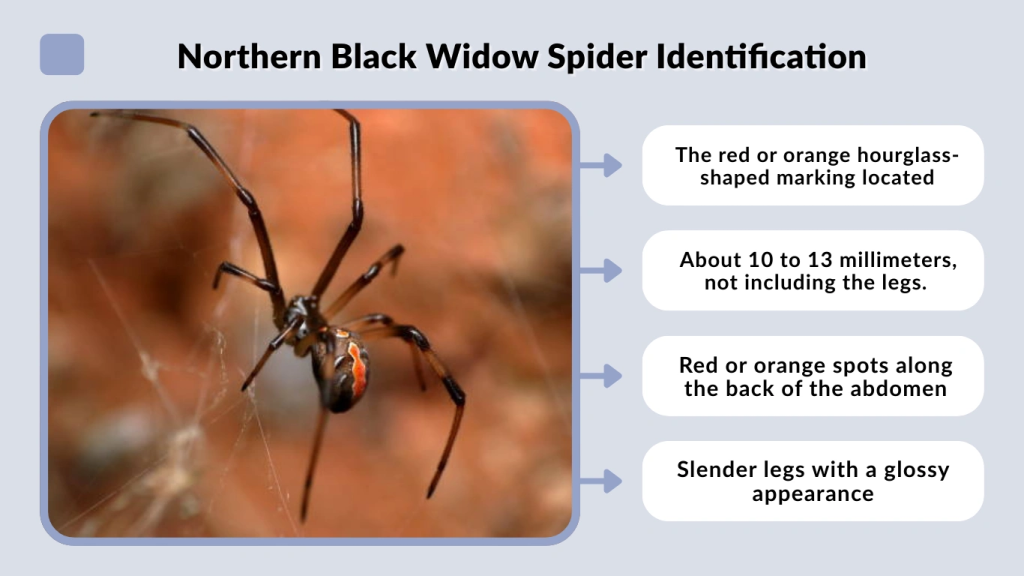
One of the most distinctive features is the red or orange hourglass-shaped marking located on the underside of the abdomen. In northern black widows, this marking often appears broken or split into two separate triangles.
Common physical characteristics include:
- Shiny black body
- Round, bulbous abdomen
- Red or orange markings on the underside
- Long, thin legs
These features help differentiate the northern black widow from many other spider species.
Size and Body Structure
Northern black widow spiders are relatively small, but their appearance can make them seem larger than they are.
Female spiders are significantly larger than males. A female northern black widow typically has a body length of about 10 to 13 millimeters, not including the legs. With the legs extended, the spider’s total span may reach about 30 to 40 millimeters.
Male black widow spiders are smaller and lighter in color. They usually have longer legs compared to their body size and may display additional markings on their bodies.
Unique Identification Features
Several features help distinguish the northern black widow from other widow spider species.
One key identifying characteristic is the broken hourglass marking on the underside of the abdomen. Unlike the southern black widow, which has a complete hourglass shape, the northern species often has two separate red triangles.
Other identifying features may include:
- Red or orange spots along the back of the abdomen
- Dark brown or black body coloration
- Slender legs with a glossy appearance
These markings can vary slightly between individuals, but they generally help confirm the species.
Northern Black Widow Spider Habitat
Northern black widow spiders prefer environments where they can build webs in protected locations. They typically choose areas that provide shelter, darkness, and access to insects for food.
Geographic Distribution
The northern black widow spider is mainly found in North America, particularly in the eastern and northeastern regions of the United States. Its range extends through areas such as:
- The northeastern United States
- Parts of the Midwest
- Southeastern Canada in some regions
The species tends to live in temperate climates where suitable shelter and prey are available.
Preferred Living Environments
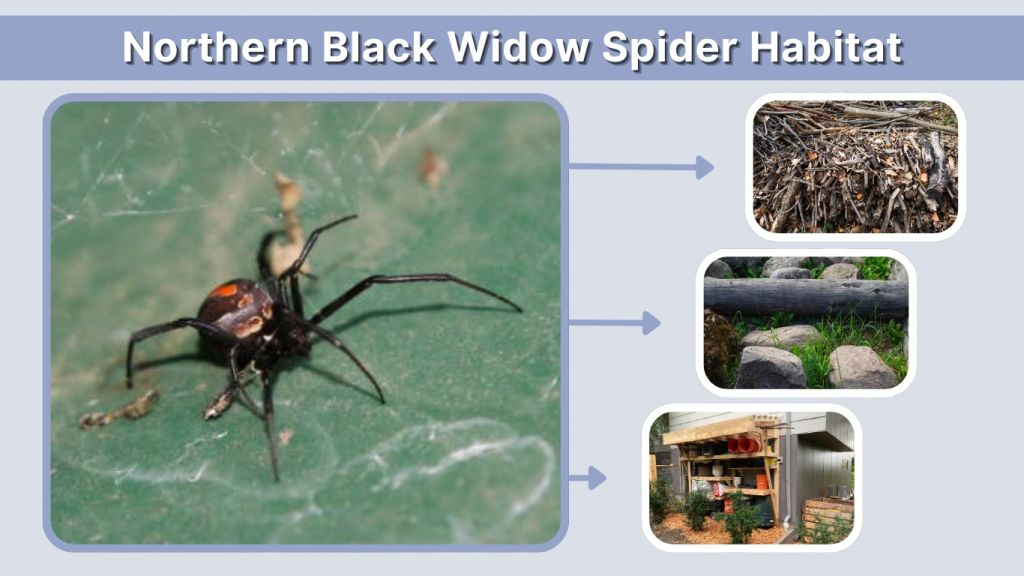
Northern black widow spiders prefer quiet, undisturbed places where they can spin their webs and capture prey. These spiders often live in outdoor environments close to the ground.
Common habitats include:
- Woodpiles
- Under rocks or logs
- Sheds and barns
- Outdoor storage areas
- Garden structures
These locations provide protection from predators and allow the spider to build its web safely.
Indoor vs Outdoor Presence
Although northern black widow spiders mainly live outdoors, they may occasionally enter buildings. This usually happens when they are searching for shelter or when outdoor habitats become disturbed.
Inside homes, they may hide in dark and quiet spaces such as:
- Basements
- Garages
- Crawl spaces
- Storage boxes
Because they prefer secluded areas, people may not notice their presence unless they accidentally disturb the spider or its web.
Behavior of Northern Black Widow Spiders
Understanding the behavior of northern black widow spiders can help people avoid encounters and reduce the risk of bites.
Web Building
Northern black widows build irregular, tangled webs rather than the symmetrical webs commonly associated with other spiders. These webs are usually constructed in protected areas near the ground.
The spider waits in the web for insects to become trapped, then quickly immobilizes its prey with venom.
These webs may be found in places such as:
- Corners of sheds or barns
- Under outdoor furniture
- Between rocks or wooden boards
The sticky strands of the web help capture insects that wander into the trap.
Feeding Habits
Northern black widow spiders are predators that primarily feed on insects. Their diet commonly includes:
- Flies
- Beetles
- Grasshoppers
- Other small insects
Once prey becomes trapped in the web, the spider injects venom that paralyzes the insect. The spider then wraps the prey in silk before feeding.
Activity Patterns
Northern black widow spiders are nocturnal, meaning they are most active during the night. During the day, they usually remain hidden in their webs or nearby shelters.
These spiders are not aggressive and typically avoid humans whenever possible. Bites usually occur only when the spider is accidentally disturbed or trapped against the skin.
Northern Black Widow Spider Bite
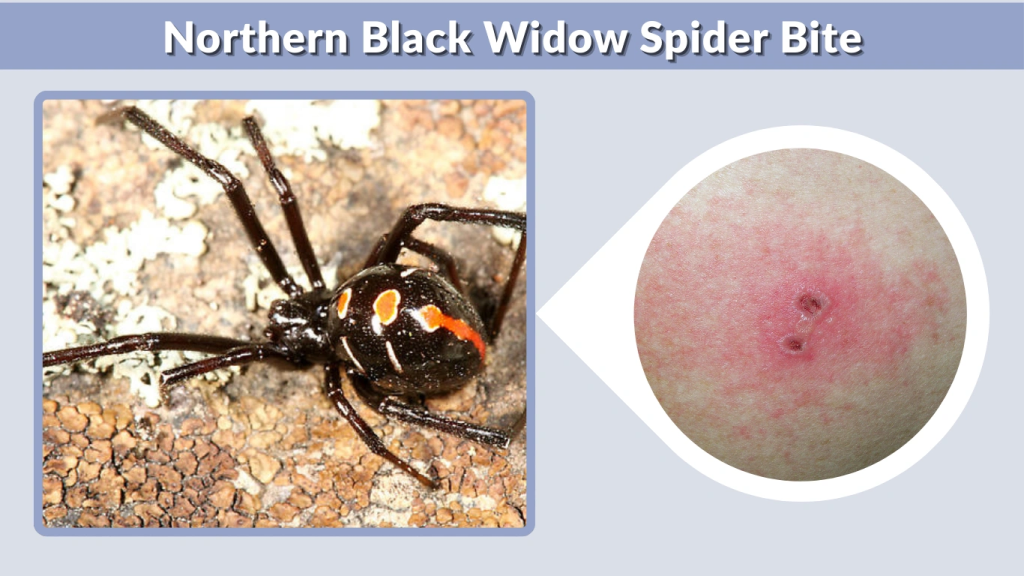
Although northern black widow spiders are venomous, bites are relatively uncommon. These spiders generally bite only in self-defense when they feel threatened.
When a bite occurs, the spider injects venom through its fangs. The venom affects the nervous system and can cause various symptoms.
Why Black Widows Bite
Black widow spiders do not actively seek out humans. Most bites happen when a person accidentally touches or presses the spider against their skin.
Common situations that may lead to bites include:
- Reaching into woodpiles or storage areas
- Handling outdoor equipment without gloves
- Accidentally disturbing a spider’s web
Because these spiders prefer quiet environments, avoiding their hiding places can greatly reduce the risk of a bite.
Bite Symptoms
A bite from a northern black widow spider may cause noticeable symptoms because the spider’s venom affects the nervous system. In many cases, the bite itself may feel like a small pinprick or may not be felt immediately.
Symptoms usually begin within 30 minutes to a few hours after the bite.
Common symptoms may include:
- Sharp or increasing pain at the bite site
- Muscle cramps or spasms
- Abdominal pain
- Sweating or chills
- Nausea or vomiting
- Headache
Some people may also experience muscle stiffness or general discomfort throughout the body. These symptoms can last from several hours to a few days depending on the severity of the bite.
Severity of the Bite
Although northern black widow spiders are venomous, most bites are not life-threatening. Healthy adults typically recover with proper medical care.
However, the venom can cause stronger reactions in certain groups, including:
- Young children
- Older adults
- People with weakened immune systems
In these cases, medical treatment may be necessary to manage symptoms and ensure recovery.
Northern Black Widow Spider Venom
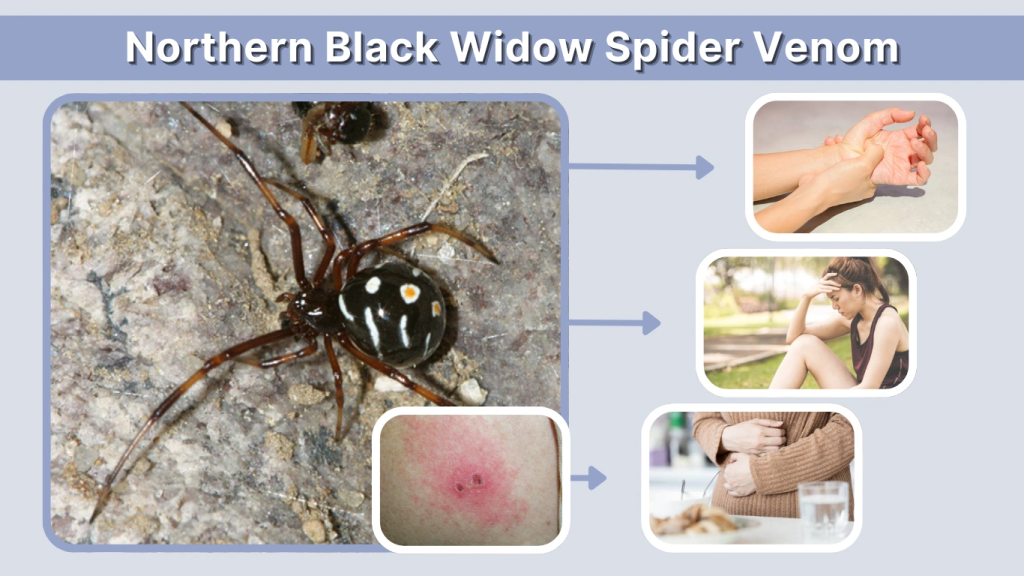
The venom of the northern black widow spider is known for its neurotoxic properties, meaning it affects the nervous system.
Venom Composition
Black widow venom contains toxins that interfere with nerve signals in the body. One of the main components is a toxin called alpha-latrotoxin, which causes nerve cells to release chemicals that affect muscles and nerves.
This process leads to symptoms such as muscle cramps, pain, and sweating.
Although the venom is potent, the amount injected during a bite is usually small.
Effects of Venom on the Body
The venom primarily affects the muscles and nervous system. As the toxin spreads through the body, it may cause several physical reactions.
Possible effects include:
- Muscle spasms
- Severe muscle pain
- Increased heart rate
- Sweating and restlessness
- Abdominal tightness
In most cases, symptoms improve with proper treatment and supportive care.
Northern Black Widow Spider Life Cycle
Like most spiders, the northern black widow goes through several stages during its life cycle.
Egg Sacs
Female northern black widow spiders produce silk egg sacs that contain hundreds of eggs. These sacs are usually round and light-colored, and they are attached to the spider’s web.
A single egg sac may contain 100 to 400 eggs.
The female often guards the egg sacs to protect them from predators.
Spiderlings
When the eggs hatch, tiny spiders known as spiderlings emerge. These spiderlings disperse from the web and begin their own development.
During this stage, many spiderlings do not survive because of predators or environmental conditions.
Lifespan
The lifespan of a northern black widow spider varies depending on environmental factors.
Female spiders may live one to three years, while males usually have a much shorter lifespan. Male spiders often die shortly after mating.
Northern Black Widow vs Other Widow Spiders
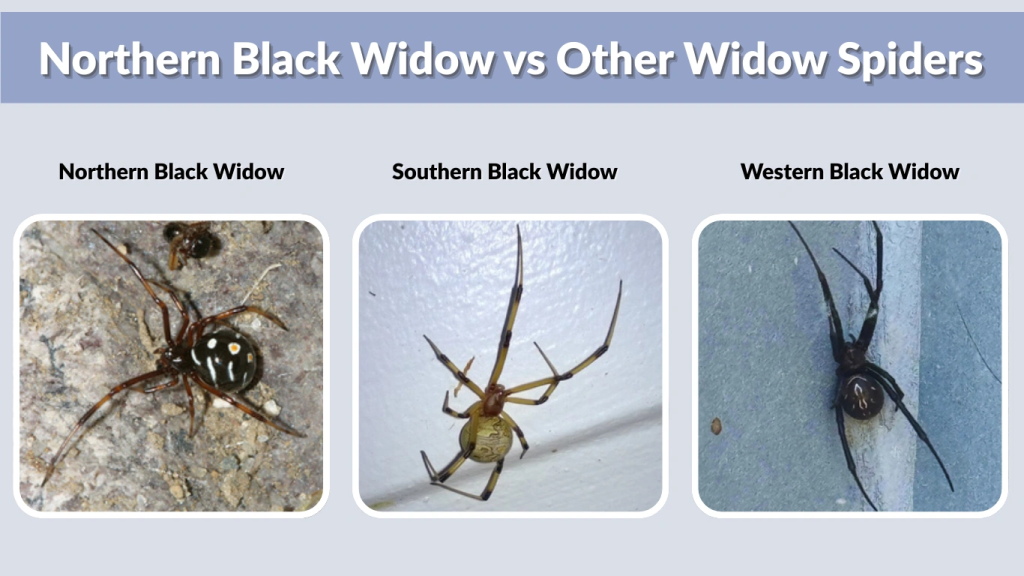
Several widow spider species exist in North America, and they share many similarities. However, there are some key differences between them.
Northern vs Southern Black Widow
The southern black widow is another common species found in warmer regions.
Key differences include:
- The southern black widow has a complete hourglass marking, while the northern species often has a broken or separated hourglass.
- Southern black widows are more common in southern climates.
Northern vs Western Black Widow
The western black widow lives mainly in the western United States.
Differences may include:
- Slight variations in body markings
- Different geographic distribution
- Slight differences in habitat preference
Despite these differences, all widow spiders share similar behavior and venom characteristics.
How Dangerous Is the Northern Black Widow Spider?
The northern black widow spider is considered venomous, but it is not usually deadly to humans. Modern medical care has greatly reduced the risks associated with widow spider bites.
Most bites cause temporary symptoms that improve with treatment.
However, the bite can still be serious, particularly for vulnerable individuals such as:
- Young children
- Elderly adults
- People with underlying health conditions
Prompt medical attention can help manage symptoms and prevent complications.
What to Do If You Encounter a Northern Black Widow
If you encounter a northern black widow spider, the safest approach is to avoid disturbing it.
Helpful safety tips include:
- Do not attempt to handle the spider
- Keep a safe distance from its web
- Use gloves when working in areas where spiders may hide
- Contact pest control if spiders are found inside the home
Most black widows will retreat rather than attack if left alone.
Northern Black Widow Bite Treatment
If a bite occurs, quick action can help reduce symptoms and prevent complications.
First Aid
Basic first aid steps include:
- Wash the bite area with soap and water
- Apply a cold compress to reduce pain and swelling
- Keep the affected area still and elevated
- Take over-the-counter pain relievers if necessary
These steps can help manage mild symptoms.
Medical Treatment
If symptoms become severe, medical care may be required.
Doctors may provide treatments such as:
- Muscle relaxants
- Pain medication
- Intravenous fluids
- Antivenom therapy in rare severe cases
Hospital observation may be recommended if symptoms are intense.
How to Prevent Northern Black Widow Encounters
Preventing contact with northern black widow spiders is the best way to avoid bites.
Home Prevention
To reduce spider activity in the home:
- Remove clutter in garages and basements
- Seal cracks and gaps around windows and doors
- Clean storage areas regularly
- Remove spider webs when found
These steps can discourage spiders from living indoors.
Outdoor Prevention
When working outdoors:
- Wear gloves when gardening or handling firewood
- Shake out shoes and clothing before wearing them
- Avoid reaching into dark areas without checking first
- Keep outdoor areas tidy and free of debris
Simple precautions can greatly reduce the chances of encountering a black widow spider.
FAQs
Are northern black widow spiders aggressive?
No, northern black widow spiders are not aggressive. They usually bite only when they feel threatened or are accidentally pressed against the skin.
How can you identify a northern black widow spider?
The spider can be identified by its shiny black body, round abdomen, and red hourglass-shaped marking on the underside of the abdomen.
Are northern black widow bites deadly?
Most bites are not deadly, especially when medical care is available. However, the venom can cause painful symptoms that require treatment.
Where do northern black widow spiders live?
They are commonly found in North America, particularly in the northeastern United States. They prefer quiet, sheltered areas such as woodpiles, sheds, and outdoor structures.
What should you do if bitten by a black widow spider?
Clean the bite area, apply ice, and seek medical attention if symptoms become severe.
Conclusion
The northern black widow spider is a fascinating but potentially dangerous species known for its distinctive black body and red markings. Although its venom can cause painful symptoms, serious complications are rare when proper medical care is available. Learning how to identify this spider, understanding its behavior, and taking simple precautions can help reduce the risk of encounters. By staying informed and cautious, people can safely coexist with these spiders while minimizing the chances of a bite.