
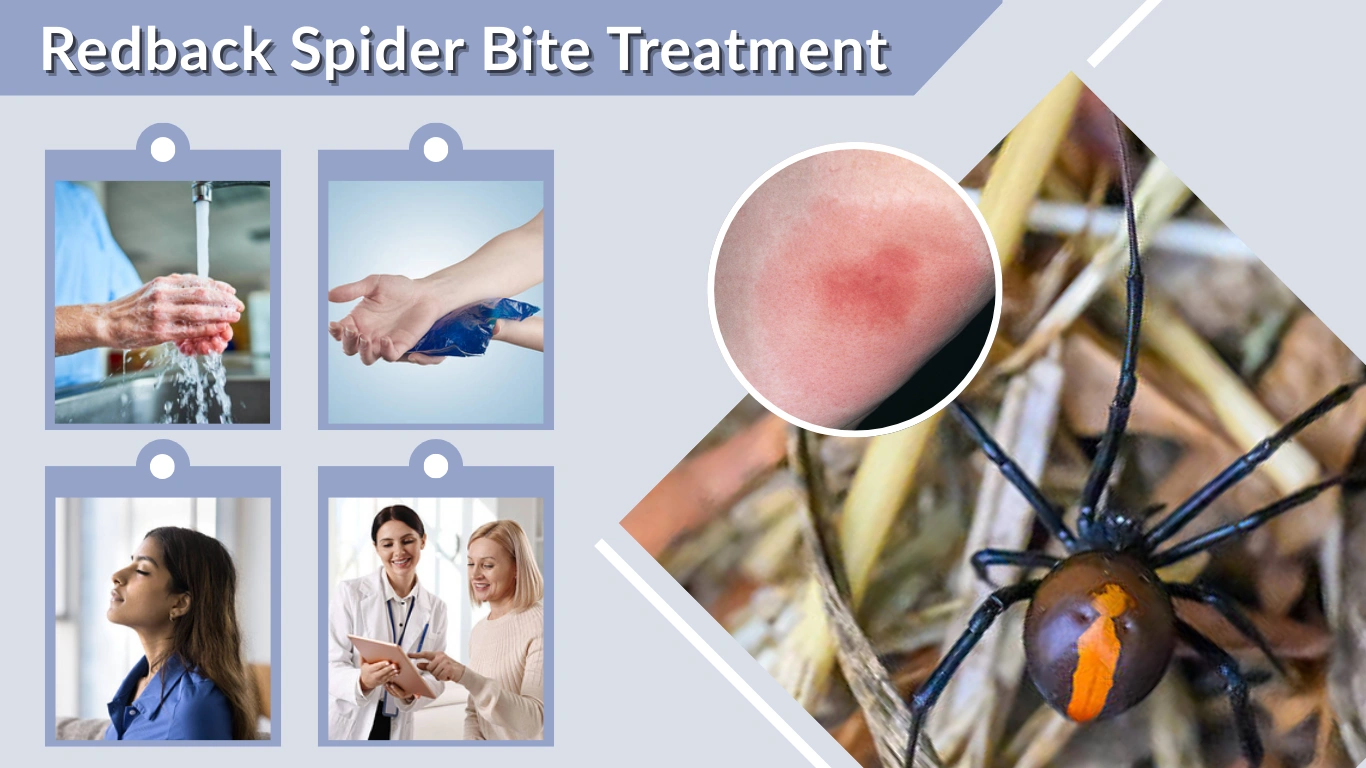
A redback spider bite can cause intense pain and uncomfortable symptoms if not treated properly. These venomous spiders are commonly found in Australia and belong to the widow spider family. Although most bites are not fatal, the venom can cause severe pain, sweating, nausea, and muscle discomfort. Knowing the correct redback spider bite treatment is essential for reducing symptoms and preventing complications. This guide explains the symptoms, first aid steps, medical treatment options, and recovery process after a redback spider bite.
What Is a Redback Spider Bite?
A redback spider bite occurs when a female redback spider injects venom into the skin through its fangs. The redback spider (Latrodectus hasselti) is a highly recognizable species known for the red stripe on its black body. These spiders usually live in dry, sheltered areas such as sheds, garages, outdoor furniture, and under rocks.
Female redback spiders are responsible for most bites because they are larger and possess stronger venom than males. Bites typically happen when people accidentally disturb the spider while gardening, cleaning storage areas, or handling objects where the spider is hiding.
The venom of a redback spider affects the nervous system and can cause a condition known as latrodectism, which leads to pain, sweating, and muscle cramps. While the bite can be extremely painful, serious complications are uncommon with proper treatment.
How Dangerous Is a Redback Spider Bite?
Redback spider bites are rarely life-threatening, but they can cause severe discomfort. The venom spreads slowly through the body and mainly affects the nerves around the bite area.
In most cases, symptoms remain localized and manageable with simple first aid. However, some people may develop stronger reactions that require medical attention. Children, elderly individuals, and people with underlying health conditions may experience more intense symptoms.
Fortunately, an effective antivenom treatment has been available for many decades, significantly reducing the risk of serious complications.
Who Is Most at Risk?
Certain groups may be more vulnerable to the effects of redback spider venom. These include:
- Young children
- Elderly individuals
- Pregnant women
- People with weakened immune systems
- Individuals with allergies to venom
People who work outdoors, such as gardeners, construction workers, and farmers, may also face a higher risk of encountering redback spiders.
Redback Spider Bite Symptoms
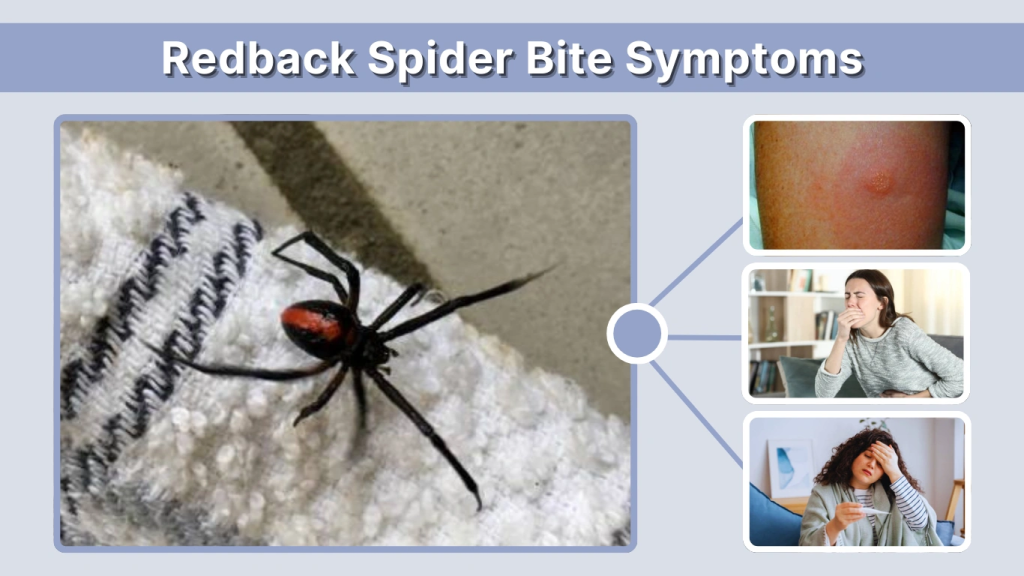
Symptoms of a redback spider bite usually begin within minutes to an hour after the bite occurs. The severity can vary depending on the amount of venom injected and the person’s sensitivity.
Early Symptoms (First 1–2 Hours)
One of the most common signs of a redback spider bite is intense pain at the bite site. Unlike many other insect bites, the pain often becomes stronger over time instead of fading.
Common early symptoms include:
- Sharp or burning pain around the bite
- Redness at the bite location
- Mild swelling
- Sweating around the bite area
- Goosebumps or tingling sensation
In some cases, the bite mark may be difficult to see, but the pain can still be very noticeable.
Severe Symptoms
If the venom spreads through the body, additional symptoms may appear several hours after the bite. These can include:
- Severe muscle pain
- Abdominal pain
- Nausea and vomiting
- Headache
- Sweating in other parts of the body
- Increased heart rate
- Restlessness or anxiety
The pain may spread from the bite site to nearby muscles and joints, which can make movement uncomfortable.
Symptoms in Children vs Adults
Children often experience stronger reactions to redback spider bites because their bodies are smaller and more sensitive to venom.
In children, symptoms may include:
- Intense crying or irritability
- Abdominal cramps
- Fever
- Sweating and fatigue
Adults usually experience localized pain and muscle discomfort, but severe systemic symptoms are less common.
Immediate Redback Spider Bite First Aid
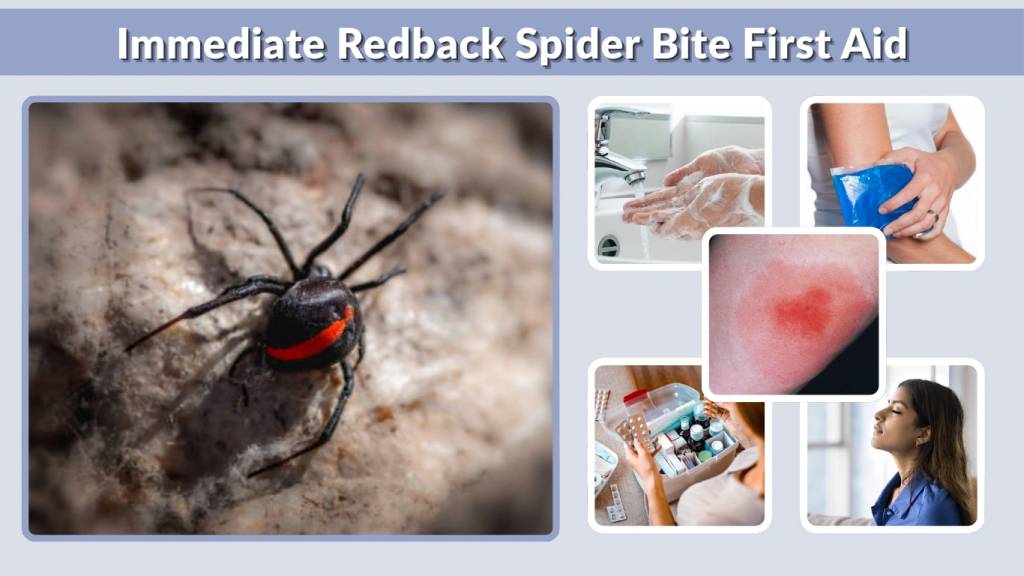
Providing quick and proper first aid can help control pain and prevent symptoms from worsening. Unlike some other venomous bites, pressure immobilization bandaging is not recommended for redback spider bites.
Step-by-Step First Aid
If someone is bitten by a redback spider, follow these steps:
- Wash the bite area
Clean the bite gently with soap and water to reduce the risk of infection. - Apply a cold pack or ice
Place an ice pack wrapped in cloth on the bite area for about 10 minutes. This helps reduce pain and swelling. - Keep the person calm
Try to keep the person relaxed and still, as anxiety can make symptoms feel worse. - Use mild pain relief if needed
Over-the-counter pain relievers such as paracetamol may help reduce discomfort. - Observe symptoms closely
Monitor the person for increasing pain, nausea, sweating, or other unusual symptoms.
What NOT to Do
There are several common myths about treating spider bites. Avoid these actions:
- Do not cut or open the bite wound
- Do not attempt to suck out the venom
- Do not apply tight pressure bandages
- Do not use home remedies like chemicals or alcohol
Incorrect treatment methods can worsen symptoms or delay proper medical care.
Medical Treatment for Redback Spider Bites
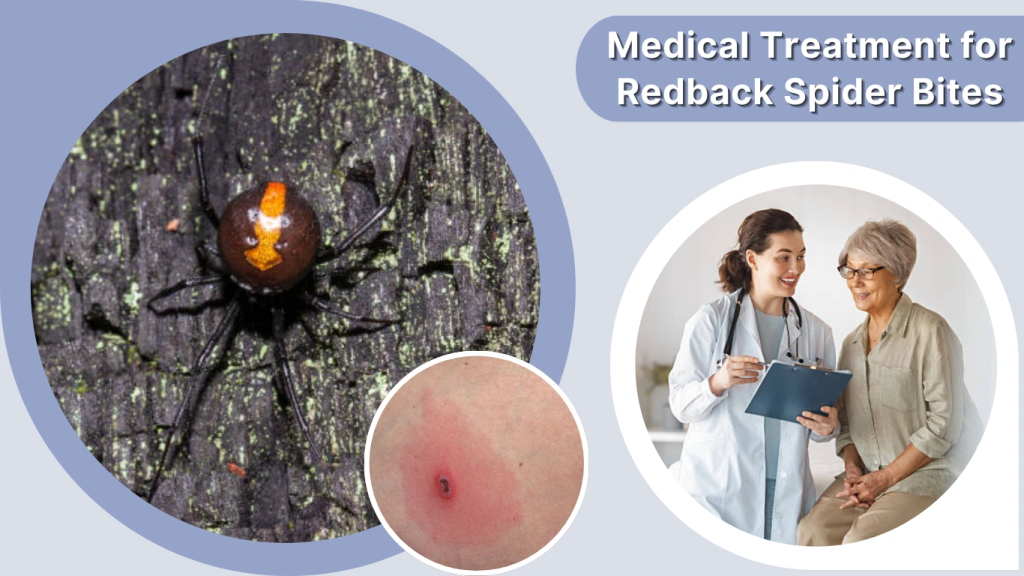
In many cases, redback spider bites can be managed with basic first aid and pain relief. However, if symptoms become severe or continue for several hours, medical treatment may be required. Hospitals and healthcare providers can offer stronger pain management and, when necessary, administer antivenom to neutralize the venom’s effects.
Doctors will usually evaluate the patient’s symptoms, overall health, and how long it has been since the bite occurred before deciding on the most appropriate treatment.
Pain Management
Pain is the most common and distressing symptom of a redback spider bite. Medical professionals may provide stronger pain relief medications if over-the-counter options are not effective.
Common pain management methods include:
- Prescription pain relievers
- Local anesthetic injections near the bite site
- Muscle relaxants if muscle pain or cramping occurs
These treatments help reduce discomfort while the body gradually recovers from the venom’s effects.
Antivenom Treatment
In cases where symptoms are severe or persistent, doctors may recommend redback spider antivenom. Antivenom is a medication specifically designed to neutralize the spider’s venom and relieve symptoms quickly.
Antivenom may be recommended when a person experiences:
- Severe or spreading pain
- Excessive sweating
- Muscle cramps
- Ongoing symptoms that do not improve with pain medication
The antivenom is usually given by injection under medical supervision. Most patients experience significant pain relief within a few hours after receiving treatment.
Although antivenom is highly effective, doctors carefully evaluate each case because mild bites often recover without it.
Hospital Treatment Process
If someone visits a hospital after a redback spider bite, the treatment process usually includes:
- Medical assessment – A doctor checks symptoms and vital signs.
- Pain control – Medication may be given to manage discomfort.
- Monitoring symptoms – Healthcare providers observe how the body reacts to the venom.
- Antivenom administration – Provided if symptoms are severe or persistent.
Most patients can return home the same day once their symptoms improve.
How Long Does Redback Spider Bite Pain Last?
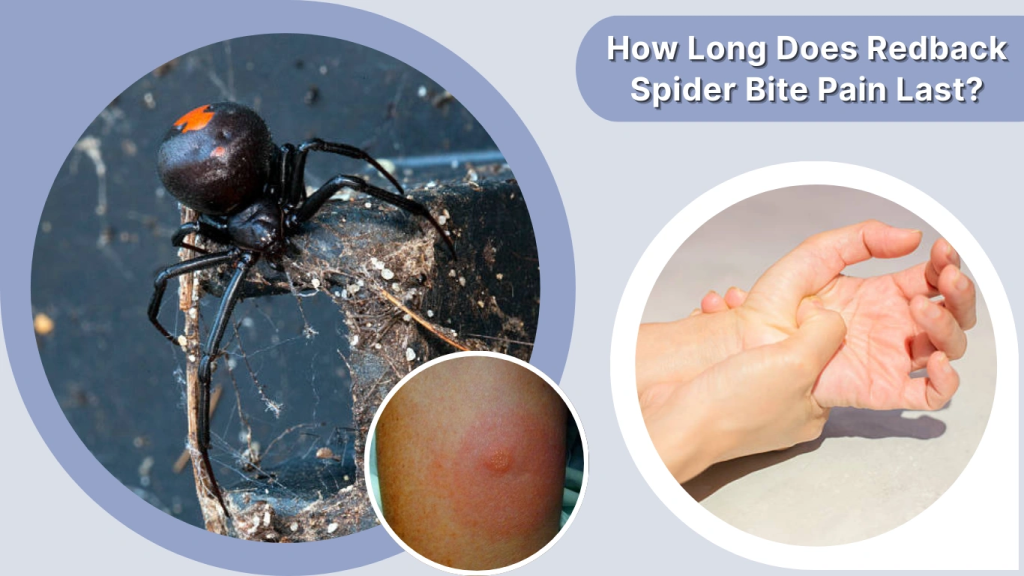
The duration of symptoms after a redback spider bite can vary from person to person. Some individuals experience only mild discomfort for a few hours, while others may have lingering pain for several days.
Typical Recovery Timeline
First 24 Hours
Pain usually begins shortly after the bite and may intensify during the first few hours. Sweating and muscle discomfort may also occur during this period.
2–3 Days After the Bite
For most people, symptoms gradually begin to improve within a couple of days. Pain typically becomes less intense, and other symptoms start to fade.
One Week Recovery
By the end of the first week, most individuals recover completely. Mild tenderness around the bite area may still remain but usually resolves without complications.
Long-Term Effects
Long-term effects from redback spider bites are rare. In some cases, people may experience mild lingering pain or fatigue for several days after the bite. Serious complications are uncommon when proper treatment is provided.
When to Seek Medical Help
While many redback spider bites can be managed at home, certain symptoms require medical attention. It is important to seek professional care if symptoms become severe or do not improve.
Emergency Warning Signs
Seek medical help immediately if any of the following symptoms occur:
- Severe or worsening pain
- Persistent vomiting
- Difficulty breathing
- Severe abdominal pain
- Heavy sweating or spreading pain
- Muscle weakness or cramps
These symptoms may indicate that the venom is affecting the body more strongly and requires medical treatment.
High-Risk Groups
Some individuals should seek medical advice sooner because they may react more strongly to the venom. These groups include:
- Children
- Elderly individuals
- Pregnant women
- People with chronic medical conditions
- Individuals with known allergies to venom
Healthcare professionals can determine whether observation, medication, or antivenom treatment is necessary.
Redback Spider Bite vs Other Spider Bites
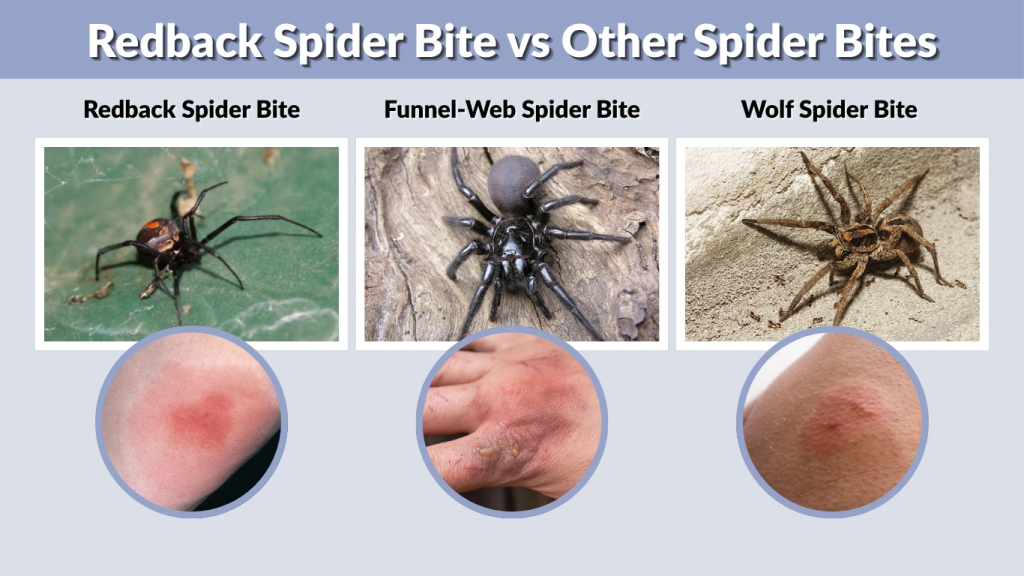
Not all spider bites cause the same symptoms. Understanding the differences can help identify the type of bite and determine the appropriate treatment.
Redback vs Funnel-Web Spider Bite
Funnel-web spider bites are considered far more dangerous than redback bites. Funnel-web venom can affect the nervous system rapidly and may require emergency treatment immediately.
Redback spider bites, while painful, usually develop symptoms more slowly and are rarely life-threatening.
Redback vs Wolf Spider Bite
Wolf spider bites typically cause mild pain, swelling, and irritation similar to a bee sting. They rarely produce systemic symptoms like sweating or muscle pain.
Redback bites, on the other hand, often cause more intense pain and sweating.
Redback vs Black Widow Bite
Black widow spiders belong to the same family as redback spiders and produce similar symptoms. Both bites can cause a condition called latrodectism, which leads to muscle pain, sweating, and abdominal discomfort.
Preventing Redback Spider Bites
Preventing spider bites is often easier than treating them. Taking simple precautions can reduce the chances of encountering redback spiders around homes and outdoor areas.
Home Prevention Tips
- Keep storage areas clean and free of clutter
- Wear gloves when gardening or moving objects outdoors
- Shake out shoes and clothing before wearing them
- Seal cracks and gaps around doors and windows
- Remove spider webs regularly
Outdoor Safety Measures
When working outdoors or in sheds and garages, always check dark corners and hidden areas before reaching into them. Wearing protective clothing and gloves can significantly reduce the risk of bites.
FAQs
Can a redback spider bite kill you?
Deaths from redback spider bites are extremely rare. With modern medical treatment and antivenom, most people recover without serious complications.
Do all redback bites require antivenom?
No. Many bites can be managed with first aid and pain relief. Antivenom is typically reserved for severe or persistent symptoms.
How painful is a redback spider bite?
The bite is often described as very painful, with pain increasing during the first few hours. However, treatment can help control the discomfort.
How long does the venom stay in the body?
The effects of the venom usually fade within a few days as the body recovers, especially with proper treatment.
Final Thoughts
Redback spider bites can be painful and uncomfortable, but most cases recover well with prompt care. Applying correct first aid, monitoring symptoms, and seeking medical help when necessary are the key steps to safe recovery. Understanding the symptoms and treatment options allows people to respond quickly and reduce the risk of complications from redback spider venom.