
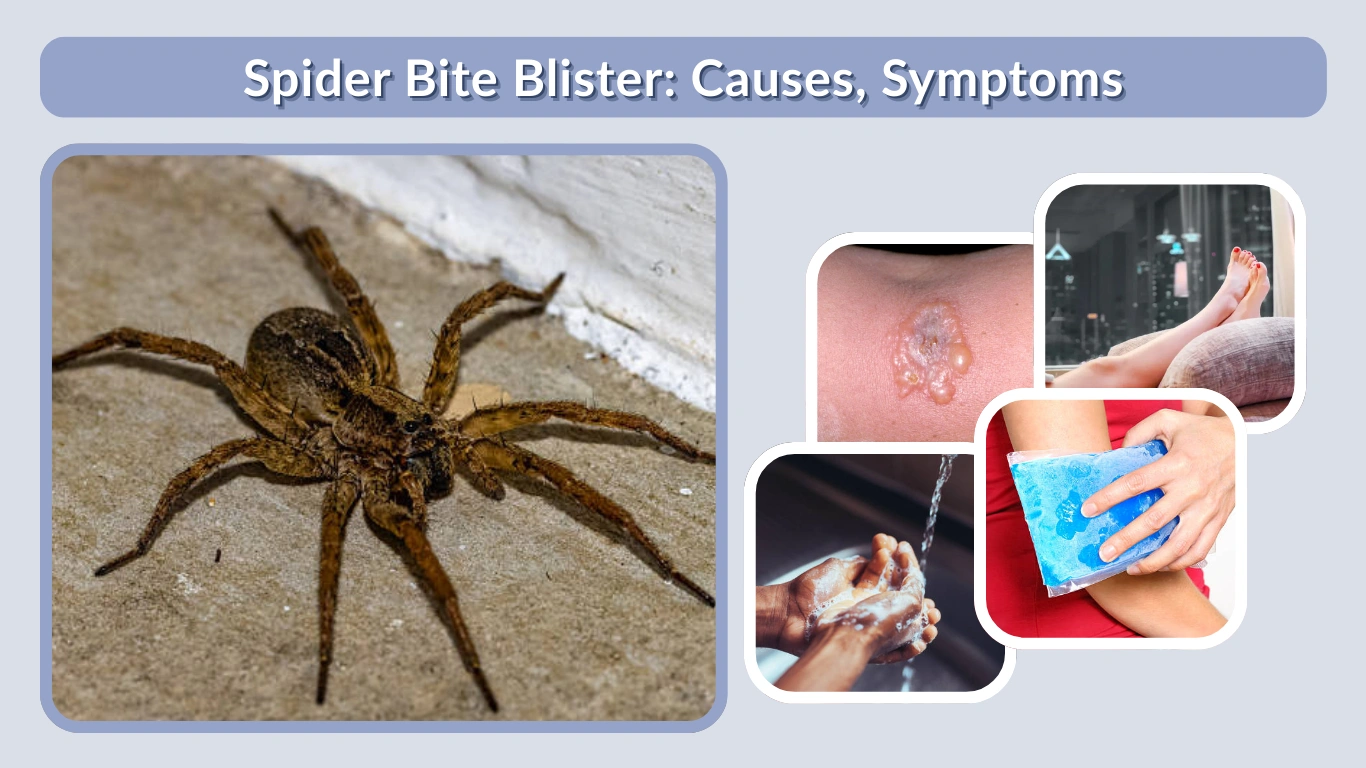
A spider bite blister can develop when the skin reacts to a spider’s venom. In some cases, the bite may cause redness, swelling, and a small fluid-filled blister at the bite site. Most spider bite blisters are mild and heal on their own within several days. However, certain venomous spiders can cause more serious skin reactions. Recognizing the symptoms early and knowing how to care for the blister can help prevent infection and promote faster healing. This guide explains the causes, symptoms, and treatment options for spider bite blisters.
What Is a Spider Bite Blister?
A spider bite blister is a small pocket of fluid that forms under the skin after a spider bite. This blister forms when the body reacts to the spider’s venom, causing inflammation and fluid buildup in the affected area.
In many cases, spider bites only cause mild redness or swelling. However, some bites may trigger a stronger skin reaction that leads to blister formation. The blister usually appears at the center of the bite and may be surrounded by redness or irritation.
Blisters are part of the body’s natural defense mechanism. They help protect damaged skin and allow it to heal. Most spider bite blisters are harmless and disappear as the skin recovers.
However, it is important to monitor the blister carefully because scratching or popping it can lead to infection.
What Does a Spider Bite Blister Look Like?
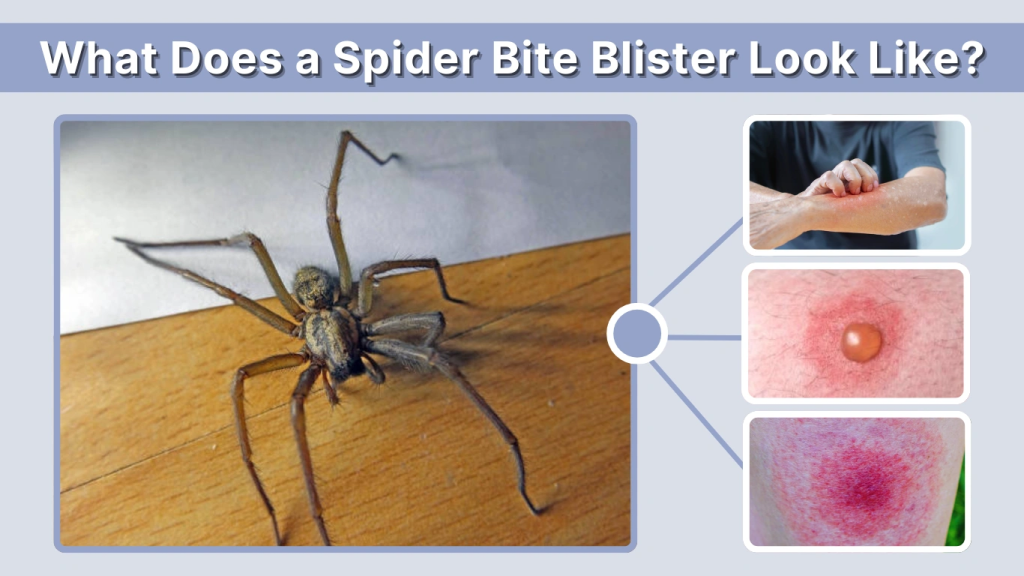
A spider bite blister can vary in size and appearance depending on the type of spider and the person’s reaction to the venom. In many cases, it begins as a small red bump that gradually develops into a fluid-filled blister.
Common Appearance
Most spider bite blisters appear as small, raised bubbles on the skin filled with clear fluid. The surrounding skin may look red, swollen, or slightly inflamed.
Common characteristics include:
- A small fluid-filled blister at the bite site
- Redness surrounding the blister
- Mild swelling of the skin
- Itching or burning sensation
The blister may appear within several hours after the bite or develop gradually over the next day.
Signs That the Blister Is From a Spider Bite
Although it is sometimes difficult to confirm that a spider caused the bite, certain signs may suggest that the blister is related to a spider bite.
Possible indicators include:
- Two small puncture marks where the spider’s fangs entered the skin
- A blister forming directly at the center of the bite
- Increasing redness around the blister
- Local skin irritation or mild pain
In many cases, the blister remains small and begins to dry out as the skin heals.
Spider Bite Blister Symptoms
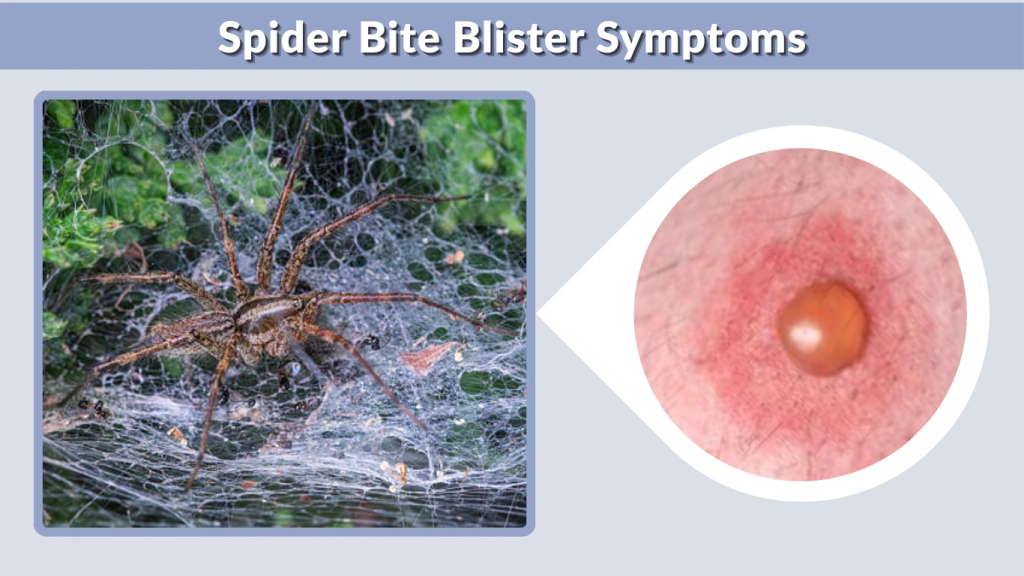
The symptoms of a spider bite blister can range from mild irritation to more noticeable skin reactions. The severity of symptoms depends on factors such as the type of spider and the individual’s sensitivity to venom.
Mild Symptoms
Most spider bite blisters cause only mild symptoms that improve within a few days. These symptoms are usually limited to the bite area and do not require medical treatment.
Common mild symptoms include:
- A small blister at the bite site
- Mild redness and swelling
- Itching or irritation
- Slight tenderness or discomfort
Applying simple first aid measures can often relieve these symptoms quickly.
Moderate Symptoms
In some cases, the reaction to a spider bite may be more noticeable. The blister may grow larger or the surrounding skin may become more inflamed.
Moderate symptoms may include:
- Larger blister formation
- Increased redness around the bite
- Warm or swollen skin
- Mild fever or fatigue
Although these symptoms are usually manageable at home, they should be monitored closely to ensure they do not worsen.
Severe Symptoms
Severe symptoms are uncommon but may occur if the bite is from a venomous spider or if the body reacts strongly to the venom.
Possible severe symptoms include:
- Large painful blister
- Severe swelling around the bite
- Skin ulcer or open wound
- Increasing redness or spreading inflammation
- Signs of infection such as pus or intense pain
If severe symptoms occur, medical attention should be sought immediately.
Causes of Spider Bite Blisters
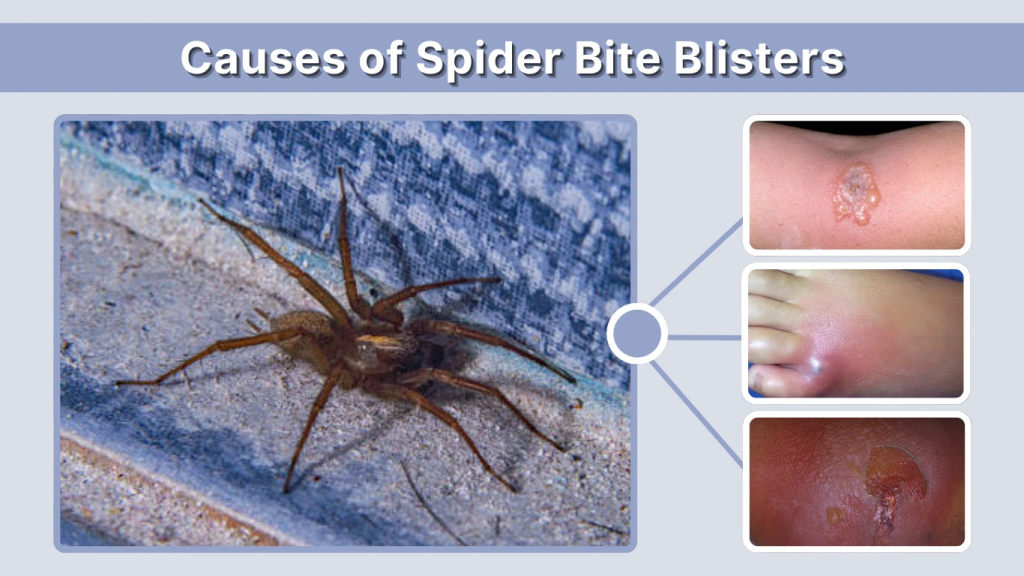
Spider bite blisters can develop for several reasons. The most common cause is the body’s natural reaction to spider venom, but allergic reactions and infections can also lead to blister formation.
Reaction to Spider Venom
When a spider bites, it injects venom into the skin through its fangs. The venom can cause irritation and inflammation, which may lead to fluid buildup under the skin. This fluid buildup forms the blister.
For most people, this reaction is mild and temporary. The blister protects the damaged skin while the body works to repair the tissue.
Allergic Reaction
Some individuals may have a stronger immune response to spider venom. This can cause the skin to become more inflamed and may lead to a larger or more painful blister.
Symptoms of an allergic reaction may include:
- Increased itching around the bite
- Larger blister formation
- Swelling beyond the bite area
- Skin irritation in nearby areas
Although mild allergic reactions may resolve on their own, severe reactions require medical attention.
Infection of the Bite
Another possible cause of spider bite blisters is infection. If bacteria enter the bite wound, the skin may become inflamed and form a blister or pus-filled lesion.
Signs of infection may include:
- Increasing redness around the blister
- Warm or tender skin
- Pus or fluid leaking from the blister
- Fever or worsening pain
Proper wound care and hygiene can help prevent infection and allow the bite to heal properly.
Types of Spider Bites That Cause Blisters
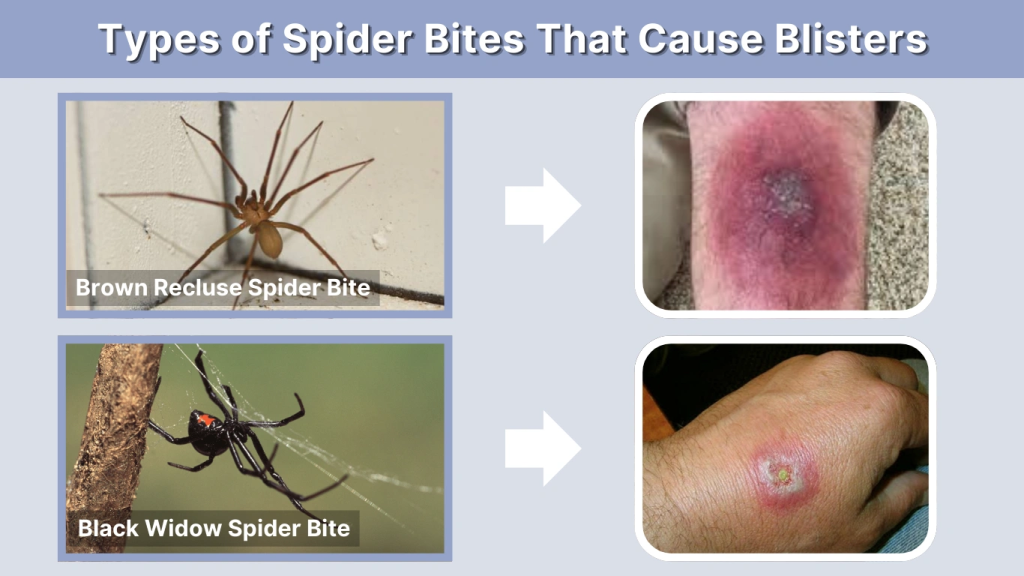
Different types of spiders can cause different skin reactions. Some spiders cause only mild irritation, while others may lead to blister formation or more serious skin damage.
Brown Recluse Spider Bite Blister
The brown recluse spider is known for bites that can cause noticeable skin reactions. The bite may start as a small red spot but can develop into a blister over time.
Common signs include:
- A blister forming at the center of the bite
- Redness surrounding the blister
- Increasing pain or irritation
In severe cases, the surrounding skin tissue may become damaged, which can slow the healing process.
Black Widow Spider Bite Blister
Black widow spider bites usually cause symptoms such as muscle pain and cramps rather than large skin blisters. However, mild blistering or redness may still appear at the bite site.
Typical symptoms may include:
- Small blister or red bump
- Mild swelling
- Local irritation or burning sensation
Although the skin reaction may be mild, other symptoms from black widow bites can require medical attention.
Spider Bite Blister Treatment
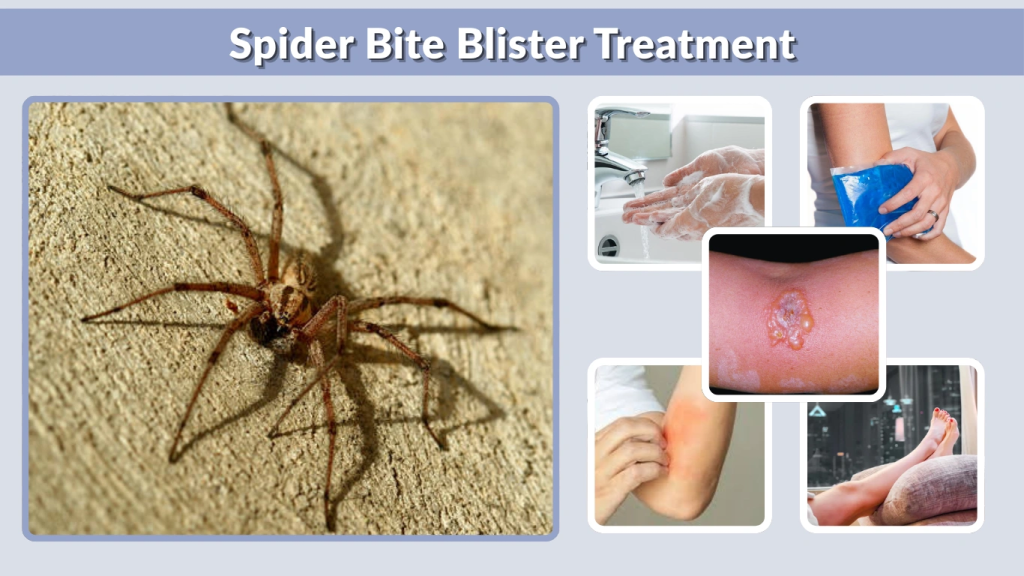
Treating a spider bite blister properly can help reduce discomfort and prevent complications such as infection. In most cases, spider bite blisters are mild and can be managed at home with simple care and basic first aid.
First Aid Treatment
If you notice a blister forming after a spider bite, immediate first aid can help control swelling and protect the skin.
Basic first aid steps include:
- Wash the bite area gently with soap and water to remove dirt and bacteria.
- Apply a cold compress or ice pack to the area for 10–15 minutes to reduce swelling and pain.
- Keep the affected area elevated if possible to minimize swelling.
- Avoid scratching or rubbing the blister, as this can break the skin and cause infection.
- Take over-the-counter pain relievers if the bite is painful.
These simple steps help reduce inflammation and support the body’s natural healing process.
Home Remedies
Several home remedies can also help soothe the skin and relieve irritation caused by a spider bite blister.
Common home treatments include:
- Aloe vera gel to calm irritated skin and reduce inflammation
- Hydrocortisone cream to relieve itching and redness
- Antihistamine medications to control allergic reactions and itching
- Baking soda paste to reduce irritation and discomfort
- Calamine lotion to soothe itchy or inflamed skin
These remedies can make the blister more comfortable while the skin gradually heals.
Medical Treatment
In some situations, medical treatment may be required. This is especially important if the blister becomes infected or if the bite came from a venomous spider.
Doctors may recommend:
- Antibiotics to treat bacterial infections
- Prescription corticosteroid creams to reduce inflammation
- Pain medication for severe discomfort
- Antivenom treatment for bites from dangerous spiders
Seeking medical care early can prevent the condition from becoming more serious.
Spider Bite Blister Healing Stages
Spider bite blisters usually go through several stages as the skin recovers. Understanding these stages can help determine whether the blister is healing normally.
Early Stage
In the early stage, the bite appears as a small red bump on the skin. The area may feel itchy or slightly painful.
Within several hours or a day, the skin may begin forming a small fluid-filled blister.
Blister Formation Stage
During this stage, the blister becomes more visible. The fluid inside the blister protects the damaged skin underneath.
The surrounding skin may appear red or slightly swollen. Itching or mild discomfort is common during this stage.
Healing Stage
As the skin heals, the blister gradually dries out and shrinks. The redness and swelling decrease, and the skin begins returning to its normal appearance.
This stage can take several days depending on the severity of the bite and the person’s skin sensitivity.
Should You Pop a Spider Bite Blister?
It is generally not recommended to pop a spider bite blister. The fluid inside the blister protects the damaged skin and helps prevent infection.
Popping the blister can:
- Expose the skin to bacteria
- Increase the risk of infection
- Slow down the healing process
- Cause additional irritation or pain
If the blister accidentally breaks, it is important to clean the area with soap and water and keep it covered with a clean bandage.
Spider Bite Blister vs Other Insect Bite Blisters
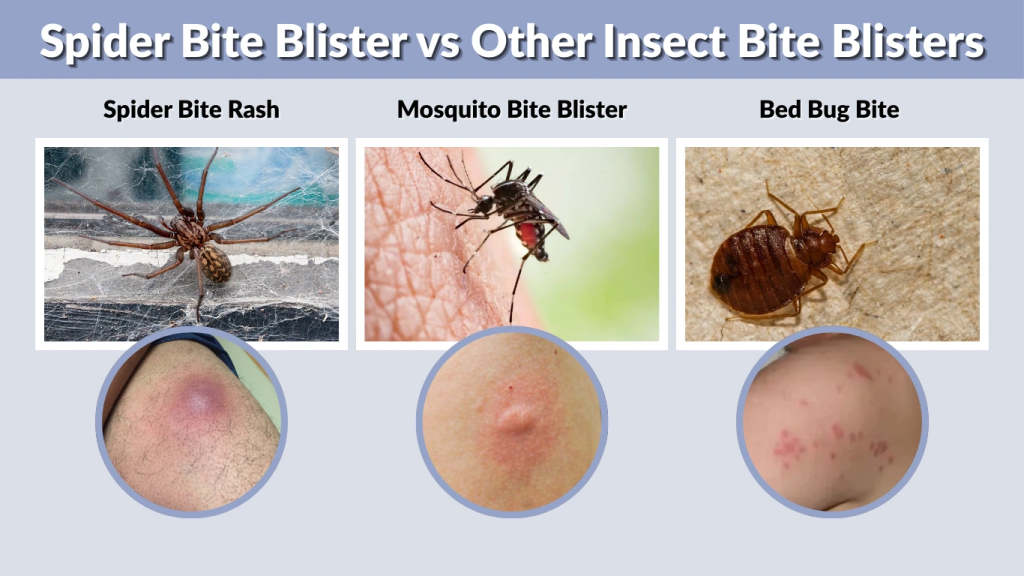
Spider bite blisters can sometimes be confused with blisters caused by other insect bites. Understanding the differences can help identify the cause more accurately.
Spider Bite vs Mosquito Bite Blister
Mosquito bites usually cause itchy bumps rather than true blisters. In rare cases, severe allergic reactions may produce small blisters, but mosquito bites typically remain small and itchy.
Spider bites may form a single blister directly at the bite site.
Spider Bite vs Ant Bite Blister
Some ant bites, particularly fire ant stings, can produce small pus-filled blisters. These blisters often appear in groups rather than as a single blister.
Spider bite blisters are usually isolated and located at one specific bite point.
Spider Bite vs Bed Bug Bite
Bed bug bites often appear in clusters or lines across exposed skin. They typically cause itchy bumps rather than fluid-filled blisters.
A spider bite blister usually appears as a single blister rather than multiple bites.
Spider Bite vs Skin Infection
Skin infections may produce painful blisters, redness, and swelling. However, infections often spread beyond the original wound.
Spider bite blisters usually remain localized unless infection develops.
When to See a Doctor
Although most spider bite blisters heal without complications, certain symptoms may indicate a more serious condition.
You should seek medical attention if:
- The blister becomes very large or extremely painful
- Redness continues spreading around the bite
- Pus or fluid begins leaking from the blister
- Fever or chills develop
- Severe swelling occurs
- Signs of an allergic reaction appear, such as difficulty breathing
Prompt medical care can prevent complications and ensure proper treatment.
How to Prevent Spider Bite Blisters
Preventing spider bites is the most effective way to avoid spider bite blisters. Taking simple precautions can greatly reduce the risk.
Indoor Prevention
To minimize spider activity inside your home:
- Remove spider webs regularly
- Keep rooms clean and free of clutter
- Seal cracks and gaps in walls or windows
- Store clothing and shoes properly
- Use pest control if necessary
These steps make it harder for spiders to hide in living spaces.
Outdoor Prevention
Spiders are often found in gardens, sheds, and wooded areas. Taking precautions outdoors can help prevent bites.
Helpful tips include:
- Wear gloves when gardening or handling firewood
- Shake out clothing and shoes before wearing them
- Avoid reaching into dark spaces without checking first
- Wear long sleeves and protective clothing when working outside
These habits can significantly lower the risk of spider bites.
FAQs
Is a spider bite blister dangerous?
Most spider bite blisters are harmless and heal within a few days. However, bites from venomous spiders can cause more serious symptoms and may require medical attention.
How long does a spider bite blister last?
A spider bite blister typically lasts 3 to 7 days, although healing time may vary depending on the person’s skin sensitivity and the severity of the bite.
Should you pop a spider bite blister?
No, it is best to avoid popping the blister. Leaving it intact helps protect the skin and reduces the risk of infection.
What cream helps spider bite blisters heal faster?
Hydrocortisone cream, antihistamine creams, and soothing lotions such as calamine lotion can help reduce itching and inflammation.
Can spider bite blisters become infected?
Yes, if the blister is scratched, popped, or not properly cleaned, bacteria can enter the wound and cause infection.
Conclusion
Spider bite blisters are a common skin reaction that can occur when the body responds to spider venom. In most cases, these blisters are mild and heal naturally with proper care. Keeping the bite area clean, avoiding scratching, and using simple treatments can help reduce symptoms and promote faster healing. However, it is important to monitor the bite for signs of infection or severe reactions. If symptoms worsen or unusual symptoms appear, seeking medical attention can help prevent complications.