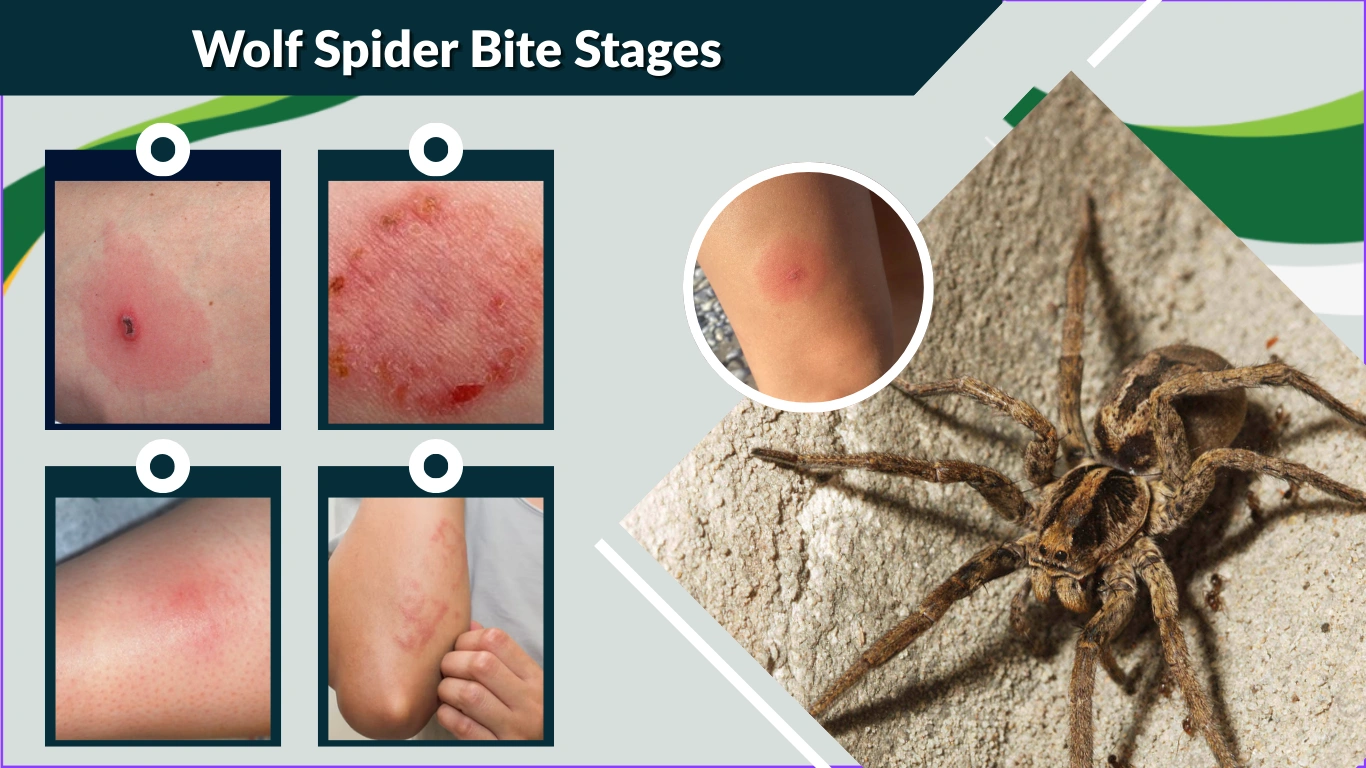
Wolf spiders are large, fast-moving hunters found across many regions of the world. Unlike orb-weavers or funnel-web spiders, they don’t spin webs to trap prey. While these spiders are generally non-aggressive, they may bite if provoked, cornered, or accidentally pressed against the skin. A wolf spider bite is not considered deadly, but it can be painful and alarming. Understanding the wolf spider bite stages—from day 1 to recovery—helps people recognize normal healing versus warning signs of complications.
Many confuse wolf spider bites with more dangerous spiders, especially the brown recluse. This article outlines the complete stages of a wolf spider bite timeline with symptoms, treatment, and how it differs from recluse bites.
Early Stages of a Wolf Spider Bite (Day 1)
Day 1 Wolf Spider Bite Stages
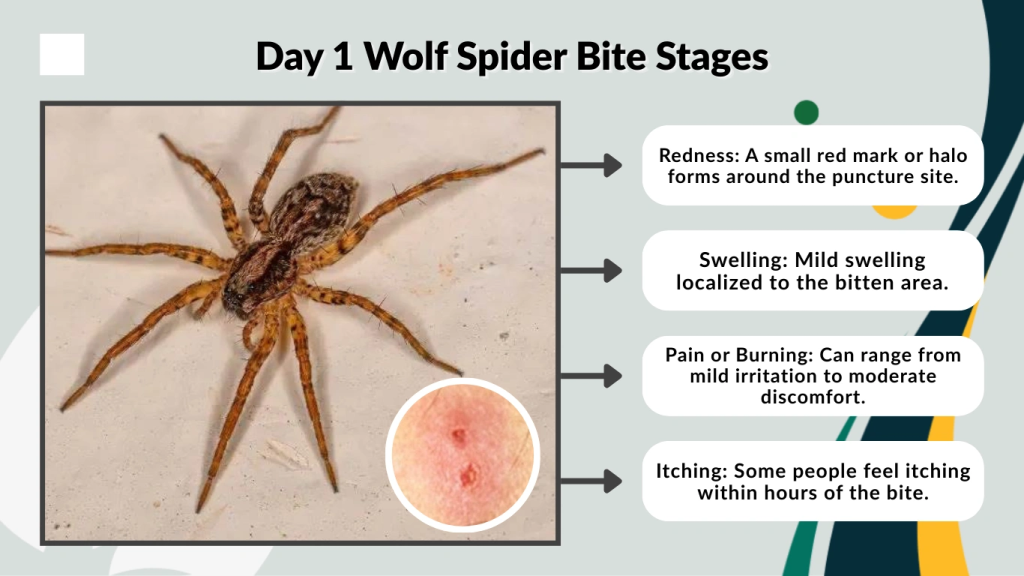
The early stages of a wolf spider bite usually begin with immediate pain at the bite site, similar to a sharp sting. The skin often develops:
- Redness: A small red mark or halo forms around the puncture site.
- Swelling: Mild swelling localized to the bitten area.
- Pain or Burning: Can range from mild irritation to moderate discomfort.
- Itching: Some people feel itching within hours of the bite.
These are typical day 1 wolf spider bite stages. Unlike venomous recluse or widow spiders, wolf spider venom is designed to immobilize prey, not destroy tissue. For humans, this means the effects are usually limited to the skin and surrounding tissues.
Wolf Spider Bite Pictures Stages (Day 1)
Images of day 1 wolf spider bites typically show:
- A raised red bump with two small puncture marks.
- Slight swelling around the bite.
- Sometimes a blister-like appearance if skin sensitivity is higher.
At this stage, many mistake it for a mosquito or bee sting. But the presence of clear puncture marks often points toward a spider bite.
Symptoms Wolf Spider Bite Stages – Day 1
The symptoms of wolf spider bite stages on the first day include localized pain, swelling, and redness. Some individuals may also feel:
- Headache or dizziness (rare).
- Muscle twitching near the bite (in sensitive cases).
- Anxiety due to not knowing whether it was a dangerous spider.
For most people, however, day 1 wolf spider bite stages remain a mild skin irritation rather than a severe medical concern.
Day 2 Wolf Spider Bite Stages

Normal Day 2 Progression
On the second day, the bite may look and feel different. The day 2 wolf spider bite stages usually show:
- Increased swelling: The bump may appear larger.
- Redness: The surrounding skin may spread slightly.
- Warmth: The bite site can feel warmer than normal skin.
- Itching over pain: The sharp sting from day 1 may reduce, replaced by constant itchiness.
Most of these changes are part of the body’s normal immune response. It indicates your system is fighting minor venom effects and repairing tissue damage.
Wolf Spider Bite Stages Pictures (Day 2)
If you look at wolf spider bite pictures stages for day 2, you’ll often see:
- A larger, firmer bump than day 1.
- The possibility of a small blister or hard lump forming.
- More visible redness extending outward.
This stage is where many people compare it to brown recluse wolf spider bite stages. The main difference: recluse bites may start breaking down skin, while wolf spider bites usually remain swollen but intact.
Symptoms Wolf Spider Bite Stages – Day 2
The symptoms of wolf spider bite stages on day 2 vary from person to person:
- For most: local swelling, redness, warmth, and itchiness.
- For sensitive individuals: nausea, fatigue, or minor fever may appear.
- For rare allergic reactions: spreading rash or difficulty breathing—this requires immediate medical care.
Stages of a Wolf Spider Bite Timeline (Day 1–2 Overview)
- Day 1: Early stages include redness, puncture marks, swelling, pain, and itching.
- Day 2: Symptoms peak—swelling increases, redness may spread, blister may form, itching is stronger.
This timeline of wolf spider bite stages shows that the first two days are the most noticeable. From day 3 onward, most cases begin to improve rather than worsen, unless infection sets in.
Stages of a Wolf Spider Bite Timeline (Day 3–5)

Day 3–4: Healing or Complications
By the third or fourth day, most people notice an improvement. In a normal healing process, the stages of a wolf spider bite move toward:
- Reduced swelling: The puffiness from day 2 starts going down.
- Less pain: The sharp sting or throbbing pain fades, replaced by mild tenderness.
- Itchiness: More noticeable as the skin begins to heal.
- Scab formation: The bite may harden or begin to form a small crust.
However, some people may experience complications. If bacteria enter the wound, infection may occur. Signs include:
- Bite becoming larger instead of smaller.
- Pus or fluid leaking from the site.
- Spreading redness far beyond the bite area.
- Fever or body aches.
These abnormal reactions should not be ignored, as they suggest something more serious than the usual wolf spider bite stages.
Day 5 and Beyond: Recovery Timeline
By the fifth day, most wolf spider bite stages are in the healing phase. The typical timeline looks like this:
- Day 5: Bite site smaller, redness fading, scab forming.
- Day 7–10: Itchiness disappears, and skin begins to return to normal.
- Beyond Day 10: Most wolf spider bites leave little to no scar.
Unlike a brown recluse bite, which may cause tissue death and open wounds lasting weeks or months, wolf spider bites usually follow a quicker healing pattern.
Complete Wolf Spider Bite Stages Timeline
Here’s a quick summary of how the bite typically progresses:
- Day 1 (Early Stages): Redness, swelling, puncture marks, pain, and itching.
- Day 2: Symptoms peak—swelling increases, blister or firm lump may form.
- Day 3–4: Healing begins—less pain, itchiness more prominent, scab may form.
- Day 5+: Recovery phase—bite shrinks, redness fades, full healing in 1–2 weeks.
This wolf spider bite stages timeline shows that most cases follow a mild course, with gradual improvement rather than worsening.
Symptoms of Wolf Spider Bite Stages

The symptoms of wolf spider bite stages can be grouped into local and systemic reactions:
- Local Symptoms
- Redness, swelling, and mild to moderate pain.
- Itching as the bite heals.
- Blister or scab formation in some cases.
- Redness, swelling, and mild to moderate pain.
- Systemic Symptoms (Rare)
- Fatigue, headache, or nausea.
- Fever if secondary infection occurs.
- Allergic reaction (hives, shortness of breath).
- Fatigue, headache, or nausea.
These symptoms are generally less severe than those seen in recluse or widow spider bites.
Wolf Spider Bite Stages Pictures
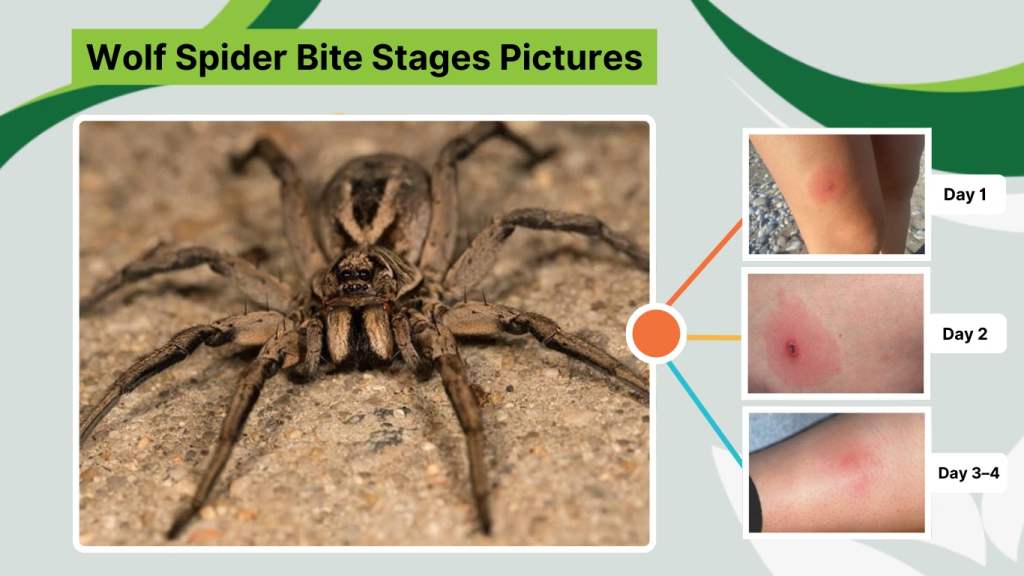
Pictures of wolf spider bite stages provide helpful visual guidance:
- Day 1: Red, swollen bump with puncture marks.
- Day 2: Enlarged swelling, firm bump or blister.
- Day 3–4: Reduced redness, scab forming.
- Day 5+: Smaller, healing wound, fading marks.
Compared with brown recluse wolf spider bite stages, the key difference is that recluse bites may show skin breakdown or necrosis, while wolf spider bites typically do not.
Comparing Wolf Spider Bite Stages with Brown Recluse
- Wolf Spider Bite:
- Painful but localized.
- Redness, swelling, itching.
- Heals within 7–10 days.
- Rarely causes systemic issues.
- Painful but localized.
- Brown Recluse Bite:
- May start mild but worsen over days.
- Skin tissue may die (necrosis).
- Healing can take weeks or months.
- Higher risk of infection and complications.
- May start mild but worsen over days.
This is why many people misidentify their bite. Adding “brown recluse wolf spider bite stages” as a comparison clarifies that wolf spider bites are much less severe.
Treatment Across Stages
Day 1 Treatment
- Wash with soap and water.
- Apply a cold compress to reduce swelling.
- Take over-the-counter pain relievers or antihistamines.
Day 2–3 Treatment
- Continue cleaning and icing the wound.
- Avoid scratching, as it increases infection risk.
- Use anti-itch cream if swelling causes discomfort.
Day 4–5 Treatment
- Keep the bite clean and covered if scabbed.
- Monitor for signs of infection.
- Seek medical attention if symptoms worsen instead of improve.
When to Seek Medical Help
- Bite looks worse after day 3–4 instead of improving.
- Red streaks or pus appear around the wound.
- Fever, chills, or nausea develop.
- Allergic reactions like hives, dizziness, or breathing trouble occur.
FAQs
What do wolf spider bite stages look like in pictures?
They begin as a small red bump with puncture marks on day 1, progress to swelling or blister by day 2, and usually scab over by day 3–5, healing within 7–10 days.
How can you tell if it’s a wolf spider bite or brown recluse?
Wolf spider bites stay red and swollen but heal quickly. Brown recluse bites may worsen, showing skin breakdown, ulcers, or necrosis.
What are the symptoms of wolf spider bite stages?
Symptoms include redness, swelling, pain, itching, and sometimes blistering. Rarely, mild fever, headache, or nausea may occur.
How long does a wolf spider bite take to heal?
Most bites heal within 7–10 days, leaving little to no scar. Severe cases with infection may take longer.
Do wolf spider bites always swell?
Yes, swelling is a common symptom, but the severity varies by person. Some may only experience mild redness, while others see more pronounced swelling.