

The southern house spider (Kukulcania hibernalis) is one of the most commonly encountered indoor spiders in warm regions, especially across the southern United States. Often mistaken for more dangerous species like the brown recluse, this spider causes unnecessary fear among homeowners. In reality, it is a shy, non-aggressive species that plays a beneficial role by controlling insect populations. Understanding its appearance, behavior, and risks can help you respond calmly and manage its presence effectively without panic or misinformation.
What Is a Southern House Spider?
The southern house spider belongs to the crevice weaver family and is known for building irregular webs in cracks, corners, and sheltered spaces. It thrives in warm climates and frequently lives inside homes, barns, and sheds. Despite its somewhat intimidating look, this spider is harmless to humans and rarely interacts directly with people.
Scientifically known as Kukulcania hibernalis, it is often confused with other spiders due to its color and size. However, unlike dangerous species, it does not possess potent venom that can harm humans. Instead, it quietly contributes to pest control by feeding on insects commonly found indoors.
Southern House Spider Identification
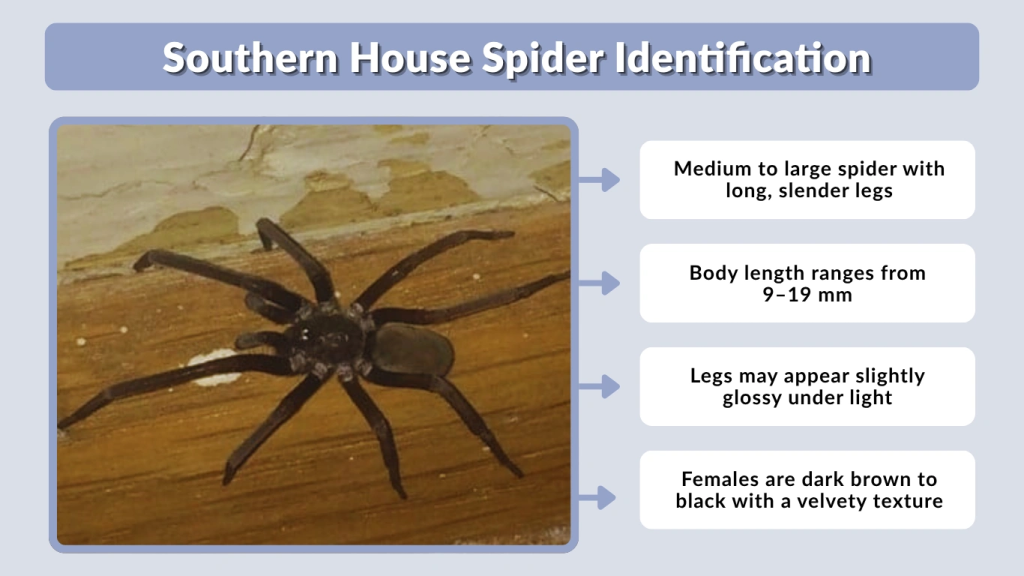
Physical Characteristics
- Medium to large spider with long, slender legs
- Females are dark brown to black with a velvety texture
- Males are lighter brown or tan and appear thinner
- Body length ranges from 9–19 mm
- Legs may appear slightly glossy under light
Male vs Female Differences
- Males are more active and often seen wandering
- Females remain hidden inside their webs
- Males have a lighter coloration and longer legs
- Females appear bulkier and darker
Common Misidentification
- Frequently mistaken for the brown recluse
- Lacks the violin-shaped marking found on recluse spiders
- Has a different eye arrangement (clustered vs six eyes in recluse)
- Body shape is more elongated and less compact
Southern House Spider Habitat and Distribution
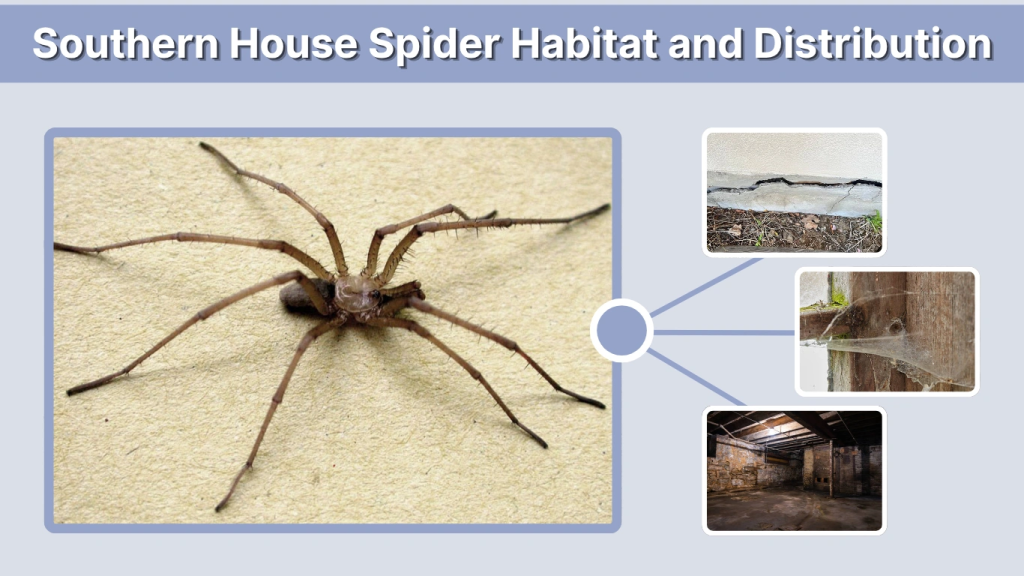
The southern house spider is widely distributed across warm regions, especially in the southeastern United States. It prefers dry, protected environments where it can remain undisturbed for long periods. Indoors, it is often found in cracks, wall voids, window frames, basements, and attics—areas that provide both shelter and access to insects.
Outdoors, this spider inhabits tree bark, rock crevices, and the exterior surfaces of buildings. Its presence indoors is usually not random; instead, it reflects the availability of food and suitable hiding spots. Homes with more insects or structural gaps tend to attract these spiders more frequently.
Behavior and Lifestyle
Web Structure and Hunting
- Builds irregular, tube-like webs in crevices
- Web silk is not sticky like typical spider webs
- Waits patiently for prey to enter the web
- Quickly captures insects using speed rather than web adhesion
Activity Patterns
- Primarily nocturnal and active at night
- Males wander in search of females
- Females remain stationary for most of their lives
- More visible during warmer months
Interaction with Humans
- Shy and avoids human contact
- Rarely bites unless provoked or trapped
- Often goes unnoticed due to hidden lifestyle
- Presence indoors is usually harmless
Is the Southern House Spider Dangerous?
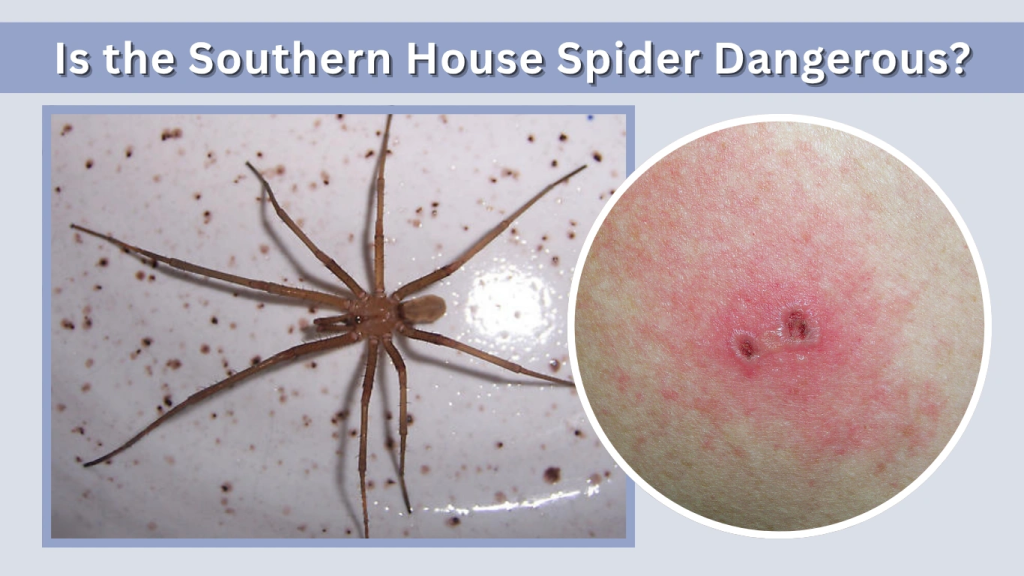
The southern house spider is not considered dangerous to humans. Its venom is mild and not medically significant, meaning it does not pose serious health risks. Bites are extremely rare and typically occur only when the spider is accidentally pressed against the skin.
In the unlikely event of a bite, symptoms are usually mild, such as slight redness, irritation, or minor swelling. These symptoms typically resolve on their own without medical treatment. Compared to spiders like the brown recluse or black widow, the southern house spider is far less harmful and should not be feared.
Overall, this species is more beneficial than threatening, as it helps reduce insect populations inside homes.
next 50%
Southern House Spider vs Brown Recluse
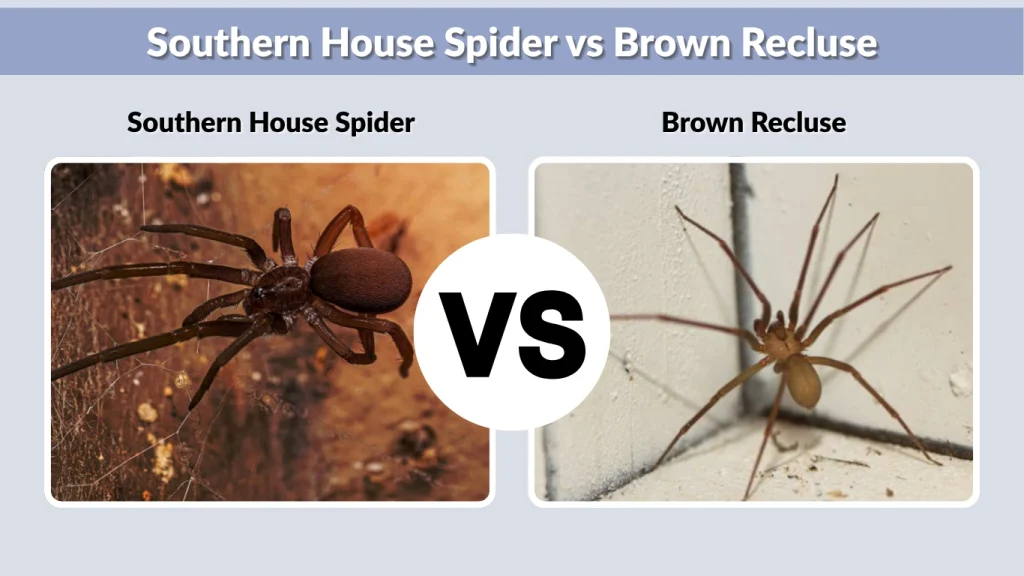
Key Differences
- Southern house spider does not have a violin-shaped marking
- Brown recluse has a distinct dark violin marking on its back
- Eye arrangement differs significantly between the two species
- Southern house spider has a more elongated body
Behavior Comparison
- Southern house spider is less secretive
- Brown recluse hides in deeper, undisturbed areas
- Southern house spider uses webs to trap prey
- Brown recluse actively hunts without webs
Risk Level
- Southern house spider: harmless to humans
- Brown recluse: medically significant venom
- Misidentification often leads to unnecessary fear
Benefits of Southern House Spiders
Southern house spiders play an important role in maintaining a balanced indoor environment. By feeding on common household insects, they act as natural pest controllers. Their presence can reduce populations of flies, mosquitoes, ants, and other unwanted bugs.
Unlike chemical pest control methods, these spiders provide a natural and eco-friendly solution without introducing toxins into your home. In many cases, allowing them to remain undisturbed can actually help improve indoor hygiene by keeping insect numbers low.
How to Get Rid of Southern House Spiders
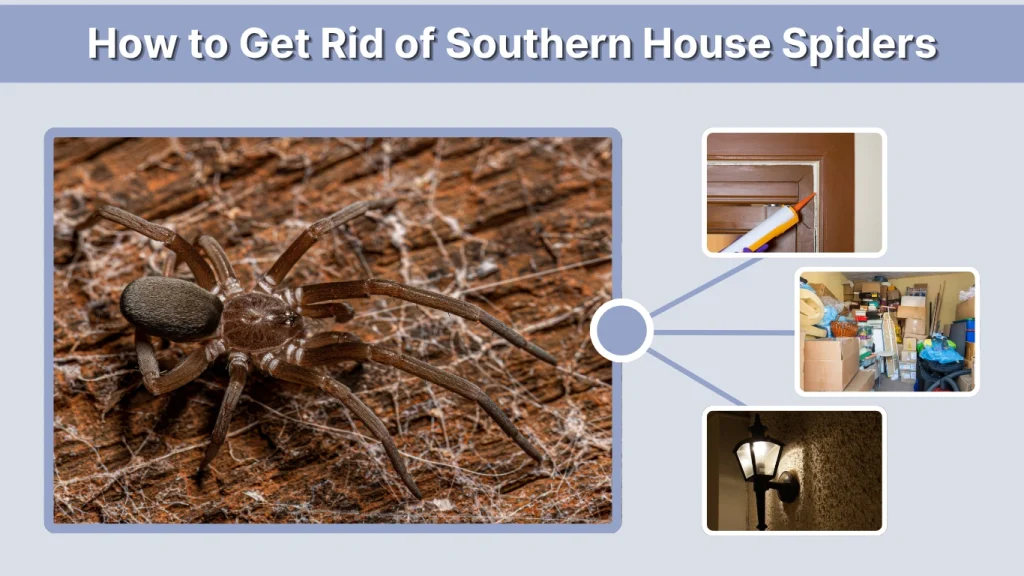
Prevention Tips
- Seal cracks and gaps around doors and windows
- Reduce clutter in storage spaces
- Install tight-fitting window screens
- Keep outdoor lights away from entry points
Cleaning Methods
- Remove webs regularly using a broom or vacuum
- Clean corners, ceilings, and hidden areas
- Maintain dry indoor conditions
- Dispose of debris where insects may breed
Safe Removal
- Capture using a glass and paper method
- Relocate the spider outdoors
- Avoid harsh chemical sprays when possible
- Use natural repellents like essential oils if needed
When to Call Pest Control
If you notice a large number of southern house spiders or recurring infestations, it may indicate underlying issues such as excess insects or structural gaps in your home. In such cases, professional pest control services can help identify the root cause and provide targeted solutions.
Experts can inspect your home for entry points, moisture problems, and insect activity. Rather than focusing solely on eliminating spiders, they address the conditions that attract them. This ensures a more effective and long-term approach to managing spider presence indoors.
FAQs
What does a southern house spider look like?
The southern house spider is medium to large in size with long legs and a velvety body. Females are dark brown or black, while males are lighter and thinner, often leading to confusion with other spider species.
Are southern house spiders poisonous?
They do have venom, but it is harmless to humans and not medically significant. Bites are extremely rare and typically cause only mild, temporary irritation if they occur.
Why do southern house spiders come indoors?
They enter homes in search of shelter and food. Houses provide stable environments and attract insects, which serve as their primary food source.
Can southern house spiders climb walls?
Yes, they can climb walls and ceilings with ease. They prefer corners and crevices where they can build their webs and remain hidden.
How long do southern house spiders live?
Females can live for several years, sometimes up to seven or eight years, while males have shorter lifespans and typically die after mating.