

The Chaco Golden Knee tarantula (Grammostola pulchripes) is one of the most popular pet tarantulas thanks to its calm temperament and striking appearance. Known for the golden bands on its legs, this species is highly favored by beginners and experienced keepers alike. Native to South America, it thrives in simple setups and adapts well to captivity. This guide covers essential details including care, size, behavior, and habitat to help you understand and properly care for this fascinating spider.
What Is a Chaco Golden Knee Tarantula?
The Chaco Golden Knee is a terrestrial tarantula species originating from the dry regions of Paraguay, Argentina, and Bolivia. It belongs to the Grammostola genus, which is known for docile and hardy species.
Scientific Classification
- Scientific name: Grammostola pulchripes
- Family: Theraphosidae
- Type: Terrestrial burrowing tarantula
Common Names
- Chaco Golden Knee
- Golden Knee Chaco
- Chaco Golden Knee Spider
Chaco Golden Knee Size, Growth & Lifespan
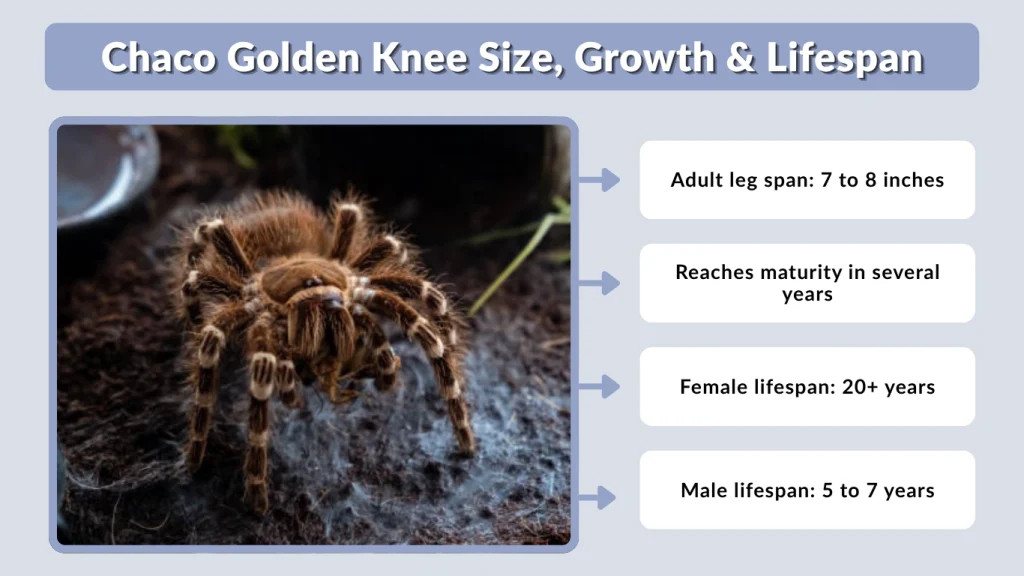
Understanding the growth and lifespan of this species is important before getting one, especially since females can live for decades.
Size and Growth Rate
- Adult leg span: 7 to 8 inches
- Growth rate: Slow to moderate
- Reaches maturity in several years
Lifespan Differences
- Female lifespan: 20+ years
- Male lifespan: 5 to 7 years
Temperament and Behavior Overview
The Chaco Golden Knee tarantula is widely known for its calm and predictable nature, making it one of the best beginner species. Unlike more defensive tarantulas, it rarely shows aggression and is more likely to retreat when disturbed. This species spends most of its time exploring its enclosure or resting in a hide. Younger individuals tend to burrow more frequently, while adults become more surface-dwelling over time.
They are terrestrial, meaning they prefer ground-level environments rather than climbing. Although they can produce silk, they do not heavily rely on webbing like arboreal species. When threatened, they typically flick urticating hairs rather than bite. Overall, their behavior is slow, steady, and easy to manage in captivity.
Chaco Golden Knee Tarantula Care Guide
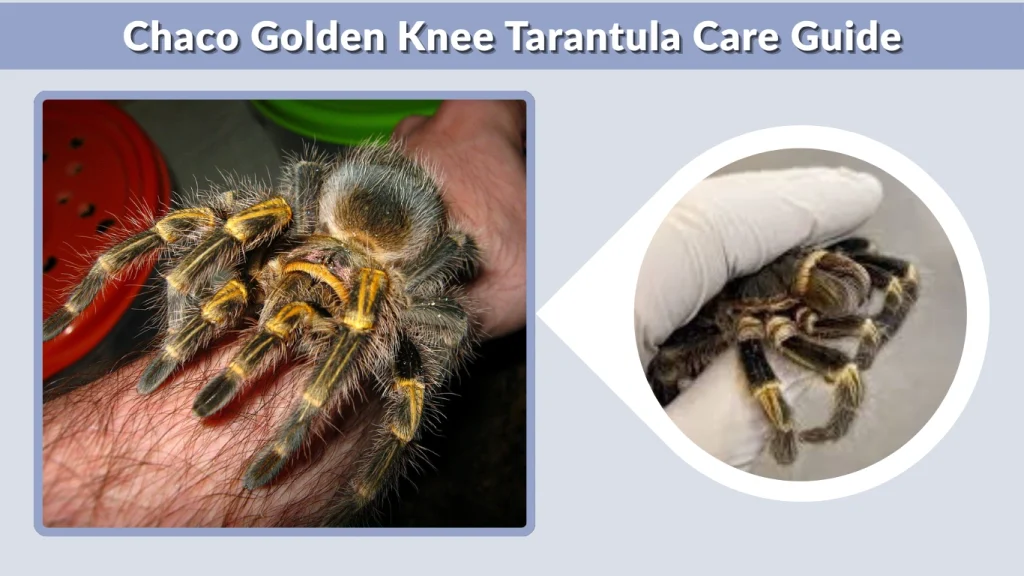
Proper care ensures a healthy and long-lived tarantula. Fortunately, this species is very forgiving and does not require complex conditions.
Temperature and Humidity
- Ideal temperature: 22–26°C
- Humidity range: 60–70%
- Avoid excessive moisture to prevent mold
Diet and Feeding
- Feeds on crickets, roaches, and mealworms
- Juveniles eat more frequently than adults
- Remove uneaten prey to avoid stress
Molting Care
- Stops eating before molting
- Needs a calm, undisturbed environment
- Avoid handling during this period
Chaco Golden Knee Enclosure Setup and Habitat
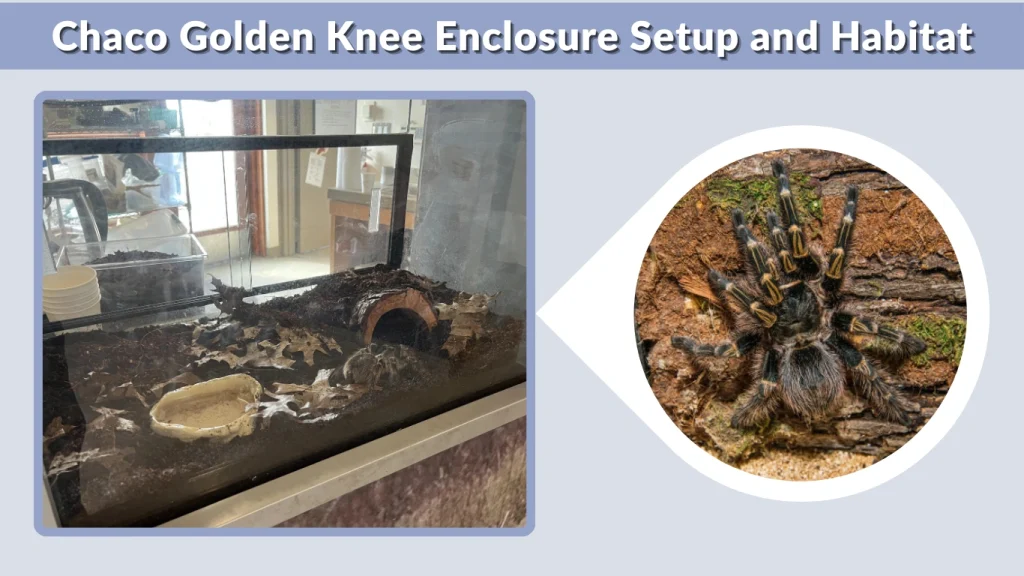
Creating the right enclosure is key to keeping your Chaco Golden Knee comfortable and stress-free. A simple terrestrial setup works best, focusing on floor space rather than height. The enclosure should have good ventilation and be secure to prevent escape.
Enclosure Essentials
- Tank size: 10–20 gallons for adults
- Low height to prevent fall injuries
- Secure lid with ventilation
Substrate and Setup
- Use coconut fiber or soil-based substrate
- Provide deep substrate for burrowing
- Include a hide and a shallow water dish
Natural Habitat Conditions
In the wild, this species lives in dry grasslands and semi-arid regions. It often creates burrows to escape heat and predators. Replicating these conditions in captivity helps maintain natural behavior and reduces stress.
Chaco Golden Knee Handling, Safety and Bite Information
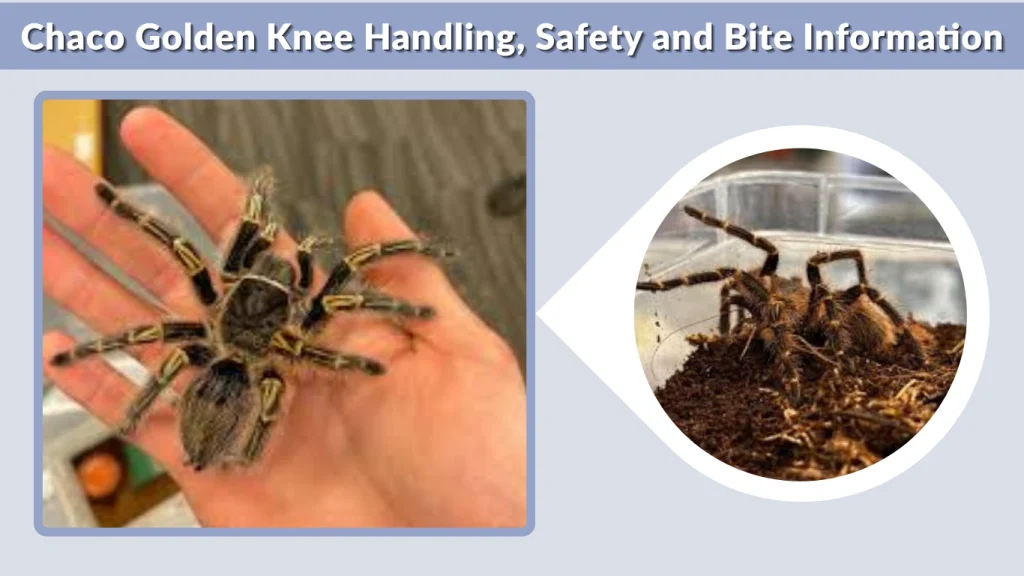
The Chaco Golden Knee tarantula is considered one of the safest species to keep, but understanding its defensive behavior is still important. While it is calm and slow-moving, it should always be respected as a wild animal. Proper handling practices reduce stress for the spider and risk for the keeper.
Can You Handle a Chaco Golden Knee?
- Generally tolerant but not recommended for frequent handling
- Risk of falling can injure the tarantula
- May flick irritating hairs when stressed
Bite and Venom Facts
- Venom is mild, similar to a bee sting
- Bites are rare and usually defensive
- Urticating hairs are the primary defense
Safety Tips
- Wash hands after contact
- Avoid touching eyes after handling
- Use tools instead of hands when possible
Price and Buying Guide
Before purchasing a Chaco Golden Knee tarantula, it’s helpful to understand pricing and what affects cost. Prices vary depending on age, size, and gender, with females being the most expensive due to their long lifespan.
Average Price Range
- Sling (baby): $20–$50
- Juvenile: $50–$100
- Adult female: $150–$250+
Where to Buy
- Reputable breeders
- Exotic pet expos
- Trusted online stores
Buying Tips
- Check for active and healthy movement
- Avoid sellers with poor reviews
- Ask about feeding and molting history
Chaco Golden Knee Male vs Female Differences
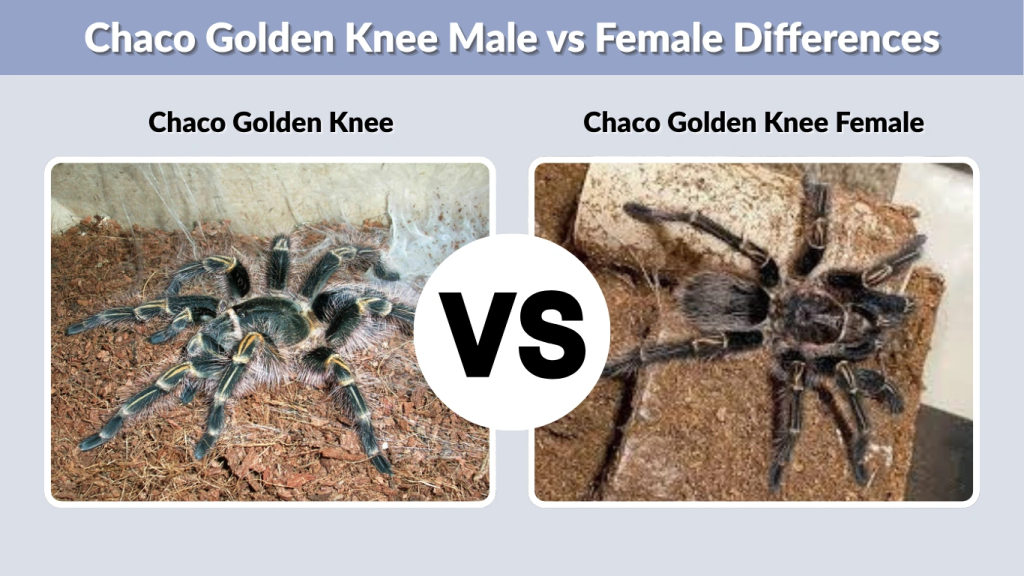
Choosing between a male and female Chaco Golden Knee tarantula can impact your long-term experience as a keeper. Each has unique traits related to lifespan, behavior, and growth.
Key Differences Explained
Female tarantulas are significantly longer-lived, often surviving over two decades with proper care. They also tend to grow slightly larger and maintain a more stable feeding pattern throughout their lives. Males, on the other hand, mature faster and develop a more restless behavior once they reach adulthood. Their shorter lifespan means they are less commonly chosen as long-term pets.
While both genders share a calm temperament, females are generally preferred by hobbyists due to their longevity and consistent behavior. Males are often selected for breeding purposes rather than companionship.
Chaco Golden Knee Life Stages: Sling, Juvenile and Adult Care
Understanding the different life stages of a Chaco Golden Knee helps you adjust care routines as the tarantula grows. Each stage has slightly different needs in terms of feeding, enclosure, and humidity.
Sling and Juvenile Care
- Require smaller enclosures for security
- Slightly higher humidity levels
- More frequent feeding schedule
Adult Care Adjustments
- Larger enclosure with more floor space
- Less frequent feeding
- More stable environmental conditions
FAQs
Is the Chaco Golden Knee tarantula poisonous?
This species is venomous, like all tarantulas, but it is not dangerous to humans. Its venom is mild and typically causes effects similar to a bee sting. Serious reactions are extremely rare, making it a safe choice for most keepers.
How fast does a Chaco Golden Knee grow?
The Chaco Golden Knee grows slowly compared to many other tarantulas. It may take several years to reach full size, especially females. This slow growth contributes to their long lifespan and steady development over time.
Do Chaco Golden Knee tarantulas burrow?
Yes, especially during their younger stages. Slings and juveniles often dig burrows for safety and comfort. Adults may still burrow occasionally but are more likely to stay above ground if provided with a proper hide.
What size enclosure does an adult need?
An adult Chaco Golden Knee tarantula typically requires a 10–20 gallon terrestrial enclosure. The focus should be on floor space rather than height, along with adequate substrate depth for comfort and natural behavior.
What do Chaco Golden Knee tarantulas eat?
They primarily eat live insects such as crickets, roaches, and mealworms. Feeding frequency depends on age, with younger tarantulas eating more often and adults requiring meals only once every one to two weeks.