

Tarantulas are among the most fascinating and misunderstood creatures in the animal kingdom. As members of the arachnid family, they share characteristics with spiders, scorpions, and mites. Known for their large size and hairy appearance, tarantulas live in a wide range of environments. Understanding their classification and natural habitats helps explain how they survive and thrive across the world.
What Is a Tarantula Arachnid?
To understand tarantulas, it’s important to first know what an arachnid is and how these creatures fit into this category.
Arachnids are a class of joint-legged invertebrates that include spiders, scorpions, ticks, and mites. Tarantulas belong to this group due to their physical structure and biological traits. Unlike insects, arachnids have eight legs, no antennae, and a body divided into two main segments.
Tarantulas are a type of spider, but they are generally larger and more robust than typical spiders. Their strong fangs and slow, deliberate movements make them unique among arachnids.
Are Tarantulas Really Arachnids?
Yes, tarantulas are true arachnids. Scientifically, they belong to the class Arachnida and the order Araneae, which includes all spiders. One key difference between arachnids and insects is the number of legs—arachnids have eight, while insects have six.
Another distinction is body structure. Arachnids have two main body parts: the cephalothorax and the abdomen. This structure is clearly visible in tarantulas. Despite their intimidating appearance, most tarantulas are harmless to humans and play an important role in ecosystems.
Classification of Tarantulas
Tarantulas are part of a well-defined scientific classification system that helps researchers understand their relationships with other animals.
Tarantulas fall under the following classification:
- Kingdom: Animalia
- Phylum: Arthropoda
- Class: Arachnida
- Order: Araneae
Within the order Araneae, tarantulas belong to the family Theraphosidae. This family includes over 1,000 species of large, hairy spiders found across different regions of the world.
What Makes Tarantulas Different from Other Arachnids?
While all tarantulas are arachnids, not all arachnids are tarantulas. Compared to scorpions and ticks, tarantulas are generally larger and have a more noticeable hairy body.
Unlike scorpions, which have a stinger, tarantulas rely on venomous fangs for hunting and defense. Compared to ticks and mites, tarantulas are free-moving predators rather than parasites.
Their size, behavior, and hunting style set them apart, making them one of the most recognizable members of the arachnid class.
Key Characteristics of Tarantula Arachnids
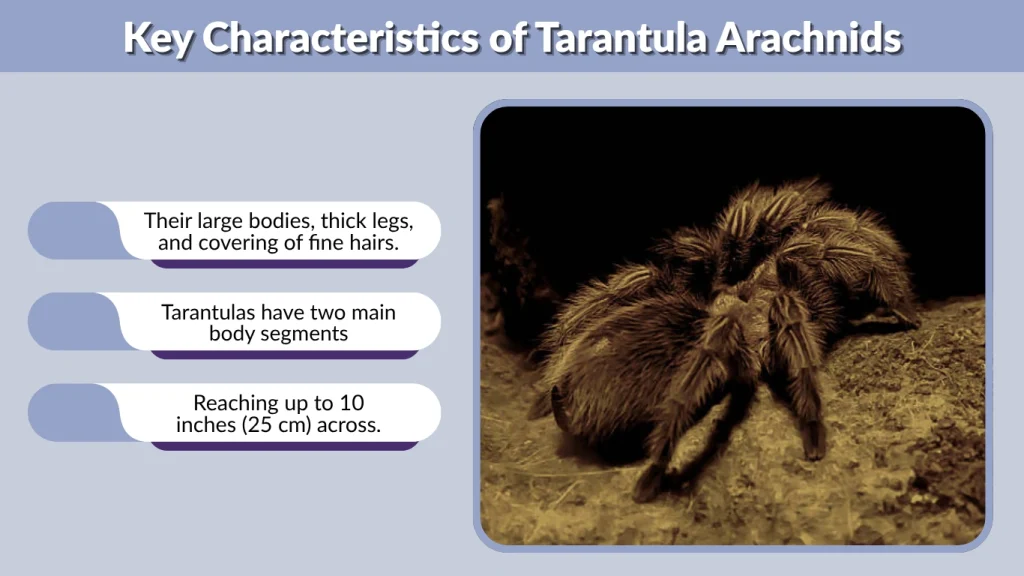
Tarantulas have several distinct features that help them survive in diverse habitats.
These spiders are known for their large bodies, thick legs, and covering of fine hairs. Despite their sometimes frightening appearance, they are generally slow-moving and rely more on ambush than speed.
Physical Features
Tarantulas have two main body segments: the cephalothorax and the abdomen. The cephalothorax contains the eyes, mouthparts, and legs, while the abdomen houses vital organs.
One of their most notable features is their hair, known as setae. In some species, these hairs can be used as a defense mechanism. When threatened, tarantulas may flick these hairs toward predators, causing irritation.
Their leg span can vary significantly depending on the species, with some reaching up to 10 inches (25 cm) across.
Behavior and Lifestyle
Most tarantulas are nocturnal, meaning they are active at night. This behavior helps them avoid predators and extreme daytime temperatures.
They are carnivorous hunters that feed on insects, small vertebrates, and other invertebrates. Instead of spinning webs to catch prey, tarantulas rely on ambush tactics, using their fangs to inject venom and immobilize their target.
Another important aspect of their life cycle is molting. Tarantulas shed their exoskeleton periodically to grow. This process is crucial for their development but also leaves them vulnerable for a short time.
Tarantula Arachnid Habitat Explained
Habitat is one of the most important factors influencing how tarantulas live and behave.
A habitat refers to the natural environment where an organism lives. For tarantulas, this includes factors such as temperature, humidity, shelter, and food availability. These elements determine how well a tarantula can survive and reproduce.
Tarantulas are highly adaptable and can live in a variety of habitats, from humid rainforests to dry deserts. However, each species is typically suited to a specific type of environment.
What Defines a Suitable Habitat?
Several key factors define a suitable habitat for tarantulas:
- Temperature: Most tarantulas prefer warm climates. Extreme cold can be harmful or even fatal.
- Humidity: Some species require high humidity, while others thrive in dry conditions.
- Shelter: Tarantulas need hiding places such as burrows, tree hollows, or rock crevices.
These conditions not only affect survival but also influence behavior, such as hunting and reproduction.
Types of Tarantula Habitats
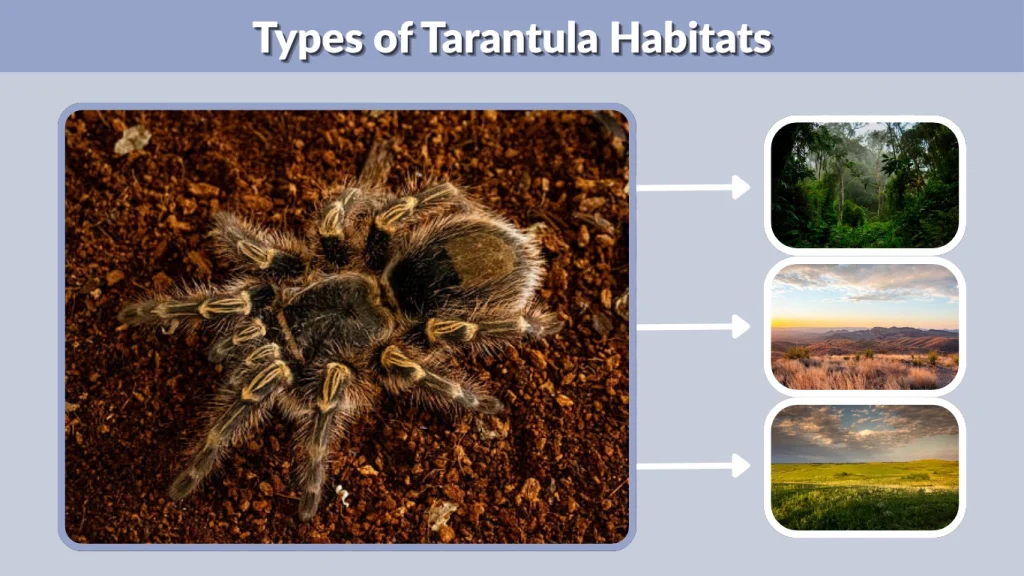
Tarantulas are found in a wide range of habitats across the globe, each offering unique conditions.
Tropical Rainforests
Tropical rainforests are one of the most common habitats for tarantulas. These environments provide high humidity, warm temperatures, and abundant vegetation.
Many arboreal (tree-dwelling) tarantulas live in rainforests, where they build silk retreats in branches or tree hollows. The dense environment also supports a rich supply of prey, making it ideal for survival.
Deserts
Some tarantula species are adapted to desert environments, where conditions are dry and temperatures can be extreme.
To cope with the heat, desert tarantulas often dig deep burrows. These burrows help regulate temperature and provide protection from predators. They are usually active at night when temperatures are cooler.
Grasslands and Savannas
Grasslands and savannas offer a moderate climate compared to deserts. Tarantulas in these areas are typically ground-dwelling and use natural shelters like logs, rocks, or shallow burrows.
Seasonal changes in these regions may affect their activity levels, with some species becoming less active during colder or drier periods.
Forest and Mountain Regions
Tarantulas can also be found in forests and mountainous areas where temperatures are cooler. In these habitats, they seek shelter under rocks, fallen trees, or within soil crevices.
These environments require tarantulas to adapt to varying temperatures and moisture levels, demonstrating their resilience as a species.
Where Do Tarantulas Live Globally?
Tarantulas are distributed across several continents, primarily in warm and tropical regions where environmental conditions support their survival.
Tarantulas are most commonly found in:
- South America: Home to the highest diversity of species, especially in the Amazon rainforest.
- Africa and Asia: Many species thrive in tropical and subtropical climates.
- Australia: Known for unique and hardy tarantula species.
- North America: Fewer species, mainly in the southern United States and Mexico.
Why They Prefer Warm Climates
Tarantulas are cold-blooded animals, meaning they rely on external temperatures to regulate their body heat. Warm climates allow them to remain active, hunt efficiently, and reproduce successfully.
In colder regions, tarantulas struggle to survive due to low temperatures that slow down their metabolism. This is why they are rarely found in areas with harsh winters.
Burrowing vs Arboreal Tarantulas
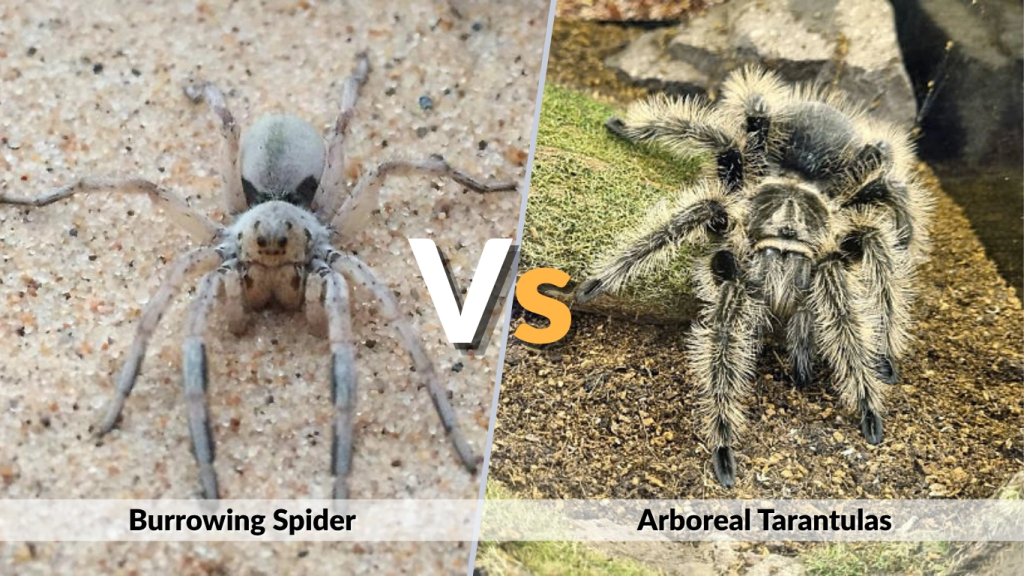
Tarantulas adapt to their environments in different ways, with some living on the ground and others in trees.
Terrestrial (Ground-Dwelling) Tarantulas
Terrestrial tarantulas spend most of their time on or below the ground. They are commonly found in deserts, grasslands, and forests.
- Build burrows for shelter and protection
- Stay hidden during the day
- Wait near burrow entrances to ambush prey
These species rely heavily on their environment for safety and temperature control.
Arboreal (Tree-Dwelling) Tarantulas
Arboreal tarantulas live in trees, shrubs, and other elevated areas, mostly in tropical forests.
- Construct silk retreats in branches
- Move more quickly than ground species
- Hunt insects and small animals in vegetation
Their ability to climb and adapt to vertical spaces gives them access to different food sources and protection from ground predators.
Adaptations to Their Habitat
Tarantulas have developed a range of adaptations that allow them to survive in diverse and sometimes extreme environments.
Physical Adaptations
Tarantulas possess several physical traits that help them thrive:
- Camouflage: Their body colors often blend with their surroundings, helping them avoid predators.
- Thick exoskeleton: Provides protection and reduces water loss in dry environments.
- Sensitive hairs: Detect vibrations and movement, helping locate prey.
These features are essential for survival, especially in habitats where threats are common.
Behavioral Adaptations
In addition to physical traits, tarantulas exhibit behaviors that enhance their survival:
- Burrowing: Helps escape heat and predators
- Nocturnal activity: Reduces exposure to daytime dangers
- Defensive displays: Raising front legs or exposing fangs to scare threats
These behaviors allow tarantulas to adapt to changing environmental conditions and improve their chances of survival.
Tarantula Habitat in Captivity
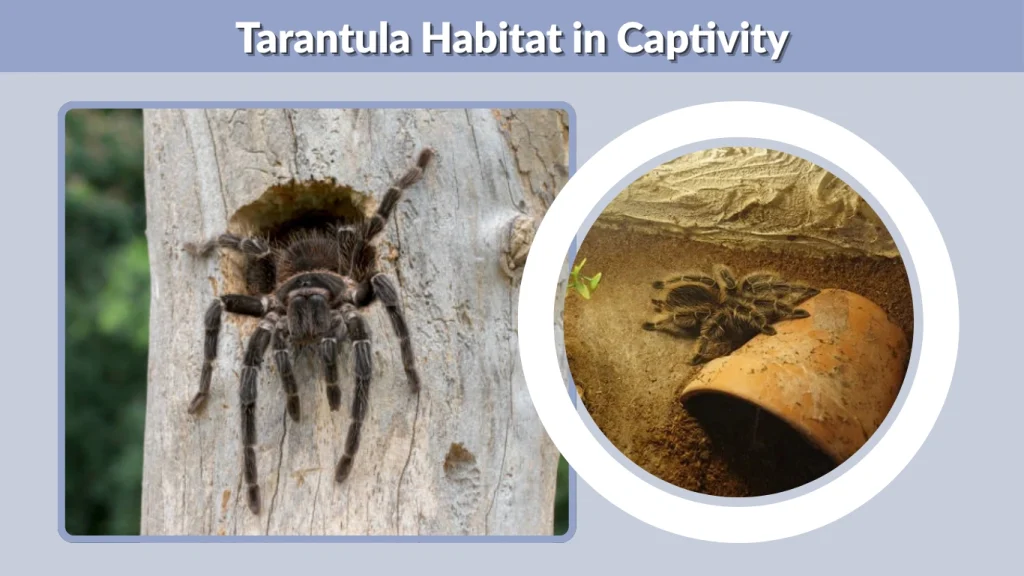
For those who keep tarantulas as pets, recreating their natural habitat is essential for their health and well-being.
Setting Up an Ideal Enclosure
A proper enclosure should mimic the tarantula’s natural environment as closely as possible.
- Use appropriate substrate (soil or coconut fiber)
- Provide hiding spots like caves or logs
- Ensure proper ventilation
The setup may vary depending on whether the species is terrestrial or arboreal.
Temperature and Humidity Needs
Different tarantula species require specific environmental conditions:
- Tropical species need higher humidity levels
- Desert species prefer drier conditions
- Stable temperatures are crucial for overall health
Maintaining the correct balance helps prevent stress and health issues in captive tarantulas.
Why Habitat Matters for Tarantula Survival
The habitat of a tarantula directly influences its health, behavior, and role in the ecosystem.
A suitable habitat ensures that tarantulas can grow, molt, and reproduce successfully. Poor environmental conditions can lead to stress, illness, or even death.
Tarantulas also play an important role in controlling insect populations, making them valuable in maintaining ecological balance. However, habitat destruction caused by deforestation and urbanization poses a significant threat to many species.
Protecting natural habitats is essential not only for tarantulas but for the ecosystems they support.
FAQs
Are tarantulas arachnids or insects?
Tarantulas are arachnids, not insects. They belong to the class Arachnida and have eight legs, while insects have six. This difference in body structure is one of the main ways scientists classify and distinguish between these two groups of animals.
What type of habitat do tarantulas prefer?
Tarantulas generally prefer warm habitats such as tropical forests, deserts, and grasslands. The exact environment depends on the species, with some requiring high humidity and others adapted to dry conditions. Their habitat must provide shelter, food, and suitable temperatures.
Do tarantulas live in burrows or trees?
Tarantulas can live in both burrows and trees depending on the species. Terrestrial tarantulas usually dig or occupy burrows, while arboreal species live in trees and build silk retreats. These living styles help them adapt to different environmental conditions.
Can tarantulas survive in cold climates?
Tarantulas typically cannot survive in cold climates for long periods. As cold-blooded animals, they depend on external warmth to regulate their body functions. Extremely low temperatures can slow their metabolism and eventually become life-threatening.
