

Waking up to itchy, red bumps on your skin is enough to make anyone uneasy. But what’s causing it? The usual suspects are spider bites or bed bug bites. While they may look similar at first glance, they have key differences that can help you figure out what you’re dealing with—and more importantly, what to do about it.
This article breaks down the differences in bite appearance, symptoms, timing, and treatment so you can take the right steps fast.
Bite Appearance: What Do They Look Like?

Spider Bite Appearance
Spider bites typically show up as a single red, swollen bump. Sometimes, you may see a small puncture mark in the center where the fangs went in. Most spider bites cause mild redness and irritation, but some species can lead to more serious reactions.
Venomous spider bites, such as those from a brown recluse or black widow, may develop a blister, turn blue or purple in the center, or even become ulcerated over time.
Bed Bug Bite Appearance
Bed bug bites usually appear in clusters or straight lines—a sign that multiple bugs fed on your skin while you were asleep. The bites are small, red, and extremely itchy, and they don’t have puncture marks. Most people see 3 to 5 bites grouped close together, especially on areas of the body exposed during sleep.
Symptoms: What You’ll Feel
Spider Bite Symptoms

- Swelling and localized pain
- Redness and warmth at the site
- Possible itching
- In rare venomous bites: fever, chills, nausea, muscle cramps, or open wounds
Mild spider bites often go unnoticed for hours and heal on their own. However, more dangerous spiders like the brown recluse can cause necrosis (dead skin), while black widow bites may lead to systemic symptoms that feel like the flu or severe cramps.
Bed Bug Bite Symptoms

- Itching that increases over time
- Red welts with a raised center
- Delayed reaction (bites may appear hours or even days later)
- No severe body symptoms unless there’s an allergic reaction
The biggest issue with bed bug bites is the intense itching, which can lead to scratching and secondary infections.
Bite Locations on the Body
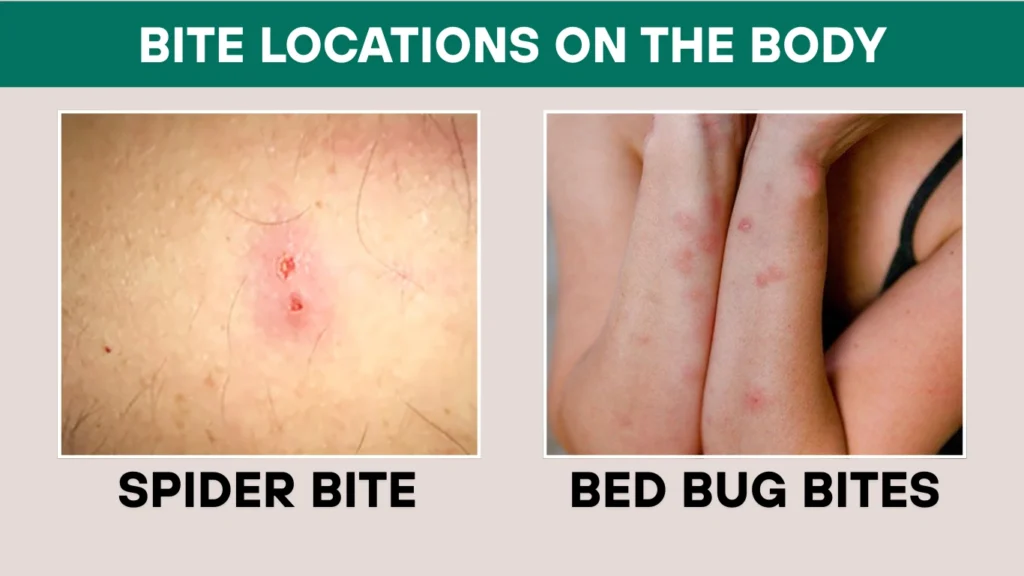
Spider bites are usually isolated and occur in random, exposed areas like arms, legs, hands, or feet. They often happen when you accidentally press on a spider—while dressing, sleeping, or reaching into shoes.
Bed bug bites, on the other hand, are most commonly found on areas exposed during sleep: arms, neck, face, shoulders, and legs. Because they bite in patterns, you’ll often notice multiple bites in a line or triangle.
When and Where Bites Occur
Spider Bites
Spiders don’t bite unless provoked. Most bites happen:
- When people unknowingly disturb a spider
- While sleeping or getting dressed
- Indoors (closets, beds, bathrooms) or outdoors (gardens, basements)
They are accidental and rare, especially when compared to bed bug bites.
Bed Bug Bites
Bed bugs are active at night and prefer feeding while you’re still or sleeping. They live in:
- Mattresses and box springs
- Cracks in furniture
- Behind headboards and baseboards
If you wake up with new bites in the morning, especially in patterns, bed bugs are likely the cause.
Risk and Severity
Spider Bite Risks
Most spider bites are harmless. But in rare cases, bites from venomous spiders like:
- Brown recluse – may cause tissue death and require medical treatment.
- Black widow – can cause nausea, muscle cramps, or breathing issues.
Severe reactions are more likely in children, older adults, or people with weakened immune systems.
Bed Bug Bite Risks
Bed bug bites are not dangerous but can be annoying. Risks include:
- Allergic reactions (swelling, itching, rash)
- Infections due to scratching
- Sleep disturbances and mental stress
- Ongoing infestations if left untreated
They don’t spread diseases but can severely impact comfort and hygiene.
Treatment Options
How to Treat Spider Bites
- Clean the bite with soap and water
- Apply a cold compress to reduce swelling
- Use over-the-counter pain relief or antihistamines
- Seek medical attention for worsening symptoms, open wounds, or if you suspect a venomous bite
For bites from dangerous spiders like the brown recluse or black widow, immediate medical care is crucial.
How to Treat Bed Bug Bites
- Avoid scratching to prevent infection
- Apply anti-itch creams (hydrocortisone) or take oral antihistamines
- Use cool compresses for relief
- If signs of infection (pus, pain, fever) appear, visit a doctor
Treating the infestation is the most important step. Wash all bedding in hot water, vacuum your mattress, and consider pest control.
Prevention Tips
Preventing Spider Bites
- Shake out clothes and shoes before wearing
- Keep rooms clean and uncluttered
- Seal cracks and windows to keep spiders out
- Declutter garages, attics, and basements
Use caution when gardening or handling firewood, and consider using sticky traps in spider-prone areas.
Preventing Bed Bug Bites
- Inspect hotel beds before sleeping
- Encase mattresses with bed bug-proof covers
- Regularly wash and dry bedding at high temperatures
- Check secondhand furniture carefully before bringing it home
If you suspect an infestation, act quickly—bed bugs multiply fast.
When to See a Doctor
Most spider and bed bug bites heal on their own, but some may need medical care. If a spider bite becomes more painful, swollen, or starts to show signs of infection like pus or darkening skin, it’s best to get it checked. Bites that don’t improve after a few days may be more serious than they appear.
Seek medical help right away if you experience fever, muscle cramps, nausea, or spreading redness after a bite. These symptoms could signal a venomous spider bite and should not be ignored, especially in children or older adults.
Bed bug bites are usually harmless but can cause issues if they’re scratched too much. If the itching leads to open sores, swelling, or an allergic reaction, a doctor can provide relief and prevent infection.
Quick Comparison Table
| Feature | Spider Bite | Bed Bug Bite |
| Number of Bites | Usually 1 | Often 3–5 in a line or cluster |
| Pain | Sometimes painful | Usually painless |
| Itchiness | Mild to moderate | Intense |
| Appearance | Red, swollen, may have a puncture mark | Small red bumps, no puncture mark |
| Risk | Low to moderate (depends on spider) | Low (mostly itching or allergic reaction) |
| Time of Bite | Anytime (day or night) | Nighttime |
| Healing Time | Few days to weeks (varies) | Usually within a week |
Conclusion
Telling the difference between a spider bite and a bed bug bite comes down to appearance, number of bites, and when they happen. Spider bites are usually isolated and may hurt, while bed bug bites tend to appear in groups and itch like crazy.
If you wake up with bites you didn’t go to bed with, there’s a good chance bed bugs are involved. On the other hand, a single painful bump may point to a spider. No matter what, quick action is key—both for relief and for preventing further problems.