

Have you ever looked at a spider and wondered if it’s just another insect? You’re not alone. While they may seem similar, spiders and insects belong to completely different classes. From leg count to body structure, their differences are clear once you know what to look for. In this article, I’ll explain what sets spiders apart and reveal 15 creatures that either look like spiders—or like insects but aren’t.
Are Spiders Insects?

Short Answer
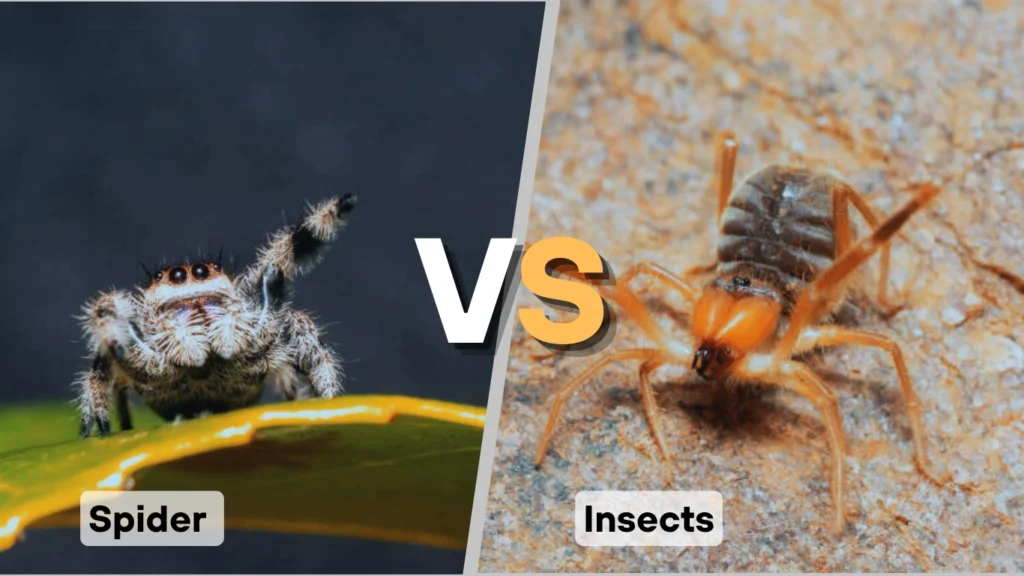
No, spiders are not insects. They belong to the class Arachnida, while insects fall under the class Insecta. Despite some similarities, their physical structures and biological classifications are clearly different.
Spiders vs Insects – Key Differences
| Feature | Spiders (Arachnids) | Insects (Insecta) |
| Number of Legs | 8 legs | 6 legs |
| Body Segments | 2 (cephalothorax and abdomen) | 3 (head, thorax, abdomen) |
| Antennae | None | One pair of antennae |
| Wings | Never have wings | Most have wings in adult stage |
| Eyes | Usually 6–8 simple eyes | Typically 2 compound eyes |
| Class | Arachnida | Insecta |
| Examples | Jumping spider, wolf spider, crab spider | Ant, beetle, butterfly, mosquito |
7 Creatures That Are Not Spiders but Look Like Insects

Spiders are often mistaken for insects, but some actual spiders or arachnids closely resemble insects due to size, color, or movement. Here are seven examples of such confusing creatures:
1. Jumping Spider
Jumping spiders are compact, fast, and often colorful. Their small size and jerky movements can easily make them look like beetles or flies at first glance.
2. Crab Spider
Crab spiders have wide, flat bodies and move sideways, mimicking the motion of beetles or true bugs. Some even blend in with flowers and appear like pollinating insects.
3. Ant-Mimic Spider (Myrmarachne)
These spiders have evolved to look nearly identical to ants. They lift their front legs to mimic antennae and move in a way that resembles ant behavior.
4. Long-bodied Cellar Spider
Often misidentified as “daddy long legs,” these thin-legged spiders resemble crane flies or harvestmen. Their delicate build gives them an insect-like appearance.
5. Spiny Orb-Weaver
Brightly colored and spiky, these spiders look more like beetles than arachnids. Their unique shape helps them blend in with insect-heavy environments.
6. Lynx Spider
Lynx spiders are green and slender, with long spiny legs. Their body shape and flower-dwelling habit can make them appear like leafhoppers or other garden insects.
7. Goldenrod Crab Spider

Capable of changing color between white and yellow, this spider is often confused with pollinators like bees or hoverflies while hiding inside flowers.
8 Creatures That Are Not Spiders but Often Mistaken as Spiders

Not all creepy-crawly creatures with long legs are spiders. Many insects and other arthropods are commonly misidentified as spiders because of their shape, movement, or number of legs. Here are eight of them:
1. Harvestman (Opiliones)
Also called “daddy long legs,” harvestmen have 8 legs like spiders but only one fused body segment. Unlike spiders, they do not produce silk or venom.
2. Mites
Mites are tiny arachnids that often go unnoticed. Due to their round bodies and small size, they can be mistaken for baby spiders or insect pests like lice.
3. Pseudoscorpion
These tiny arachnids have pincers like a scorpion but no stinger or long tail. They resemble spiders at first glance but are harmless and often live unnoticed indoors.
4. Camel Spider (Solifugae)
Large and fast, camel spiders (also called wind scorpions) are neither true spiders nor scorpions. They have powerful jaws and a spider-like appearance, which often causes confusion.
5. Antlion Larva
This insect larva has large jaws and a low, flat body. It lives in soil and is sometimes confused with spiders due to its shape and slow movement.
6. Crane Fly
Often called “mosquito hawks,” crane flies have long, spindly legs and delicate wings. When at rest or moving on walls, they can be mistaken for flying spiders.
7. Assassin Bug Nymph
With long legs and an extended head, these insect nymphs can resemble small spiders, especially when moving slowly or lurking under leaves.
8. Springtail
Tiny, fast-jumping creatures found in soil or leaf litter. Their six legs and spring-loaded tails make them bounce unpredictably—often mistaken for tiny spiders or fleas.
How to Tell the Difference at a Glance
Sometimes it’s hard to tell if you’re looking at a spider, an insect, or something else entirely. But with a quick observation of a few key features—like legs, antennae, and body parts—you can usually figure it out. Below is a simple comparison to help you identify what you’re seeing.
Quick Identification – Spiders vs Insects vs Lookalikes
| Feature | Spiders (Arachnids) | Insects | Common Lookalikes |
| Number of Legs | 8 | 6 | Varies (6 or 8) |
| Body Segments | 2 (cephalothorax, abdomen) | 3 (head, thorax, abdomen) | Usually 1 or 2 |
| Antennae | No | Yes | Varies (some have, some don’t) |
| Wings | Never | Often | Often or never |
| Web-making | Yes (most) | No | No |
| Venomous Fangs | Yes (most) | No | No |
| Examples | Jumping spider, wolf spider | Ant, fly, beetle | Mite, harvestman, crane fly |
Why the Confusion Matters
At a glance, many people assume anything small with legs is either a spider or an insect. While that might seem harmless, misidentifying these creatures can have real consequences—especially in pest control, education, and health.
Misidentification Can Lead to Unnecessary Fear
Many harmless creatures, like jumping spiders or crane flies, are often killed out of fear simply because they’re mistaken for dangerous pests. Recognizing harmless species can reduce panic and unnecessary extermination.
Accurate Identification Helps with Pest Control
Different species require different treatment. Misting a room for insects won’t work on spiders, and vice versa. Misidentifying mites as fleas or spiderlings can lead to ineffective pest solutions.
Educational Value for Children and Nature Lovers
Learning to correctly identify spiders, insects, and their lookalikes fosters curiosity and respect for nature. It encourages observation skills and scientific thinking, especially for kids and hobbyists.
Some Lookalikes Can Be Harmful or Beneficial
Not all spider-like creatures are dangerous. Pseudoscorpions, for instance, feed on pests. On the other hand, mites and certain bugs that resemble spiders can cause allergic reactions or plant damage. Knowing the difference matters.
FAQs
Are spiders classified as insects in science?
No. Spiders are classified as arachnids, not insects. They belong to the class Arachnida, while insects belong to the class Insecta.
What are some bugs that look like spiders but aren’t?
Harvestmen, pseudoscorpions, crane flies, and antlion larvae are often mistaken for spiders but belong to different groups.
Can spiders have six legs like insects?
No healthy spider has six legs. All spiders have eight legs. If a spider appears to have six, it may have lost two due to injury.
Why do some spiders mimic insects?
Mimicry helps spiders avoid predators or sneak up on prey. For example, ant-mimic spiders resemble ants to stay hidden or ambush ant prey.
How can I quickly tell if it’s a spider or an insect?
Count the legs (8 = spider, 6 = insect), check for antennae (insects have them), and observe body segments (2 = spider, 3 = insect).