

When spider mites invade your plants, they can quickly turn lush greenery into a web-covered disaster. Instead of relying on chemical sprays that can harm your plants and the environment, many gardeners and farmers now turn to a tiny but mighty ally—Phytoseiulus persimilis. This predatory mite is a specialist in hunting and devouring spider mites, offering an eco-friendly and highly effective solution for controlling infestations.
Whether you’re running a greenhouse, managing crops, or simply caring for your houseplants, understanding how Phytoseiulus persimilis works can help you naturally restore balance without pesticides.
What is Phytoseiulus persimilis?

Phytoseiulus persimilis is a species of predatory mite belonging to the family Phytoseiidae. It is best known for its role as a biological control agent, specifically targeting spider mites like Tetranychus urticae, the two-spotted spider mite.
Originally native to Chile, it was first discovered in the 1950s and has since been used worldwide due to its impressive pest control abilities. Phytoseiulus persimilis is now commercially bred and released in agricultural and horticultural settings to manage spider mite outbreaks naturally.
Identification

Phytoseiulus persimilis is very small, but if you look closely (usually under a magnifying lens or microscope), you’ll notice some key features:
- Size: About 0.5 mm long (roughly half the size of a pinhead)
- Color: Typically bright orange to reddish
- Shape: Pear-shaped body
- Movement: Fast-moving with long legs
- Other Traits: Unlike spider mites, they don’t produce webbing
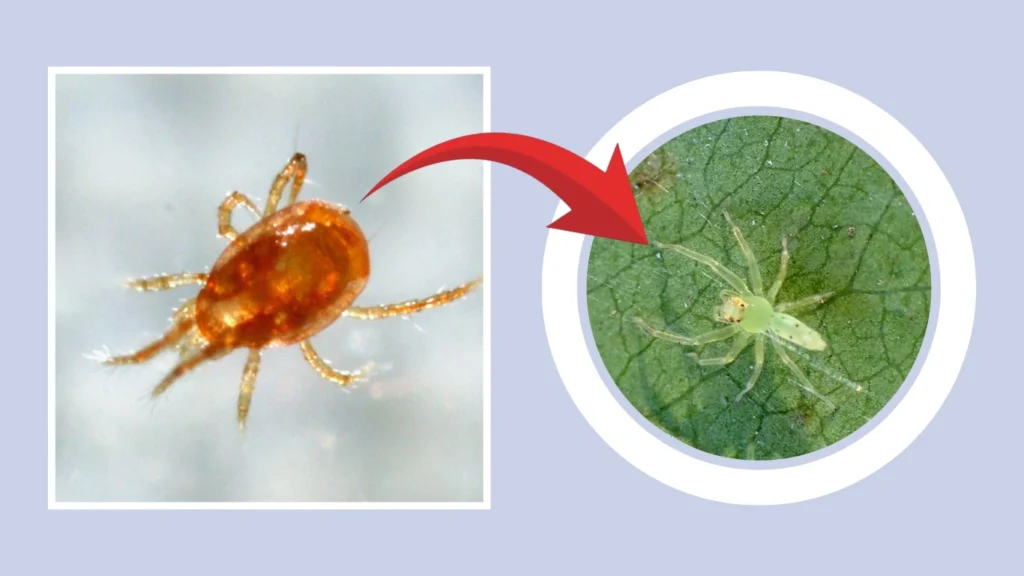
These traits help differentiate them from their prey (spider mites), which are typically slower, have oval bodies, and are paler in color with dark spots.
Life Cycle of Phytoseiulus persimilis
Egg to Adult
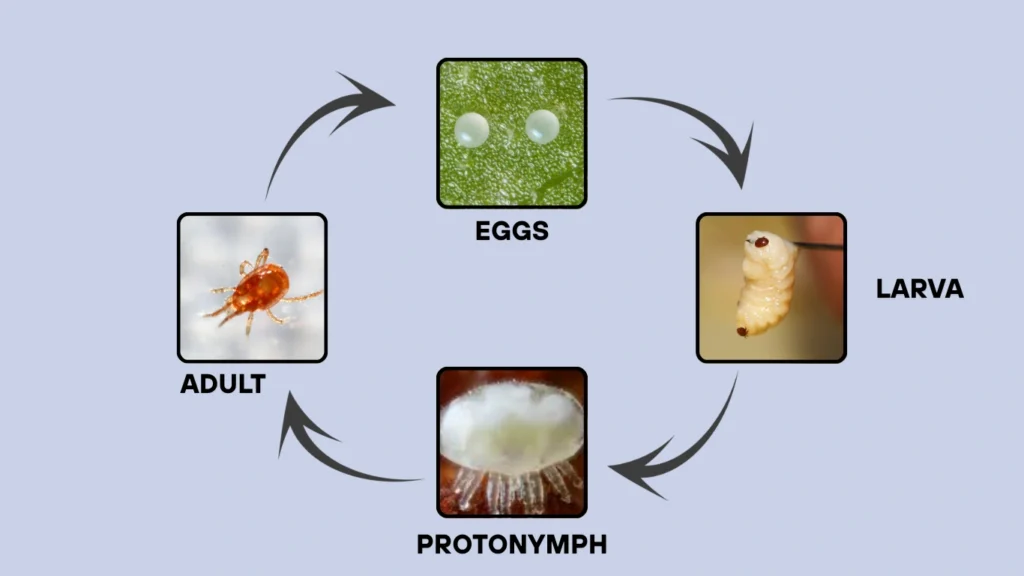
The life cycle of Phytoseiulus persimilis is impressively quick, allowing populations to grow rapidly when food (spider mites) is abundant. The full life cycle, from egg to adult, typically takes:
- 3 to 5 days at optimal temperatures (around 25–30°C)
- Eggs: Laid singly on leaf surfaces, often near spider mite colonies
- Larva: Hatch and feed minimally
- Protonymph and Deutonymph: Immature stages that feed actively on mites
- Adult: Fully mature and ready to reproduce
Females can lay up to 60 eggs in their lifetime, which ensures a steady and aggressive population growth in response to spider mite infestations.
Diet and Hunting Behavior
Main Prey
Phytoseiulus persimilis is a specialist predator. Its diet consists almost entirely of spider mites, especially the two-spotted variety (Tetranychus urticae). They are not generalist feeders like some other predatory mites, which makes them extremely effective when the target pest is known.
Feeding Habits
Adult predatory mites actively seek out spider mite colonies. Using their well-developed senses, they locate their prey through vibrations and chemical cues. Once found, they pierce the spider mite’s body and suck out its contents.
- An adult Phytoseiulus persimilis can consume 5 adult spider mites or 20 immature mites per day.
- Immature Phytoseiulus also feed, helping reduce pest numbers quickly even at early life stages.
Their aggressive hunting style and high reproductive rate make them one of the most effective natural enemies of spider mites.
Ideal Conditions for Phytoseiulus persimilis

For Phytoseiulus persimilis to thrive and effectively control spider mites, environmental conditions play a crucial role. Since they are living organisms, they perform best under specific settings.
Temperature and Humidity
- Optimal temperature: 20°C to 30°C (68°F to 86°F)
- Humidity requirement: Above 60% relative humidity
Low humidity or temperatures below 15°C can slow their development or reduce their survival rate. Greenhouses, grow tents, or indoor setups often provide ideal environments for these mites.
Light and Air Circulation
- Prefer moderate light—not direct intense sunlight
- Need good air circulation to reduce mold but not strong wind that could displace them
Maintaining the right microclimate helps ensure they reproduce efficiently and continue to control pest populations.
How to Use Phytoseiulus persimilis in Pest Control
Application in Greenhouses and Gardens
Using Phytoseiulus persimilis is relatively simple, but timing is key.
- Inspect your plants regularly for signs of spider mites (tiny yellow spots, webbing, or visible mites).
- Release Phytoseiulus when you see early signs of infestation.
- Quantity:
- Light infestations: 2–5 mites per plant
- Heavy infestations: 20–100 mites per square meter
- Light infestations: 2–5 mites per plant
They are usually sold in containers mixed with carrier materials (like bran or vermiculite), which you sprinkle on the leaves or place in small piles near affected areas.
Tips for Success
- Avoid chemical insecticides or miticides before and after release—they may harm or kill the beneficial mites.
- Release them in the early morning or evening to prevent them from drying out in direct sun.
- Keep monitoring the plant weekly to ensure spider mite numbers are decreasing.
Benefits of Using Phytoseiulus persimilis
Eco-Friendly and Non-Toxic
- No chemical residues on fruits, vegetables, or flowers
- Safe for kids, pets, and pollinators like bees
- Won’t disrupt the natural ecosystem
Efficient and Fast-Acting
- Rapid reproduction means a growing army of mite hunters
- Targets spider mites specifically, leaving beneficial insects unharmed
- Can reduce visible spider mite damage within a week under ideal conditions
Cost-Effective Long-Term Solution
Though the upfront cost may seem higher than pesticides, it saves money in the long run by reducing the need for repeated chemical applications and preserving plant health.
Limitations and Considerations
Narrow Target Range
- Only effective against spider mites
- If other pests (like aphids or thrips) are present, additional predators or controls are needed
Climate-Sensitive
- Performance drops in dry or cold conditions
- May need supplemental humidity indoors or in arid regions
Short Lifespan
- Adult lifespan is only about 2–4 weeks
- Continuous availability of spider mites is necessary to maintain their population
Comparison with Other Predatory Mites
Phytoseiulus persimilis vs. Neoseiulus californicus
| Feature | Phytoseiulus persimilis | Neoseiulus californicus |
| Target pests | Spider mites only | Spider mites + broad mites |
| Temperature tolerance | Narrow (20–30°C) | Broader range (15–35°C) |
| Speed of action | Very fast | Slower but more resilient |
| Survivability without prey | Short-lived | Can survive longer without food |
Depending on your conditions, Phytoseiulus persimilis is best for rapid knockdown of spider mites, while Neoseiulus californicus works better in varying climates and with mixed pest populations.
Where to Buy and How to Store Them
Commercial Availability
You can buy Phytoseiulus persimilis from most biological pest control suppliers, both online and through garden centers. They’re typically sold in:
- Bottles with 1,000 to 10,000 mites
- Sachets for slow-release on plants
Storage and Handling
- Keep them refrigerated at 6–10°C (43–50°F)
- Use them within a few days of delivery
- Avoid shaking or exposing them to direct sunlight before release
FAQs
How long does Phytoseiulus persimilis live?
Adults typically live around 2 to 4 weeks, depending on temperature and food availability.
Can I use them indoors or only in greenhouses?
Yes, they can be used indoors, in greenhouses, and in outdoor gardens as long as environmental conditions are suitable.
Do they harm plants or beneficial insects?
No. They do not feed on plants or attack pollinators or other beneficial insects. They only consume spider mites.
What if I see no results after releasing them?
Check environmental conditions—temperature or humidity might be too low. Also, ensure you haven’t recently used pesticides, which could have killed the mites.
How can I tell they’re working?
Look for a reduction in spider mite webbing and visible mites after 5–7 days. You may also spot the red predatory mites moving quickly on leaves.