

The six-eyed sand spider (genus Sicarius) is one of the most mysterious arachnids in the world. Native to the deserts of southern Africa, this spider is rarely seen in the wild due to its camouflage and reclusive behavior. But beneath its still and sandy disguise lies a skilled ambush predator with a specialized diet suited for survival in some of the harshest environments on Earth.
So, what do six-eyed sand spiders eat? Let’s dig into their feeding habits, prey preferences, and how their desert adaptations influence what—and how—they eat.
Understanding the Six-Eyed Sand Spider
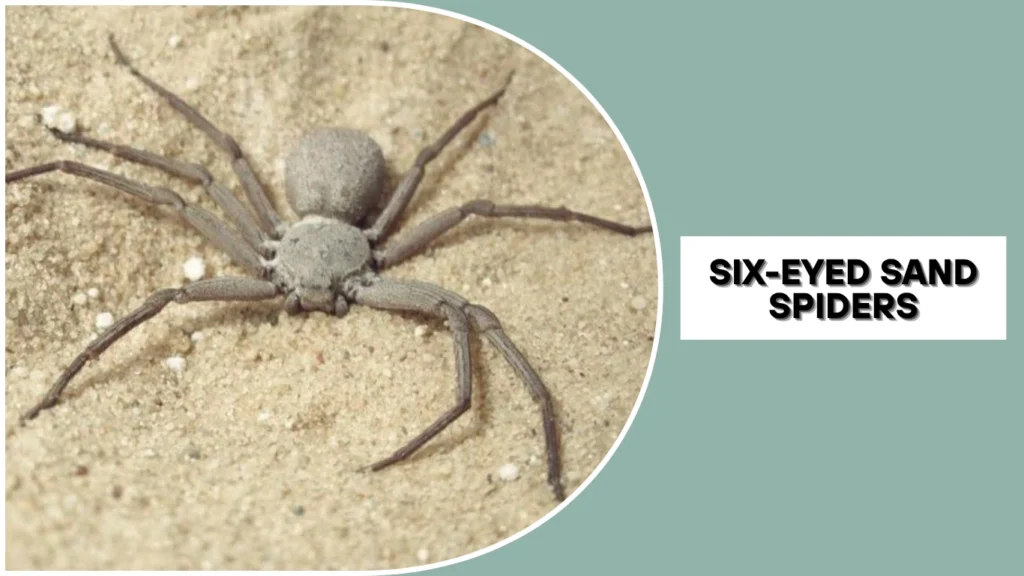
The spider’s flattened body and legs help it blend into the sand. Its six eyes are arranged in three pairs, providing limited but useful vision. It relies more on vibrations in the ground to detect prey than on sight.
One of its most powerful tools is its venom, which is cytotoxic—meaning it can destroy tissue. While this venom is dangerous to its prey, the spider only uses it when absolutely necessary, making it a calculated and efficient hunter.
What Do Six-Eyed Sand Spiders Eat?

Primary Prey: Insects and Arthropods
The six-eyed sand spider mainly preys on:
- Small ground-dwelling insects like beetles and crickets
- Ants that happen to march across its hiding spot
- Other spiders, including smaller species in the area
- Occasionally small scorpions or even soft-bodied reptiles (if they’re small and vulnerable)
Its preferred prey is usually small, slow, and unaware of its presence. Because this spider doesn’t chase, it relies heavily on prey walking directly into its trap zone.
Opportunistic Diet
While it has favorite prey, the six-eyed sand spider isn’t picky. If an edible creature walks within striking distance and can be subdued, it will attack. This includes:
- Termites
- Woodlice
- Soft-bodied larvae
Due to the low availability of food in the desert, it takes advantage of every opportunity it gets.
How Does It Hunt and Eat?
Ambush Hunting Technique
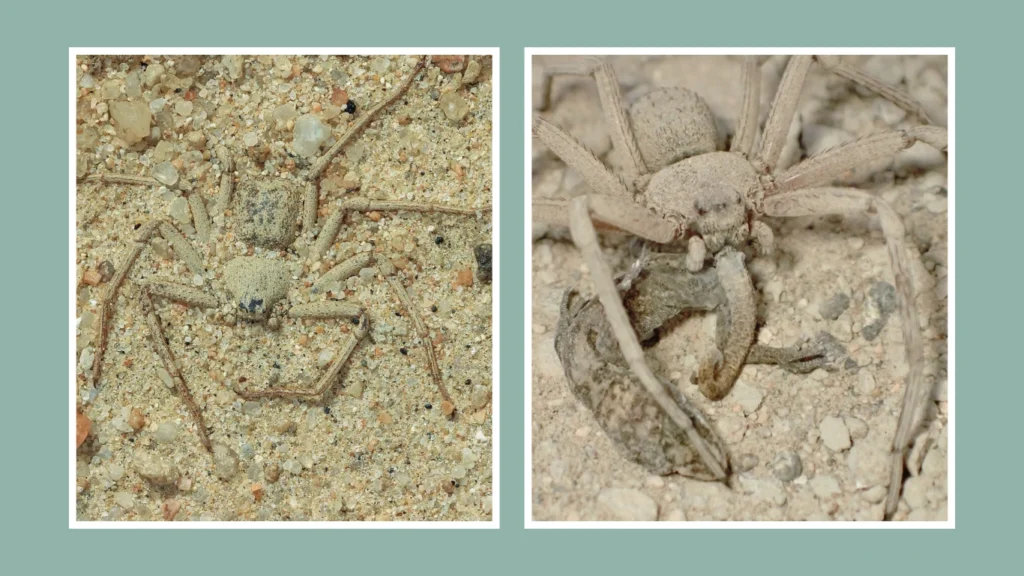
Rather than spin a web, the spider hides under the sand with just the tips of its legs exposed. When it senses vibrations or movement nearby, it bursts out with surprising speed. A quick bite delivers venom into the prey, paralyzing or killing it in seconds.
This method requires patience but uses very little energy—perfect for an environment where food may be scarce for long stretches.
Feeding Process: External Digestion
Like other spiders, the six-eyed sand spider cannot chew solid food. Instead, after biting its prey, it injects digestive enzymes into the body. These enzymes liquefy the soft internal tissues of the prey. The spider then uses its mouthparts to suck up the nutritious liquid.
After feeding, it often leaves behind a crumpled shell or exoskeleton.
Feeding Frequency and Desert Survival
How Often Do They Eat?
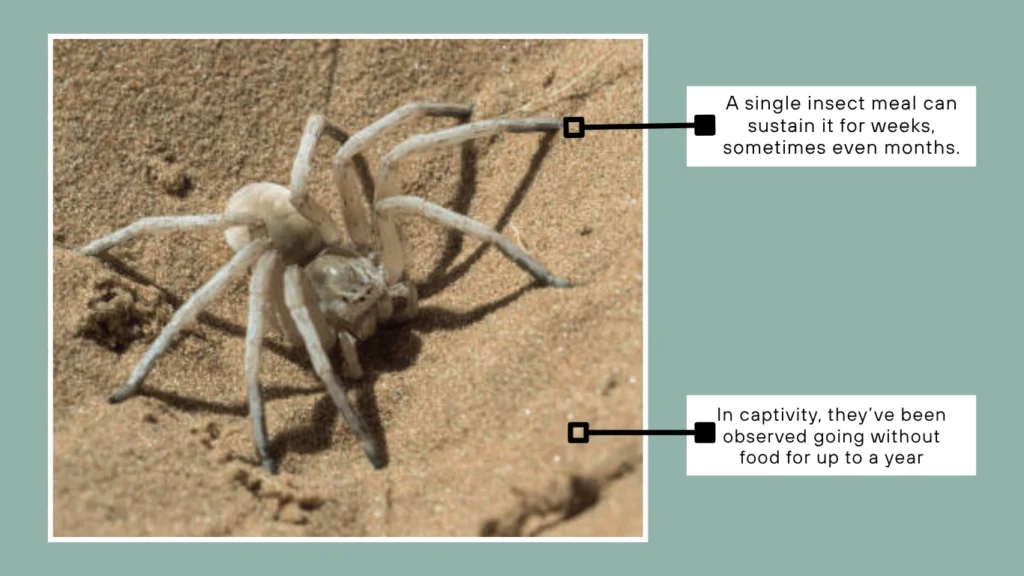
Unlike more active spiders, the six-eyed sand spider doesn’t need to eat often. A single insect meal can sustain it for weeks, sometimes even months. This is critical for survival in the dry, resource-limited deserts where it lives.
In captivity, they’ve been observed going without food for up to a year, especially when temperatures are lower or when conserving energy during molting periods.
Survival Mechanisms
Their slow metabolism, minimal movement, and ambush hunting style all help reduce calorie usage. They don’t waste energy wandering or chasing prey. They simply wait, hidden, until food comes to them.
Diet Compared to Other Spiders
No Web, No Problem
Most spiders use webs to catch prey like flies, moths, and mosquitoes. But the six-eyed sand spider doesn’t build any kind of trap. Its stealth and powerful venom do the work instead.
This results in a very different diet. You won’t find it eating winged insects very often—its prey mostly includes crawling bugs and small desert life.
Similar to Other Ambush Spiders
Its behavior is somewhat similar to wolf spiders or trapdoor spiders, who also rely on stealth and ambush rather than web-trapping. However, six-eyed sand spiders are even more sedentary, moving only when absolutely necessary.
Final Thoughts
The six-eyed sand spider is a desert survival specialist, and its diet reflects that. It feeds on whatever it can catch—mainly insects and arthropods—using powerful venom and strategic ambush techniques. Its slow metabolism and minimal energy use help it thrive in an environment where food can be hard to come by.
Though mysterious and rarely seen, this spider plays an important role in desert ecosystems by keeping insect populations in check. And while its venom is among the most dangerous in the spider world, its lifestyle is solitary, and it poses little threat to humans.
FAQs
1. Do six-eyed sand spiders eat humans?
No. They do not eat humans. These spiders are far too small to consider humans prey. Although their venom is dangerous in lab tests, they avoid human contact and will only bite in extreme cases.
2. Can they survive long without food?
Yes. Six-eyed sand spiders are capable of surviving for several months—sometimes even up to a year—without eating, thanks to their low metabolic rate and energy-conserving lifestyle.
3. Are they dangerous to their prey or to humans?
They are extremely dangerous to their prey due to their powerful venom. While potentially harmful to humans, bites are very rare and not well-documented in medical literature.
4. What’s their most common prey in the wild?
Their most common prey includes beetles, ants, and small spiders. These creatures are abundant in desert environments and provide enough nutrition for the spider’s minimal needs.
5. Do they scavenge or eat dead animals?
Typically, no. Six-eyed sand spiders prefer to hunt live prey. They rely on movement to detect and capture their food. However, in extreme situations, scavenging cannot be entirely ruled out, though it’s not common behavior.