

The six-eyed sand spider (Sicarius spp.), sometimes called the “assassin spider,” is one of the most elusive and misunderstood arachnids in the world. Known for its deadly venom and exceptional camouflage, this spider thrives in harsh desert environments. While many people are curious about its venom, just as important are the questions: Where does the six-eyed sand spider live? and How long does it survive in the wild? Let’s explore both habitat and lifespan in detail.
Natural Habitat of the Six-Eyed Sand Spider

Native Regions and Geographic Range
Six-eyed sand spiders are found primarily in southern Africa, especially in the arid regions of:
- Namibia
- South Africa
- Botswana
- Parts of Angola and Zimbabwe
These spiders belong to the genus Sicarius, which also includes relatives found in South and Central America, though the term “six-eyed sand spider” usually refers to the African species.
Their ideal habitat is desert or semi-desert regions where sand is loose, dry, and undisturbed. These environments provide the perfect hiding spots and offer plenty of small arthropods to hunt.
Desert Adaptations and Survival Tactics
Six-eyed sand spiders are highly adapted to survive in hot, arid, and nutrient-scarce environments. Key survival adaptations include:
- Camouflage: Their sandy-brown color blends perfectly with desert soil.
- Burrowing behavior: They bury themselves just beneath the surface, hiding from both predators and prey.
- Ambush hunting: Instead of roaming around for food, they wait still for hours—sometimes days—for unsuspecting prey to come near.
They prefer areas with fine, undisturbed sand, such as under rocks, near dry bushes, or in shaded crevices where temperatures are slightly cooler.
Do They Live in Urban or Populated Areas?
No. These spiders are not typically found in human homes, gardens, or cities. They are extremely shy and avoid human interaction altogether. The idea of six-eyed sand spiders lurking in populated areas is mostly a myth.
They are so secretive and well-camouflaged that sightings are rare—even in areas where they are native.
How Long Do Six-Eyed Sand Spiders Live?

Average Lifespan in the Wild
In natural desert environments, six-eyed sand spiders can live for around 5 to 15 years, though exact lifespans are not well-documented due to how elusive they are.
Some estimates suggest:
- Males live 5–8 years
- Females live 10–15 years, especially in undisturbed areas
The long lifespan is made possible by their low metabolism, minimal movement, and energy-efficient lifestyle. Unlike web-building spiders that need frequent meals, six-eyed sand spiders can go for months without eating, which greatly conserves their energy and extends their lives.
Lifespan in Captivity
In controlled environments like research labs or spider terrariums:
- They may live longer due to stable conditions, regular feeding, and no predators.
- However, stress from confinement or mishandling can shorten their lives.
Because they are not commonly kept as pets (due to their venom and reclusive nature), there is limited data on their longevity in captivity.
Life Cycle Stages
Like other spiders, six-eyed sand spiders go through:
- Egg stage: Females lay eggs in hidden sand pockets. Exact numbers are unknown.
- Spiderlings: Hatchlings are miniature versions of adults and are immediately independent.
- Juvenile molts: As they grow, they shed their exoskeletons multiple times.
- Adult stage: After several molts, they reach maturity. This may take 1–2 years depending on environmental conditions.
Each molt can take weeks or even months to recover from, which also contributes to their slow, long-paced life.
Environmental Factors That Affect Lifespan
Temperature Extremes
These spiders are built to withstand high desert heat during the day and cold at night. However:
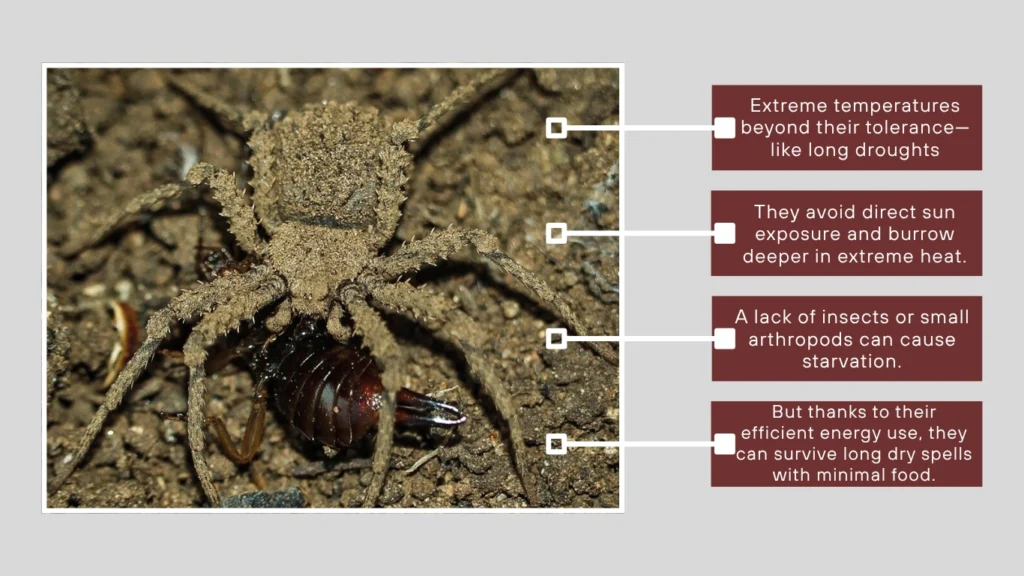
- Extreme temperatures beyond their tolerance—like long droughts or sudden cold snaps—can reduce survival rates.
- They avoid direct sun exposure and burrow deeper in extreme heat.
Food Availability
Because they rely on passing prey, food scarcity can affect lifespan:
- A lack of insects or small arthropods can cause starvation.
- But thanks to their efficient energy use, they can survive long dry spells with minimal food.
Predation
Six-eyed sand spiders have few natural predators due to their venom and stealth. However, some birds, reptiles, and larger arthropods may attack them—especially during the juvenile stages when they’re more vulnerable.
Final Thoughts
The six-eyed sand spider is a desert survivor, perfectly adapted to thrive in dry, unforgiving landscapes. It lives primarily in the sandy deserts of southern Africa, hiding beneath the surface and waiting for prey. Though rarely seen, these spiders can live surprisingly long lives—up to 15 years for females—thanks to their energy-saving lifestyle, reclusive nature, and ability to go long periods without food.
While they may seem terrifying due to their venom, they pose no real threat to humans and are an essential part of their ecosystem, helping control insect populations in some of the planet’s most extreme environments.
FAQs
1. Are six-eyed sand spiders found outside of Africa?
Yes, related species in the Sicarius genus are found in parts of Central and South America. However, the six-eyed sand spider most people refer to is native to southern Africa.
2. Can they survive in cold climates?
No. They are desert-adapted and require hot, dry environments. Cold, wet climates are not suitable for their survival.
3. Are they dangerous to humans in their natural habitat?
While they have potent venom, bites are extremely rare. These spiders avoid humans and are more likely to flee or remain buried when approached.
4. How do they avoid predators in the desert?
Their flat bodies and sand-colored appearance make them nearly invisible. They stay buried under sand and only come out when necessary.
5. How do scientists study their lifespan if they’re so rare?
Most lifespan data comes from controlled environments or long-term observation of closely related species. Their secretive nature makes field research difficult, so much of what we know is still evolving.