

The red-back jumping spider (Phidippus johnsoni) is a striking and agile predator native to North America. With its bold red abdomen and fearless leaping ability, it often draws attention from photographers, spider enthusiasts, and curious homeowners. But as urban development and environmental concerns grow, so do questions about its survival.
So, are red-back jumping spiders endangered of extinction? Let’s explore the facts.
Are Red-Back Jumping Spiders Endangered?

No, red-back jumping spiders are not endangered. They are currently classified as a species with a stable population and are not listed on any threatened or endangered species lists, including the IUCN Red List or U.S. Endangered Species Act.
In fact, this species is relatively common in many parts of the western United States and Canada, especially in dry, open habitats.
What Is the Red-Back Jumping Spider?

Scientific Overview
- Scientific name: Phidippus johnsoni
- Family: Salticidae (Jumping Spiders)
- Common name: Red-back jumping spider
- Size: 10–15 mm (females slightly larger than males)
- Coloration: Black body with a bright red or orange abdomen
- Venom: Mild—harmless to humans
This species is one of the most recognizable jumping spiders in North America, often confused with more dangerous spiders due to its red coloring.
Where Are Red-Back Jumping Spiders Found?
Red-back jumping spiders are found across western North America, particularly in:
- United States: California, Oregon, Washington, Nevada, Utah, and Arizona
- Canada: British Columbia and Alberta
- Mexico: Northern regions in desert habitats
They prefer:
- Dry scrubland
- Rocky slopes
- Wood piles, fences, and shrubs
- Occasionally found around homes and gardens
They do not rely on webs to catch prey but instead hunt using vision and quick leaps, a signature of Salticidae spiders.
Why People Might Think They’re Endangered
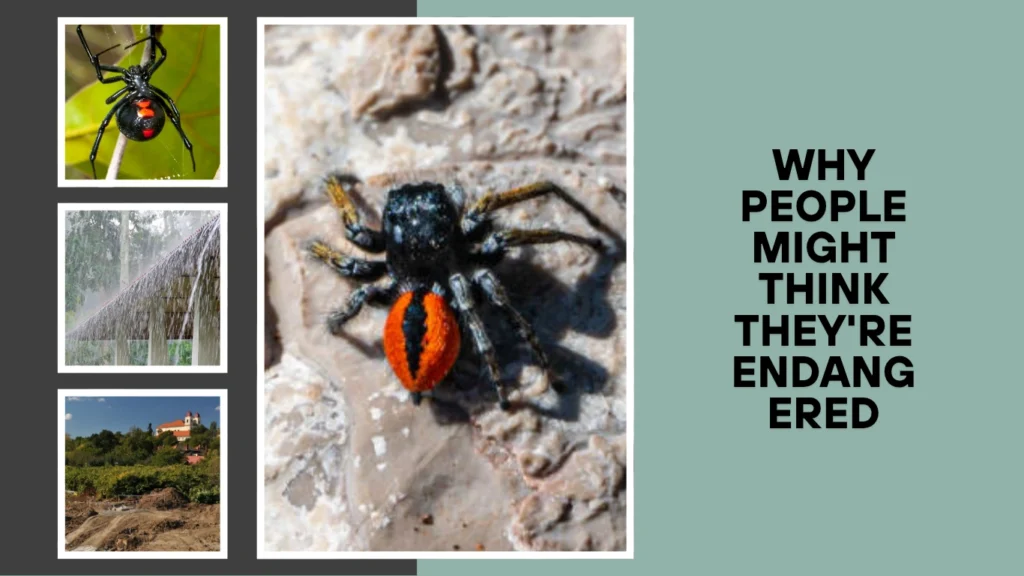
1. Misidentification and Fear
Due to their red abdomen, some people mistake red-back jumping spiders for black widows or other venomous species. This can lead to unnecessary killing or exaggerated concern over their rarity.
2. Limited Visibility
They are solitary and active mostly in warm seasons. In cooler months or regions with high rainfall, sightings drop—leading people to think they are disappearing.
3. Habitat Loss Assumptions
As urbanization increases, people assume that all native species are at risk. While habitat loss can affect local biodiversity, red-back jumping spiders are adaptable and not currently in decline.
Do Red-Back Jumping Spiders Face Any Threats?

Not in a serious way, but like all wildlife, they could face localized risks:
- Habitat fragmentation from construction or agriculture
- Pesticide use reducing their prey (flies, ants, beetles) or affecting them directly
- Climate extremes in certain regions, such as wildfires or droughts, could limit survival in smaller populations
However, their ability to live in human-dominated environments like gardens and fences helps them survive changes better than many less-adaptable species.
Role in the Ecosystem
Red-back jumping spiders are beneficial in several ways:
- Natural pest control: They eat insects like flies, gnats, aphids, and other spiders.
- Food source: They are preyed on by birds, reptiles, and larger insects.
- Biodiversity indicators: Their presence indicates a healthy, balanced environment.
They are also popular in macro photography and nature education due to their bold colors and curious behavior.
FAQs
1. Are red-back jumping spiders dangerous to humans?
No. While they are venomous (as all spiders are), their venom is not dangerous to humans. A bite may cause mild irritation, but it’s very rare and occurs only when the spider is provoked or trapped. Most bites are less severe than a bee sting.
2. Are red-back jumping spiders protected by any law?
No. These spiders are not protected because they are not considered at risk. They are not listed under CITES, the U.S. Endangered Species Act, or Canadian wildlife protection laws. Their populations are stable, and they live in both wild and urban habitats.
3. Can red-back jumping spiders be kept as pets?
Yes, in many places it is legal to keep them as pets, and they are quite popular among spider hobbyists. Their active behavior, colorful appearance, and ease of care make them a favorite. However, it’s important to source captive-bred spiders responsibly rather than removing them from the wild.
4. Could red-back jumping spiders become endangered in the future?
It’s unlikely, but not impossible. If environmental changes such as overdevelopment, climate disruption, or widespread pesticide use severely affect insect populations, jumping spiders could struggle. However, Phidippus johnsoni is highly adaptable, making it one of the more resilient species in its family.
5. How can we help protect red-back jumping spiders?
Even though they aren’t endangered, here’s how you can support their survival:
- Avoid pesticide overuse in gardens and yards
- Preserve native plants that attract insect prey
- Avoid killing them out of fear—they’re not dangerous
- Educate others about their role as beneficial predators
By creating spider-friendly spaces, we not only help red-back jumping spiders but also support broader biodiversity in our neighborhoods.