Australia is famous for its unique and sometimes intimidating wildlife—including large, ground-dwelling spiders often called “bird-eating spiders.” While the name sounds dramatic, it’s rooted in fact: some of these spiders are large enough to overpower small vertebrates. In this article, we’ll take a close look at the bird-eating spiders of Australia, covering their impressive size, natural diet, habitat preferences, hunting behaviors, and whether they truly pose any danger to humans.
What Are Bird-Eating Spiders?

Bird-eating spiders are large, ground-dwelling tarantulas that belong to the family Theraphosidae. In Australia, they’re often referred to as whistling spiders or barking spiders due to the hissing noise they make when threatened (a behavior called stridulation). Despite the name, they rarely prey on birds and instead feed on insects and small animals. Their size, strength, and fangs, however, do make bird predation possible in rare cases.
Species Commonly Referred to as Bird-Eating Spiders in Australia
Several tarantula species in Australia fall under this nickname. The most notable include:
- Selenotypus plumipes – Often considered the largest native tarantula species in Australia
- Phlogius spp. – A fast-growing genus popular in the pet trade, known for strong webbing
- Coremiocnemis spp. – Lesser known but still large and capable hunters
These spiders are typically found in Queensland, the Northern Territory, and parts of Western Australia.
Size and Appearance
How Big Are They?
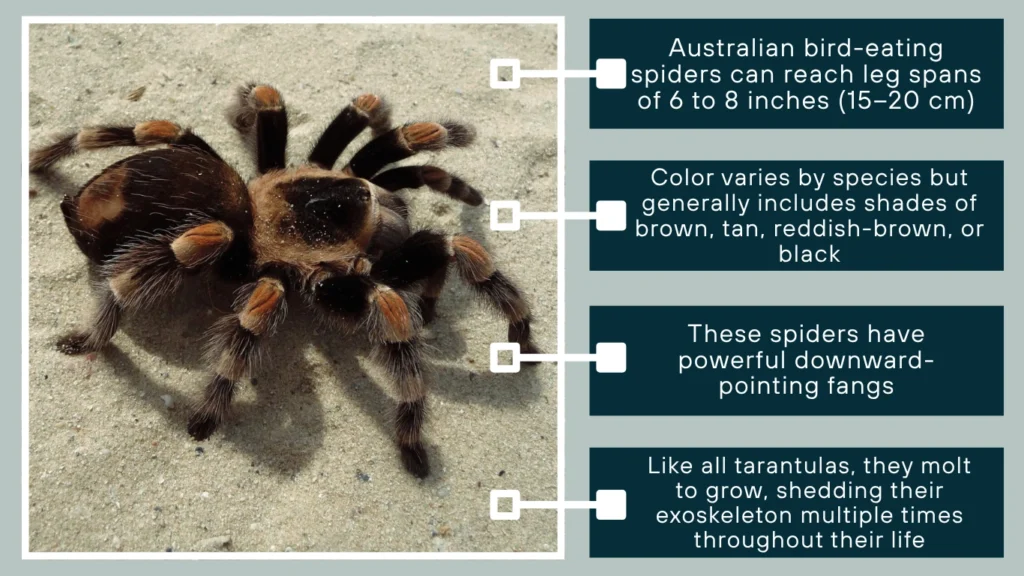
Australian bird-eating spiders can reach leg spans of 6 to 8 inches (15–20 cm), with heavy, thick bodies and strong fangs up to 1 cm long. While not the largest in the world, they are some of the heaviest and most robust spiders found in Australia.
Color Variations and Physical Traits
Color varies by species but generally includes shades of brown, tan, reddish-brown, or black, often with a velvety texture. Some may have faint striping on the legs or a reddish sheen on the carapace.
Fangs and Hair Structure
These spiders have powerful downward-pointing fangs, capable of piercing skin and small prey with ease. Their bodies are covered in fine sensory hairs, and their legs may have bristles used in sensing vibrations or in defense.
Growth and Molting Cycle
Like all tarantulas, they molt to grow, shedding their exoskeleton multiple times throughout their life. Molting is also how they regenerate lost limbs and reset their internal systems.
Male vs Female Size Differences
Females are typically larger, stockier, and longer-lived, while males are slimmer and mature more quickly. After reaching maturity, males live only a year or two, while females can survive up to 20 years.
Natural Diet of Bird-Eating Spiders

Do They Really Eat Birds?
While they have the strength to kill a small bird, these incidents are extremely rare. The name “bird-eating spider” originated from an early 20th-century image of a tarantula eating a hummingbird, but it’s not representative of their usual diet.
Typical Prey in the Wild
Their standard diet includes:
- Crickets and beetles
- Cockroaches
- Small lizards and frogs
- Mice (on occasion)
- Other spiders or invertebrates
They are opportunistic feeders, striking at anything that passes near their burrow.
Hunting Style and Venom Use
Australian tarantulas are ambush predators. They wait at the entrance of their burrows and pounce on prey, injecting venom that immobilizes and digests the internal tissues for easy consumption.
Feeding Frequency and Digestion
They feed infrequently, sometimes going weeks without eating. After a large meal, a tarantula may not hunt again for several days or even weeks. Digestion is external—enzymes liquefy the prey before it’s consumed.
Prey Capture in Captivity vs Wild
In captivity, they are often fed crickets, roaches, and mealworms. Their hunting behavior remains strong, and they will strike with the same intensity, even in confined enclosures.
Habitat and Distribution in Australia
Regions Where They’re Found
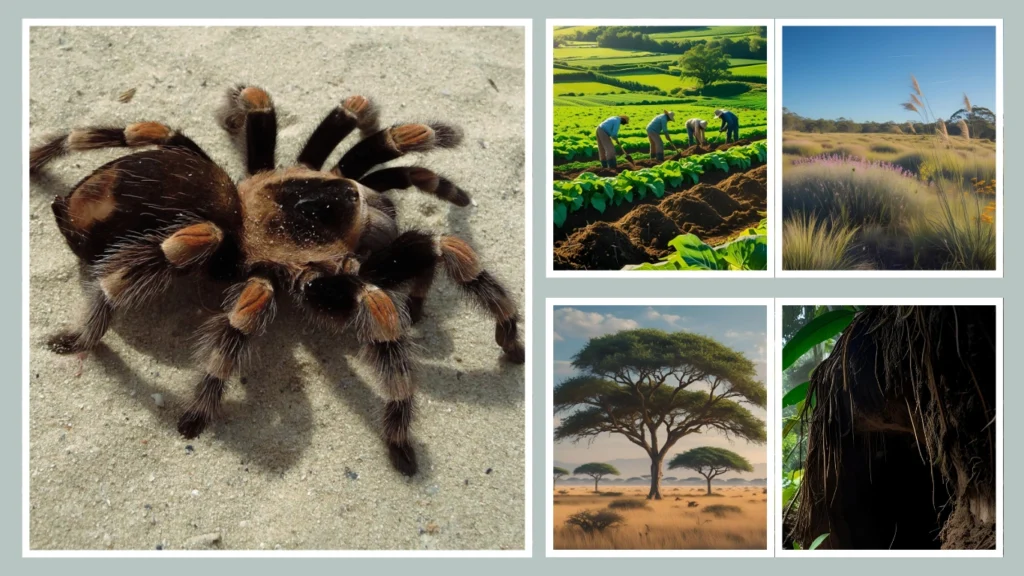
Bird-eating spiders in Australia are most commonly found in the northern and central parts of the country. Their range includes:
- Northern Queensland
- Northern Territory
- Western Australia
These areas provide the warm and dry to tropical environments that these spiders prefer.
Preferred Environments
These spiders are fossorial, meaning they live underground. They thrive in:
- Loose, well-drained soils
- Open bushland
- Savannahs and grasslands
- Edges of tropical rainforests
They often remain hidden, coming out only at night to ambush prey near the entrance of their burrows.
How They Build Burrows
Bird-eating spiders construct deep vertical burrows, sometimes over 30 cm (12 inches) deep, lined with silk for structure and sensitivity to vibrations. These burrows offer protection from predators, heat, and dehydration. The spider may seal the entrance with silk and dirt during molting or cold conditions.
Behavior and Lifestyle
Nocturnal Habits
These spiders are strictly nocturnal, remaining underground or hidden during the day and emerging at night to hunt. Their activity increases during humid or rainy seasons, which trigger both mating behavior and higher prey availability.
Burrowing and Territorial Behavior
They are highly territorial and spend most of their lives in or around a single burrow. They do not wander unless disturbed, during mating season, or when looking for new territory (common with males).
Mating and Reproduction
Mating occurs when males reach maturity and begin wandering in search of a female’s burrow. If accepted, the male deposits sperm using specialized pedipalps. Females lay up to 200 eggs in a silk sac, which they guard inside the burrow until spiderlings emerge.
Molting Process and Lifecycle
Molting is crucial for growth and limb regeneration. Young spiders molt frequently, while adults may molt only once a year. Females can live 15–20 years, while males usually die shortly after mating.
Defensive Actions (Stridulation, Threat Posture)
When threatened, these spiders may:
- Produce a hissing sound by rubbing their front legs together (stridulation)
- Rear up and display fangs in a warning posture
- Bite if provoked, though they prefer to retreat into their burrow
Are Bird-Eating Spiders Dangerous to Humans?

Bite Risk and Symptoms
Though intimidating in appearance, bird-eating spiders are not considered deadly. Bites are rare and typically occur only if the spider is mishandled or provoked. Symptoms may include:
- Pain and localized swelling
- Nausea or vomiting (in some cases)
- Muscle cramps
Their venom can cause discomfort, but it’s not lethal.
Medical Significance of Venom
The venom is cytotoxic, designed to break down tissues of prey. While it can cause pain and mild tissue damage, it is not considered medically significant for healthy adults. Severe allergic reactions are rare.
Handling Risks in Captivity
Bird-eating spiders should never be handled casually. Their large fangs can cause painful puncture wounds, and their defensive nature makes them unsuitable for physical interaction—even in pet settings.
Reports of Bird Consumption—Facts vs Hype
Though some wild individuals have been observed preying on small birds or nestlings, these events are extremely rare. The spider would need ideal conditions: the right size, an exposed nest, and a still target. Their usual prey remains insects and ground-dwelling creatures.
Safe Coexistence Tips
If you live in an area with these spiders:
- Avoid disturbing burrows
- Use gloves when gardening in rural areas
- Shake out shoes and clothing if left outdoors
- Seal cracks in homes near bushland
FAQs
1. What is the largest bird-eating spider in Australia?
The largest is Selenotypus plumipes, commonly referred to as the Australian whistling spider. It can reach up to 8 inches in leg span and is known for its heavy body and powerful bite.
2. Can bird-eating spiders really kill birds in the wild?
Yes, but very rarely. Although they are capable of overpowering small birds or hatchlings, their natural diet consists mainly of insects, frogs, and small reptiles. Bird predation is not typical.
3. Are Australian bird-eating spiders kept as pets?
Yes. Species like Phlogius and Selenotypus are commonly kept by advanced hobbyists. However, due to their speed, size, and defensive behavior, they are not recommended for beginners.
4. How long do these spiders live?
Female bird-eating spiders can live up to 15–20 years, while males usually live 3–5 years, often dying shortly after reaching maturity and mating.
5. What should I do if I see a bird-eating spider near my home?
If the spider is outside and not posing a direct threat, it’s best to leave it alone. If it’s indoors, use a container to gently relocate it outside, or contact a local pest specialist if needed. Avoid handling it directly, as it may bite in self-defense.