

Wolf spiders often stir curiosity and confusion when it comes to webs. Many people expect them to spin large, sticky webs like orb-weavers or funnel-web spiders. Yet, wolf spiders are hunters that rely more on speed and stealth than webs to catch prey. Still, they do produce silk, which raises questions: what does a wolf spider web look like? Do they make funnels, burrows, or nests? And how do they compare to spiders like the funnel-web, nursery web, or brown recluse?
Do Wolf Spiders Spin Webs?

Wolf spiders are active ground hunters. Unlike orb-weavers, they don’t wait in webs for insects to fall into sticky traps. Instead, they chase down prey, using their speed, strong legs, and excellent eyesight.
But wolf spiders are not entirely “web-free.” They produce silk for other purposes:
- Draglines: Thin silk threads used for navigation and safety, preventing falls.
- Burrow lining: Some wolf spiders live in silk-lined burrows for protection and comfort.
- Egg sacs: Female wolf spiders carry their silk-wrapped egg sacs attached to their spinnerets.
- Retreats: When resting, they may create small silk retreats under leaves, rocks, or debris.
This means wolf spiders don’t make capture webs like funnel or orb-weaving spiders. Instead, their silk is functional for survival and reproduction.
What Does a Wolf Spider Web Look Like?
When people ask this, they often expect to see a large geometric design. In truth, wolf spider “webs” are subtle and easy to miss.
- Silk retreats: Appear as thin sheets of silk under stones or leaf litter.
- Burrows: Some species dig tunnels and line them with silk to reinforce the walls.
- Egg sac silk: A small, round, cottony ball that the female carries behind her.
- Dragline threads: Nearly invisible strands left behind as they move across surfaces.
Because their silk isn’t designed to trap prey, wolf spider webs are often mistaken for the work of other species. Many funnel-shaped webs in lawns, for example, actually belong to grass spiders, not wolf spiders.
Wolf Spider Web Types

Wolf spiders don’t have just one silk use; their silk serves multiple roles:
- Ground silk retreats – a resting shelter hidden from predators.
- Protective silk nests for eggs – females fiercely guard these.
- Dragline silk trails – left behind as a safety cord.
- Burrow linings – more common in larger species like the Carolina wolf spider.
This limited use of silk sets them apart from true web-building spiders.
Wolf Spider vs Funnel-Web Spider

One of the biggest confusions is between wolf spiders and funnel-web spiders. Funnel-web spiders are famous for their tube-shaped webs, which lead into a hidden retreat. Prey that touches the web triggers the spider to rush out and capture it.
By contrast, wolf spiders:
- Do not build funnel webs.
- Hunt directly on the ground.
- Use silk only for burrows, draglines, or egg sacs.
In Australia, the Sydney funnel-web spider is one of the most dangerous spiders in the world due to its potent venom. Wolf spiders, though large and intimidating, are not deadly to humans. Their venom is mild, and their bites usually cause only temporary pain, swelling, or itching.
Comparison Table: Wolf Spider vs Funnel-Web Spider
| Feature | Wolf Spider | Funnel-Web Spider |
| Web Type | No capture web; silk for burrows/egg sacs | Funnel-shaped web for trapping prey |
| Hunting Style | Active ground hunter | Waits inside funnel web for prey |
| Venom | Mild, not deadly | Highly toxic (Sydney funnel-web is dangerous) |
| Appearance | Hairy, robust, brown/gray | Glossy, dark, with prominent fangs |
Wolf Spider vs Nursery Web Spider

Another common comparison is with nursery web spiders. Both are agile hunters, but their approach to reproduction and silk use differs.
- Nursery web spiders create large silken “nurseries” where they guard their spiderlings until they are ready to disperse.
- Wolf spiders, instead of nursery webs, carry their spiderlings on their back. After hatching, dozens of baby spiders climb onto the mother and stay there until they’re ready to leave.
This key difference is why the two species are often confused. The nursery web spider’s name comes directly from its habit of making silk tents, while wolf spiders don’t make such nurseries at all.
Wolf Spider vs Brown Recluse Web

The brown recluse spider builds messy, irregular webs in hidden corners, attics, or basements. These webs are not for trapping prey but serve as retreats where the recluse hides and waits for insects.
Wolf spiders, on the other hand, don’t build sticky webs. When people find them indoors, they often assume wolf spiders are responsible for cobwebs. In reality, the webs in a house are almost always from other spiders, such as cobweb spiders or recluses.
The brown recluse is medically significant, with venom that can cause necrotic skin wounds. Wolf spiders may look just as intimidating but do not pose the same danger.
Regional Web Behavior of Wolf Spiders
Not all wolf spiders behave the same way when it comes to silk use. Different species across regions show slightly different patterns:
- Carolina Wolf Spider (Hogna carolinensis): One of the largest wolf spiders in North America. Females often dig burrows and reinforce them with silk to prevent collapse. These silk-lined tunnels look more like small dens than webs.
- Rabid Wolf Spider (Rabidosa rabida): Known for fast hunting. Instead of making retreats, it relies heavily on dragline silk during movement, leaving faint silk traces behind.
- Black Wolf Spider (Hogna frondicola): Found in wooded areas, it often creates simple silk retreats under rocks or logs, especially for resting or egg protection.
- California Wolf Spider: Frequently seen in dry regions, some individuals adapt by burrowing and lining the tunnels with silk, resembling “silk doors” at the entrance.
These differences show that while wolf spiders don’t spin capture webs, their use of silk varies depending on habitat and survival needs.
Wolf Spider in Houses – Web or Nest?
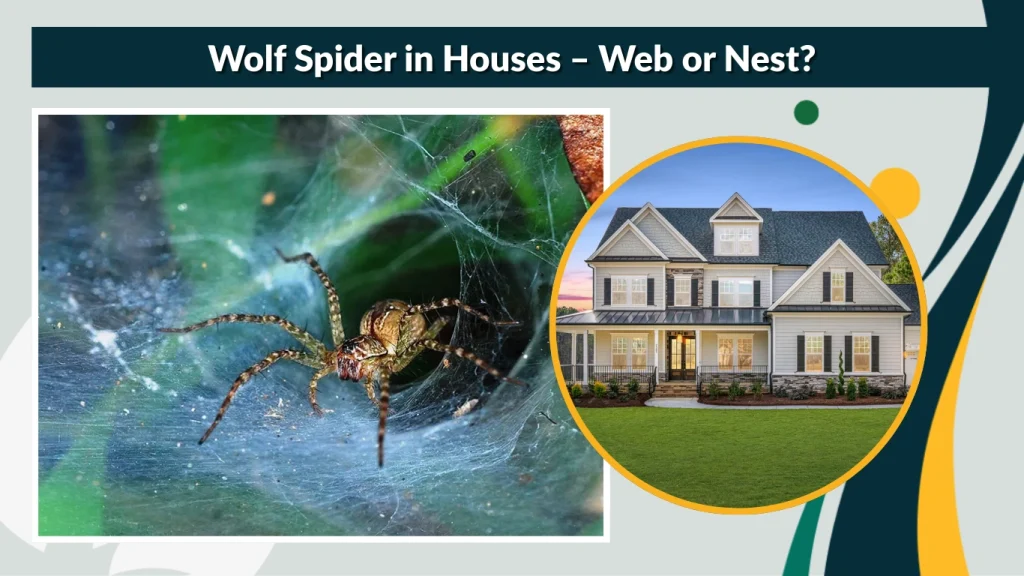
When wolf spiders wander indoors, homeowners often assume that the webs in corners belong to them. In truth, wolf spiders rarely make visible structures inside homes.
- What you’ll find indoors: A wolf spider might create a small silk retreat under furniture or behind boxes, but not large cobwebs.
- Confusion point: Most cobwebs indoors come from cobweb spiders or house spiders, not wolf spiders.
- Why they come inside: Wolf spiders usually enter homes seeking shelter, warmth, or prey such as small insects.
If you find a wolf spider in your house, you’re more likely to see the spider itself rather than its silk structure.
Wolf Spider vs Grass Spider Web

Another frequent confusion happens with grass spiders, which are closely related to funnel-weavers. Grass spiders create distinctive sheet-like webs with a funnel retreat at one end. These webs are easy to spot in lawns or shrubs, especially when dew makes them glisten in the morning.
Wolf spiders, by contrast, don’t spin webs across grass at all. If you see a spider running across the lawn without a web, it’s more likely a wolf spider. If you see a wide, funnel-shaped web stretched across the grass, that belongs to a grass spider.
Spider That Looks Like a Wolf Spider but Spins a Web

Several spiders look similar to wolf spiders but actually make webs:
- Hobo Spider (Eratigena agrestis): Builds funnel-shaped webs and is often mistaken for wolf spiders due to similar brown coloration.
- Grass Spider (Agelenopsis spp.): Creates sheet webs in lawns, but looks much like a wolf spider at first glance.
- True Funnel-Web Spiders (Atracidae family in Australia): Known for their tube-shaped webs and highly venomous bites, often confused with wolf spiders in photos.
If you see a spider that looks like a wolf spider and it is sitting on a funnel or sheet-like web, chances are it isn’t a wolf spider.
Wolf Spider Web Myths in Pop Culture
Wolf spiders often appear in popular culture and television, sometimes inaccurately:
- Monster Bug Wars (Sydney funnel-web vs wolf spider): TV shows sometimes pit spiders against each other, but this fuels the myth that wolf spiders also spin funnel webs. In reality, wolf spiders don’t make such structures.
- Madame Web (Marvel reference): Pop culture uses the term “web” with wolf spiders, though it’s more metaphorical than biological.
- Online images: Many “wolf spider web” pictures online are actually photos of grass spider or funnel-web spider webs.
This confusion emphasizes the importance of knowing what wolf spiders really do with their silk.
Wolf Spider Food Web (Ecological Role)
Wolf spiders play a vital role in ecosystems. Instead of being web-dependent predators, they hunt actively, which makes them effective at controlling insect populations.
- Predators of: Crickets, flies, moths, ants, beetles, and other small invertebrates.
- Prey to: Birds, reptiles, frogs, and parasitic wasps.
- Food web role: They serve as both hunters and prey, maintaining ecological balance.
Their hunting ability makes them beneficial in gardens, where they help reduce pest numbers.
Wolf Spider Web Pictures and Identification
When searching for images of wolf spider webs, most people actually see grass spider or funnel-web webs. True wolf spider silk structures are harder to spot because:
- They are low to the ground, under rocks, leaves, or in soil burrows.
- They appear as light silk linings, not large visible nets.
- The most obvious silk is the egg sac, carried by females.
To correctly identify wolf spiders:
- Look for the spider itself, often brown, hairy, and robust.
- Notice if it is carrying an egg sac or young spiderlings.
- Check the environment—burrows and silk retreats suggest wolf spiders, while sheet or funnel webs point to other species.
FAQs
Does a wolf spider spin a web like other spiders?
No. Wolf spiders don’t make trapping webs like orb-weavers or funnel-web spiders. They use silk for egg sacs, burrows, and draglines but rely on active hunting for food.
What does a wolf spider’s silk retreat look like?
It appears as a thin silk lining in soil burrows or under leaves and rocks. Sometimes, you may see silk used to protect egg sacs or as a resting shelter.
How is a wolf spider web different from a funnel-web spider?
Wolf spiders don’t make funnel webs at all. Funnel-web spiders build tube-like webs to trap prey, while wolf spiders are hunters that only use silk for survival needs.
Do wolf spiders build webs in houses?
No. Wolf spiders may enter homes but don’t build large webs indoors. Any cobwebs you see in your house belong to other spiders, not wolf spiders.
What spider looks like a wolf spider but spins a web?
The hobo spider and grass spider look similar but spin funnel-shaped or sheet-like webs. Wolf spiders, in contrast, never make capture webs.