

Tarantulas are among the most captivating arachnids, admired by hobbyists for their size, beauty, and unique behaviors. One of the most important aspects of keeping tarantulas is learning how to distinguish males from females. Sexing tarantulas is not just about curiosity—it directly affects care, lifespan expectations, and breeding success. This guide explains the differences in anatomy, growth, behavior, and molting, with comparisons across popular species.
Male vs Female Tarantulas: General Differences

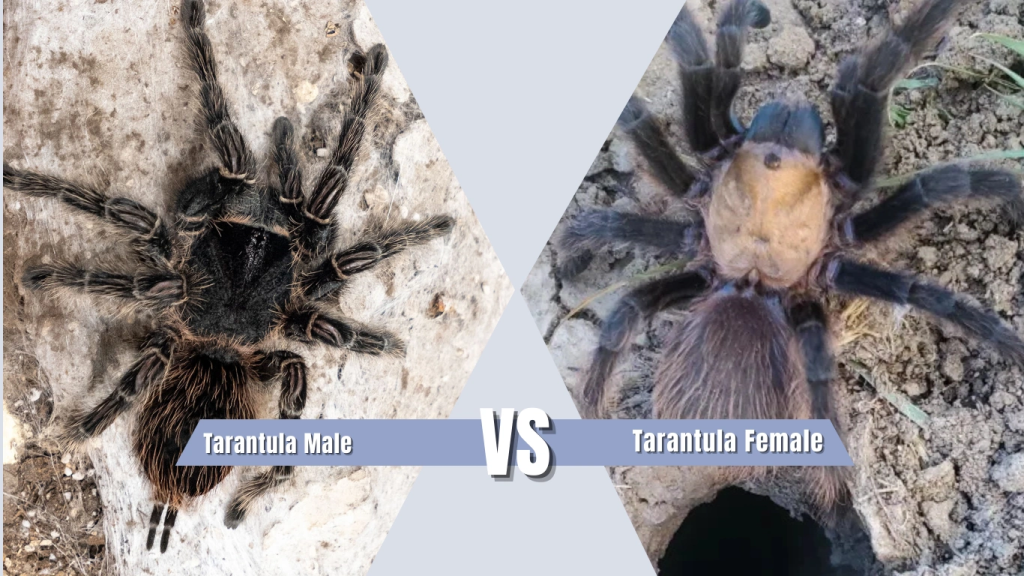
The most noticeable difference between male and female tarantulas is lifespan. Females live significantly longer, often 15–30 years depending on species, while males typically live only 3–6 years. Size also plays a role: females generally appear bulkier, with wider abdomens and thicker legs. Males, by contrast, are slimmer and leggier, built for traveling in search of mates rather than staying in one burrow.
Coloration can also shift after maturity. Males sometimes exhibit brighter or shinier tones, particularly after their final molt, making them look sleeker. Females usually retain a more robust and subdued appearance, consistent throughout adulthood. These distinctions help hobbyists quickly identify which sex they own, even without close inspection.
Physical Identification and Anatomy
Ventral Sexing (Underside Differences)
Looking at the underside of a tarantula can provide early clues to its sex. Females possess an epigastric furrow between the top pair of book lungs, which eventually develops into spermatheca for storing sperm. In males, this area is flat and lacks the distinct slit-like structure. While ventral sexing requires practice and good lighting, it can be done without harming the spider.
Pedipalps
Another reliable indicator is the pedipalps, the small appendages near the mouth. In mature males, the ends of these appendages swell into bulb-like structures used during mating. Females and immature males lack these swollen tips, showing only slender palps. This makes pedipalp inspection a useful tool once a male has reached sexual maturity.
Abdomen Shape
Females usually have a rounder, fuller abdomen, reflecting their role in reproduction and egg sac production. Males tend to have smaller, narrower abdomens, especially after reaching maturity, since their energy is directed toward roaming and breeding rather than building reserves. For beginners, the abdomen shape combined with overall body proportions is often the easiest way to tell them apart.
Molting and Growth Patterns
Molting plays a crucial role in sexing tarantulas. Each time a tarantula sheds its old exoskeleton, it reveals key details about its sex. A discarded female molt will contain spermatheca structures—tiny reproductive organs visible under magnification. Males, by contrast, lack these features, making molt inspection the most reliable method of sexing across all species.
Growth rates also differ significantly. Males mature much faster, sometimes reaching adulthood in only a few years. Once mature, they undergo a “final molt,” after which they stop eating regularly and focus solely on finding mates. Females molt regularly throughout their lives, even in adulthood, allowing them to grow larger and live for decades. This difference explains why males have shorter lifespans and why females dominate the pet trade for long-term keeping.
Behavior and Aggression
Activity Levels
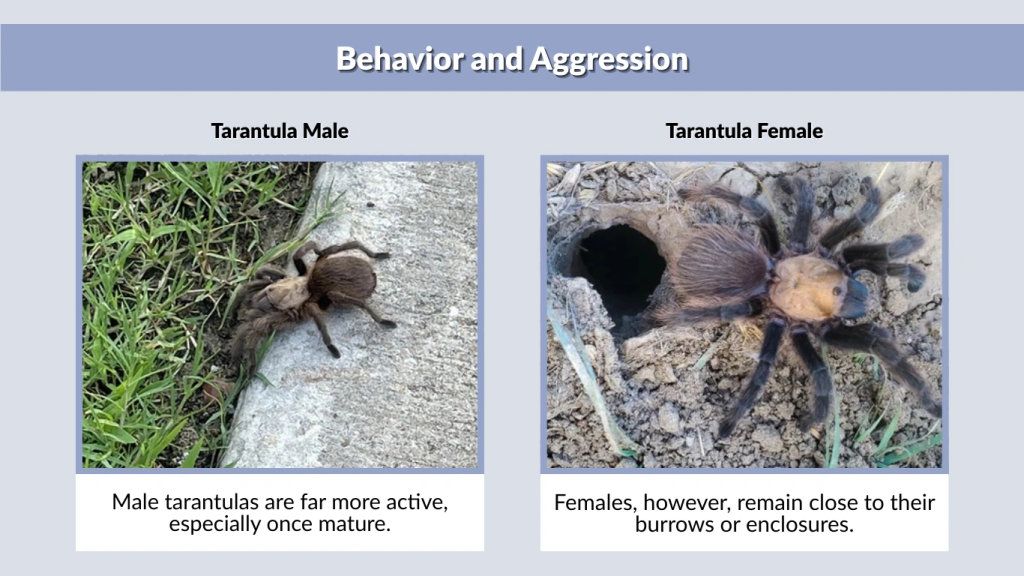
Male tarantulas are far more active, especially once mature. They leave their burrows and wander constantly in search of females, sometimes refusing food as they prioritize mating. Females, however, remain close to their burrows or enclosures, maintaining a stable territory.
Territorial Nature
Females are generally more defensive of their space. When threatened, they may kick urticating hairs or display threat postures more often than males. While this can make them seem aggressive, it is mostly defensive behavior meant to protect themselves and their habitat.
Aggression Comparison
Although both sexes can bite if provoked, females tend to stand their ground more often, while males prefer to retreat. For this reason, female tarantulas are sometimes seen as more “aggressive,” though in captivity they are usually predictable and calm once settled. Males’ restlessness, by contrast, can make them seem nervous or flighty.
Why Females Are Preferred as Pets
From a keeper’s perspective, females are more desirable because of their longer lifespan and consistent behavior. A female tarantula can become a long-term companion, while a male’s short lifespan often leaves owners disappointed after years of rearing. For breeders, however, males are essential, so understanding these behavioral contrasts helps balance pet ownership with reproduction goals.
Mating and Cannibalism
Courtship among tarantulas is fascinating yet risky. Mature males approach cautiously, tapping their legs or pedipalps to signal their presence. If the female is receptive, she allows him to insert sperm using his specialized pedipalps. However, once mating is complete, the male must retreat quickly.
Females are larger and stronger, and in some cases, they attack or even consume the male afterward. This cannibalistic behavior is not guaranteed but is common enough to be a concern. In the wild, it provides the female with extra nutrients for egg production. In captivity, careful monitoring during breeding reduces the risk of fatal encounters.
Species-Specific Comparisons

Texas Brown Tarantula
Females are noticeably stockier, with lifespans reaching two decades. Males are leggier and live far shorter lives.
Arizona and Desert Blonde Tarantula
Females are bulkier, sandy-colored, and live 20–25 years. Males mature quickly, have longer legs, and die within a few years of adulthood.
Mexican Red Knee Tarantula
Females are the classic choice for pets due to their longevity and brilliant red-orange knees. Males are more slender and often display shinier coloration after maturity.
Curly Hair Tarantula
Females have rounder abdomens and live up to 15 years, while males are slimmer and reach maturity faster, often living only 3–4 years.
Brazilian Black Tarantula
Females grow into large, jet-black adults prized by keepers. Males are slimmer and display a shinier sheen after their final molt.
Chilean Rose Tarantula
Females can live 15–20 years, while males rarely live beyond five. Males appear more slender and restless compared to calm, robust females.
Cobalt Blue Tarantula
Known for their vibrant blue legs, females are aggressive burrowers with long lifespans. Males are leggier and short-lived once mature.
Pink Toe and Antilles Pinktoe Tarantulas
Females are sturdier and maintain their arboreal lifestyle for many years. Males are more delicate, with leggier frames and a restless drive to breed.
Green Bottle Blue Tarantula (GBB)
Females retain striking green and orange colors throughout their long lives. Males often appear more vibrant but only survive a few years post-maturity.
Gooty Sapphire Tarantula
This rare, electric-blue species shows the same pattern: long-lived females prized by collectors and slender, short-lived males.
Lifespan Differences Between the Sexes
Perhaps the most significant distinction between male and female tarantulas is lifespan. Female tarantulas often live anywhere between 15 and 30 years, depending on the species. Their ability to continue molting throughout adulthood helps them regenerate tissue, maintain health, and live far longer lives.
Males, however, live short lives after maturity—sometimes just one or two years. Once they reach adulthood, they stop molting and dedicate themselves to finding mates, ultimately shortening their lifespan. For hobbyists, this means females provide decades of companionship, while males are usually bred rather than kept long-term.
FAQs
How can you tell if a tarantula is male or female?
The most reliable method is examining a shed molt under magnification. Females show spermatheca structures, while males lack them. Ventral sexing and checking pedipalps also help, though these methods require experience. Abdomen size and proportions provide general clues, but molt inspection remains the gold standard for accuracy.
Do female tarantulas eat males after mating?
Yes, but not always. In nature, cannibalism helps females gain nutrients for egg production. In captivity, successful pairings often end peacefully if the male escapes quickly. Still, many breeders monitor interactions closely and separate the pair immediately after mating to reduce the risk of injury or death.
Are female tarantulas more aggressive than males?
Females are more territorial and defensive, especially around their burrows or egg sacs. They may kick urticating hairs or show threat postures more readily. Males are typically less defensive but more restless, constantly wandering in search of mates. Neither sex is inherently “aggressive”; behavior depends on context.
How long do female tarantulas live compared to males?
Female tarantulas can live 15–30 years, while males average only 3–6 years. The difference lies in their biology: females continue molting throughout life, while males stop molting after reaching maturity. This extended molting cycle allows females to repair and grow, giving them far greater longevity.
Which tarantula sex makes a better pet?
For most keepers, females are the better choice because of their long lifespan, consistent growth, and predictable behavior. They become long-term companions that can be passed down through generations. Males, although important for breeding, live shorter lives and are generally less rewarding to keep as pets.