


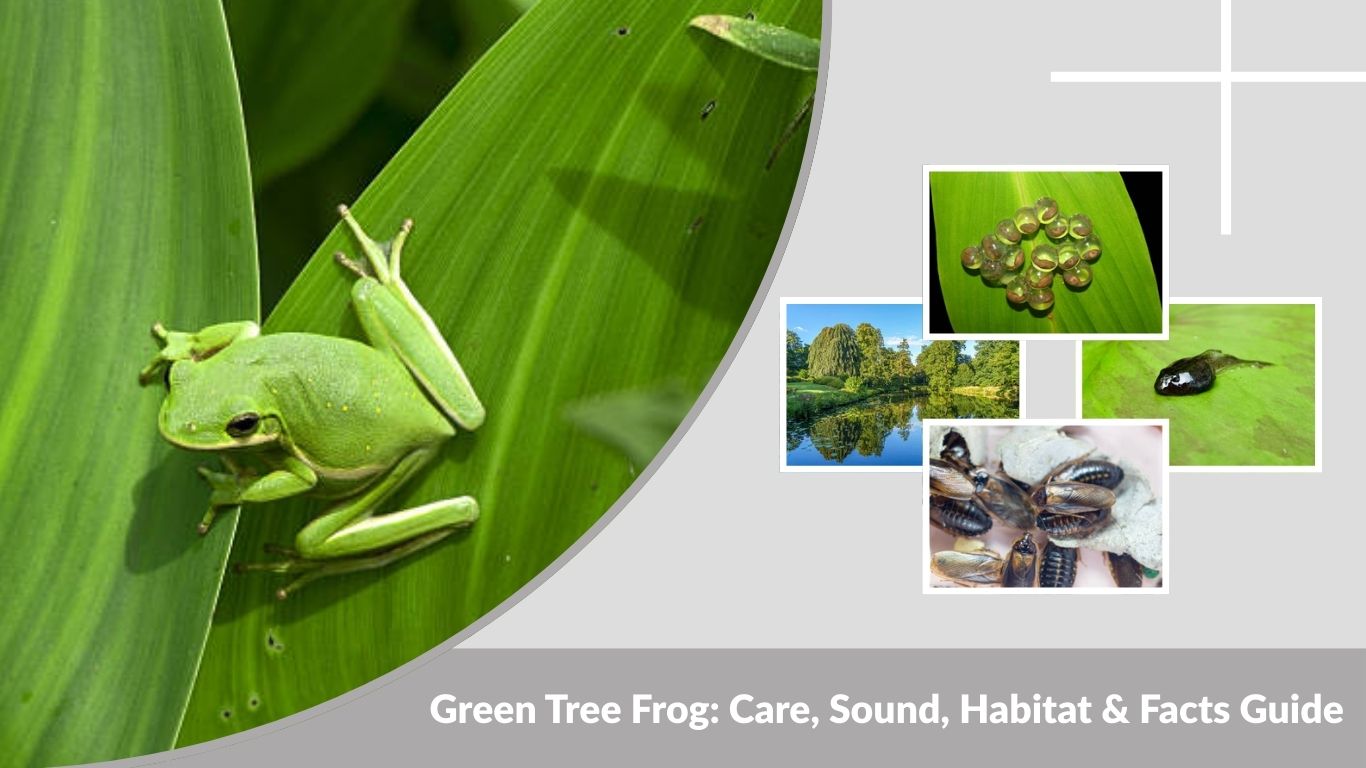
Green tree frogs are among the most recognizable and beloved amphibians in the world. From the chunky Australian green tree frog to the slender Florida green tree frog, these bright green climbers are known for their sticky toe pads, gentle expressions, and distinctive nighttime calls. Many people search for information about their care, diet, lifespan, habitat setup, and whether they are poisonous. This guide covers everything you need to know about green tree frogs in detail.
Green Tree Frog Overview
Green tree frogs belong to a group of arboreal (tree-dwelling) frogs known for their climbing ability and vibrant green coloring. While several species share the common name, the two most well-known are the Australian green tree frog and the American green tree frog found in Florida and the southeastern United States.
Scientific Name
The Australian green tree frog is scientifically known as Litoria caerulea. It is also commonly called the Dumpy tree frog or White’s tree frog.
The American or Florida green tree frog is known as Hyla cinerea. This species is native to the southeastern United States, including Florida and Georgia.
Common Names
Depending on region and species, green tree frogs may be called:
- Dumpy green tree frog
- White’s tree frog
- Florida green tree frog
- Dainty green tree frog (a smaller Australian species)
Although these frogs look similar, they differ in size, habitat, and care requirements.
Quick Facts
- Average Size: 1.5–4 inches depending on species
- Lifespan: 6–20 years (longer in captivity)
- Habitat: Wetlands, forests, swamps, and urban gardens
- Temperament: Generally calm and non-aggressive
Types of Green Tree Frogs
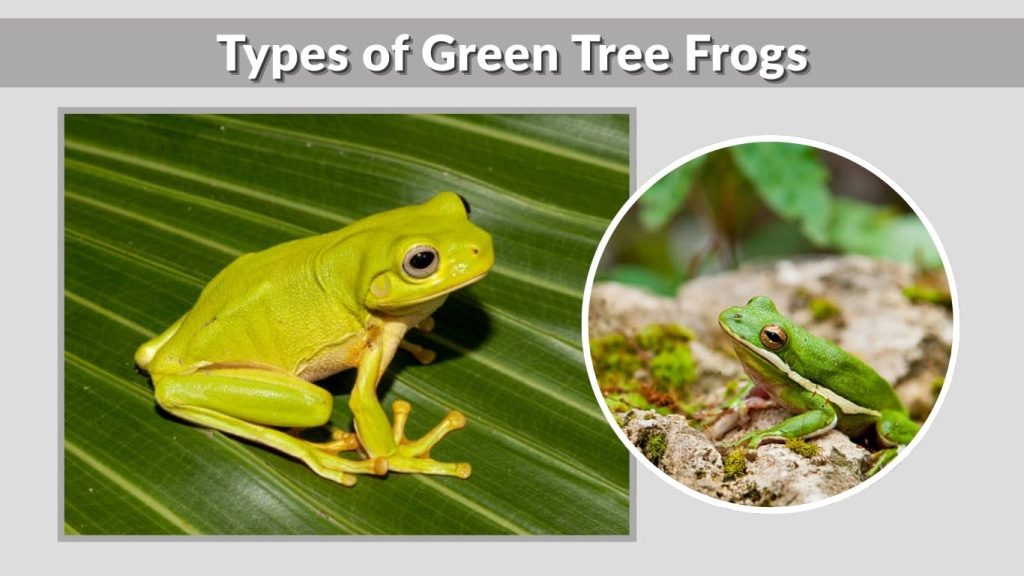
Several species fall under the “green tree frog” label. Understanding the differences is important for both pet owners and wildlife enthusiasts.
Australian Green Tree Frog
The Australian green tree frog is the larger and more popular pet species. It has a plump body, smooth skin, and a somewhat “smiling” facial appearance.
These frogs can grow up to 4 inches long and are known for their calm nature. They adapt well to captivity and are often recommended for beginner amphibian keepers. Their skin may range from bright green to a bluish-green shade, depending on mood and environment.
Florida Green Tree Frog
The Florida green tree frog (Hyla cinerea) is slimmer and slightly smaller than its Australian relative. Adults usually reach around 1.5 to 2.5 inches in length.
They are commonly found in:
- Florida
- Georgia
- Alabama
- South Carolina
- Other southeastern U.S. states
This species has a distinctive white or yellow stripe running along each side of its body.
Differences Between Australian and American Species
- Size: Australian species are larger and chunkier.
- Lifespan: Australian frogs live longer in captivity.
- Temperament: Australian frogs are more tolerant of handling.
- Habitat range: American species are native to the U.S., while Australian frogs originate from Australia and New Guinea.
Green Tree Frog Habitat
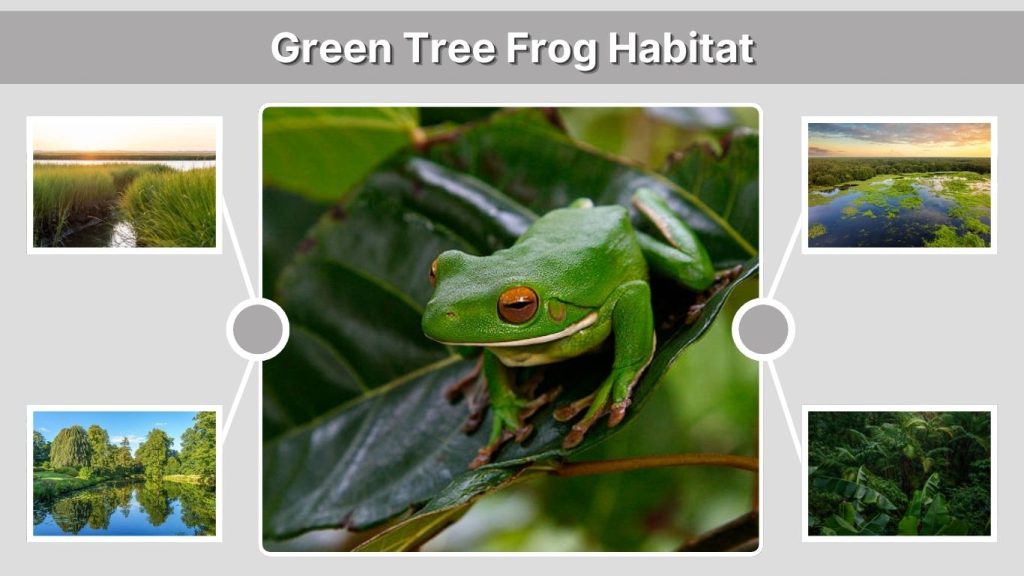
Green tree frogs thrive in warm, humid environments with plenty of vegetation. Whether in the wild or captivity, their habitat must provide moisture and climbing opportunities.
Natural Habitat
In the wild, green tree frogs are found in:
- Swamps
- Rainforests
- Marshes
- Ponds
- Urban gardens near water sources
They are arboreal, meaning they spend most of their time in trees, shrubs, and other elevated surfaces. Their sticky toe pads help them cling to leaves, branches, and even glass surfaces.
Geographic Distribution
The Australian green tree frog is native to:
- Northern and eastern Australia
- New Guinea
The American green tree frog is commonly found in:
- Florida
- Georgia
- Southeastern United States
They prefer areas with consistent humidity and access to water for breeding.
Green Tree Frog Habitat Setup (For Pets)
Creating the proper habitat setup is essential for keeping a green tree frog healthy in captivity. Their enclosure should replicate warm, humid conditions similar to their natural environment.
Tank Size Requirements
A single adult green tree frog should have at least a 10–20 gallon vertical enclosure. Height is more important than floor space because these frogs love to climb.
Multiple frogs require larger enclosures to prevent stress and overcrowding.
Substrate Options
Safe substrate options include:
- Coconut fiber
- Reptile-safe soil
- Sphagnum moss
Avoid gravel or small stones, as frogs may accidentally ingest them.
Lighting & Temperature
Green tree frogs need:
- Daytime temperatures between 75–85°F
- Slight nighttime temperature drops
- A regular day/night light cycle
While they do not require intense UVB lighting like reptiles, low-level UVB can support overall health.
Humidity Levels
Humidity should remain between 50–70%, depending on species. Daily misting helps maintain proper moisture levels. Always provide a shallow dish of clean, dechlorinated water.
Plants & Decor
Include:
- Live or artificial plants
- Climbing branches
- Hiding spots
A well-decorated enclosure reduces stress and encourages natural behavior.
Green Tree Frog Diet
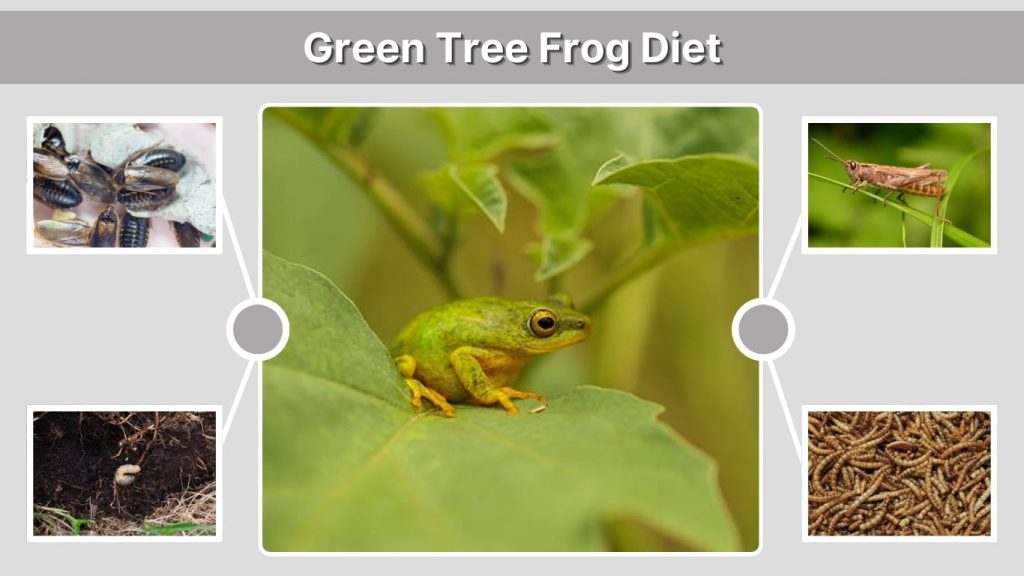
Green tree frogs are carnivorous insectivores. Their diet plays a major role in growth, lifespan, and overall health.
What Does a Green Tree Frog Eat?
Common food options include:
- Crickets
- Mealworms
- Dubia roaches
- Waxworms (occasionally)
Larger Australian green tree frogs may occasionally eat pinky mice, though this should not be a regular practice.
Feeding Schedule
- Juveniles: Feed daily
- Adults: Feed every 2–3 days
Food size should never be wider than the frog’s head.
Supplementation
Dust feeder insects with:
- Calcium powder
- Vitamin D3 supplements
Proper supplementation prevents metabolic bone disease and supports long-term health.
Green Tree Frog Lifespan
Green tree frogs are known for their relatively long lifespan compared to many other amphibians. Their life expectancy depends heavily on species, environment, and quality of care.
Lifespan in the Wild
In the wild, green tree frogs typically live 5–10 years. However, survival rates vary due to:
- Predators such as snakes and birds
- Habitat destruction
- Pollution
- Climate changes
Wild frogs face constant environmental stress, which naturally shortens their lifespan.
Lifespan in Captivity
In captivity, especially for the Australian green tree frog, lifespan can reach 15–20 years with proper care. Controlled temperature, steady food supply, and protection from predators allow them to live much longer than their wild counterparts.
The American green tree frog usually lives slightly shorter lives in captivity, averaging around 6–12 years.
Proper nutrition, clean enclosures, and stable humidity levels significantly influence longevity.
Are Green Tree Frogs Poisonous?
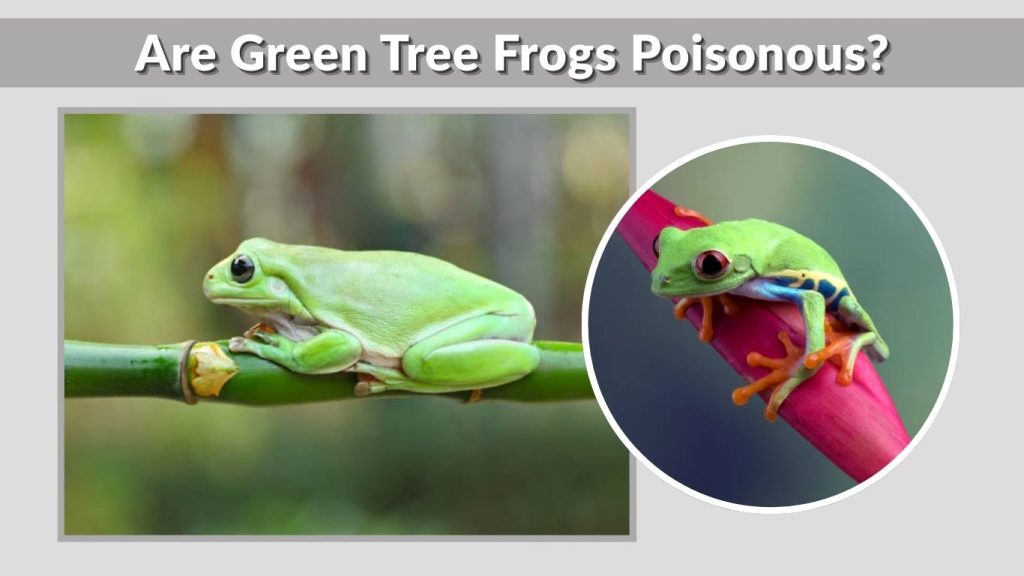
Many people wonder whether green tree frogs are poisonous or dangerous to handle. The answer depends on what you mean by “poisonous.”
Toxicity Explained
Green tree frogs are not dangerously poisonous to humans. However, they do secrete mild toxins through their skin as a defense mechanism. These secretions can:
- Cause mild skin irritation
- Trigger allergic reactions in sensitive individuals
Washing your hands after handling a frog is always recommended.
Are They Poisonous to Pets?
While not deadly in most cases, a dog or cat that bites or mouths a green tree frog may experience:
- Drooling
- Mild stomach upset
- Temporary discomfort
It’s best to prevent pets from interacting with wild frogs.
Safety Tips
- Always wash hands before and after handling
- Avoid touching your face or eyes
- Do not allow children to handle frogs unsupervised
Overall, green tree frogs are considered safe when handled responsibly.
Green Tree Frog Sound & Noise
Green tree frogs are famous for their nighttime calls. Their vocalizations are one of the most searched topics about them.
What Does a Green Tree Frog Sound Like?
The Australian green tree frog produces a deep, slow croaking sound that some people describe as a barking noise.
The American green tree frog has a high-pitched, repetitive call often described as a nasal “quonk” or “queenk” sound.
Their calls are loud compared to their body size.
Why Do They Make Noise?
Frogs vocalize mainly for:
- Attracting mates
- Establishing territory
- Responding to rain
Male frogs are usually the ones calling.
When Are They Most Vocal?
Green tree frogs are most active at:
- Night
- During warm weather
- After rainfall
If kept as pets, they may call during nighttime hours, which is important to consider before ownership.
Green Tree Frog Eggs & Life Cycle
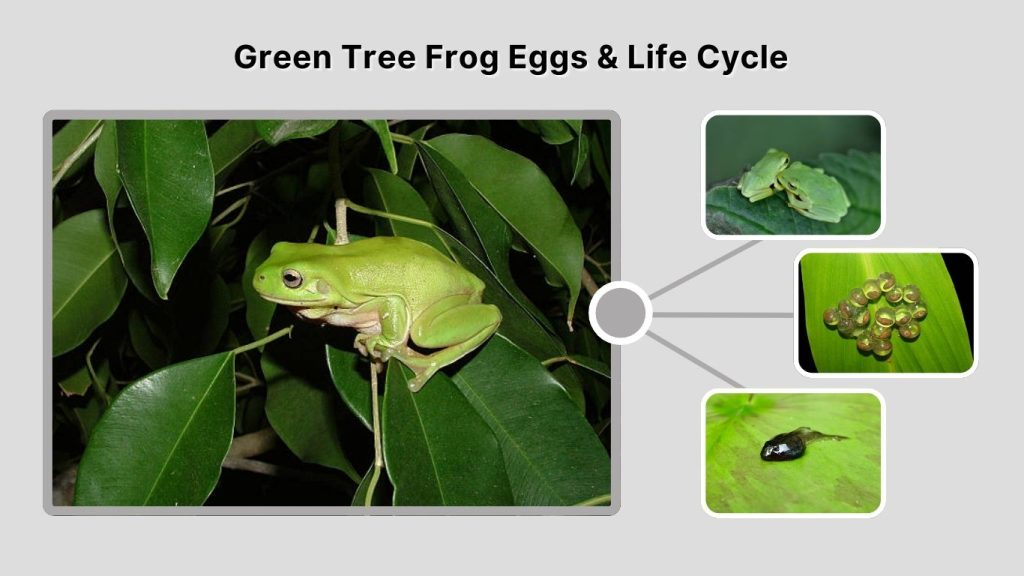
Like all amphibians, green tree frogs undergo metamorphosis. Their life cycle is fascinating and closely tied to water sources.
Breeding Season
Breeding typically occurs during warm, rainy seasons. Rain stimulates males to begin calling for females.
Egg Laying
Females lay clusters of jelly-like eggs in:
- Ponds
- Still water
- Temporary rain pools
Eggs float or attach to vegetation near the water surface.
Tadpole Stage
Within a few days, eggs hatch into tadpoles. During this stage:
- They live fully in water
- Breathe through gills
- Feed on algae and organic matter
This phase lasts several weeks.
Metamorphosis
As tadpoles develop:
- Legs begin to grow
- Tails shrink
- Lungs replace gills
Eventually, they leave the water as fully formed young frogs.
Green Tree Frog Size
Green tree frog size varies depending on species and gender.
Average Size
- Australian green tree frog: 3–4 inches
- American green tree frog: 1.5–2.5 inches
Australian frogs are noticeably larger and bulkier.
Male vs Female Differences
Females are generally slightly larger than males. Males may develop darker throat patches due to frequent calling.
Growth Timeline
Most green tree frogs reach full size within 1–2 years, depending on diet and environmental conditions.
Green Tree Frog Facts
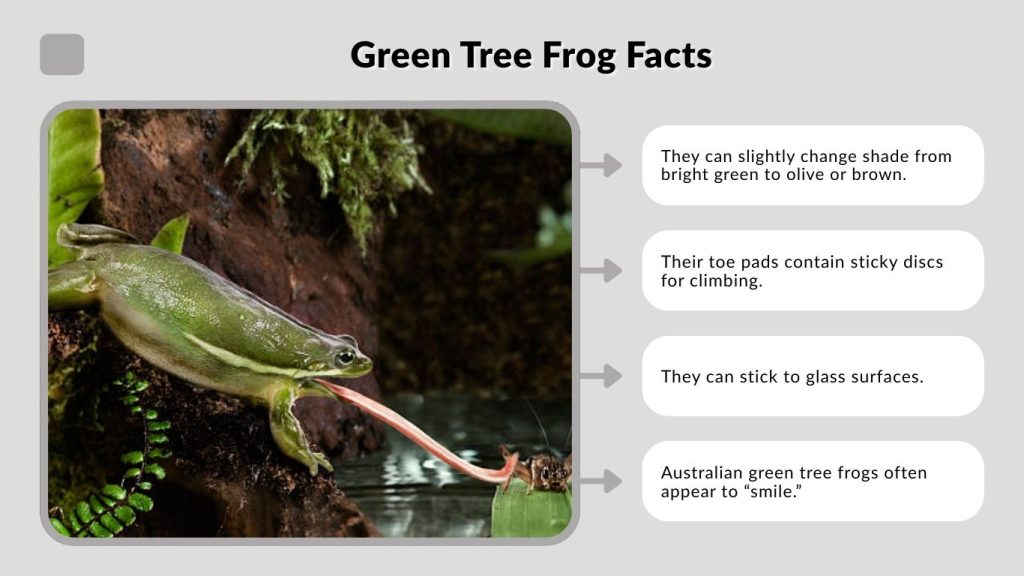
Green tree frogs have several unique traits that make them fascinating amphibians.
Interesting Facts
- They can slightly change shade from bright green to olive or brown.
- Their toe pads contain sticky discs for climbing.
- They can stick to glass surfaces.
- Australian green tree frogs often appear to “smile.”
- They may live over 15 years in captivity.
These features contribute to their popularity as both pets and wildlife photography subjects.
Cute Green Tree Frog: Why They’re So Popular
Green tree frogs are widely considered one of the cutest frog species.
Unique Appearance
Their rounded faces, large golden eyes, and relaxed posture give them a friendly look. The Australian species, in particular, has a chubby body that enhances its appeal.
Social Media Popularity
Images and videos of dumpy green tree frogs frequently go viral online. Their expressive faces and calm demeanor make them favorites among reptile and amphibian enthusiasts.
Conclusion
Green tree frogs are fascinating amphibians known for their bright color, climbing ability, and distinctive nighttime calls. Whether you’re interested in the Australian green tree frog as a pet or observing Florida green tree frogs in the wild, understanding their habitat, diet, lifespan, and care needs is essential.
With proper research and responsible care, green tree frogs can thrive for many years, making them rewarding companions or captivating wildlife to observe.